 Rafael Santos
Do Salento slowly: one early morning among the wax palms of the Cocora Valley, one unhurried afternoon on a family coffee farm, and evenings with no plan beyond the painted streets and the main square. That is the short answer, and it suits this small town in Colombia’s Quindio department better than any checklist. Salento sits at about 1,900 metres in the Coffee Cultural Landscape, the UNESCO listed coffee region, and it works as the base for the valley where the Quindio wax palm, Colombia’s national tree and the tallest palm species in the world at up to about 60 metres, grows in open grassland under fast changing cloud. This guide explains how the jeep ride, the two valley walks, the coffee tours and the town itself fit together over two or three unhurried days.
Quick Facts
- Base: Salento, Quindio, a small colourful town at about 1,900 metres, founded in the 19th century
- Headline sight: Cocora Valley, about 20 to 30 minutes by Willys jeep from Salento’s main square
- The palms: Quindio wax palms, Colombia’s national tree, protected since 1985, reaching up to about 60 metres
- Valley walks: A short palm viewpoint route of about 60 to 90 minutes, or a long cloud forest loop of roughly five to six hours
- Coffee: Small family fincas around town run tours of about two to three hours covering picking, washing, drying, roasting and tasting
- Best rhythm: Cocora early for the clearest views, coffee farm the next afternoon, town time left deliberately unplanned
How does the Cocora Valley actually work?
The day starts in Salento’s main square, where Willys jeeps, the classic vehicles of the coffee region, line up and leave through the morning for the valley trailhead, a ride of about 20 to 30 minutes on a rising rural road. Buy a return arrangement or note the last jeeps back before you walk, and carry small cash for jeep fares and the entry fees charged by the private landowners whose farms the trails cross. Fees and fares change locally and are posted at the square and trailhead, so treat any figure in older guides as history and check the boards on the day.
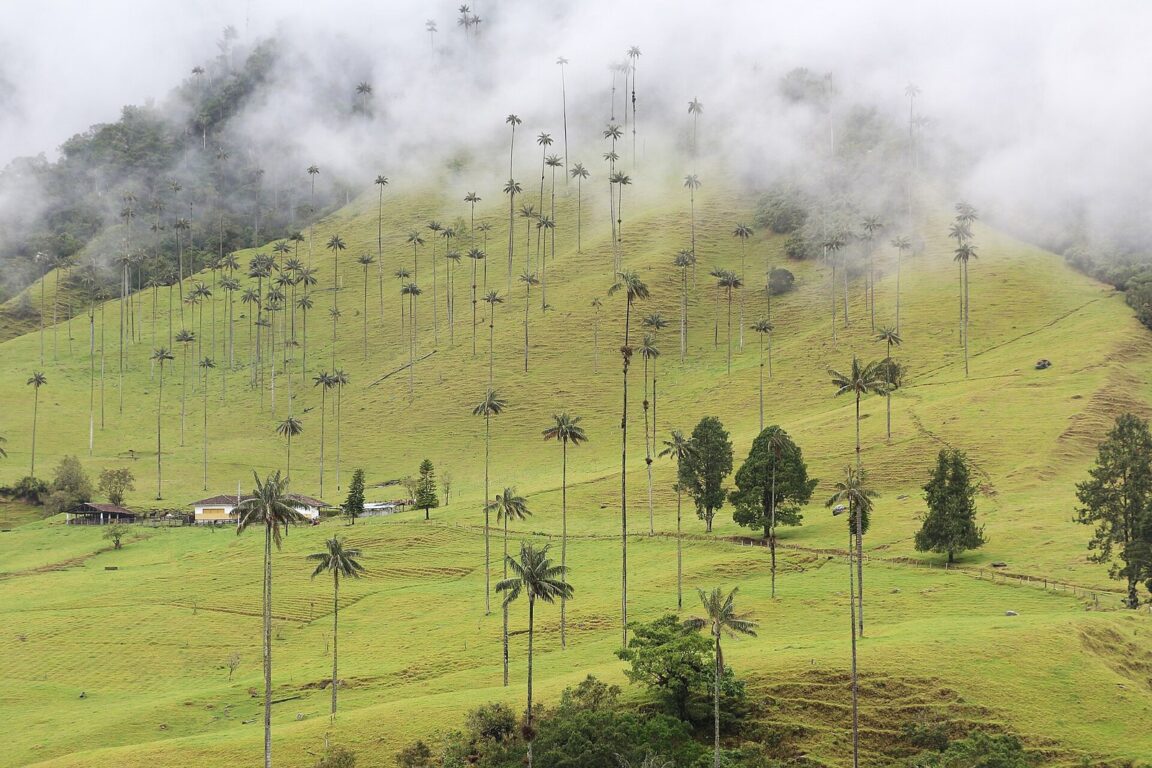
At the trailhead the route splits by ambition. The short route climbs directly to the palm viewpoints and back, roughly 2.5 kilometres and 60 to 90 minutes of walking plus photo time, and it delivers the classic image: slender trunks rising from green pasture, crowns in and out of the mist. The long loop, variously mapped at about 12 to 15 kilometres and five to six hours, continues into cloud forest, crosses the Quindio river on suspension bridges, and passes the Acaime reserve, known for its hummingbirds, before descending through the palms. It is muddy in places in any season, involves real climbing, and needs proper shoes, water and a rain layer even under a blue morning sky.
Why are the wax palms worth the early start?
The Quindio wax palm, Ceroxylon quindiuense, was declared Colombia’s national tree under Law 61 of 1985, which also protected it from felling, and the Cocora Valley sits within the buffer of Los Nevados National Natural Park. The species grows at altitude, between roughly 1,800 and 2,400 metres in the valley, and mature palms reach about 60 metres, making them the tallest palms in the world. They are also slow growing and classed as vulnerable, which is why the surviving stands in open pasture, remnants of cleared forest, matter so much: the landscape that photographs so beautifully is partly an accident of farming history, and regeneration projects in the valley are working to plant the next generation inside protected forest.
Go early for three practical reasons. Cloud builds over the valley as the day warms, and the clearest palm views are usually in the first hours. The jeeps and trail are quieter before mid morning tour groups arrive. And the light on the eastern slopes in the first part of the day gives the trunks and pasture their strongest colour. A slower Andean morning rewards patience in the same way as the old towns in our guide to Kotor, Montenegro, where arriving ahead of the day crowds changes the whole visit.
What happens on a Salento coffee farm tour?
Salento sits in the Eje Cafetero, and the farms around town, many of them small and family run, open their working land to visitors for tours that typically run two to three hours. The format is consistent because the process is: walk the rows and see how coffee grows alongside banana and plantain, pick ripe red cherries in season, then follow them through depulping, fermentation, washing, drying and roasting, finishing with a tasting of the farm’s own coffee. The better tours are led by the growers themselves, keep groups small, and explain the economics honestly, including how little of the final cup price reaches the farm gate.
Choose a small finca within walking distance or a short jeep ride of town if your time is limited, and book a day ahead in busy periods so the farm can plan around its work. Wear shoes that can handle farm tracks, expect the tour to run in Spanish or English depending on the farm, and buy beans at the farm shop if you enjoyed the cup: it is the most direct money you will spend in the region. Prices vary by farm and group size and are quoted when you book, so confirm the current rate directly rather than relying on figures in older articles.
How should you spend time in Salento town itself?
Slowly, and mostly on foot. The town’s traditional bahareque houses, built with bamboo and earth and painted in saturated colours around white trim, line the streets running from the main square, Plaza de Bolivar, up Calle Real, the craft street, to the Alto de la Cruz viewpoint, reached by a long flight of steps and worth it at sunset for the view over the rooftops toward the valley. The church on the square, the artisan shops and the small cafes are the extent of the formal sightseeing, and that is the point.
Build the town into the gaps: a late breakfast after the early Cocora start, an afternoon coffee in a square side cafe between the farm tour and dinner, an evening of trout, the local speciality served in many restaurants, often with a large crisp plantain. Two nights is the minimum that makes the rhythm work, one for the valley and one for the farm with town time around both; three nights lets weather move a plan without breaking it, which in a cloud forest foothill town is a real consideration. Travellers building a longer slow itinerary through Latin America may also enjoy our 3 days in Lisbon itinerary for the same one big sight a day approach applied to a European capital.
When is the best time to go, and how do you get there?
Salento can be visited year round, with the relatively drier stretches, broadly December to February and June to August, giving the best odds of clear valley mornings and drier trails, and the wetter months bringing greener hills, more mud and fewer visitors. At about 1,900 metres the town has warm days and cool evenings rather than tropical heat, so a jacket earns its place in the bag alongside rain gear.
Most visitors arrive by road from the regional cities of Armenia or Pereira, both with airports and bus connections to Salento, and the final mountain road is part of the experience rather than a problem to solve. Once in town you need no car: the centre is walkable, and jeeps cover the valley and many farm visits. Confirm current schedules and road conditions locally before travel days, as mountain services change with season and weather.
Frequently Asked Questions
How long do I need in Salento?
Two nights is the practical minimum, giving you one early morning for the Cocora Valley and one afternoon for a coffee farm with town time around both. Three nights adds a weather buffer and makes the slow pace the town rewards actually possible.
Is the long Cocora loop worth it over the short route?
If you are fit, equipped for mud and have five to six hours, yes: the loop adds cloud forest, river bridges and the hummingbird reserve to the palm views. If time or knees are limited, the short route delivers the essential valley landscape in about 90 minutes.
Do I need to book coffee tours in advance?
In quiet periods you can often arrange a tour a day ahead or on arrival through your hotel or the farm directly. In holiday periods and weekends, book at least a day or two ahead, and confirm the price and language when you book.
What should I pack for Salento and Cocora?
Broken in walking shoes that can handle mud, a waterproof jacket, layers for cool evenings at altitude, sun protection for the valley, and small cash for jeeps and trail entry fees. The altitude sun is stronger than the mild temperatures suggest.
Heights, distances and ecological facts checked against published sources on the Cocora Valley, the wax palm and the Coffee Cultural Landscape on 11 November 2026. Jeep fares, trail entry fees and coffee tour prices are set locally and change, so they are deliberately not quoted here; confirm them at the square, the trailhead and the farm when you book.