 Wei Chen
Yes, Almaty deserves real days on a Central Asia trip, not a transit night. Give it three days at minimum and four if the mountains matter to you, because this is two destinations stacked together: a leafy, grid planned city of boulevards, markets and Soviet era monuments at the bottom of the slope, and a wall of snow capped Tian Shan peaks rising directly behind it, close enough that ski lifts, an Olympic skating rink and alpine lakes sit inside the city limits or just beyond them. The mountain setting is not scenery here. It shapes the weather, the street plan, the weekend rhythm and the best hours of every day, and planning around it is the difference between a pleasant city break and one of the great urban mountain stays in Asia.
Quick Facts
- Best for: Travelers who want a major city and high mountains in the same base, with Silk Road history, Soviet architecture and Central Asian food
- How long: Three days for the city and one mountain excursion, four to five days to add Big Almaty Lake or a fuller Shymbulak day without rushing
- Setting: Almaty sits at the northern foot of the Trans Ili Alatau range of the Tian Shan, and the city slopes upward toward the peaks to the south
- The apple story: The name Almaty is linked to the Kazakh word alma, meaning apple. The wild ancestor of the domestic apple, Malus sieversii, grows in the mountains of Kazakhstan, and the local Aport variety is a city symbol
- Status: Almaty is the largest city in Kazakhstan and its former capital. The capital moved to Astana in 1997, but Almaty remains the cultural and commercial centre
- Mountain access: Kok Tobe hill overlooks the city, the Medeu skating rink and the gondola to Shymbulak ski resort sit in the gorge south of the centre, and Big Almaty Lake lies in the mountains above the city
- Airport: Almaty International Airport, code ALA, is around 15 kilometres northeast of the centre
Why does the mountain setting change everything here?
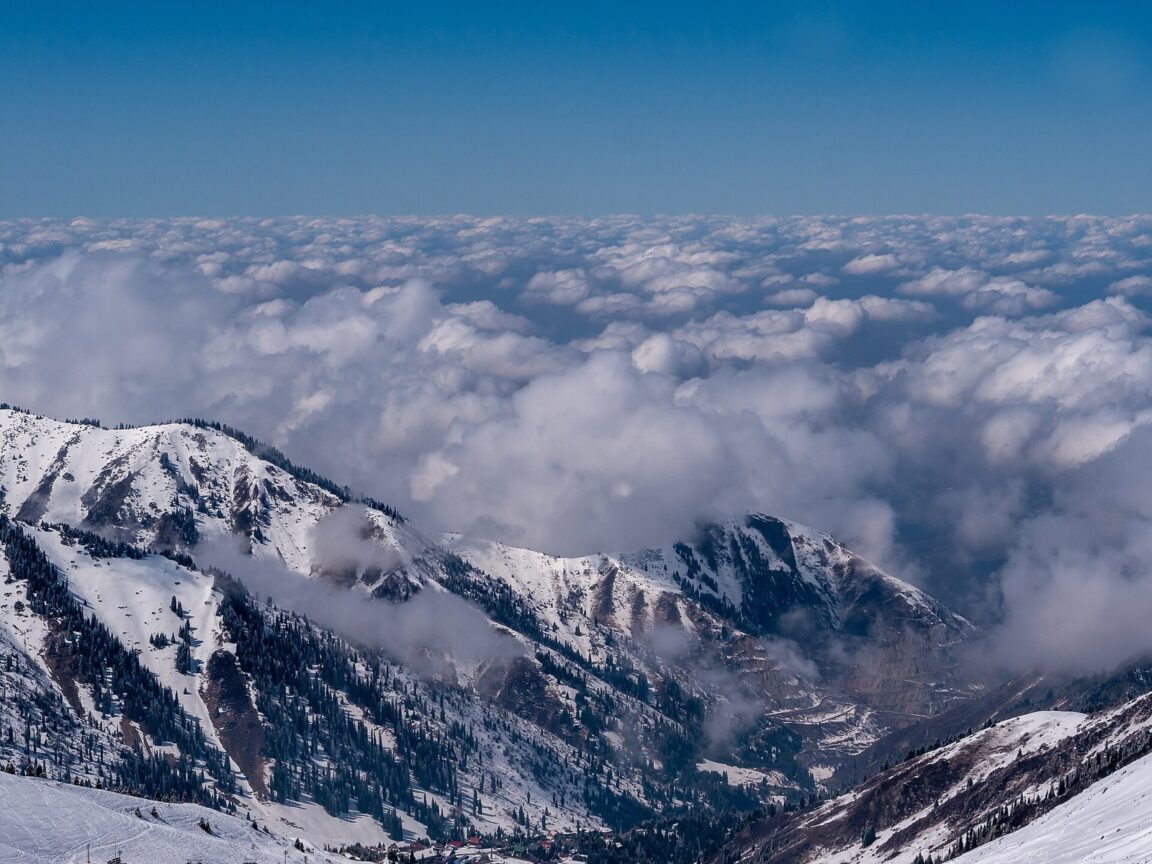
Most big cities sit near mountains. Almaty sits against them. Streets in the southern districts climb steadily, and on a clear morning the snow line fills the windscreen, the office window and the end of almost every south facing avenue. That proximity does practical work. Temperatures drop as you ride south and uphill, haze over the city tends to clear after wind or rain, and the finest views often arrive early in the day before cloud builds over the ridge. It also explains the local calendar: residents treat Medeu, Shymbulak and the foothill trails the way coastal cities treat beaches, as the default weekend plan rather than a special expedition.
The range at the end of the street is the Trans Ili Alatau, the northernmost chain of the Tian Shan system that runs across Kyrgyzstan and western China. Peaks above the city carry snow for much of the year, and the high point visible from Almaty, Talgar Peak, rises to just under 5,000 metres. You do not need to climb any of it to feel the benefit. A cable car ride, a rink visit and a lake road put you inside the landscape within an hour of a city breakfast, which is a ratio few capitals anywhere can match.
What is the apple connection, and is it real?
It is real, and it is one of the better documented origin stories in food history. Genetic research traces the domestic apple back to Malus sieversii, the wild apple that still grows in forests across the Tian Shan foothills of Kazakhstan. The biologist Nikolai Vavilov identified the groves near Almaty as a centre of origin in the early twentieth century, and modern genome work has confirmed the Sievers apple as a principal ancestor of cultivated varieties. Seeds moved west along Silk Road routes over centuries, carried by animals and traders, and the orchard apple followed.
On the ground, look for the Aport, the large, fragrant local variety that became a symbol of the city during the Soviet period, when the city carried the name Alma Ata, often translated as father of apples. Apples appear on monuments, at market stalls and in the Green Bazaar, and orchards still ring parts of the foothills. If your trip falls in harvest season, market fruit is the easiest way to taste the story. Travelers routing onward into China from Kazakhstan should also check the entry rules early, since the overland logic of this region rewards planning, as set out in the guide to China visa free entry changes.
How should the city days be structured?
Start with the boulevard grid and the Golden Square
Almaty rewards a slow first day on foot in the historic centre, the area locals call the Golden Square. The grid is orderly, the pavements are shaded by mature trees, and the architecture layers Russian imperial, Soviet monumental and post independence building into walkable blocks. Panfilov Street, the pedestrianised avenue in the centre, is the natural spine for a first afternoon: cafes, buskers, fountains and mountain views at the southern end. From there, Arbat, the pedestrian stretch of Zhibek Zholy, adds shopping and street life, and the opera and ballet theatre anchors the cultural end of the district.
Zenkov Cathedral and the Green Bazaar
Inside Panfilov Park stands the Ascension Cathedral, widely known as Zenkov Cathedral, a candy coloured Russian Orthodox cathedral built in the early twentieth century and famous for its timber construction. It is one of the most recognisable buildings in the city and an easy anchor for a morning. Pair it with the Green Bazaar, the great covered market a short walk away, where stalls stack apples, dried fruit, nuts, horse meat, kurt cheese balls and spices in dense, photogenic rows. Go hungry, taste before you buy where tasting is offered, and treat the bazaar as both a sight and a pantry for mountain picnics.
Soviet Almaty, without the caricature
The Soviet layer here is substantial and, handled properly, genuinely interesting rather than grim. Look for the monumental public buildings, the mosaic decorated facades, the broad ceremonial avenues and the war memorials in Panfilov Park, including the eternal flame and the memorial to the Panfilov Division. The Central State Museum gives the long view, from steppe nomads and Silk Road trade through the Soviet century to independence, and it is the single best stop for putting the boulevards in context. A city that has been a fortress town, a Soviet republican capital and a commercial hub within 170 years needs that context, and Almaty wears all three layers visibly.
What are the mountain days actually like?
Kok Tobe for the orientation view
Kok Tobe, the green hill topped by the television tower on the southeastern edge of the centre, is the orientation point. A cable car climbs to it from near the Palace of the Republic, and the top has viewpoints, cafes, amusements and a famous statue of the Beatles. The real value is the panorama: the whole grid below and the whole range behind it in one frame. Go late in the day for the light, and use it early in the trip to understand the geography everything else hangs on.
Medeu and Shymbulak, the high gorge
South of the city, the road up the Medeu gorge leads to the Medeu high altitude skating rink, one of the most storied speed skating venues in the world, set in the mountain air above the city. From Medeu, gondolas climb to Shymbulak, Kazakhstan’s best known ski resort, and continue higher toward the Talgar Pass in season. In winter this is a ski day. In summer it is a lift served hiking and viewpoint day, with the same gondola doing the altitude work. Either way, build in acclimatisation sense: the top stations are high, the weather turns fast, and a clear morning can cloud over by afternoon.
Big Almaty Lake, the classic excursion
The turquoise reservoir of Big Almaty Lake, set in a bowl of peaks in the gorge above the southwestern suburbs, is the postcard excursion. The water colour shifts with light and season, from milky turquoise to deep blue, and the road up is part of the experience. Access rules and road conditions in the national park can change, and the lake is a protected water source, so swimming is not permitted and shoreline access is restricted. Check current conditions before setting out, carry identification, and treat it as a viewpoint and picnic excursion rather than a beach day. Travelers who enjoy an emerging city with a layered past will also appreciate the approach taken in the guide to Mostar and its old town, another place where history sits directly in the street plan.
Where should you stay, and how do you get around?
Stay in or near the Golden Square for a first visit. The boulevards, Panfilov Street, the cathedral, the bazaar and the main museums are all walkable from there, and the mountain roads head south from the same districts. The city metro is a single clean line that helps on north south hops, buses cover the grid, and ride hailing apps are the practical default for most visitors, including the airport run and the Medeu road. Traffic builds at rush hour on the main avenues, so mountain starts are best made early. Cash in tenge is useful at markets even as cards spread, and Russian remains widely understood alongside Kazakh, with English strongest in hotels and newer cafes.
When is the best time to go?
Spring and autumn are the sweet spots. April and May bring blossom, including apple blossom in the foothills, green hillsides and mild city temperatures. September and October bring harvest fruit, golden trees and often the clearest mountain views of the year. Summer is warm in the city and ideal for high trails and the lake, with afternoon storms possible in the mountains. Winter is cold, bright and built for skiers: Shymbulak in season, Medeu’s ice, and the range at its most dramatic under snow, balanced against icy pavements and short days in the city. Whatever the season, check the mountain forecast separately from the city forecast, because they are frequently different days.
Frequently Asked Questions
How many days does Almaty need?
Three days is the honest minimum: one for the boulevard centre, cathedral and bazaar, one for Kok Tobe and the museums, and one for Medeu and Shymbulak or Big Almaty Lake. A fourth day lets you do both mountain excursions without choosing, and a fifth suits skiers in season or anyone adding a longer foothill hike.
Is Almaty safe and easy for a first Central Asia trip?
Almaty is the most common first stop in Central Asia for good reason. It has the region’s largest airport, a deep hotel stock, an orderly centre and strong cafe and restaurant scenes. Normal big city awareness applies, especially around stations and late at night, and mountain weather deserves more respect than street safety usually requires.
Can you see the mountains every day?
No, and planning should assume that. Haze, cloud and winter inversion can hide the range for a day or more, then a front clears it overnight and the peaks appear at breakfast. Build mountain viewpoints into more than one day so a single grey morning does not cost you the defining view, and take the clear hour when it comes.
What should you buy at the Green Bazaar?
Aport apples in season, dried apricots and other dried fruit, nuts, mountain honey, spices and kurt, the salty dried cheese that travels well. Taste, compare a few stalls, and remember fresh fruit rules if you are crossing borders afterwards.
Do you need a tour for Big Almaty Lake and Shymbulak?
Shymbulak is straightforward independently by road to Medeu and gondola from there. Big Almaty Lake is also reachable by car, but access arrangements and road conditions change, so many visitors use a driver or a small group tour for simplicity. Either way, verify the current access situation the day before rather than relying on old trip reports.
What is the best base for onward travel in Kazakhstan?
Almaty works as the southern base: the Charyn Canyon country and the lakes of the southeast, including Kolsai and Kaindy, are reached from here on longer day trips or overnight tours, while trains and flights connect to Astana and the rest of the country. Keep those canyon and lake days separate from the city days rather than stacking them into an exhausting single itinerary.