 Priya Nair
A first trip to Delhi works in three days if each day takes one city: Day 1 for Old Delhi, the Mughal walled city of Shahjahanabad, Day 2 for New Delhi, the wide avenues and memorials of the Lutyens era capital, and Day 3 for the garden tombs and older quarters that connect them, from Humayun’s Tomb to the Qutub Minar. The governing rule is the heat. Start at opening time, retreat indoors or to shade in the middle of the day, and return outdoors in the late afternoon, in every season. Delhi’s three UNESCO World Heritage Sites, the Red Fort, Humayun’s Tomb and the Qutb Minar complex, anchor the plan, the metro makes the distances manageable, and the food, from Chandni Chowk lanes to modern Delhi kitchens, is a reason in itself.
Quick Facts
- Structure: Day 1, Old Delhi: Red Fort, Jama Masjid and Chandni Chowk. Day 2, New Delhi: India Gate, Kartavya Path, government quarter and Connaught Place. Day 3, Humayun’s Tomb, Lodhi Garden and the Qutub Minar in Mehrauli
- World Heritage: Delhi holds three UNESCO World Heritage Sites: the Red Fort Complex, Humayun’s Tomb and the Qutb Minar and its Monuments. Verify current entry fees, opening days and booking rules on Archaeological Survey of India channels before visiting
- Heat rule: Sightsee early and late. From April to June, daytime temperatures routinely exceed 40 degrees Celsius; carry water, a hat and sun protection, and plan indoor stops at midday in every season
- Best season: October to March, with the mildest weather. Winter mornings can bring fog and poor air quality, so check the day’s air quality reading before planning long hours outdoors
- Getting around: The Delhi Metro links the airport, Old Delhi and New Delhi and is the fastest way across the city. Use registered taxis or app based cars for door to door trips, and agree or confirm the fare basis before setting off
- Dress and conduct: Carry a light scarf or cover for mosque and temple visits, dress modestly at religious sites, remove shoes where required, and ask before photographing people
- Where to stay: Central Delhi near Connaught Place for metro links in every direction, or the diplomatic enclave and south Delhi for quieter, greener streets
How should a first timer divide three days in Delhi?
Delhi is not one city but a stack of them, and first timers enjoy it most when they stop trying to mix the layers in a single day. Old Delhi, founded as Shahjahanabad by the Mughal emperor Shah Jahan in the seventeenth century, is dense, loud and best taken slowly on foot. New Delhi, inaugurated as the capital in 1931 and laid out under Edwin Lutyens and Herbert Baker, is monumental, green and spread along broad avenues. The tomb gardens and Sultanate ruins of the south belong to older Delhis again. One layer per day keeps travel time down and lets each register. Travellers arriving from a Mumbai food trip through street stalls and Irani cafes will find Delhi’s food scene equally deep, but organised around different signatures: Mughlai kitchens, chaat counters and old city sweet shops rather than coastal and Parsi flavours.
Day 1: How should Old Delhi be tackled?
Where does an Old Delhi day start?
At the Red Fort, and early. The vast red sandstone palace fortress, built for Shah Jahan in the seventeenth century and listed by UNESCO, was the seat of Mughal power for two centuries. Its Lahori Gate, audience halls, pavilions and museums need a couple of unhurried hours, and the early start beats both the heat and the worst of the crowds. Note that major Archaeological Survey of India monuments in Delhi have weekly closing patterns, with the Red Fort traditionally closed on Mondays; verify the current schedule on official channels when fixing the day order, and swap Days 1 and 3 if needed. From the fort, walk or take a short rickshaw ride into the lanes of Chandni Chowk, the market avenue laid out in Shah Jahan’s city and still the commercial heart of the old town, its specialised lanes given to silver, textiles, spices, sweets and wedding finery.
What are the Old Delhi highlights beyond the fort?
The Jama Masjid, among the largest mosques in India, raised on a hillock above the old city by Shah Jahan and completed in 1656, dominates the afternoon. Its vast courtyard, red sandstone and white marble domes and minarets reward a late afternoon visit as the light warms and the temperature falls; dress modestly, expect the site to pause around prayer times, and confirm current visitor arrangements on arrival. Around it, Old Delhi feeds its visitors: Khari Baoli, the great spice market at the western end of Chandni Chowk, loads the air with chilli, turmeric and dried fruit, and the lanes below the mosque hold some of the city’s most storied Mughlai cooking, kebabs, biryanis and breads, alongside jalebi and chaat stalls. Eat where turnover is fast, prefer freshly cooked food served hot, drink bottled or properly filtered water, and let a first day appetite build gradually rather than attempting everything at the first counter.
Day 2: What defines New Delhi?
How does the ceremonial axis fit together?
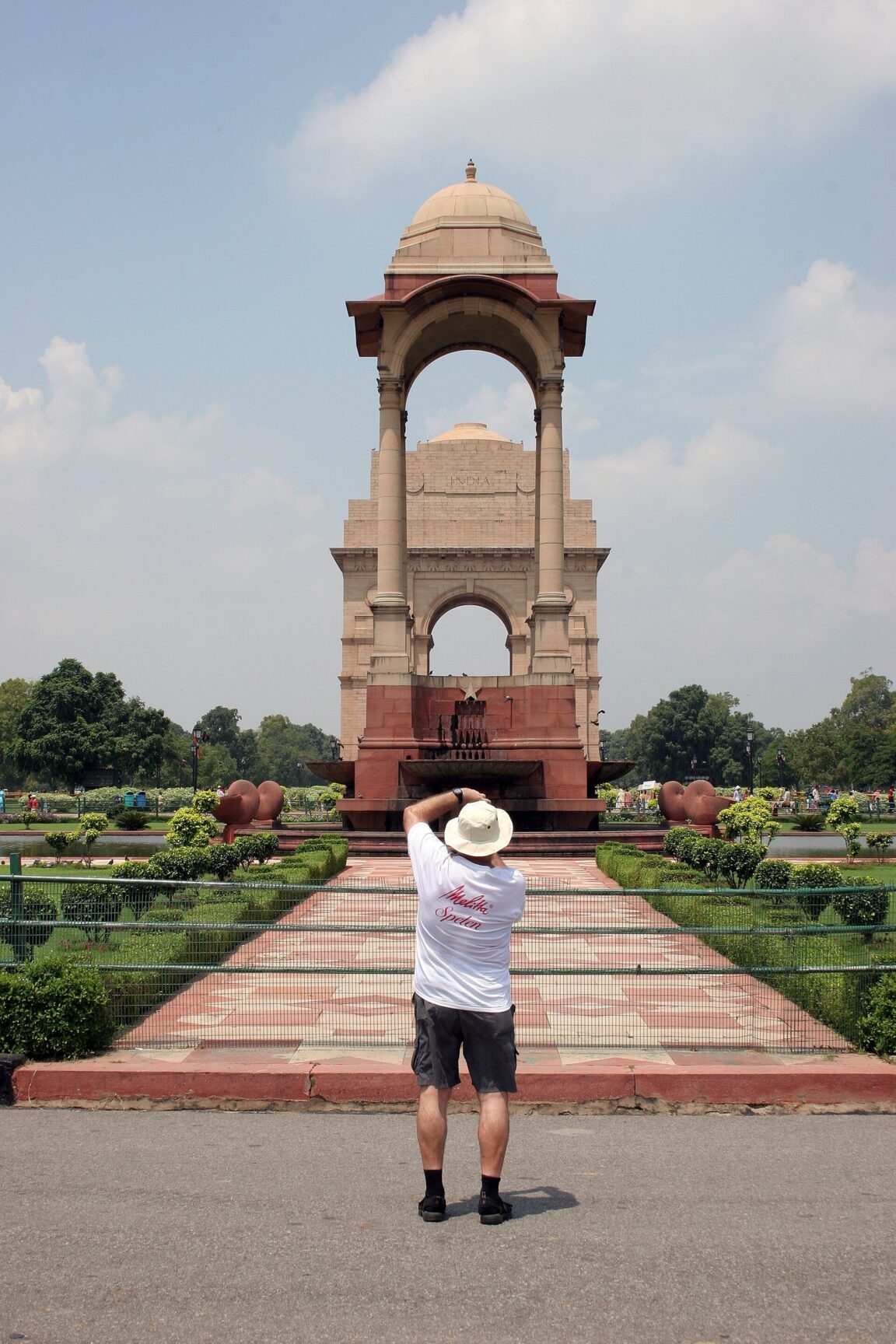
Day 2 walks the capital that replaced the old city. India Gate, the 42 metre war memorial arch designed by Edwin Lutyens and completed in 1931, commemorates Indian soldiers who died in the First World War and the Third Anglo Afghan War, their names inscribed on its stone. It stands at the eastern end of Kartavya Path, the ceremonial avenue that runs west to Raisina Hill, where Rashtrapati Bhavan, the President’s official residence, crowns the axis between the government secretariat buildings. The lawns around India Gate fill toward evening with families and vendors, and the memorial is floodlit after dark, so the axis works twice: a morning walk for the architecture and an evening return for the atmosphere. The National War Memorial beside India Gate adds the contemporary chapter. Security arrangements shape how close visitors can approach the government buildings themselves, so treat Raisina Hill as a viewed ensemble unless an official tour, such as a booked visit to Rashtrapati Bhavan through its own channels, is arranged in advance.
What else belongs on a New Delhi day?
Connaught Place, the colonnaded circular market at the commercial heart of New Delhi, suits the middle of the day, with bookshops, cafes and air conditioned pauses between sights. The National Museum near India Gate holds one of India’s great collections, from Indus Valley artefacts to miniature painting, and makes the strongest indoor anchor of the trip on a hot or smoggy day. Gurudwara Bangla Sahib, the Sikh temple with its white marble, golden dome and sacred pool near Connaught Place, welcomes visitors who cover their heads and wash their feet at the entrance, and its langar, the community kitchen serving free meals, expresses the city’s generous side. Keep the day loose, move by metro between clusters, and save energy for the evening lawns at India Gate. The contrast is the lesson of the day: the walled city of Day 1 governed an empire from a fortress, while New Delhi performs the state in open avenues and lawns.
Day 3: How do the tombs and the south complete the picture?
Why start at Humayun’s Tomb?
Humayun’s Tomb, built in the sixteenth century for the second Mughal emperor, is the first great garden tomb on the Indian subcontinent and the direct architectural ancestor of the Taj Mahal. Red sandstone and white marble rise from a formal charbagh garden of pathways, water channels and lawns, and the complex, a UNESCO World Heritage Site, includes the tomb of Isa Khan and other garden monuments within its walls. Go at opening time, when the gardens are quiet, the light is kind and the heat is still low, and give it a full morning rather than a rushed hour. The restored Sunder Nursery heritage park beside the tomb extends the visit with gardens, lakeside paths and weekend markets in season. From there, Lodhi Garden, a short drive north, spreads tombs of the Sayyid and Lodhi era across green lawns where Delhi walks, picnics and practises yoga, the most relaxed green hour of the three days.
How does the Qutub Minar finish the trip?
In the afternoon, head south to Mehrauli and the Qutb Minar complex, the third of Delhi’s World Heritage Sites. The Qutub Minar itself, begun at the end of the twelfth century, rises 72.5 metres in tapering storeys of red sandstone, the tallest brick minaret of its kind, surrounded by the Quwwat ul Islam mosque built with carved pillars from earlier temples, the rust resistant Iron Pillar, and the tombs and gateways of the early Sultanate. It is the oldest layer of the trip, older than the Mughals, older than both Day 1 and Day 2 cities, and it closes the historical arc in the right order. Mehrauli village beside the complex, and the Mehrauli Archaeological Park behind it, reward any remaining energy with tombs, stepwells and a village high street of cafes. Travellers continuing to a first time Kathmandu itinerary will find the same principle at work there: one old city, taken layer by layer, never all at once.
How should visitors handle heat, air and logistics?
Treat climate as the itinerary’s co author. In the hot months, roughly April to June, build every day as two outdoor shifts, dawn to mid morning and late afternoon to evening, with museums, long lunches and rest in between, and never rely on willpower against midday sun at exposed stone sites like the Red Fort or Qutub Minar, where shade is scarce. In the monsoon months, expect sudden heavy rain, waterlogged streets and slower traffic, and keep timings elastic. In winter, the constraint flips: fog can delay morning travel and air quality can deteriorate, especially from late autumn into January, so check the official air quality index, carry a well fitting mask for sensitive travellers, and swap outdoor heavy days for museum days when readings are poor. Across all seasons, carry water, use the metro for long hops, keep hotel address details on the phone, and confirm monument fees, closing days and online booking rules on Archaeological Survey of India channels close to the visit, because arrangements change.
Frequently Asked Questions
Is three days enough for a first visit to Delhi?
Three full days cover the essentials well: Old Delhi and the Red Fort, the New Delhi ceremonial axis, Humayun’s Tomb and the Qutub Minar, with serious eating in between. A fourth day adds the Lotus Temple, Akshardham or a deeper museum day, and Delhi is also the usual gateway for an Agra day trip to the Taj Mahal.
When is the best time of year to visit Delhi?
October to March offers the most comfortable sightseeing weather. April to June is extremely hot, July to September brings monsoon rain and humidity, and late autumn and winter can bring fog and poor air quality, so season should shape both dates and daily planning.
Which Delhi monuments close on which days?
Closing patterns vary by site and change over time; the Red Fort has traditionally closed on Mondays. Verify each site’s current opening days, hours and entry fees on Archaeological Survey of India channels before fixing the order of the three days.
How should first timers get around Delhi?
The metro for cross city journeys, including the airport line, and taxis or app based cars for local hops. Auto rickshaws suit short trips in the old city area; agree the fare or insist on the meter before setting off, and allow generous buffers, since Delhi traffic is slow at peak hours.
Is Old Delhi safe and manageable for first timers?
Yes, with ordinary big city awareness. Go in the morning or late afternoon, keep valuables secure in the crowds of Chandni Chowk, dress modestly for the Jama Masjid, and consider a reputable guided walk for a first visit, which adds context and removes navigation stress in the lanes.
What should visitors eat on a first trip?
In Old Delhi, Mughlai kebabs and biryani near the Jama Masjid, chaat and jalebis in Chandni Chowk and parathas in the famous lane given to them; in New Delhi, a spread of regional Indian kitchens around Connaught Place and the city’s modern restaurants. Choose busy counters, eat food cooked fresh and served hot, and drink bottled or reliably filtered water.
A final practical note before booking anything
Book the hotel base first, in central or south Delhi, then pin the Red Fort and Humayun’s Tomb to the two coolest, clearest mornings of the stay, then let the rest arrange itself around the heat. Start earlier than feels reasonable, rest in the middle of every day without guilt, and treat the metro map as the trip’s best friend. Delhi overwhelms only when it is rushed; taken one city at a time, fortress, avenue and garden tomb, a first visit becomes a clear story, and one of the great urban introductions in Asia.