 Omar Haddad
La Mamounia is Marrakech’s palace garden hotel in the fullest sense: a hotel opened in 1923 inside an 18th century royal garden, a short walk from the Koutoubia Mosque and Jemaa el-Fnaa, holding 135 rooms, 71 suites and 3 private riads among olive trees, orange groves and rose beds that predate the building by generations. It suits travellers who want the definitive grand hotel experience in Marrakech, gardens to disappear into, a vast spa and destination restaurants including Moroccan, Italian and Asian dining, and who accept palace pricing for it. It suits less well travellers seeking a small medina riad’s intimacy or a discreet, under the radar stay. Facts below follow the hotel’s own published material at mamounia.com; confirm current rates, restaurant bookings and spa arrangements there for exact dates.
Quick Facts
- Setting: Avenue Bab Jdid, inside the old city walls, opposite the Koutoubia Mosque and a short walk from Jemaa el-Fnaa and the medina souks
- Origins: The gardens were an 18th century wedding gift from Sultan Mohammed ben Abdallah to his son, Prince Mamoun. The hotel, designed by Henri Prost and Antoine Marchisio, opened in 1923, blending Moroccan craft with Art Deco
- Scale: 135 rooms, 71 suites and 3 private riads, set in extensive historic gardens of olive, orange and palm trees, with a vegetable garden supplying the kitchens
- Dining: Four restaurants, including Le Marocain for Moroccan fine dining, L’Italien and L’Asiatique by Jean-Georges Vongerichten, and Le Pavillon de la Piscine for poolside dining, plus bars including Le Churchill and the Majorelle bar, and tea rooms
- Wellness: A spa of around 2,500 square metres with hammams, treatment rooms and outdoor massage pavilions in the gardens, indoor and outdoor pools, and a fitness pavilion
- Renovations: A landmark restoration led by Jacques Garcia reopened the hotel in 2009; a further renovation by Paris studio Jouin Manku refreshed the public rooms, restaurants and bars around the centenary in 2023
- Best for: Milestone trips, garden and spa led stays, food focused travellers, and anyone who wants Marrakech’s most storied address
What makes La Mamounia different from every other Marrakech hotel?
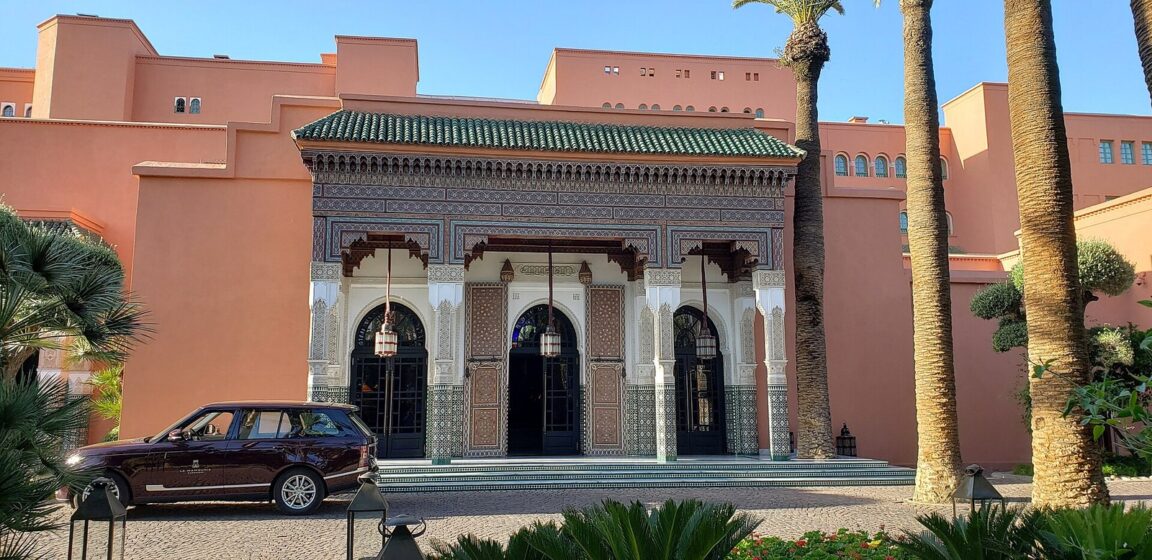
The gardens came first, and everything about the hotel still flows from that fact. In the 18th century the Alaouite sultan gave this walled estate, orchards, olive groves and reception grounds, to his son Prince Mamoun, whose name the property keeps. When the hotel opened in 1923, it was built into a living landscape rather than onto a cleared plot, and a century later the proportions still feel improbable for a city centre: a palace hotel where the walk from the lobby to the pool passes through mature gardens, where the Atlas Mountains frame the view beyond the palms, and where the noise of the medina, minutes away, simply stops at the walls. That sense of a green world apart, combined with Moroccan craftsmanship at its most lavish, zellige tilework, carved plaster, painted cedar and brass, is the product. Travellers planning the wider city should read it alongside a two day Marrakech itinerary, because La Mamounia works best as the calm base for the medina’s intensity, not as a substitute for visiting it.
How do the rooms, suites and riads divide?
What are the rooms and suites like?
The hotel’s published inventory is 135 rooms and 71 suites. Rooms run from around 30 to 45 square metres and suites from around 55 square metres upward, the largest exceptional suites exceeding 200 square metres, all finished in the hotel’s rich Moroccan idiom: patterned tiles, carved wood, deep colours, balconies or terraces in many categories, and views that divide between the gardens, the pools and the Koutoubia tower. The choice that matters most is outlook. Garden facing rooms deliver the property’s essence, green depth and quiet; Koutoubia facing rooms trade some of that calm for the iconic view of the minaret, especially fine at sunset. Higher category suites add separate salons and larger terraces, and the named exceptional suites, including the Churchill Suite, named for the hotel’s most famous repeat guest, who painted in the gardens across several winters, suit travellers celebrating something specific.
Who should consider the riads?
The 3 private riads are the hotel’s within the hotel: standalone houses of around 700 square metres each, set discreetly in the gardens, each with three bedrooms, a Moroccan salon, private terraces and its own swimming pool, with dedicated service and full access to the hotel’s restaurants, spa and pools. They suit multi generational families, groups of couples travelling together, and any party that wants a private house rhythm, breakfasts on its own terrace, afternoons at its own pool, with a palace hotel’s staff and kitchens behind the garden wall. Priced as they are, the riads only make sense when the privacy and the shared living space will genuinely be used; a couple alone will usually be happier, and better served, in a garden facing suite.
What are the gardens, pools and spa like?
Why do the gardens dominate every account of the hotel?
Because they are both the scenery and the schedule. The grounds roll out in olive groves, some trees centuries old, orange and lemon orchards, rose beds, cactus and palm alleys and broad lawns, with the great outdoor pool at their centre and pavilions and terraces arranged through them. Gardeners maintain the estate to a standard that makes a simple walk a legitimate morning activity, and the hotel’s vegetable garden supplies its kitchens. The practical consequence for a stay is time: guests consistently plan an hour in the gardens and give them three. Build that into the trip. A Marrakech stay split between dawn in the souks and afternoons in these gardens has a natural rhythm that a pool deck alone cannot reproduce.
What does the spa offer?
The spa, around 2,500 square metres by the hotel’s published figures, is a destination within the destination: traditional hammams, a heated indoor pool in a serene hall, treatment rooms and outdoor massage cabins set in the gardens, plus jacuzzi, sauna and a fitness pavilion with coaching. Signature rituals lean on Moroccan ingredients and traditions, argan oil, orange blossom, rhassoul clay, alongside international brands. As at any palace hotel, prime slots go early, so book hammam and treatments when the room is booked, not on arrival. Non residents can often book spa and restaurant access in Marrakech’s grand hotels, but policies change, and residents should still reserve; confirm the current arrangements on mamounia.com.
Where do guests eat and drink?
Four restaurants anchor the dining. Le Marocain, set in a riad style house in the gardens, serves refined Moroccan cuisine in a candlelit setting of carved wood and tile, and is the essential reservation of any stay. The Jean-Georges Vongerichten concepts bring two contrasting rooms: L’Italien, a bright, garden edged Italian restaurant, and L’Asiatique, drawing on South East Asian flavours. Le Pavillon de la Piscine handles long poolside breakfasts and lunches by the water. Pierre Herme’s presence supplies the pastry and afternoon tea standard, with tea rooms and garden terraces for the mint tea hour. Bars carry the hotel’s history in their names, Le Churchill for the great guest, and the Majorelle bar, while the wine cellar experience, L’Oenotheque, offers tastings for small groups. Restaurant reservations are open to non residents in many cases and the famous rooms fill, so book key dinners ahead regardless of where the room is booked.
Who does La Mamounia suit best, and who should look elsewhere?
La Mamounia suits travellers who collect the world’s great hotels and want Marrakech’s definitive entry, couples on honeymoon or anniversary trips who will use the gardens and spa daily, food led travellers who want three serious restaurants without leaving the grounds, and anyone who prefers a palace’s scale and staff depth to a small property’s intimacy. It also suits a first Marrakech visit surprisingly well, because its calm makes the medina manageable: intensity in the morning, sanctuary after lunch, exactly the rhythm suggested in a Morocco packing guide built around medina days and its advice on dressing for both souks and smart hotel dining rooms. Look elsewhere if the budget would force the cheapest room and no use of the restaurants or spa, since the hotel’s value lives in its shared spaces; if a medina riad’s rooftop and family feel is the actual dream; or if discretion matters, because La Mamounia is a social, see and be seen address, and proudly so.
Frequently Asked Questions
When did La Mamounia open?
The hotel opened in 1923, designed by Henri Prost and Antoine Marchisio, on gardens given in the 18th century by Sultan Mohammed ben Abdallah to his son, Prince Mamoun. It celebrated its centenary in 2023 with a renovation of its public spaces by Jouin Manku.
How many rooms does La Mamounia have?
135 rooms, 71 suites and 3 private riads, according to the hotel’s published material, set within its historic gardens inside the Marrakech medina walls.
How far is La Mamounia from Jemaa el-Fnaa and the souks?
A short walk. The hotel stands on Avenue Bab Jdid opposite the Koutoubia Mosque, with Jemaa el-Fnaa and the entrance to the souks roughly ten minutes away on foot, yet its gardens feel entirely removed from the medina’s bustle.
Can non residents eat at La Mamounia or use its spa?
The hotel’s restaurants and spa have traditionally welcomed outside guests by reservation, but access policies and availability change. Book ahead through mamounia.com and confirm current arrangements before relying on a visit.
Which room view is best at La Mamounia?
Garden facing rooms give the quietest, greenest stay and best express the property. Koutoubia facing rooms suit travellers who want the minaret view, particularly at sunset. State the preference when booking.
A final practical note before booking anything
Book the room and, in the same sitting, reserve Le Marocain for one evening, one spa ritual, and a poolside lunch, because the hotel’s famous shared pleasures are the first to fill. Choose the view before the category, pack for both medina mornings and palace evenings, and leave one afternoon entirely unscheduled for the gardens. La Mamounia has been Marrakech’s grand address for a century not because it is the newest or the quietest, but because nowhere else in the city combines a royal garden, a working palace of Moroccan craft and the medina at the gate. Booked with that understanding, it delivers exactly what its reputation promises.