 Hana Kim
Sedona does not need the hype, and the best way to visit is to let the red rocks do the work: hike Cathedral Rock or Fay Canyon in the cool of the morning with a Red Rock Pass on the dashboard, spend the hot middle of the day in Oak Creek shade or a treatment room, and treat the famous vortex sites as what they verifiably are, beautiful, culturally layered places where a modern spiritual tradition took root in the 1980s, rather than as measured energy fields. That balance, strenuous mornings, restorative afternoons, and honest curiosity about the beliefs layered over the landscape, is a wellness trip in Sedona without a single claim you have to pretend to believe.
Quick Facts
- Where: Sedona, Arizona, in the Red Rock Ranger District of Coconino National Forest, south of Flagstaff
- The pass: A Red Rock Pass, or an America the Beautiful interagency pass, is required to park at 19 Forest Service day-use sites around Sedona
- Pass prices: US$5 daily, US$15 weekly, US$20 annual for the Red Rock Pass, as listed by Visit Sedona and the Forest Service program, checked 11 November 2026
- Where to buy: Fee machines at the sites, the Sedona Chamber of Commerce visitor centre, the Red Rock Ranger visitor centre, and online through Recreation.gov
- Not covered: The Red Rock Pass does not work at the five concessionaire sites, including West Fork at Call of the Canyon, Crescent Moon Ranch and Grasshopper Point, which charge separately, or at Arizona state parks
- The shuttle: The free Sedona Shuttle runs Thursday to Sunday to busy trailheads including Cathedral Rock, Little Horse, Soldier Pass, Dry Creek Vista and Mescal; check the current schedule before you rely on it
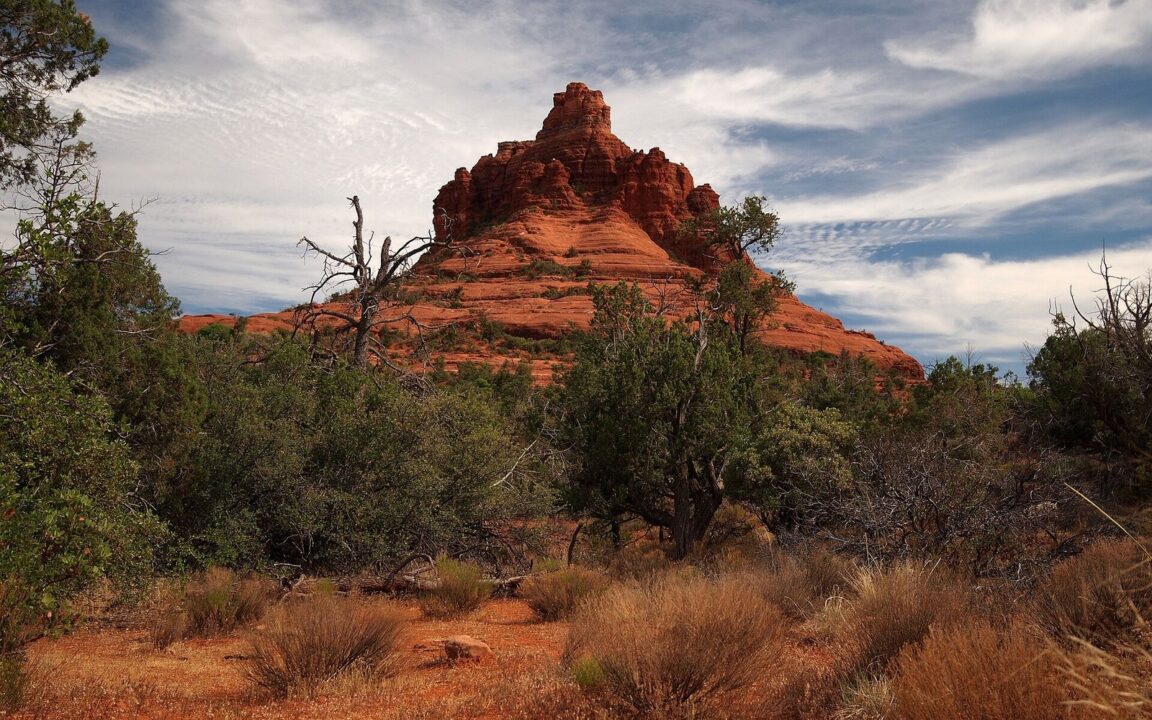
- The four vortex sites: Airport Mesa, Bell Rock, Cathedral Rock and Boynton Canyon, named in a tradition dating to around 1980
- The honest line on vortexes: A cultural and spiritual tradition, not a scientifically established phenomenon; no accepted scientific evidence shows these sites emit a special energy
Which hikes give you Sedona at its best, and how hard are they really?
Start with the Forest Service’s own descriptions, because they are admirably blunt. Cathedral Rock Trail No. 170, the signature Sedona hike, is described by the Coconino National Forest as more of a rock climb than a hike: unshaded, steep and difficult in places, following basket cairns across a wash and up the slickrock toward the spires, about 1.5 miles return with a broad ledge at a quarter mile that already delivers the view. It is a magnificent morning hike and a poor choice at noon in summer or in smooth-soled shoes. The trailhead sits off Back O’ Beyond Road, reached by taking Route 179 south from the junction with 89A for about 3.5 miles, then turning right for 0.6 miles.
For the same red rock drama at a kinder grade, the Forest Service points to Fay Canyon Trail No. 53, a favourite for its shorter distance and minimal elevation gain, ending beneath a towering Supai sandstone cliff in a hidden-feeling canyon west of town. Soldier Pass Trail No. 66 offers the middle path: a diverse 4.5 mile round trip that passes the Devil’s Kitchen sinkhole at about a quarter mile, climbs into the Red Rock-Secret Mountain Wilderness and tops out on Brins Mesa, with the practical warnings that the trailhead gate is open only from 8am to 6pm and the lot holds just 14 cars. Baldwin Trail No. 191, at 1.6 miles, loops through the Cathedral Rock views from the quieter Verde Valley School Road side and doubles as a mountain biking route. Build a hiking day as one headline trail at dawn, when the light is on the rock and the lots still have space, and one short, shaded or creekside walk later, rather than stacking hard trails in desert heat.
How does the Red Rock Pass actually work?
The Red Rock Pass is a parking pass for Forest Service fee sites, not an entrance ticket to Sedona, and understanding that distinction prevents most visitor confusion. Visit Sedona’s program guide, reflecting the Forest Service scheme, states that a Red Rock Pass or an America the Beautiful interagency pass is required at 19 specific day-use sites on the Red Rock Ranger District, including Baldwin, Bell Rock Pathway, Boynton, Cathedral Rock, Courthouse Butte, Doe Mountain, Dry Creek, Fay Canyon, Little Horse, Mescal and Yavapai Vista, plus the Palatki and Crane Petroglyph heritage sites. The pass is sold in three tiers: US$5 for a day, US$15 for a week and US$20 for a year, from fee machines at the sites themselves, at visitor centres and the Chamber of Commerce, and online through Recreation.gov, where you buy against your licence plate. Display it in the windshield. A short stop of about 15 minutes or less for a photograph at a scenic vista does not require a pass.
The exceptions are where travelers get caught out. Five Forest Service sites are run by a concessionaire, Crescent Moon Ranch, Grasshopper Point, Call of the Canyon at West Fork, Beaver Creek and Lower Lake Mary, and neither the Red Rock Pass nor the America the Beautiful pass is valid at them; they charge their own fees, with a separate Coconino Annual Pass, listed at US$50, covering those sites. Arizona state parks nearby, including Slide Rock and Red Rock State Park, run their own entry fees entirely. Note also that the Forest Service proposed changes to Sedona-area recreation fees in 2025, so treat the figures above, checked on 11 November 2026, as the prices to confirm on the Forest Service passes page before a future trip rather than as permanent. The free Sedona Shuttle removes the pass question altogether on the days it runs: it serves the busiest trailheads from park-and-ride lots, and on shuttle days the Cathedral Rock and Soldier Pass lots are closed to private cars, which makes the shuttle not just the cheap option but, for those trailheads, the only practical one.
What is a vortex, honestly?
Here is the history, separated from the claim. The red rock country around Sedona has been significant for far longer than the modern town: the Yavapai and Apache peoples of the Verde Valley hold their own sacred geography here, in which these formations figure in creation stories and ceremonial life, and the canyons hold archaeological sites and rock art that demand care from every visitor. The word vortex, applied to Sedona, is modern. Local historians credit Page Bryant, a psychic living in Sedona around 1980, with identifying and naming energy centres at the sites that remain canonical today: Airport Mesa, Bell Rock, Cathedral Rock and Boynton Canyon. Through the 1980s, including the 1987 Harmonic Convergence gatherings, Sedona became an international centre of New Age spirituality, and the four sites became fixtures of its visitor economy.
The claim attached to them, that each site emits a distinct, unusually strong energy, sometimes sorted into masculine, feminine or balanced types, is a spiritual interpretation. No peer-reviewed, independently replicated measurement has established a special energy at these sites, and geologists who have commented on Sedona say plainly that there is no scientific evidence for vortex energy as described. None of that makes the sites less worth visiting: they are four of the finest viewpoints and hikes in the area, and many visitors do find a quiet sit on the rocks at Airport Mesa at sunset or in Boynton Canyon genuinely restorative, which is an experience that needs no pseudophysics to justify it. Go for the landscape, respect the older Indigenous significance of the land, leave archaeological sites and rock art untouched, and let believers and sceptics share the trail politely. Our guide to the Dead Sea on the Jordan side takes the same approach to another wellness destination wrapped in big claims: enjoy what is real, and label the rest honestly.
How do you build the wellness half of the trip without the hype?
Sedona’s wellness offer is strongest when it is concrete. The raw materials are exceptional and undisputed: high desert air, big silence once you are a mile from a trailhead, dark skies, cold creek water at Oak Creek swimming spots in season, and a town full of massage therapists, yoga teachers and spas competing for your afternoon. Book treatments the way you would book a good restaurant, on reputation and specificity, a named therapist, a defined treatment, a real duration, rather than on promises about energy, detox or transformation. Sunrise and sunset are the town’s natural wellness schedule: a dawn hike, a long slow breakfast, shade and water through the heat, then a gentle evening walk at Bell Rock Pathway, where the path at the base of Bell Rock and Courthouse Butte is one of the easiest and most beautiful in the district, as the light goes red.
Protect the basics that actually determine how you feel. Sedona sits at high desert elevation and the sun at altitude, on unshaded slickrock, punishes the unprepared: carry more water than feels reasonable, hike hard trails early, wear a hat, and treat summer afternoons as indoor or creek time. Give yourself one completely unplanned half-day. The travelers who report the famous Sedona effect most convincingly are usually describing something mundane and available anywhere the landscape is this good: several days of walking, sleeping, eating and looking at beautiful rock, with the phone mostly off. For the cold-water counterpart to Sedona’s dry heat, see our guide to Budapest’s thermal baths, where the wellness ritual is a soak rather than a hike.
Frequently Asked Questions
Do you need a Red Rock Pass for every Sedona trailhead?
No. A Red Rock Pass, or an America the Beautiful pass, is required to park at 19 named Forest Service day-use sites, including Cathedral Rock, Bell Rock Pathway, Boynton and Fay Canyon. Many other trailheads are free, the five concessionaire creek sites charge separately and do not accept the pass, and state parks have their own fees. Check your specific trailhead on the Forest Service site before you go.
How much is the Red Rock Pass and where do you buy it?
US$5 for a day, US$15 for a week and US$20 for a year, checked on 11 November 2026. Buy it at fee machines at the trailhead sites, at the Sedona Chamber of Commerce visitor centre or the Red Rock Ranger visitor centre, or online through Recreation.gov against your licence plate. An America the Beautiful interagency pass covers the same sites.
Are Sedona’s vortexes real?
The sites are real and spectacular: Airport Mesa, Bell Rock, Cathedral Rock and Boynton Canyon. The energy claim is a modern spiritual tradition dating to around 1980, not a scientifically established phenomenon, and there is no accepted scientific evidence that the sites emit a special energy. The land’s significance to the Yavapai and Apache peoples long predates the vortex idea and deserves respect on its own terms.
What is the best first hike in Sedona?
For an easy and beautiful start, the Bell Rock Pathway at the base of Bell Rock and Courthouse Butte, or Fay Canyon, which the Forest Service describes as a shorter hike with minimal elevation gain. Save Cathedral Rock, described by the Forest Service as more of a rock climb than a hike, steep and unshaded at about 1.5 miles return, for a cool morning with proper shoes.
When is the best time of day to hike in Sedona?
Early morning, year-round. Trailhead lots for Cathedral Rock and Soldier Pass are small and fill fast, summer heat makes unshaded trails dangerous by midday, and the light on the red rock is at its best in the first and last hours. The free Sedona Shuttle, running Thursday to Sunday on its current pattern, is worth using for the busiest trailheads; check its live schedule before your visit.
Trail descriptions are from the US Forest Service, Coconino National Forest; Red Rock Pass sites, prices and exceptions checked against the Forest Service program and Visit Sedona on 11 November 2026. The Forest Service has proposed fee changes for the Sedona area, so confirm current prices before you travel.