 River Callahan
Taghazout earns its reputation in winter. From roughly November to March, North Atlantic groundswell wraps into a short stretch of Moroccan coast north of Agadir and switches on a run of right hand point breaks, Anchor Point above all, that can hold long, powerful walls on the right day. The honest version matters too: those famous points are rocky, crowded at peak season and aimed at confident surfers, while beginners learn on separate sandy beach breaks nearby, and even in season there are flat spells and days too big for most visitors. Go with that picture, rather than the poster version, and Taghazout is one of the most rewarding winter surf trips within reach of Europe.
Quick Facts
- Where: A small fishing village turned surf base on Morocco Atlantic coast, about 19 kilometres north of Agadir, reached by road from Agadir Al Massira Airport
- Prime season: Winter swell season runs roughly November to March, when North Atlantic groundswell lights up the point breaks. October and April are shoulder months with smaller, less consistent surf
- The headline break: Anchor Point, a long right hand point break over rock just north of the village, for intermediate to advanced surfers on a solid swell
- The supporting cast: Killer Point for the biggest days, Hash Point as the mellower village wave, Panoramas and the sandy beach breaks around Tamraght for learners and improvers
- Water and wetsuits: Winter water is cool, generally in the high teens Celsius. A 3/2 mm full suit covers most of the season, with many surfers using a 4/3 mm in the coldest weeks. Booties are strongly advised on the rocky points
- Best base format: A surf camp or surf house that bundles coaching or guiding, board and wetsuit hire, meals and daily transport to whichever break is working
- Level check: Winter Taghazout suits improvers through advanced surfers best. Complete beginners can learn year round on the beach breaks, but the winter points are not a learning environment
Why does Taghazout work as a surf destination?
Geography does most of it. The coast around Taghazout bends through a series of headlands facing the northwest Atlantic swell window, and each headland shapes the same swell into a different wave. Within a short drive there is a world class point for the biggest days, a heavy backup point, a sheltered village wave, a forgiving point for improvers and several sandy beaches for lessons. That density is rare, and it is why surf camps here can almost always find a wave matched to a group level on a given morning, moving up or down the coast as tide, wind and swell size change.
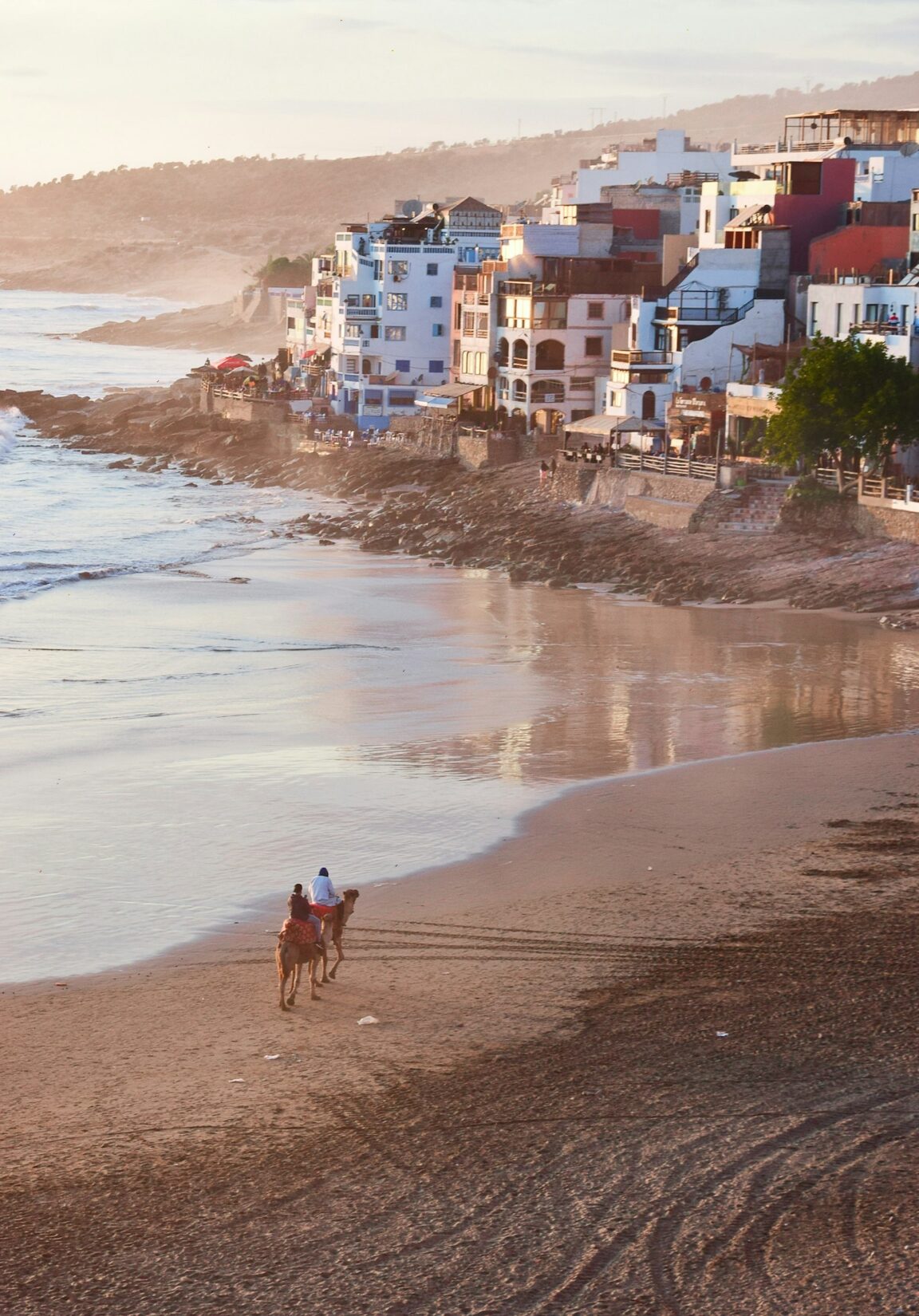
The village itself is the second half of the appeal. Taghazout is small and walkable, built around one main road along the beach, with surf shops, cafes and camp rooftops stacked above the water. Days organise themselves around tides and meals rather than nightlife, which stays low key. Travelers combining the coast with a slower second base often pair it with Essaouira, the Atlantic port further north, which runs at an even gentler pace.
When is the surf actually good?
The winter engine: November to March
The season is driven by North Atlantic winter storms sending long period northwest groundswell down past Portugal and the Canaries to Morocco. That swell typically arrives in earnest in November and delivers its biggest, most consistent surf through December, January and February, easing during March. This is when Anchor Point and Killer Point do what their reputations promise, with long walls and, on the strongest swells, genuinely large faces. It is also when the lineups are busiest, because the same weeks bring European winter escapees, camp groups and competition level visitors to a handful of take off zones.
What about the shoulder and summer months?
October and April sit either side of the core season: swell still arrives, the points still work on the right days, but gaps between swells grow longer and average size drops. From late spring into summer the coast is a different, friendlier place, with small surf that suits beginners and longboarders and points that mostly sleep. A summer trip sold on Anchor Point photographs is a mismatch. A summer trip sold as warm water learning, with the village at its most relaxed, is an honest one. Beginners choosing dates should decide which of those two trips they actually want before booking flights.
Which break suits which surfer?
Anchor Point: the headline wave
Anchor Point is the wave that made Morocco famous: a long, fast, walling right hander that peels down a rocky headland just north of the village for hundreds of metres on a good winter swell. It needs a solid northwest swell to show its best, works best around low to mid tide in the usual local advice, and on a firing day it is a demanding, crowded wave where positioning, paddle fitness and etiquette are all tested at once. Intermediate surfers will get rides here on smaller days. On a solid day, it belongs to advanced surfers, and watching from the headland with a coffee is a legitimate and enjoyable alternative.
Killer Point and the heavy backups
North of Anchor, Killer Point handles the biggest swells of the season and is treated locally as an experts wave, powerful and exposed, with a rock entry that punishes hesitation. Boilers, further along the same stretch, is another advanced spot known for steep, barreling sections over rock. These names set the ceiling of a Taghazout trip rather than its everyday reality. Most visiting surfers, including competent ones, will surf them rarely or not at all, and a camp that promises otherwise is overselling.
Hash Point and Panoramas: the everyday waves
Hash Point sits right in front of the village at its northern end and is the mellowest of the named points, a shorter, softer right that works as the everyday intermediate wave and the sunset session backdrop for half the cafes in town. Panoramas, just south of the village, is a more forgiving point and beach combination that suits improving surfers moving from whitewater to green waves. Between them, these two carry the bulk of most visitors actual surfing, and progression in Taghazout usually means graduating from the beaches to Panoramas, then to Hash Point, and only then looking north.
Where do beginners actually learn?
On sand. The beach breaks around Taghazout Bay, and at spots such as Devil Rock near Tamraght and Banana Beach near Aourir, give schools a forgiving bottom, manageable whitewater and room to spread groups out. First lessons happen in waist deep water with an instructor alongside, and the early goal is wave count and board control, not point break heroics. That separation is the most important honest expectation in this guide: a beginner week and an Anchor Point week are different products, sold in the same village. Both are good trips. Confusing one for the other is where disappointment starts.
How do surf camps work, and who should book one?
The Taghazout camp model bundles the logistics of a surf trip into one booking: accommodation in a surf house, villa or small hotel, breakfast and usually dinner at communal tables, daily coaching for learners or guiding for experienced surfers, board and wetsuit hire, and transport each morning to the break the instructors judge best for the group and the forecast. Packages are typically built around a week, with shorter stays possible at many houses, and groups are split by level so that beginners are coached on the beaches while intermediates and advanced surfers are guided to the points.
The coaching versus guiding distinction is worth understanding before paying. Coaching means structured lessons, in water instruction and technique work, and it is what beginners and improvers need. Guiding means local knowledge applied to surfers who can already handle themselves: reading the forecast, choosing the break and the tide, explaining the entry, exit and hazards, and managing the lineup politics of a famous wave. Independent advanced surfers sometimes skip camps entirely, rent a car and a quiver locally, and surf the points on their own reading of the forecast. That works for the self sufficient. For everyone else, the camp premium buys the two things Taghazout makes awkward to arrange alone: daily transport up and down a coast with no useful public option for board carrying, and a local call on which break, at which tide, today.
Questions to ask any camp before booking are consistent across the village. How many surfers per instructor or guide in the water? Is board and wetsuit hire included, and what quality are the boards? Are lunches, airport transfers and yoga or other activities included or extra? What happens on flat days or days too big for the group level? The honest camps answer all of these plainly on their own sites, and the answers vary more than the marketing suggests. Travelers packing for a camp week can use what to pack for Morocco in winter as the base list, since camp life adds board shorts and reef booties to an otherwise medina and mountain packing system.
What should you honestly expect?
Expect rock. Every famous wave here breaks over rock or reef, entries and exits involve timing over uneven stone, and sea urchins are a real feature of the points, which is why booties are standard advice rather than a soft suggestion. Expect crowds at Anchor Point whenever it fires in peak season, with a competitive, skilled lineup. Expect variability: a week in January can deliver three classic days, two fun smaller days and two days written off to wind, flatness or a swell too large for most breaks, in any order. Expect a village that is developing, with the resort construction of Taghazout Bay to the south changing the coastline feel, while the old village core remains compact, friendly and surf obsessed. And expect the food, the sunsets from the Hash Point rooftops and the rhythm of surf, eat, rest, surf to be a large part of why people return, including many who surfed less, or less well, than the brochure in their head promised. The comparison with the gentler surf school scene in Weligama in Sri Lanka is instructive: Taghazout in winter is the more serious, colder and more rewarding of the two for surfers with some experience already.
How do you get there and settle in?
Agadir is the gateway. Taghazout lies about 19 kilometres north of the city, and Agadir Al Massira Airport is the practical arrival point, with camps typically offering transfers that remove the need to negotiate the journey with boards in tow. Independent travelers reach the village by taxi, rental car or local bus from Agadir. Once based in the village, almost everything is on foot, and camp transport covers the breaks. Money, language and etiquette follow normal Moroccan patterns: dirhams in cash for small purchases, French widely spoken alongside Moroccan Arabic and Tashelhit, and modest dress appreciated away from the beach in a conservative, welcoming village.
Frequently Asked Questions
When is the best month to surf in Taghazout?
For the point breaks at their best, aim for the core winter window from December to February, inside the wider November to March season. For a balance of swell, thinner crowds and milder conditions, November and March are the usual compromise. Beginners are often happiest in the shoulder months, when the beach breaks are gentler.
Can beginners surf in Taghazout in winter?
Yes, but not on the famous points. Beginners learn on sandy beach breaks around the bay and near Tamraght, where schools run lessons in whitewater and small green waves. Winter swells can make even these beaches powerful on big days, in which case a good school moves the lesson, changes the timing or takes a rest day.
What wetsuit do you need?
A 3/2 mm full suit covers most surfers for most of the season. In the coldest winter weeks many surfers step up to a 4/3 mm, particularly for dawn sessions. Add booties for the rocky points, where entries, exits and urchins make bare feet a poor idea.
How good do you need to be for Anchor Point?
On a small day, a confident intermediate who can take off on a steep face, hold a line and observe lineup etiquette will get waves. On a solid winter day it is an advanced wave: long, fast and crowded, over rock. There is no dishonor in Hash Point or Panoramas instead. Most visitors surf their best waves there.
Is a surf camp worth it, or should you go independent?
For beginners and intermediates, the camp bundle of coaching, hire kit and daily transport to the right break is usually worth it. For experienced surfers who read forecasts confidently and want dawn sessions at the points on their own schedule, an independent base with a rental car can suit better. The middle path, a surf house with guiding only, exists at several properties.
What happens when it is flat?
Flat spells happen even in season. Camps fill them with day trips, including Paradise Valley inland, souk and hammam time in Agadir or the village, yoga on the rooftops and rest. Build one slack day into a week long trip and a flat day becomes a feature of the trip rather than a failure of it.