 Wei Chen
Amanfayun is Aman resort built inside a real, centuries old tea village in a wooded valley west of Hangzhou West Lake, with 46 dwellings, some more than a hundred years old, spread along a 600 metre stone pathway among tea fields, bamboo groves and seven Buddhist temples. There is no lobby block, no tower and no pool deck scene: guests sleep in converted village houses, eat in village eateries and walk a pilgrimage path to Lingyin Temple, founded in 326 AD, as part of the daily routine. It suits travelers seeking quiet, culture and slowness near one of China most storied lakes. It does not suit travelers who want a city hotel, nightlife, or conventional resort hardware.
Quick Facts
- Location: 22 Fayun Lane, West Lake Street, West Lake Scenic Area, Hangzhou, China
- Rooms: 46 abodes across Rooms, Suites and two storey Villas, some over a century old
- Setting: 14 hectares of tea fields, woodland and bamboo in a UNESCO World Cultural Heritage landscape, 6 kilometres from West Lake
- Dining: The Restaurant and Bar, Steam House, Cafe, plus independently operated Hangzhou House, Tea House and Vegetarian Restaurant on Fayun Pathway
- Wellness: Aman Spa in five pavilions inspired by Traditional Chinese Medicine, with a 20 metre outdoor pool
- Heart of the resort: Fayun Place, a 19th century timber hall reserved for guests, for tea, cultural programs and exhibitions
- Facts checked: 14 November 2026, against aman.com
A village first, a resort second
Most luxury resorts are buildings with grounds. Amanfayun is a settlement with guests. The resort occupies the former village of Fayun, whose stone dwellings once housed the families who worked the surrounding tea hills and served the temples on the pilgrimage circuit between Lingyin and the peaks above. Aman restored the houses rather than replacing them, kept the village main street, the Fayun Pathway, as the spine of the property, and let the public life of the place continue: the pathway is a working route for pilgrims and walkers heading to the temples, which means the resort breathes with the valley instead of sealing itself off from it.
That choice defines the experience and divides opinion in a useful way. Travelers who love it describe mornings that begin with temple bells, incense drifting over stone lanes and tea pickers on the hillsides. Travelers who expect a conventional Aman, private, hushed and hermetic, should know that village life passes the front doors here. For planning the wider China trip around a Hangzhou stay, our explainer on China visa free entry through 2026 covers the entry rules that apply to many nationalities.
Rooms, suites and villas among the tea fields
The 46 abodes divide into Rooms and Suites in the converted dwellings, each with its own layout because each began as a different village house, and free standing Villas arranged over two storeys with separate living areas and private massage rooms. Under clay tile roofs, interiors pair courtyard or forest views with Aman usual restraint: pale walls, dark timber, underfloor warmth in winter and bathrooms built for long soaks. No two units are identical, ceiling heights and courtyard shapes vary, and that irregularity is the point. Guests who need a specific layout, a ground floor room or a true twin arrangement, should say so at booking rather than assume a standard floor plan exists.
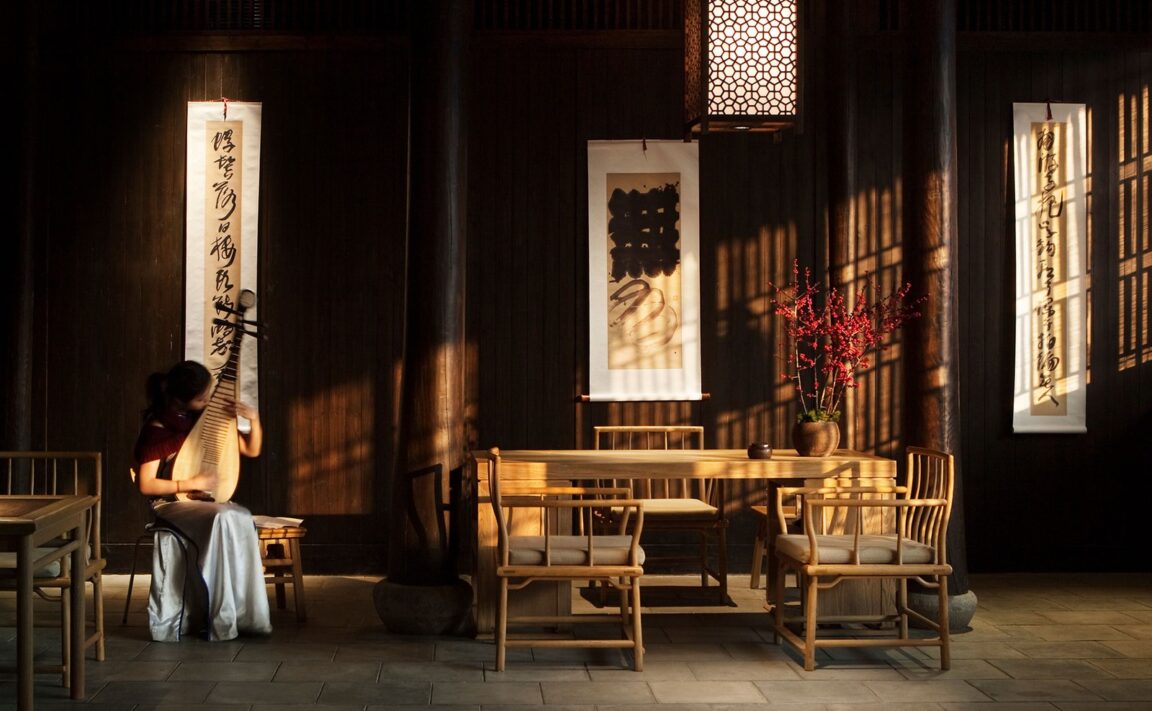
Fayun Place, the largest original structure in the village, dates to the 1800s and is reserved for guests. Its lower level holds guest assistants and a lounging hall with soaring ceilings and latticework, where tea and light snacks are served through the day, along with a library. It also anchors the cultural program: calligraphy, paper cutting and tea tasting sessions, talks on Buddhism and Traditional Chinese Medicine, local musicians, and rotating art exhibitions that Aman now runs as a formal program in the hall.
Eating along the Fayun Pathway
Dining is distributed along the pathway like a village, because it is one. The Restaurant and Bar, reached across a reflection pool, serves Western and international dishes for breakfast, lunch and dinner. The Steam House is the casual heart of the food offer, serving steamed dumplings and village style dishes. The Cafe handles coffee, baked goods and afternoon tea. Three independently operated eateries complete the lane: Hangzhou House for local classics such as shrimp with Longjing tea leaves and braised pork, the Tea House for a selection of China famous teas above a pond, and the Vegetarian Restaurant, which makes particular sense in a valley full of temples and is a destination for pilgrims as much as for guests.
The practical effect is choice without formality. A stay can alternate a Western breakfast, a dumpling lunch and a vegetarian temple style dinner without ever leaving the lane, and the cooking stays rooted in Hangzhou traditions, where tea is an ingredient and not only a drink.
The spa, the temples and West Lake
The Aman Spa spreads across five pavilions screened by bamboo, tea bushes and magnolia trees, with signature journeys that draw on Traditional Chinese Medicine, plus a fitness space with Pilates and yoga and a 20 metre heated outdoor pool set in the gardens. Treatments, reflexology and bathing rituals follow the Chinese health tradition rather than a generic international spa menu, which keeps the wellness offer consistent with everything else in the valley.
Beyond the lane, the walking is the luxury. Lingyin Temple, one of China great Buddhist temples, is a short walk, with the carved grottoes of Feilai Peak beside it, and six further temples complete the pilgrimage circuit through the hills. The guided options include the trek through bamboo forest and across nine streams to Longjing Village, home of the famous Dragon Well tea, and the climb to North Peak for views back to West Lake. The lake itself, a UNESCO listed cultural landscape of causeways, pagodas and islands, is six kilometres away and best visited early, by boat or bicycle, before the day crowds build. Travelers continuing to a contrasting Asian resort afterwards can compare this village model with our guide to Capella Singapore on Sentosa, a colonial estate resort with a similar devotion to its setting.
Who Amanfayun suits best
It suits travelers who measure luxury in silence, age and authenticity: tea drinkers, walkers, students of Chinese culture, couples on a slow itinerary through Zhejiang, and anyone pairing Hangzhou with Shanghai who wants the countryside chapter to feel genuinely rural. It also suits a restorative break, since the spa, the vegetarian food and the temple rhythm all pull in the same direction. It suits less well families needing a kids club and water slides, travelers who want Hangzhou dining and shopping at the door, anyone uneasy with walking distances built into every meal, and guests who prefer their hotel sealed from the public. Fayun Pathway is shared, the valley is alive, and that is precisely the product.
Frequently Asked Questions
How many rooms does Amanfayun have?
Amanfayun has 46 abodes: Rooms and Suites in converted village dwellings, some over a century old, and larger two storey Villas with separate living areas and private massage rooms.
How far is Amanfayun from West Lake and Hangzhou center?
The resort is 6 kilometres from West Lake and about a 20 minute scenic drive from central Hangzhou. Aman lists transfers of about 50 minutes from Hangzhou East and West railway stations and about 60 minutes from the airport by car.
Can non guests walk through Amanfayun?
Fayun Pathway is a public pilgrimage and walking route to the temples, so walkers pass through the village. Fayun Place and the guest dwellings themselves are reserved for guests.
What food is served at Amanfayun?
The Restaurant and Bar serves Western and international food, the Steam House serves dumplings and village dishes, and the independent eateries on the pathway serve Hangzhou dishes, teas and vegetarian temple style food.
When is the best season to stay at Amanfayun?
Spring brings the Longjing tea harvest and blossom on the lake causeways, autumn brings clear skies and osmanthus, and both are the classic choices. Summer is lush and hot, winter quiet and occasionally snowy.
Prices checked 14 November 2026. Amanfayun rates vary by dwelling type and season and are quoted live by Aman. Confirm the current rate and inclusions for your dates on aman.com before booking.