 James Wolfe
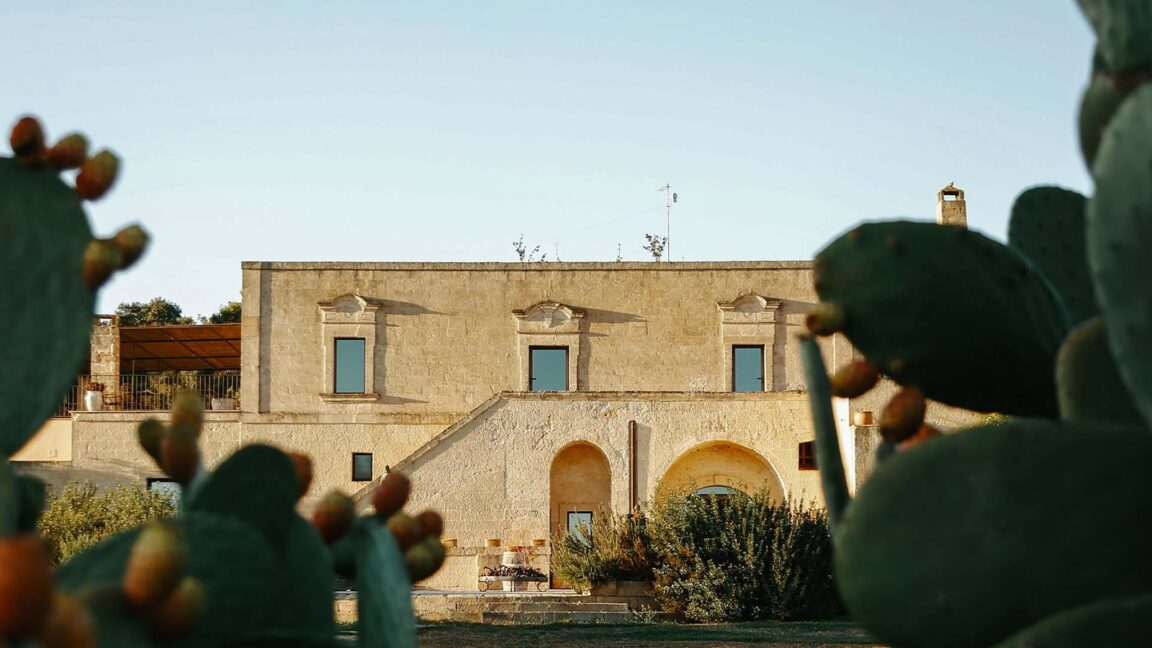
Masseria Le Fabriche is best understood as a wine estate with rooms attached, not as a beach hotel with a vineyard view: a 17th century white stone masseria near Maruggio in Puglia, standing among olive groves and bush trained vineyards just two kilometres from the Ionian Sea, per the official site at lefabriche.it, checked today, 16 November 2026. The estate makes one wine that matters, MarrubiuM, a Primitivo di Manduria DOC riserva, and an organic olive oil called Olivaro, and the stay is organised around that production: the historic farmhouse holds the restaurant and reception, while the guest suites sit in contemporary blocks apart from the main house, each with its own terrace facing the countryside. Choose Le Fabriche for wine, quiet and countryside, with the beach as a short drive. Choose a Campomarino beach hotel instead if the sea, not the vineyard, is the point of the trip.
Quick Facts
- Location: SP130 near Maruggio, province of Taranto, Puglia, at the foot of the Murge Tarantine and two kilometres from the Ionian Sea
- Building: A 17th century masseria farmhouse, documented as an agricultural centre and noble summer residence from the early 1600s
- Wine: MarrubiuM Riserva, a Primitivo di Manduria DOC from centuries old bush trained vines; the 2022 vintage ran to 12,500 numbered bottles and 200 magnums
- People: Acquired in 2020 by Rinaldo Del Bono, working with oenologist Mattia Vezzola; the winery itself dates to the late 1990s
- Rooms: Suites in contemporary blocks set apart from the farmhouse, with private terraces and Trani marble floors; the farmhouse holds reception, lounges and the restaurant
- Oil: Olivaro, an organic extra virgin olive oil from early harvested Ogliarola and Cellina olives grown on the estate
- Certification: The estate company is organically certified, with soil biodiversity zoning under its BioPASS programme
- Beaches: The Ayala beach area is about 8 kilometres away and the Campomarino dunes are a short drive; confirm any shuttle arrangements direct before relying on them
- Best for: Wine travellers and couples after a quiet vineyard base near the Ionian coast
What is a vineyard masseria, and how is Le Fabriche arranged?
A masseria is Puglia’s fortified farmhouse form: a working agricultural estate with a defensible main house, built when the countryside needed walls as much as roofs. Le Fabriche’s own history page records documents from the early 1600s showing the property as an agricultural production centre and summer residence for the noble families who owned it, and the name itself comes from the Latin fabrica, the art of making and producing. That producing identity is still the estate’s centre of gravity. The winery was founded in the late 1990s, and in 2020 Rinaldo Del Bono acquired the property and rebuilt the wine project around a single serious red, working with oenologist Mattia Vezzola.
The layout follows from that priority. The white stone farmhouse is the social and culinary heart, holding reception, lounges and the restaurant, with its terrace looking over the estate. The accommodation sits separately, in low contemporary blocks a short walk from the main house, where the suites are arranged for privacy: each has a private terrace, contemporary interiors with Trani marble floors and a walk in closet, and the outlook is over olive groves, vines and open countryside rather than into a courtyard. Guests who picture sleeping inside vaulted stone rooms in the old farmhouse should recalibrate: at Le Fabriche you dine and gather in the historic building and sleep in the modern one. Many guests prefer exactly that division, because the suites are quiet, private and easy to live in, but it is the single most important expectation to set before booking.
What does the wine programme actually offer a guest?
The estate’s wine is MarrubiuM, and the official site treats it as the project’s essence: a Primitivo di Manduria DOC riserva drawn from centuries old head trained vines in vineyards that overlook the sea. The 2022 vintage, the first to reach the market under the current project, totalled 12,500 bottles and 200 magnums, every bottle numbered, a scale that signals intent rather than volume. The vines themselves are the other half of the story. Le Fabriche describes its genetics work as living memory: each vine grows from the heritage of centuries old plants, selected and regenerated to preserve the identity of the Upper Salento, with new sustainable plantings alongside the historic rows.
For a guest, the practical pleasures are vineyard walks from the door, tastings of the estate wine with meals, and a restaurant table where the house red is not an afterthought but the reason the estate exists. Primitivo di Manduria is one of southern Italy’s great red wine appellations, rich and warm from the Salento sun, and drinking the estate’s riserva within sight of the vines that produced it is the experience this address sells. Travellers building a Puglia or southern Italy food trip can pair a stay here with the city eating in our Naples pizza and food guide, then return to the quiet of the estate at night.
How do the olive grove rooms and the estate land feel?
The suites’ setting is the estate itself: ancient olive groves, vineyard rows, woodland and Mediterranean scrub, on land the official site describes as a unique ecosystem suspended between land, sea and ancient silences at the foot of the Murge Tarantine. The olive programme mirrors the wine programme. Olivaro, the estate’s organic extra virgin oil, comes from an early harvest of Ogliarola and Cellina olives from centuries old trees in the district once called Olivaro, and the groves are protected through sustainable practice, soil biodiversity studies and active research into Xylella, the bacterial disease that has devastated olive trees across Salento. The estate company is organically certified, and its BioPASS zoning treats soil quality as the foundation of wine quality.
That land first seriousness shapes the stay’s rhythm. Days run on estate time: breakfast at the farmhouse, a walk among the vines, a long lunch, an afternoon on a private terrace, dinner at the restaurant with the estate’s own oil and wine on the table. It is a restorative pattern, and it is deliberately not a resort pattern. There is no animation programme and no beach club of its own, and the honest comparison for travellers is with the working farm hotels of southern Italy rather than with Puglia’s larger resort masserie. Our guide to Matera, just over the regional border in Basilicata, makes a natural pairing for a second base on the same trip.
What about the Ionian beach shuttle and the coast?
The sea is close but not at the door, and precision matters here. The official site places Le Fabriche two kilometres from the sea as the crow flies, overlooking the Ionian from its low hill; by road, the swimming beaches are a short drive, with the Ayala beach area about 8 kilometres away and the dunes and beach clubs around Campomarino di Maruggio beyond it. Hotel listings for the property describe a shuttle service to the nearby coast, and the slot that commissioned this guide names the Ionian beach shuttle as part of the format, but the estate’s own current site is wine led and does not publish shuttle times, so the correct approach is to confirm the current shuttle arrangement, its destination beach and its hours directly with the property when booking, and to treat a rental car as the reliable default for beach days.
That caveat aside, the coastal position is a genuine strength. The Maruggio stretch of the Ionian is one of Puglia’s quieter and prettier coasts, with dune backed sand at Campomarino and clear, shallow water, and it escapes the crowds of the better known Salento resorts further south. A Le Fabriche day can honestly run vineyard morning, beach afternoon and estate dinner, provided the driving is planned rather than assumed. Guests without a car should settle transport with the property before arrival, because the estate is rural and public transport at the door is not part of the offer.
Who should book Le Fabriche, and who should look nearby instead?
Book Le Fabriche if wine is a reason for the trip, if a numbered bottle of Primitivo riserva from vines you can walk to sounds like a souvenir worth having, and if you prefer a small, quiet, design clean suite with a private terrace to a grand historic bedroom. It suits couples, wine travellers touring the Manduria area and anyone using the Ionian coast as a daily excursion rather than an address.
Look nearby instead if you want to sleep inside a historic masseria’s stone walls, if you need a beach at walking distance, or if you want a full resort’s facilities on site. Two practical checks belong in every booking enquiry here, because third party listings for this property disagree with each other on facilities: confirm the current pool position and the beach shuttle arrangement directly with the estate, in writing, before paying. With those two answers settled, Le Fabriche is exactly what it claims to be on its own site: a serious small wine estate that also, quietly and well, takes guests.
Frequently Asked Questions
Where is Masseria Le Fabriche?
On the SP130 near Maruggio in the province of Taranto, Puglia, at the foot of the Murge Tarantine. The official site places it two kilometres from the Ionian Sea, among olive groves, woodland and vineyards overlooking the coast.
What wine does Le Fabriche make?
One flagship wine: MarrubiuM Riserva, a Primitivo di Manduria DOC made under oenologist Mattia Vezzola from centuries old bush trained vines. The 2022 vintage produced 12,500 numbered bottles and 200 magnums. The estate also makes Olivaro, an organic extra virgin olive oil.
Are the rooms inside the old farmhouse?
No. The 17th century farmhouse holds reception, lounges and the restaurant. Guests sleep in suites in contemporary blocks set apart from the main house, each with a private terrace and countryside views, a layout built for privacy and quiet.
How far is the beach from Le Fabriche?
The sea is two kilometres away in a straight line, and the swimming beaches are a short drive: the Ayala beach area is about 8 kilometres and the Campomarino dunes are close beyond it. Listings describe a shuttle to the coast; confirm the current arrangement with the property when booking.
Is Le Fabriche organic?
The estate company, Le Fabriche Societa Agricola, is organically certified, and the estate runs a BioPASS programme zoning soil biodiversity and functional soil quality. Its olive oil is organic, and its old groves are managed with research into protection against Xylella.
Who owns Le Fabriche now?
Rinaldo Del Bono acquired the property in 2020 and rebuilt the wine project with oenologist Mattia Vezzola. The winery itself was established in the late 1990s, and the masseria is documented as a farm and noble summer residence from the early 1600s.