 Omar Haddad
Lupaia is not a hotel with grounds attached. It is a small Tuscan hamlet that happens to take guests: five restored farm buildings, some dating to 1622, holding just 12 rooms and suites on a hilltop above Torrita di Siena, with the Val d’Orcia in front, Montepulciano and Montefollonico on the horizon, and an open kitchen restaurant at its centre. The format is judged correctly on three things: the hamlet layout, which gives every room its own entrance and outdoor space, the kitchen, where the chef cooks a different four course menu each night from the estate garden, and the activities, cooking classes, wine tastings and truffle hunts that fill slow days. Facts were checked on Lupaia’s own site on 16 November 2026.
Quick Facts
- Address: Localita Lupaia 74, 53049 Torrita di Siena, Italy, on a hilltop between Montepulciano, Pienza and Montefollonico
- Rooms: 12 rooms and suites across five restored farm buildings dating in part to 1622, each with an independent entrance and a private terrace or garden
- Room names: Suites including Master Suite Lupaia, Grand Suite Vigna, Montepulciano, San Biagio and Oliva; Junior Suites Nido, Serra and Orto; Deluxe Rooms Cigno and Pino; Garden Rooms Aurora and Bassa
- Dining: A restaurant built around an open kitchen in the main house; breakfast from 8am, all day lunch, and a different four course set menu each evening, with dinner open to non residents subject to availability
- Pool: An infinity pool set into the western hillside facing Montefollonico, with a heated Jacuzzi beside it; the pool is unheated, the Jacuzzi heated year round
- Activities: Private cooking classes, wine tastings, truffle hunting, e-bike and mountain bike rental, olive grove picnics and a Sunset Negroni experience
- Season: Open from mid March to early December and closed in the winter months
- Recognition: A member of Small Luxury Hotels of the World since 2022 and holder of a Michelin Key since 2024, per the hotel’s own FAQ
What does the five casale hamlet layout actually feel like?
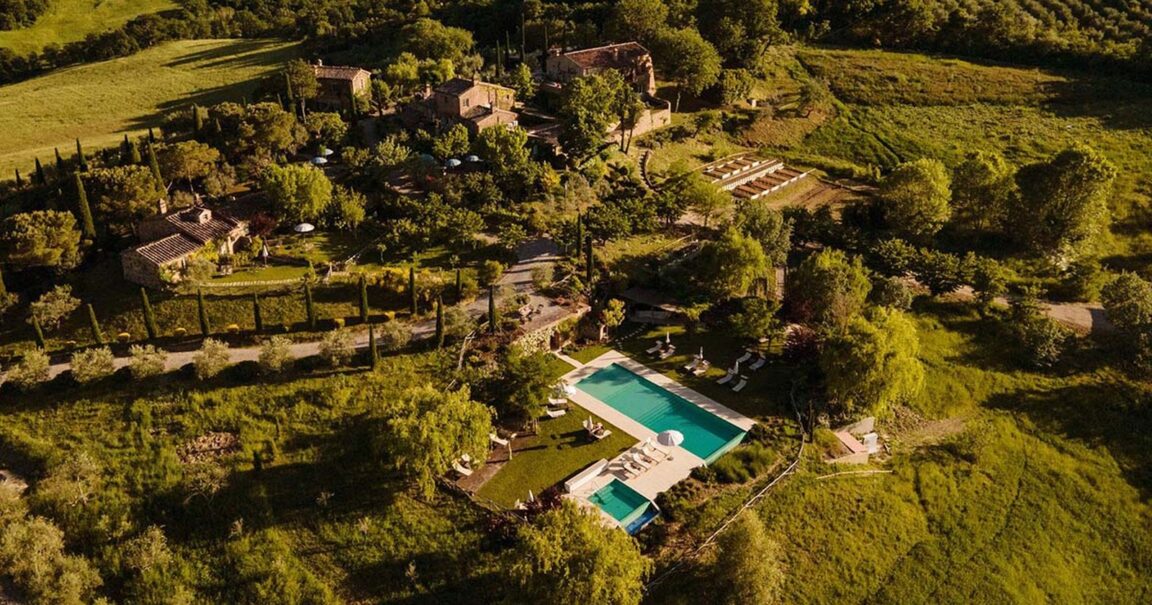
The estate began as a working Tuscan farm on foundations the owners describe as more than a thousand years old, with the main house and annexes dating to 1622. The Austrian owners, Christopher and Heidi Mueller, who bought Lupaia in 2016, restored its five farm buildings rather than consolidating them, and that decision defines the stay. There is no corridor, no lobby floor and no room stack. Guests walk lanes and garden paths between stone buildings, every room has its own entrance, and every room has a terrace or a piece of garden. The effect is closer to borrowing a house in a tiny village than to checking into a hotel, and it is why Lupaia reads as a hamlet first and a property second.
The layout has practical consequences worth planning around. Privacy is exceptional, since no room shares a wall of neighbours in the hotel sense, and the 12 room count keeps the pool, the restaurant and the grounds uncrowded at full house. The other side of the coin is exposure: rain means a wet walk to breakfast, and travellers who like a concierge desk and room service theatre will find the operation deliberately small and personal instead. The hotel does offer room service, a small gym, a bar, a library and a reading and games room, but the estate itself is the facility list.
How do the Val d’Orcia views organise the estate?
Lupaia sits on its hill inside the Val d’Orcia, the UNESCO listed landscape of cypress lines, wheat hills and stone farmhouses that defines southern Tuscany in the imagination. The hotel says all rooms and suites face the surrounding hills and medieval villages, and the sight lines run to Montepulciano in one direction and Montefollonico in another, with Pienza within easy driving reach. The infinity pool is placed on the western side of the property specifically for the sunset over the Montefollonico hills, with rosemary and lavender around it and the heated Jacuzzi beside it, and complimentary morning yoga by the pool runs in summer.
The position also makes Lupaia a touring base of a particular kind. It sits in the wine triangle between Montepulciano, Montalcino and Chianti country, about 45 minutes from Siena, so days alternate naturally between the estate and the hill towns: a morning in Pienza, an afternoon by the pool, a tasting in Montepulciano, dinner back at the long table. Guests without a car will find the hamlet format hard work, since nothing here is walkable except the estate itself. With a car, the isolation becomes the asset it is sold as.
Why is the open kitchen the heart of the house?
Most small hotels treat the restaurant as a service. At Lupaia it is the social centre and the daily programme in one. The open kitchen sits in the main building under wood beams, and the hotel’s own FAQ describes Chef Luca and his team cooking a different four course set menu every evening from the daily harvest of the organic kitchen garden and seasonal local produce. Breakfast runs from 8am, lunch is served all day, and dinner starts at 7pm and is open to non residents when space allows, which at 12 rooms is not often. The cooking classes run out of the same kitchen: guests pick herbs and vegetables in the garden with the chef, then make pasta, ragu and cantucci around the island and take home an apron.
Around the kitchen orbit the other bookable pleasures: private wine tastings in the wine room, truffle hunting with a local hunter and dogs, e-bike rental, picnics in the olive grove and the Sunset Negroni experience. None of this is programming for its own sake. It is the answer to the obvious question a 12 room hamlet has to answer, which is what guests do on day three. Compare the model with the larger estate format in our guide to Borgo Santo Pietro, plan town days with our Lucca travel guide, and see the newest Tuscan comparison in our Rosewood Castiglion del Bosco guide.
Who should book Lupaia, and who should not?
Book it for romance, food and landscape: couples, honeymooners, cooks and anyone whose ideal Tuscan day is a market town, a pool, a garden and a long dinner. The named suites, especially the Master Suite Lupaia and Grand Suite Vigna, are the occasion rooms, while the Garden Rooms Aurora and Bassa are the honest entry point to the same estate. Do not book it for a winter trip, since the hotel closes from early December to mid March, for a no car itinerary, or for travellers who want a town at the door. Lupaia is a hilltop hamlet that asks guests to slow down to its pace, and it rewards exactly the travellers willing to do that.
Frequently Asked Questions
How many rooms does Lupaia have?
Lupaia has 12 rooms and suites in total, spread across five restored farm buildings dating back in part to 1622. The hotel’s own FAQ lists five suites, three junior suites, two deluxe rooms and two garden rooms, each individually styled with its own entrance and terrace or garden.
What food does the Lupaia restaurant serve?
The open kitchen restaurant serves breakfast from 8am, an all day lunch, and a different four course set menu each evening, cooked by Chef Luca and his team from the organic kitchen garden and seasonal local produce. Dinner is open to non residents subject to availability.
Does Lupaia offer cooking classes?
Yes. Private cooking classes are a signature activity: guests gather herbs and vegetables from the garden with the chef, then prepare pasta, ragu and cantucci biscuits in the open kitchen. The hotel also offers wine tastings, truffle hunting, e-bike rental and olive grove picnics.
Does Lupaia have a pool?
Yes. The infinity pool sits into the western hillside with views over Montefollonico and the Tuscan countryside, at its best at sunset. It is not heated, but the Jacuzzi beside it is heated throughout the year, and the pool area stays accessible all year.
When is Lupaia open?
The hotel’s own FAQ states it is open from mid March to early December each year and closed during the winter months. It stands at Localita Lupaia 74, 53049 Torrita di Siena, between Montepulciano and Pienza in the Val d’Orcia.
Photo credit: Aerial view of the Lupaia estate, its farm buildings and pool above Torrita di Siena. Photo from the hotel’s own official website, lupaia.com.