 Jonas Lindqvist
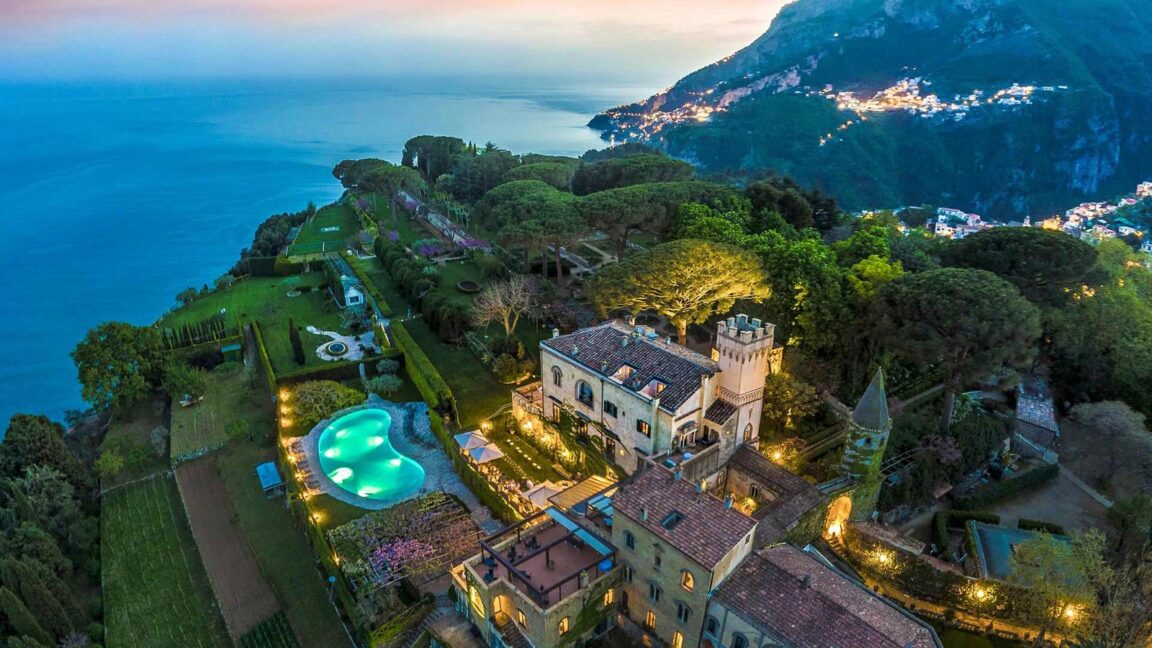
Villa Cimbrone is the Ravello stay to choose when the gardens are the holiday. The 19 room hotel occupies a villa with roots in the 11th century on the Cimbronium promontory, wrapped in about six hectares of gardens that end at the Terrace of Infinity, the marble lined belvedere that produces the most famous view on the Amalfi Coast. Day visitors pay to walk those gardens, but only guests sleep inside them, dine at the Michelin starred Il Flauto di Pan, and get the Terrace to themselves at the quiet ends of the day. Compared with its grand hotel neighbours, including Hotel Santa Caterina down in Amalfi, Cimbrone trades beach access and scale for gardens, altitude and calm. Facts were checked on the hotel’s own site on 16 November 2026.
Quick Facts
- Address: Via Santa Chiara 26, 84010 Ravello, Italy, a ten minute walk from Ravello’s main piazza along stone lanes
- Rooms: 19 individually decorated rooms and suites with frescoes, majolica tile floors, antiques and stone fireplaces
- Gardens: About six hectares of historic gardens, open to the public daily from 9am to sunset for a ticketed entry, free to explore as a guest
- Signature view: The Terrace of Infinity, or Terrazza dell’Infinito, a belvedere lined with marble busts about 300 metres above the sea
- Dining: Il Flauto di Pan, the hotel’s Michelin starred restaurant, plus the Mediterraneo restaurant, a lounge bar and a cafe
- Garden highlights: The Avenue of Immensity under wisteria, the Rose Garden and Terrace of Roses, the Temple of Ceres, the cloister and the crypt
- Facilities: A swimming pool overlooking the coast, a fitness centre, and a private helipad in the gardens
- Pairing: Villa Rufolo, Ravello’s other great garden villa, is a short walk across town and the natural second half of a garden day
What makes the Terrace of Infinity worth the fame?
Plenty of Amalfi Coast viewpoints are oversold. This one is not, and the reason is construction rather than luck. The belvedere is a long, deliberate terrace at the very end of the garden axis, edged with a balustrade carrying classical marble busts, so the view arrives framed: busts in the foreground, the Gulf of Salerno opening below, and the coast running away towards the Cilento headlands on a clear day. Gore Vidal, who lived in Ravello, called it one of the most beautiful views in the world, and the terrace has been the estate’s calling card since Ernest Beckett, Lord Grimthorpe, rebuilt the villa and gardens in the early 20th century.
For hotel guests the terrace has a second life that day visitors never see. The gardens open to the public at 9am and close at sunset, and the middle of a summer day can be busy with wedding parties and tour groups. Early morning and the last hour before closing belong largely to residents, and the difference is not marginal. The same view, taken in near silence with the light low, is a different experience from the midday version, and it is the strongest single argument for sleeping here rather than visiting.
How do the rose gardens and the garden route actually work?
The gardens are built as a sequence rather than a single lawn. The route runs from the cloister and crypt near the entrance, down the Avenue of Immensity, a pergola walk heavy with white and blue wisteria in season, past temples, statues and pavilions, to the Temple of Ceres, which guards the entrance to the Terrace of Infinity. The Rose Garden, laid out near the villa on the Terrace of Roses, blooms from May to October and is the most formally planted section, with stone walls and majolica ornament. A copy of Donatello’s David, the Temple of Bacchus and a series of smaller viewpoints fill the return route, so the full circuit takes a unhurried hour or more.
Guests should treat the gardens as the hotel’s main facility, because they are. The swimming pool, set in the gardens with coast views, and the fitness centre support the stay, but there is no beach, no spa complex and no children’s programming. A stay here is structured around walks, meals and the view, repeated at different hours. Travellers who need activity density should base in Amalfi or Positano instead. Travellers who garden, photograph, read or simply sit will find the six hectares do more work than most resort facility lists.
What are the rooms and Il Flauto di Pan like?
The 19 rooms and suites are individually decorated in the villa’s historic fabric: frescoed ceilings and walls, Vietri majolica tile floors, antiques, stone or majolica fireplaces, and furnished outdoor space in most categories. The named suites carry the house’s history, including the Greta Garbo Suite and the Lord Beckett Suite, both with terraces and sea views. Entry categories face the courtyard or gardens, which at this address is no punishment, but sea view rooms deliver the coast panorama the estate is famous for, so the view line deserves attention at booking. The hotel is reached on foot through Ravello’s lanes, as is everything in the town’s historic core, and luggage logistics are part of the arrival.
Il Flauto di Pan, the villa’s fine dining restaurant, holds a Michelin star and serves refined Mediterranean cooking built partly on produce from the estate’s own gardens, on a terrace over the coast or in the vaulted interior. Mediterraneo offers a second, more traditional table, and the cellar in the old vaults holds the wine collection. For a guest, the pairing of a starred dinner inside the gardens with a night walk back through them is the stay in miniature: this is a hotel whose luxuries are place and produce rather than hardware.
How should you pair Cimbrone with Villa Rufolo?
Ravello’s two great villas divide the town’s garden heritage between them. Rufolo, near the cathedral, is the older Wagnerian site, its gardens terraced above the coast and its summer stage home to the Ravello Festival concerts. Cimbrone, at the end of Via Santa Chiara, is the larger, quieter, more romantic estate. Visiting both in one day is the classic Ravello plan: Rufolo in the morning, lunch in the piazza, then Cimbrone in the late afternoon when its gardens empty and the Terrace light turns. Guests at Cimbrone have the luxury of reversing that order at will. Widen the trip with our guide to what to eat in Naples, the arrival city for most Amalfi Coast itineraries, and our Lucca travel guide if the journey continues north through Italy’s walled towns.
Frequently Asked Questions
Can you visit Villa Cimbrone without staying there?
Yes. The gardens are open to the public daily from 9am to sunset, with a ticket bought at the entrance, listed at 10 euros. The villa itself is a private hotel and its interiors, pool and restaurants are for guests, but the gardens, the Rose Garden and the Terrace of Infinity are all on the public route.
How many rooms does Hotel Villa Cimbrone have?
There are 19 rooms and suites, each individually decorated with frescoes, majolica floors and antiques. Named options include the Greta Garbo Suite and the Lord Beckett Suite, and most rooms have furnished outdoor space with garden or sea views.
What is the Terrace of Infinity?
It is the villa’s belvedere, a long terrace at the end of the garden axis lined with marble busts on its balustrade, standing about 300 metres above the Gulf of Salerno. It is reached through the Temple of Ceres and is the most celebrated viewpoint on the Amalfi Coast.
Does Villa Cimbrone have a Michelin starred restaurant?
Yes. Il Flauto di Pan, the hotel’s fine dining restaurant, holds a Michelin star and serves Mediterranean cooking using produce from the estate gardens. The hotel also has the Mediterraneo restaurant, a lounge bar and a cafe.
How far is Villa Cimbrone from Ravello town centre?
About a ten minute walk. The villa stands at Via Santa Chiara 26 at the far end of Ravello’s historic lanes, and the whole route is pedestrian. Villa Rufolo and the cathedral piazza are the same walk in the other direction.
Photo credit: Villa Cimbrone and its gardens above the Amalfi Coast at dusk. Photo from the hotel’s own official website, hotelvillacimbrone.com.