 Sofia Rossi
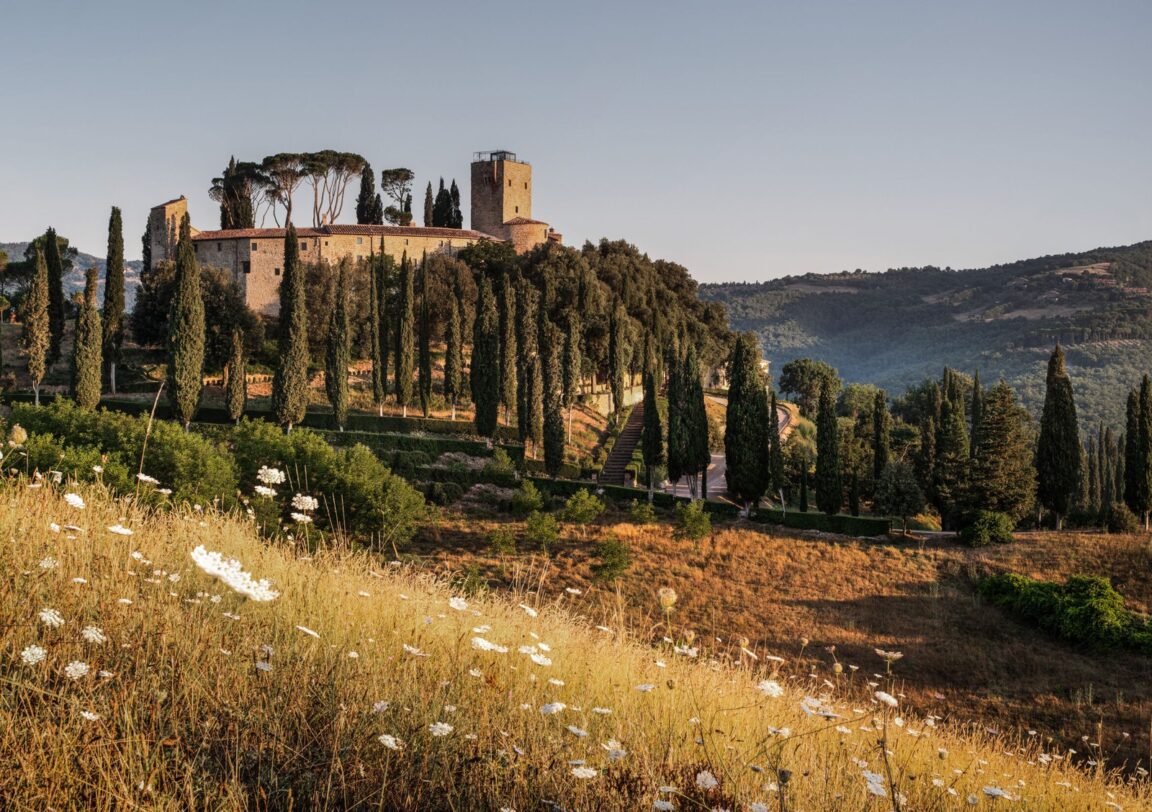
Castello di Reschio fits a Umbria trip when the estate itself is the destination: a castle built in 1050, restored by the Bolza family and opened as a hotel in late May 2021, holding just 36 rooms and suites inside a 1,500 hectare private estate of oak woodland, lakes, vineyards and meadows on the border with Tuscany, per the estate and the hotel pages at reschio.com, checked today, 16 November 2026. The thousand acre scale in the slot title understates it; the estate brochure puts Reschio at 1,560 hectares. What that scale buys is not a room count but a working world of its own: a stud of purebred Spanish dressage horses, two restaurants, a Bathhouse in the old wine cellars, a lake, tennis courts and miles of estate tracks. Book it for a rural stay of several nights with days spent on the estate. Book elsewhere if you want a town base for daily sightseeing across Umbria, because Reschio sits in countryside near Lisciano Niccone and its pleasures point inward.
Quick Facts
- Location: Tabaccaia di Reschio, 06060 Lisciano Niccone (PG), Umbria, on the border with Tuscany
- Estate: 1,500 hectares of woodland, meadows, lakes and vineyards, held by the Bolza family since 1994
- Castle: Built in 1050, restored under architect Count Benedikt Bolza, opened as a hotel in late May 2021
- Rooms: 36 rooms and suites, 30 inside the castle walls and 6 San Michele suites beside the old parish church
- Largest suite: The Tower Suite, 180 square metres over five floors, with an open air tub on the roof
- Dining: Ristorante al Castello inside the castle and Ristorante alle Scuderie at the estate centre, plus the Palm Court Bar, Bar Centrale and the poolside Bar Torrino
- Wellness: The Bathhouse in the former wine cellars, with a saltwater Roman Bath, hammam and sauna
- Horses: A stud of purebred Spanish horses founded by Count Antonio Bolza, with lessons and guided rides at the Teatro Equestre
- Best for: Couples and riders planning a multi night estate stay; less suited to travellers who want a walkable town base
What does the thousand acre estate actually change about a stay?
Almost everything, starting with the map. Most Umbrian hotels are a building in a town or a farmhouse in a valley. Reschio is a small private country that happens to contain a hotel. The Bolza family bought the estate in 1994, when it was a tangle of ruined farmhouses and an empty castle, and spent decades restoring the landscape as well as the buildings: farmhouses across the estate have been rebuilt as rental houses, the woodland is managed as a nature reserve, and the hotel sits at the centre of a working rural estate rather than in landscaped grounds. For a guest, the practical effect is that a day without a plan still fills itself. The official hotel page lists horse riding through the hills, rowing on the lake, hiking in ancient forest, cooking lessons and daily artisan workshops, and none of that requires leaving the gates.
The same scale is also the honest limitation. An estate of this size near Lisciano Niccone is a drive from Umbria’s hill towns, and the hotel is designed on the assumption that guests will spend most of their time inside it. Travellers building a sightseeing circuit of Perugia, Assisi and Orvieto in three days will feel the distance every evening. Travellers who treat the estate as the trip, with one or two excursions, will feel it as freedom. That distinction, more than any room category, is the booking decision this hotel asks for. Readers weighing a town based alternative in the south of Italy can compare the pattern in our guide to Matera and its cave city, where the town itself does the entertaining.
Which castle rooms and suites matter?
The 36 rooms and suites are shaped by the castle’s original walls rather than by a hotel blueprint, so no two are the same shape, and the design language is consistent instead: four poster campaign beds, marble and brass washbasins, bespoke furniture made for the house and antiques chosen room by room. Categories run from Rooms starting at 30 square metres, through Grand Rooms and Suites Castello, including a twin bedded Suite Castello Twin, up to Grand Suites. Six further suites, the San Michele suites and Garden Suites San Michele, sit beside the estate’s old parish church, a short walk from the castle, and suit guests who want a little separation from the main house.
The signature key is the Tower Suite, a self contained suite of 180 square metres spread over the castle tower’s five floors, with views across the estate, an open air tub on its roof and a dumb waiter for drinks. It is the room to request for a celebration stay, and the one to skip for anyone with limited mobility, because five floors of a medieval tower mean stairs. For most guests the value sits one rung down, in a Suite Castello with a valley view: the castle front faces the Niccone valley and the meadows where the Spanish horses graze, and a room that frames that view delivers the Reschio effect without the tower’s price or steps. Because every room differs, the useful booking move is to describe the view and the floor you want when reserving, rather than relying on the category name alone.
Why is the equestrian centre more than a hotel activity?
Because the horses came before the hotel. The official horses page at reschio.com explains that Count Antonio Bolza’s lifelong ambition was to own horses and master dressage; in the early 2000s he founded a stud at Reschio, selecting a stallion and two broodmares from Yeguada Candau near Seville, a stable known for long standing bloodlines. The line has since produced around 40 foals at Reschio, and the purebred Spanish horses, bred for elegance, calm temperament, height and classical training, remain present across the estate, grazing in the fields and working in the Teatro Equestre.
The Teatro Equestre is the centre’s working theatre: a manege of fine pinkish sand, two thirds covered and one third open to the sky, used for dressage training, performances and riding lessons, and in warmer months for open air cinema in the evenings. Trainer Antonello Radicchi leads the school with a method built on gentle coaxing rather than force, and weekly training sessions with Radicchi and his wife Francesca are open for guests to watch. Lessons run for beginners and experienced riders, younger guests start on ponies, and guided rides head out into the estate’s nature reserve. Even guests who never ride should walk down to the stables: the centre explains the estate better than any brochure, and it is the clearest evidence that Reschio is a family project first and a hotel second.
What are the two restaurants and the Bathhouse like?
Ristorante al Castello is the formal room, embraced by the castle walls, with a terrace facing the sunset and a refined menu built on local and seasonal ingredients; breakfast is served there. Ristorante alle Scuderie, in the former stables at the centre of the estate, is the relaxed counterweight: soaring ceilings, shaded garden tables, a roofed terrace facing the sunset, a seasonal menu drawn from the estate’s organic gardens and foraged ingredients, and live music in the evenings. Bar Centrale sits inside Alle Scuderie, the Palm Court Bar anchors the castle courtyard, and Bar Torrino serves light lunches and drinks by the pool. The hotel also runs a cooking school at the Bottega, where foraging walks and lessons turn estate produce into lunch, one of the better rainy day plans in rural Umbria.
The Bathhouse occupies the castle’s former wine cellars and follows what the hotel calls a slower, older rhythm. Its centrepiece is the Roman Bath, a warm saltwater pool beneath vaulted stone, supported by a hammam, a sauna and treatment rooms offering bath rituals, lymphatic massage and dry brushing. It is a compact, atmospheric circuit rather than a large modern spa, and that is the point: the cellars keep the experience inside the castle’s history. Outside, the castle pool rests among pine trees and private gardens with sunset views, and sport runs to tennis courts, a gym, e-bikes and walking trails through the ancient woods.
Who should book Reschio, and who should book elsewhere?
Book Reschio if your Umbria trip is really an estate trip: three or more nights, days given to riding, walking, the Bathhouse and long lunches, and a room that feels designed rather than decorated. It suits couples, riders of any level, and travellers who have already done the hill town circuit and want the countryside itself. The hotel’s recognition supports the ambition; the Michelin Guide lists Reschio Hotel with Three Michelin Keys, and our coverage of another Italian estate hotel, Borgo Santo Pietro in Tuscany, shows the same farm first pattern working at a smaller scale.
Book elsewhere if you need a town outside the door, a choice of restaurants you did not reserve, or a base for daily excursions in every direction. Families with young children should also read the estate’s own terms before booking, because the hotel and the rental houses across the estate carry different arrangements, and the houses, not the castle rooms, are the natural family format here. Reschio rewards commitment to one place. Given that commitment, few hotels in Italy offer this much place to commit to.
Frequently Asked Questions
How big is the Reschio estate?
The estate covers about 1,500 hectares, or roughly 3,700 acres, of woodland, meadows, lakes and vineyards on the Umbria and Tuscany border, per the estate’s own materials. The hotel castle stands near Lisciano Niccone, and the grounds include a lake, tennis courts and miles of riding and walking tracks.
How many rooms does Castello di Reschio have?
There are 36 rooms and suites. Thirty sit inside the castle walls and six San Michele suites stand beside the estate’s old parish church. The largest is the Tower Suite, 180 square metres arranged over five floors of the castle tower.
Can beginners ride at Reschio?
Yes. The riding school at the Teatro Equestre teaches all levels, with ponies for younger guests and lessons that progress toward dressage, plus guided rides through the estate’s nature reserve. The horses are purebred Spanish horses bred at Reschio from a stud founded by Count Antonio Bolza.
What is the Bathhouse at Reschio?
The Bathhouse is the hotel’s wellness space inside the castle’s former wine cellars. It centres on a saltwater Roman Bath and adds a hammam, a sauna and treatments including bath rituals and lymphatic massage.
Which restaurants does Reschio have?
Two: Ristorante al Castello, the elegant restaurant inside the castle where breakfast is served, and Ristorante alle Scuderie, the relaxed former stables restaurant at the estate centre. Bars include the Palm Court Bar, Bar Centrale and the poolside Bar Torrino.
Is Reschio a good base for touring Umbria?
It works best as a destination in itself. The estate is rural, near Lisciano Niccone, and its programme of riding, walking, cooking and wellness fills days on site. Travellers planning daily excursions to several hill towns will usually prefer a town base and visit the countryside on day trips.