 Jonas Lindqvist
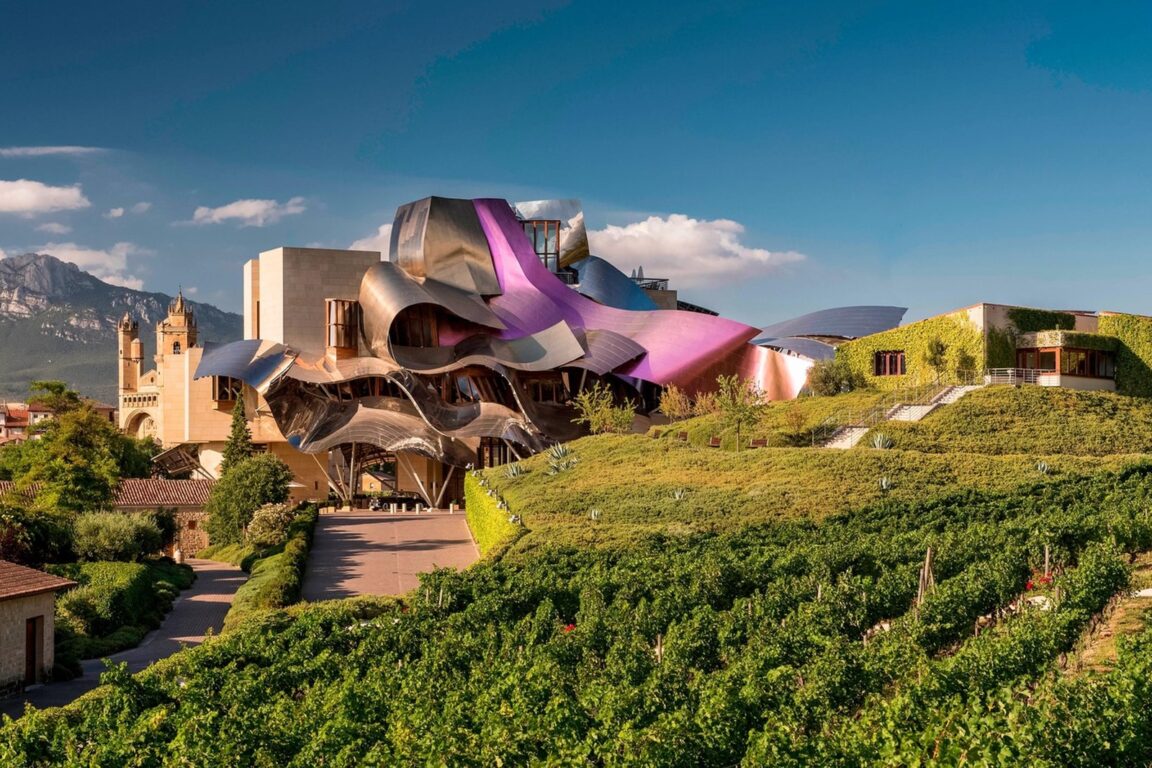
Hotel Marques de Riscal is the only hotel Frank Gehry has ever designed, a 61 room Luxury Collection property wrapped in pink, gold and silver titanium ribbons above the vineyards of Elciego in Rioja Alavesa. It opened in October 2006 as the centrepiece of the Marques de Riscal City of Wine, the estate complex built around one of Spain’s oldest wineries, founded in 1858. Guests sleep in two wings linked by a raised glass walkway, eat in two restaurants overseen by Michelin starred chef Francis Paniego, and book grape based treatments in a 1,400 square metre Caudalie Vinotherapie spa. It suits wine travellers who want a working winery at the door and architecture travellers who have already done the Guggenheim in Bilbao and want the other Gehry landmark in northern Spain. It suits them at a price, and with one honest caveat: Elciego is a small medieval village, so the hotel is the destination, not a base for city nightlife.
Quick Facts
- Location: Calle Torrea 1, Elciego, Rioja Alavesa, Spain, inside the Marques de Riscal City of Wine
- Architect: Frank O. Gehry; the only hotel he has designed, opened October 2006
- Rooms: 61 guestrooms and suites across the Gehry Wing and the Spa Wing, joined by a raised glass walkway
- Dining: Marques de Riscal Restaurant and 1860 Tradicion, both overseen by Michelin starred chef Francis Paniego, plus the Vinoteca and Bistro wine bar
- Spa: Vinotherapie SPA Caudalie Marques de Riscal, 1,400 square metres, with an indoor pool
- The estate: The City of Wine covers almost 100,000 square metres, including the historic cellars, a wine shop and a rooftop lounge
- Brand: A Luxury Collection Hotel, Marriott Bonvoy
Why do the ribbons look like a wine bottle?
The coloured titanium canopy is the most quoted design detail in Spanish hotel architecture, and the colours are a deliberate code. According to the estate, the pink titanium stands for the red wine itself, the gold for the mesh that wraps a Marques de Riscal bottle, and the silver for the foil capsule over the cork. The ribbons sit on a sandstone base that matches the older buildings of Elciego, so the building reads as a sculpture landed in a working wine village rather than a resort dropped into empty countryside. Under the canopy, the main building is propped on columns above the ground, which keeps the vineyards running almost up to the walls and preserves the sight lines from the village to the Sierra de Cantabria hills behind it.
Context matters for expectations. Gehry was commissioned after the Guggenheim Museum Bilbao, about an hour north, had proved that a single titanium building could redraw a region’s visitor map. The Riscal project applied the same logic at village scale, and it worked in the same way: the hotel put Elciego, previously a stop for serious Rioja buyers, onto the general travel itinerary for the Basque Country and Rioja.
Gehry Wing or Spa Wing: which rooms should you book?
The 61 rooms and suites are split between two buildings with genuinely different characters. The Gehry Wing holds the smaller count of rooms inside the sculptural main building, where tilted walls, angled windows and maple wood interiors follow the architecture, and the views run either to Elciego’s church tower and rooftops or straight into the titanium ribbons themselves. The Spa Wing is the quieter, more conventional building, with straighter lines, terrace options and direct access to the Caudalie spa and indoor pool. Marriott lists views across the categories as countryside, the medieval town of Elciego or the hotel’s own architecture, and that third view is the one to weigh honestly: a room facing the ribbons is a room facing the landmark, which many guests prefer to a vineyard panorama.
Suites top out with the Gehry Suite inside the main building and the Riscal Suite, whose terrace looks back at the Gehry building. Because every room in the Gehry Wing is shaped by the structure, no two floor plans match exactly, and travellers who need a predictable, accessible layout should say so at booking rather than assume a standard rectangle. The hotel lists accessible facilities among its amenities, but the sculptural wing is the wrong place to leave that to chance.
What is there to eat and drink?
Dining is the second reason to come. The Marques de Riscal Restaurant is the estate’s gastronomic dining room, where Francis Paniego reworks traditional Rioja flavours at tasting menu level. Paniego is a Michelin starred chef, and both hotel restaurants are overseen by him, so the cooking has a single handwriting at two registers. The second room, 1860 Tradicion, is named for the year of the estate’s original winery building and serves the more traditional register: regional dishes in an airy second floor space with panoramic views over the vineyards and Elciego. The Vinoteca and Bistro, just off the lobby, is the casual wine bar for working through the estate’s own bottles by the glass, and there is a rooftop lounge above for the evening.
The practical pattern for a two night stay writes itself: 1860 Tradicion on the first night, when arrival times are uncertain, the gastronomic restaurant on the second, and a cellar visit in between. The estate’s historic cellars, including the bottle library known as the Cathedral, are part of the City of Wine complex, and the winery runs tours and tastings that hotel guests can fold into the stay. Book the gastronomic restaurant when the room is booked, not on arrival, because the dining rooms also draw non resident diners from across Rioja Alavesa.
What does the spa actually do?
The Vinotherapie SPA Caudalie Marques de Riscal covers 1,400 square metres facing the vineyards, with an indoor pool, and it is built on Caudalie’s founding idea: treatments that use the grape and the vine, including the antioxidant polyphenols found in grape seeds. Expect barrel baths, grape based body treatments and the standard Caudalie facial menu alongside the pool and fitness facilities. It is a real spa, not a treatment room with a brand on the door, and the Spa Wing exists precisely so that spa focused guests can move between room, pool and treatment areas without crossing the whole complex. Travellers comparing design led wine hotels might also look at how a city design hotel handles wellness differently; our guide to Ett Hem in Stockholm covers the townhouse end of that spectrum.
Who does this hotel suit best?
It suits three travellers precisely. First, the wine traveller who wants Rioja Alavesa without a hire car negotiation every morning: the winery, the cellars, the restaurants and the spa are one complex, and other Rioja villages and bodegas sit within short drives. Second, the architecture traveller pairing Bilbao and Elciego in one trip, for whom the building itself is the sight. Third, couples marking an occasion who will actually use the tasting menu, the spa and a Gehry Wing room rather than treating the hotel as a bed. The through line is that the rate buys a place, not just a room, much as the all suite format does at The Woodward in Geneva, another hotel where the building and the setting are the argument.
It suits other travellers less well. Families wanting a big resort pool scene will find an indoor spa pool and a village, not a beach club format. Bargain hunters should know that the Gehry premium is structural and permanent; there is no off brand version of this building. And anyone who wants to walk out into a city’s restaurant row at night should base in Logrono or Haro instead and visit Elciego as a day trip with a booked cellar tour and lunch.
How should you plan the stay?
Two nights is the honest minimum: one day for the estate itself, with the cellar tour, the spa and the gastronomic dinner, and one day for Rioja Alavesa beyond the gates. Three nights lets the second day run further, toward Laguardia and the other walled villages of the Alavesa. The hotel is in the Basque province of Alava while sitting in the Rioja wine region, a quirk that explains the mix of Basque and Riojan cooking on local menus. Bilbao airport is the natural arrival point for international visitors, and the drive south crosses from the green Basque coast into the drier Ebro valley wine country in about an hour. Rates vary strongly by date and room type, and the hotel publishes them only through its booking channels, so treat any third party figure as indicative and confirm the Gehry Wing versus Spa Wing split before paying, because that choice defines the stay more than any other.
Frequently Asked Questions
Who designed Hotel Marques de Riscal?
Frank O. Gehry designed the hotel, which opened in October 2006. Marriott describes it as the only hotel created by Gehry, and its titanium ribbons use the same architectural language as his Guggenheim Museum Bilbao.
How many rooms does the hotel have?
61 guestrooms and suites, divided between the Gehry Wing inside the main sculptural building and the Spa Wing beside the Caudalie spa, connected by a raised glass walkway.
What do the colours of the titanium roof mean?
The estate explains the palette as a bottle in cross section: pink for the red wine, gold for the mesh around a Marques de Riscal bottle and silver for the foil capsule over the cork.
Which chef runs the restaurants?
Michelin starred chef Francis Paniego oversees both the Marques de Riscal Restaurant, the gastronomic dining room, and 1860 Tradicion, the more traditional restaurant named for the estate’s 1860 winery building.
Can non guests visit the winery and cellars?
The City of Wine is a visitor complex as well as a hotel: the Marques de Riscal cellars run tours and tastings, and the estate includes a wine shop. Hotel guests can fold the tour into a stay, and day visitors book the winery experience separately from a room.
Where is the hotel, exactly?
At Calle Torrea 1 in Elciego, a medieval village in Rioja Alavesa in the Basque province of Alava, northern Spain, surrounded by the estate’s vineyards.
Details verified against the hotel’s official Marriott Luxury Collection pages on 14 November 2026, including room count, restaurants, spa size and the October 2006 opening. Rates are date specific and were not quoted; check the hotel’s own booking channel for the nights in question.