 Jordan Ellis
Haleakala in a single season asks for two different trips planned as one: a cold, high altitude sunrise above the clouds in the Summit District, and a hot, humid waterfall day on the Kipahulu coast, with no road connecting the two districts inside the park. The honest answer is to give each district its own day, book the sunrise reservation on Recreation.gov up to 60 days ahead, and treat the crater hike as a mountain walk where the climb out takes twice as long as the walk in. Do that, and the season trade offs become simple. Rush both districts into one day, and the mountain usually wins the argument.
Quick Facts
- Park: Haleakala National Park, Maui, Hawaii, with a Summit District and a separate Kipahulu District on the coast past Hana.
- Summit: Puu Ulaula (Red Hill) at 10,023 feet; Haleakala Visitor Center at 9,740 feet.
- Sunrise rule: A reservation is required for every vehicle entering between 3:00 a.m. and 7:00 a.m., booked on Recreation.gov, released at 7:00 a.m. Hawaii time up to 60 days ahead, with a second release 2 days ahead. The reservation costs $1.00 per vehicle and is separate from the entrance pass.
- Entrance pass: Standard Pass $15 to $30 per vehicle, valid for 3 days in both districts; the park is cashless, credit and debit only. The Hawaii Tri-Park Annual Pass and the park Annual Pass are each $55.
- Key hike, summit: Keoneheehee (Sliding Sands) Trail from the Haleakala Visitor Center parking lot; the crater floor is 3.9 miles down one way with almost 2,500 feet of elevation change.
- Key hike, coast: Pipiwai Trail in Kipahulu, 4 miles round trip with 800 feet of elevation change, ending at the Waimoku Falls viewing area.
- Services: No food, clothing or gas is sold in the park in either district. Drinking water is available at visitor centers.
- Facts checked: 20 November 2026, against the National Park Service pages for Haleakala at nps.gov.
Why does Haleakala need two separate days?
The two districts sit on the same volcano and share one entrance pass, but they do not share a road. The Summit District is reached from Kahului via the Haleakala Highway, climbing to an entrance station at about 7,000 feet and then on to the visitor center at 9,740 feet, with about 30 minutes of driving between the entrance gate and the summit area. The Kipahulu District is reached the other way around the island, by driving 12 miles past the town of Hana on the Hana Highway along the northeast coast. There is no shortcut between them through the park.
That geography shapes the whole season plan. A sunrise morning starts in the dark, in cold and wind at altitude, and pairs naturally with a crater hike and the overlooks on the summit road. A Kipahulu day starts with a long, slow coastal drive and pairs with heat, rain showers and stream trails. Splitting them also protects the second day if the first runs long, which summit days often do once altitude and weather have their say. For wider context on how timed entry now works across the park system, see our explainer on US national park reservations in 2026.
How does the sunrise reservation actually work?
Sunrise is the one part of Haleakala that cannot be improvised. A reservation is required for each vehicle entering the park from 3:00 a.m. to 7:00 a.m., every day of the year, and it is only valid for the day reserved. Reservations open up to 60 days in advance on Recreation.gov and are released at 7:00 a.m. Hawaii time. A portion of each day is held back and released 2 days, or 48 hours, in advance, which is the realistic second chance if the first release sells through. One visitor may hold only one sunrise reservation per three day period.
On the morning itself, the reservation holder must be present with valid photo ID, the reservation confirmation and a park pass or a way to buy one, because the $1.00 reservation does not include entrance. Park staff cannot make a reservation for you by phone or in person, and reservations are not refunded or exchanged because of weather. That last point matters for expectations: a cloudy sunrise is still a used reservation, so pick the date for the trip as a whole rather than gambling on a forecast a month out.
What should the sunrise morning itself look like?
Build in more time and more clothing than the beach day before suggests. The National Park Service warns that the hours just before dawn and just after dusk at the summit are regularly wet, windy and below freezing, and summit temperatures commonly range between 30 and 65 degrees Fahrenheit, with wind chill able to push conditions below freezing at any time of year. The road up has no streetlights and no guard rails, and parking is restricted to designated lots that close when full. The park suggests the Leleiwi and Kalahaku overlooks for a quieter experience than the main summit viewpoints. After sunrise, the smart sequence is a warm drink from your own flask, the short Pa Kaoao walk by the visitor center if energy allows, and then a decision about the crater based on how everyone actually feels at altitude, not on how the plan read at sea level.
What is the honest reality of the Sliding Sands hike?
The Keoneheehee Trail, known as Sliding Sands, starts in the Haleakala Visitor Center parking lot and drops straight into the crater. The first overlook is only 0.50 mile round trip with about 50 feet of elevation change, which makes a good taster. Beyond that the numbers change character fast. The crater floor is 3.9 miles down one way, with almost 2,500 feet of elevation change, and the full crossing to the Halemauu Trail is a popular 11 mile full day hike that ends at 7,990 feet, with no park shuttle to bring you back, so logistics have to be arranged before setting off.
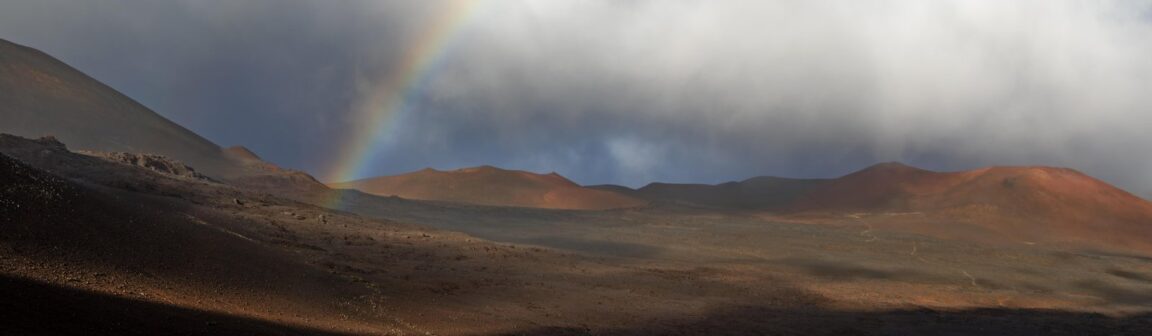
Altitude is the governing fact. Summit trails are strenuous because each breath carries less oxygen, and the park lists the warning signs of altitude sickness plainly: nausea, headache, dizziness and shortness of breath. The park advice for anyone pregnant or living with a heart or respiratory condition is to consult a doctor before visiting and hiking in the Summit Area. The practical rule the park gives is the one to plan by: allow twice the time to hike out as you took to hike down, so 15 minutes down means 30 minutes up. Soft cinder underfoot adds to the effort, in places hiking feels similar to walking on a beach. A sensible first crater walk turns around well before the floor, at a fixed time agreed at the trailhead, and treats Pele’s Paint Pot and the coloured cinder cones as a goal for a second, longer day rather than a first morning add on.
What does the Kipahulu coast add, and what does it cost in time?
Kipahulu is the same park in a different climate. The district is remote, hot, humid and rainy, reached only via the Hana Highway, and emergency medical help is at least an hour away. Fill the fuel tank and bring food before leaving Hana, because neither is available in the park. The reward is a coastal district of waterfalls, ocean views and Hawaiian cultural sites, with two walks that cover most of what a day visitor needs.
The Pipiwai Trail is the main event: 4 miles round trip with 800 feet of elevation gain, moderately strenuous, following a freshwater stream through varied forest. Makahiku Overlook at 0.5 mile gives a first view of Makahiku Falls, the bamboo forest arrives at about one mile in, with boardwalks and footbridges, and the trail ends after two miles at the Waimoku Falls viewing area. The Kuloa Point Trail is the short companion piece, 0.5 mile in total from the Kipahulu Visitor Center past a cultural demonstration area to the mouth of Oheo Gulch, and it is the safe way to view the Pools of Oheo. Go in knowing the limit: the pools are not open for entry because of safety concerns, swimming in Oheo Gulch is not recommended because of flash floods and rock slides, and posted closures must be followed. Viewed from the trail, the pools and the coast still justify the drive. For the island wide costs that sit around a Maui trip, our guide to Hawaii’s green fee and the 11 percent lodging tax is worth reading before booking.
How should the season’s trade offs shape the booking order?
Book in the order the park forces on you. First, the sunrise reservation, because its 60 day window opens earliest and the date anchors everything else. Second, accommodation split by district: an upcountry or central Maui base for the summit morning, so the pre dawn drive stays short, and a Hana side night if Kipahulu matters, so the coastal day is not spent entirely on the Hana Highway. Third, the entrance pass maths: a single vehicle Standard Pass covers both districts for 3 consecutive days, so a summit day and a Kipahulu day inside the same 3 day window need only one pass, while a trip spread wider may suit the $55 annual options.
The season itself then tunes the plan rather than changing it. Summit cold, wind and harsh sun are year round realities, so layers, rain gear, sun protection, sturdy shoes, food and water belong on the list in every month, and the park sells none of it. Kipahulu rain is also year round, and stream conditions can close pools and change trails without much warning, so the coastal day should be the flexible day in the itinerary, the one that can swap with a beach or upcountry day if alerts advise it. Check the park alerts page on nps.gov the night before each district day, keep group sizes on trails at 12 or fewer as the park requires, and stay on marked trails throughout, which is a legal requirement here because of the fragile ecosystems.
Frequently Asked Questions
Do I need a reservation for sunset at Haleakala?
No. The reservation system covers vehicle entry between 3:00 a.m. and 7:00 a.m. for sunrise only. Sunset visits need an entrance pass but no sunrise reservation, though summit parking lots still close when full, so arriving early remains wise.
Can I visit the summit and Kipahulu on the same day?
It is physically possible for a determined driver, but it is a poor plan. The districts have no connecting road inside the park, Kipahulu lies 12 miles past Hana on a slow highway, and a sunrise start plus a crater hike leaves little safe energy for that drive. Give each district its own day inside the 3 day pass window.
How much does Haleakala cost in total?
A private vehicle Standard Pass is $15 to $30 and lasts 3 days across both districts, and the sunrise reservation adds $1.00 per vehicle. The park Annual Pass and the Hawaii Tri-Park Annual Pass are $55 each. The park is cashless, so bring a credit or debit card, and use the self pay machines by the entrance stations if you arrive when they are closed.
How far should a first time hiker go on Sliding Sands?
Start with the first overlook, 0.50 mile round trip, then decide. The park rule is to allow twice as long to climb out as to descend, altitude symptoms are common, and the crater floor at 3.9 miles one way with almost 2,500 feet of descent is a full commitment, not a stroll. A timed turnaround agreed before starting is the safest approach.
Can visitors swim in the Pools of Oheo?
No. The Pools of Oheo in the Kipahulu District are not accessible for entry because of safety concerns, and swimming is not recommended in Oheo Gulch because of flash floods and rock slides. The pools can be viewed safely from the Kuloa Point Trail, and stream closures posted by the park must be obeyed.
What should be packed for a summit sunrise?
Warm and wet weather clothing, including a jacket, trousers and rain gear, plus a hat, sunglasses and sunblock for after dawn, sturdy shoes, food and water. There is no food, clothing or gas for sale in the park, and pre dawn summit conditions are regularly wet, windy and below freezing, even when the coast is warm.
Facts verified 20 November 2026 against the National Park Service Haleakala pages at nps.gov, including fees and passes, sunrise reservations, hiking and the Kipahulu District. Check park alerts before travelling, as conditions and closures change.