 Priya Nair
Titilaka is a small exploration lodge on a private peninsula in Lake Titicaca, at 3,810 metres above sea level, where every room faces the water and the rate is built around guided exploration rather than a room alone. The lodge’s own official site describes a four acre peninsula with a private shore on either side, rooms organised by the light they catch, and days shaped by boat, foot and Altiplano excursions to the Uros floating islands, Taquile and the communities of the lake. It holds two Michelin Keys. The honest questions are about altitude, pacing and the all inclusive structure: this guide answers them in order, so you can decide whether Titilaka is the right way to do Lake Titicaca or an expensive way to rush it.
Quick Facts
- Location: A private peninsula on Lake Titicaca near the community of Titilaka, in the Plateria district east of Puno, Peru.
- Altitude: 3,810 metres above sea level, stated on the lodge’s official site. This is the single most important planning fact.
- Rooms: A small lodge of lake facing rooms, every one looking onto the water, organised by orientation: dawn facing, dusk facing, corner and explorer categories in the lodge’s current materials.
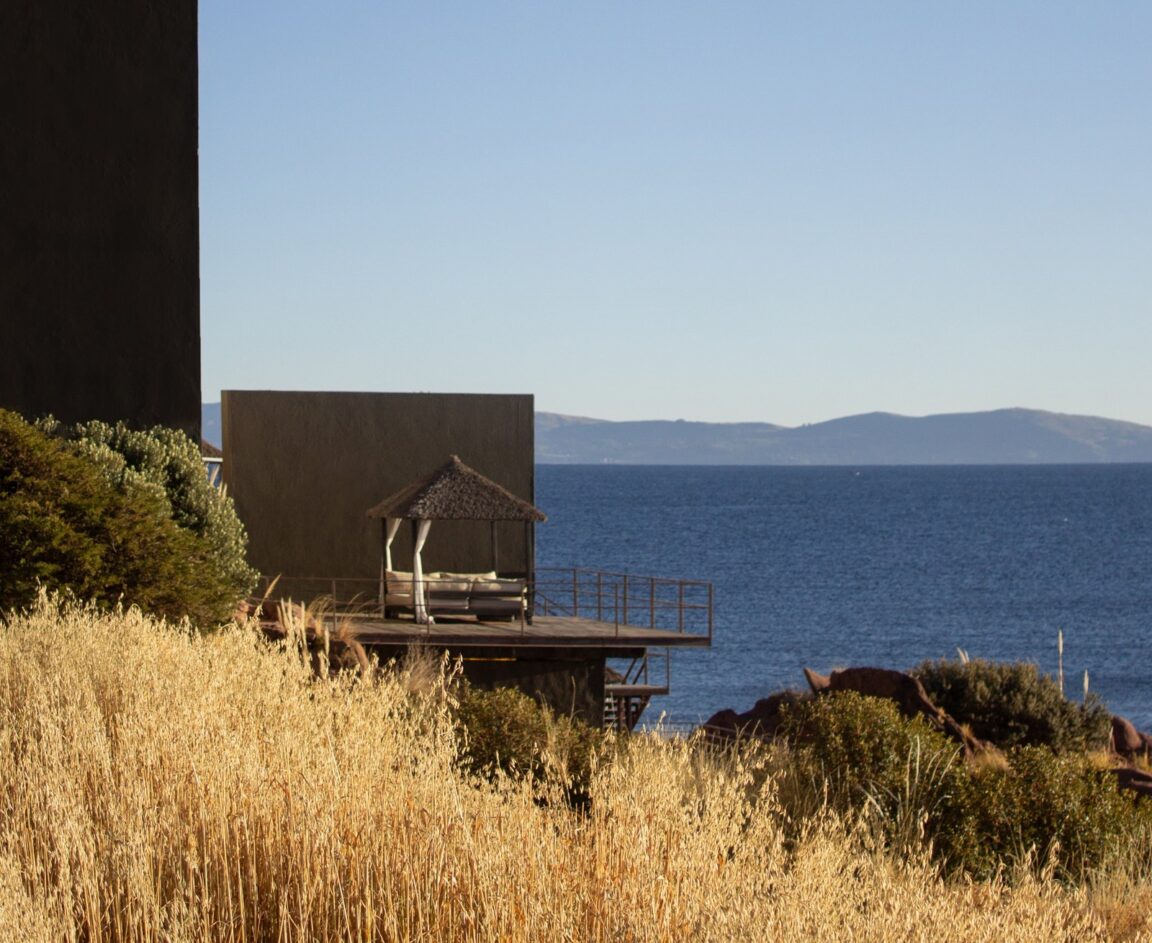
- Setting: Four acres reaching into the lake, with a private shore on either side and a dock as the departure point for excursion boats.
- Exploration: Guided excursions by boat, on foot and across the Altiplano, including the Uros floating islands and Taquile, plus a boathouse with kayaks, paddle boards and sailing boats.
- Table: All meals at the lodge, from breakfast overlooking the water to afternoon tea, sundowners and dinner, built on local ingredients and Andean preparations.
- Recognition: Two Michelin Keys, shown on the lodge’s official site.
- Rates: Titilaka sells a fully hosted, excursion led stay rather than a bare room night. Confirm exactly what your quoted program includes, and the transfer arrangements from Puno or Juliaca, before booking.
- Facts checked: 19 November 2026, against titilaka.pe.
Why does the peninsula setting matter so much here?
Lake Titicaca is usually visited as a day trip from Puno: a boat out, a boat back, and the lake reduced to a single bright afternoon. Titilaka is built against that pattern. Because the lodge sits on its own peninsula with shore on both sides, the lake is not an excursion from the hotel. It is the hotel’s permanent condition. Rooms face the water, terraces face the water, and the dock for the excursion boats is at the northern tip of the grounds. The lodge’s own description puts it well: at this altitude, light travels differently, days feel longer, and the lake sets its own sense of time.
The practical consequence is that the hours between excursions, which day trippers never get, become the stay itself: reading in a quiet lounge, afternoon tea as the light changes, sundowners on the terrace. Travelers who want Titicaca as a highlight to tick off will find this lodge more than they need. Travelers who suspect the lake deserves two or three slow days will find it is one of the few properties on the shore designed exactly for that.
Room by room: dawn, dusk, corner or explorer?
Every room at Titilaka faces the lake, so the choice is about light and layout rather than view versus no view. The lodge organises its rooms by the sun. Dawn rooms face east and take the first light over the water, which at this altitude arrives sharp and gold. Dusk rooms face west and hold the evening, when the lake turns copper and the cold comes down. Corner rooms sit at the ends of the building and carry the water on two sides, the widest panorama the lodge offers. Explorer rooms form the fourth category in the lodge’s current materials, aimed at guests who will spend their days out on the excursions and use the room as a comfortable base.
Across categories, the lodge’s published descriptions emphasise the same high altitude comforts: heated floors against the Altiplano cold, generous beds dressed for freezing nights, oversized soaking tubs in the bathrooms, and daybeds or banquettes set beneath the windows so the lake stays in the room. Choose dawn if you are a natural early riser and want sunrise from bed. Choose dusk if your ritual is the evening terrace hour. Choose a corner room for a special stay of three nights or more, when the double aspect earns its premium every single day.
How do the excursions and the altitude fit together?
Exploration at Titilaka begins with the landscape itself, in the lodge’s phrase, and runs by boat, on foot and across the Altiplano with local guides. The signature full day pairs the Uros floating reed islands, built and rebuilt by their residents from totora reeds, with Taquile, whose terraced hillsides and textile traditions make it the lake’s most rewarding island walk. Shorter outings cover the shoreline, local communities and archaeological sites, and the boathouse puts kayaks, paddle boards and sailing boats on the water for independent hours between guided trips.
Altitude is the discipline that orders all of it. At 3,810 metres, most visitors arrive from Puno or Juliaca already high, and the lodge pattern that works is a gentle first afternoon, a shoreline or community outing on day one, and the full island day once you have slept a night at altitude. Drink water constantly, keep alcohol to the sundowner rather than the bottle, and treat a headache as information, not weakness. Travelers combining the lake with Cusco and Machu Picchu should also read our comparison of the trains to Machu Picchu, because the same altitude logic governs the order in which you should visit both regions.
What does the all inclusive structure actually cover?
Titilaka’s model, set out on its official site and in its stay descriptions, is fully hosted: meals from breakfast to dinner, afternoon tea and sundowners, and the guided excursion program are woven into the stay rather than itemised day by day. That structure is the rate’s justification. A comparable Puno hotel room looks cheaper until you add private boat days, guides, transfers and every meal, at which point the gap narrows sharply, and the lodge’s version comes with the peninsula, the boathouse and the quiet.
Two checks protect you. First, confirm which excursions are included in your program and which, such as crossings toward Bolivia, carry an additional cost, because lodge materials have long distinguished the core program from a small number of extras. Second, confirm your arrival and departure transfers, including the Juliaca airport or Puno station pickup, in writing. At this altitude and distance, logistics are not a detail. For the same fully hosted philosophy at the far end of the Andes, compare Awasi Patagonia, the other great private exploration lodge in our coverage.
Season by season on the Altiplano
The dry season, roughly April to October, brings the clearest skies, the coldest nights and the best conditions for the island days and stargazing. Pack for temperatures that swing from strong sun at midday to below freezing after dark.
The wet season, roughly November to March, softens the landscape to green, brings afternoon storms and a quieter lake. Excursions still run, but flexibility matters more, and the lodge’s lounges and long lunches come into their own.
Festival weeks around Puno, above all the Candelaria celebrations in February, fill the region and its transport. Book far ahead if your dates touch them, or avoid them entirely if quiet is the point of the trip.
There is no bad season for the lake itself. There is only the season that matches whether you came for hard blue skies and cold stars, or for green hills and an emptier shore.
Who does Titilaka suit, and who should stay in Puno?
Book Titilaka if Lake Titicaca is a destination in your trip rather than a day trip inside it, if you want the Uros and Taquile experience led by local guides without the standard boat circuit crowds, and if two or three nights at altitude fit your itinerary. The lodge rewards slowness more than almost any property in Peru.
Stay in Puno instead if you have a single night between trains, if altitude has troubled you before and you want a city’s medical facilities close, or if your budget is better spent on more nights elsewhere in Peru. Titilaka’s rate buys time, guiding and a peninsula. A traveler passing through at speed will use none of the three.
Frequently asked questions
How high is Titilaka, and will the altitude affect me?
The lodge sits at 3,810 metres, per its official site. Most guests feel the altitude on arrival. Pace the first day gently, hydrate, eat lightly, and schedule the full island excursion after your first night’s sleep.
How many rooms does Titilaka have?
It is a small lodge of under twenty rooms, every one facing the lake, in dawn, dusk, corner and explorer categories. The lodge’s current official materials describe 17 rooms. Confirm your category’s exact layout when booking.
Are excursions included at Titilaka?
The stay is built around a guided excursion program, including the Uros and Taquile island day, with meals included in the hosted model. Confirm the inclusions and any extra cost excursions, such as Bolivia crossings, in your written quote.
How do you get to Titilaka?
Most guests arrive via Juliaca airport or Puno, then transfer by road to the lodge’s peninsula east of Puno. Confirm pickup arrangements with the lodge when booking, and allow generous connection times at altitude.
How many nights should you stay at Titilaka?
Two nights is the minimum that makes sense of the journey and the altitude. Three nights lets you take the island day, an Altiplano day and one slow peninsula day, which is the rhythm the lodge is designed for.
Image credit: Titilaka, via the property’s official website, titilaka.pe. Facts verified 19 November 2026.