 Sofia Rossi
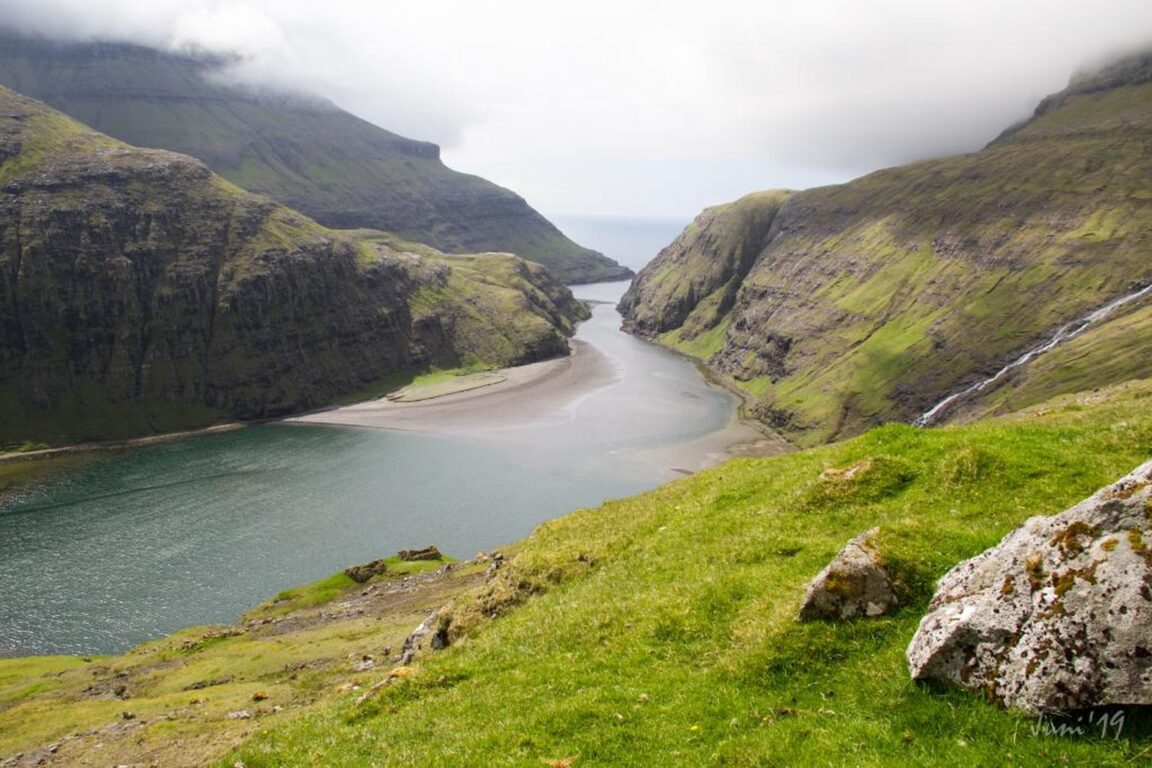
Saksun is a tiny turf roof village at the head of a tidal lagoon on the northwest coast of Streymoy, and the whole visit turns on one number: the time of low tide. At low tide the lagoon, Pollurin, empties into a wide sandy shore and you can walk out along it toward the open Atlantic. At high tide the same basin fills with seawater and the walk disappears. Add the Duvugardar farm museum, open in summer under the National Museum of the Faroe Islands, a turf roofed church that was dismantled in Tjornuvik and rebuilt here in 1858, and a drive of about 50 minutes from Torshavn, and Saksun becomes the most complete short trip in the Faroes, provided the tide table, not the clock on the wall, sets the schedule.
Quick Facts
- Where: Saksun, at the end of the Saksunardalur valley on the northwest coast of Streymoy, the largest Faroe island.
- From Torshavn: About 50 minutes by car, roughly 11 kilometres northwest of Hvalvik at the end of a single track road with passing places. There is no public transport to Saksun.
- The lagoon: Pollurin, a tidal lagoon created when a heavy storm in the early 17th century blocked a former natural harbour with sand. Only small boats can enter now, and only at high tide.
- Lagoon walk: 4.6 kilometres return, about 1 to 2 hours, possible only around low tide. Check the local tide chart before setting off and turn back well before the tide returns.
- Duvugardar: A historic turf roof farm protected by the National Museum of the Faroe Islands, open as a museum in the summer season for a fee.
- The church: A solitary white, turf roofed church above the lagoon, built in Tjornuvik, dismantled and reassembled in Saksun in 1858. It is closed to visitors, but you can walk right up to it.
- Services: No shop and no cafe in the village. There is parking and a public toilet. Bring everything you need from Torshavn or Hvalvik.
- Second hike: The old village path to Tjornuvik, 7 kilometres one way over a 522 metre pass, rated medium by Visit Faroe Islands, with blue markers and cairns.
How does the tidal lagoon walk actually work?
Pollurin was a working harbour until a storm in the early 1600s threw sand across its mouth. What remains is a shallow tidal basin ringed by steep mountains, with waterfalls threading down the valley sides. The walk starts at the small parking area in the southern part of the village: pass through the gate, follow the gravel track to the shore, then walk the sand toward the mouth of the bay where the lagoon meets the North Atlantic. The full return walk is 4.6 kilometres and takes most people between one and two hours. Stay off the sand dunes, which are fragile, and treat the tide chart as a hard deadline rather than a suggestion. The water rises quickly across flat sand, and the correct pattern is to walk out on a falling tide, reach the mouth with time in hand, and be walking back well before the turn.
This is the same tidal logic that governs much of Faroese coastal walking, and it is why Saksun rewards planners. Our earlier Faroe Islands travel guide sets out the archipelago wide picture; Saksun is where that picture narrows to a single valley, a single lagoon and a single decision about timing. Arrive two hours before low tide and the village gives you its best sequence: church and farm first, lagoon at its emptiest, and the walk back as the sea begins to return.
What is Duvugardar, and when is it open?
Duvugardar is the old farm at the heart of the village: a cluster of historic turf roofed houses and outbuildings, including the small hjallur sheds used for fermenting and drying mutton, set where waterfalls slide down the mountainsides behind it. The farm is protected by the National Museum of the Faroe Islands and opens as a museum during the summer season, for an entry fee. Inside, the value is context rather than spectacle: this was a working farm in a valley with no road for most of its history, supplied by the harbour that is now the lagoon, and the rooms explain how a Faroese household organised food, wool, peat and livestock across a long winter. Outside summer season the buildings are still the visual centre of the village, but plan on viewing them from the paths rather than entering. The church, a short walk away, completes the pair. It stands alone above the lagoon with its cemetery around it, white walled and turf roofed, moved here piece by piece from Tjornuvik in 1858 so that Saksun could have a church of its own.
How does Saksun work as a day trip from Torshavn?
The maths are friendly. The drive from the capital takes about 50 minutes in normal conditions, up through Hvalvik and then along the single track valley road, where passing places handle oncoming traffic and sheep have their own priorities. Near the end of the road, by Lake Saksunarvatn, the route splits: right for the historic village, church and farm, left for the lagoon trailhead parking. There is no bus, so the day trip needs a rental car or a guided tour. Budget half a day at minimum and a full day if the Tjornuvik path is part of the plan. Because there is no shop or cafe, the picnic is not a romantic extra here; it is the catering plan. Buy supplies in Torshavn, carry water, and assume the weather will test whatever you are wearing, because the valley funnels wind off the Atlantic in every season.
Should you add the Tjornuvik village path?
Only with the hours and the legs for it. Visit Faroe Islands rates the Saksun to Tjornuvik hike at 7 kilometres one way, climbing to Tjornuviksskard at 522 metres, and most walkers need four to five hours for the crossing. The route follows blue markers and cairns above Duvugardar, crosses waterfalls that can run high after rain, and earns wide views back over Pollurin and forward to the sea stacks Risin og Kellingin near Tjornuvik. It is a point to point walk, so the return needs the same trail in reverse, a lift, or a bus connection from Tjornuvik, where Route 202 runs to Oyrarbakki. As a there and back day from Saksun it is a serious undertaking; as a one way crossing with logistics arranged, it is one of the finest walks on Streymoy. Travellers building a wider North Atlantic itinerary will find the same turf roof, tide governed atmosphere across the water in Norway, covered in our Lofoten Islands travel guide.
What should you respect while you are there?
Saksun is a living village of a handful of residents, not an open air museum that happens to have people in it. Much of the land around the lagoon and the farm is privately owned and worked, sheep graze freely across the valley, and the paths cross ground that families depend on. Stay on the marked routes, close gates, keep off the fragile dunes, and treat the churchyard and the farm buildings with the quiet that a small community is entitled to expect from its guests. The village gives far more to visitors who arrive slowly than to those who treat it as a photo stop.
Frequently Asked Questions
When can you walk the Saksun lagoon?
Only around low tide. The lagoon shore walk, 4.6 kilometres return, follows the sand out to the mouth of the bay, and the route floods as the tide returns. Check the local tide chart, start on a falling tide and turn back well before high water.
How do you get to Saksun without a car?
There is no public transport to Saksun. The realistic options are a rental car, about 50 minutes from Torshavn, or one of the guided tours that include the village. Tjornuvik, at the other end of the village path, does have a bus connection on Route 202.
Is Duvugardar open all year?
No. The farm museum, protected by the National Museum of the Faroe Islands, opens during the summer season for a fee. Outside summer, the turf roofed buildings can be viewed from outside but should not be assumed open.
Can you go inside the Saksun church?
The church is closed to visitors, according to the Guide to Faroe Islands, but you can walk right up to it and around its cemetery above the lagoon. It was built in Tjornuvik and reassembled in Saksun in 1858.
What facilities are there in Saksun?
Very few, by design. There is parking and a public toilet, but no grocery store and no cafe. Bring food, water and full weather gear from Torshavn or Hvalvik.
How long do you need in Saksun?
Half a day covers the village, church, farm exterior and the lagoon walk if the tide cooperates. A full day allows a slower visit in season, when Duvugardar is open, or the one way village path toward Tjornuvik with transport arranged.
Tide, trail and museum details checked against Visit Faroe Islands and the Guide to Faroe Islands on 20 November 2026. Tide times change daily, so always work from the current local tide chart.