 Rafael Santos
Every traveller aged 18 and over landing at Santiago must make a sworn declaration to Chile’s Agricultural and Livestock Service, the SAG, and to Customs, and the rule that matters is absolute: declare every product of plant or animal origin you are carrying, in any quantity, however small, and let the inspector decide. Declaring costs you nothing and cannot be fined. Not declaring can be. The digital joint affidavit can be completed online up to a day before arrival, the paper form still exists at the border, and after passport control your bags pass X-ray, hand inspection and the SAG detector dogs, the beagles travellers meet at the carousel and the inspection tables. An apple left in a handbag from the flight is the classic Santiago fine, and it is entirely avoidable.
Quick Facts
The form: Joint SAG and Customs sworn declaration, Declaracion Jurada Conjunta, required on every entry to Chile
Who completes it: Every traveller aged 18 and over, by air, land or sea
When: Online up to one day before arrival through the SAG digital declaration, or on the paper form at the border
Declare: All plant and animal products and parts, food, seeds, wood, soil, honey, live animals, farm and forestry items, in any quantity
Inspection: X-ray screening, hand searches and SAG detector dogs at Santiago’s Arturo Merino Benitez airport
The safe rule: Declared items may be confiscated if prohibited, but declaring itself is not penalised; false or missing declarations can bring fines and legal consequences
Source: SAG, sag.gob.cl, checked 24 November 2026
Which foods trigger the declaration?
Almost every food a traveller actually carries. Fresh fruit and vegetables head the list, followed by meat in every form, including cured meats, sausages and jerky, dairy products such as milk, butter, cream and cheese, eggs, and honey and other bee products. Then come the items people forget are plant products at all: seeds and grains, nuts, dried and dehydrated fruit, herbs and spices in bulk, tea and coffee in plant form, flowers and dried flowers, and any sandwich, salad or snack left over from the aircraft meal that contains animal or plant ingredients. The declaration asks about products, parts and by products of plant or animal origin with no minimum quantity and no personal use exemption. A single apple, a child’s half eaten ham sandwich and a packet of trail mix all sit on the same side of the line: declare them. An inspector may allow some industrially processed, sealed and labelled foods after inspection, and may refuse others. That judgment is theirs to make at the table, not yours to make in the queue.
Why do wooden souvenirs and seeds matter so much?
Because Chile’s geography is its biosecurity policy. The Atacama desert, the Pacific and the Andes isolate the country from many of the pests and diseases that damage farms elsewhere, and Chilean fruit, wine and salmon exports depend on keeping that status. Wood and bark can carry boring insects, seeds can carry weeds and disease, soil can carry almost anything, and untreated handicrafts are a known pathway. So the declaration also covers wooden souvenirs and carvings, handicrafts made from plant material, straw and wicker, potpourri, bulbs, cuttings and plants, soil on boots and camping gear, and items used in farming, livestock, forestry, hunting or fishing. A carved wooden figure bought in a market abroad is not contraband; it is an item to declare and show. The inspector checks it, and in most cases a finished, treated souvenir passes, while raw wood with bark is the kind of item that gets held. Trekking boots with caked soil deserve a clean before the flight for the same reason.
What happens at Santiago airport, step by step?
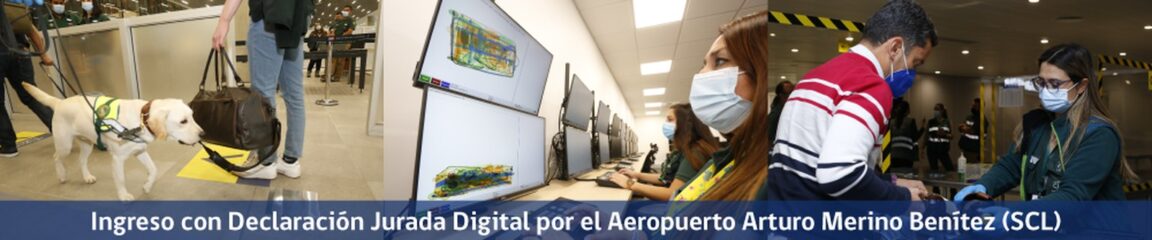
Passport control comes first, then baggage reclaim, then the joint control. Your declaration, digital or paper, is presented, your bags go through X-ray screening, and SAG staff select bags for hand inspection based on the scan, the declaration and the detector dogs working the hall. The beagles are trained on food scents and they are very good at the banana in the side pocket. If you declared an item, an inspector examines it and either clears it or confiscates it, and the encounter ends there. If an undeclared risk item is found, the encounter becomes paperwork: the item is seized, your details are taken, and a sanction process follows that can end in a fine, with SAG warning that false information on a sworn declaration carries legal consequences beyond the fine itself. Chile treats the form as what its name says, a sworn statement. The fastest passengers at Santiago are not the ones with nothing to declare by luck; they are the ones who ate the flight snacks on the plane, cleaned their boots, and ticked yes where yes was true. After the airport, reward yourself properly with our guide to eating mariscos and completos around La Vega in Santiago.
How do you complete the digital declaration?
SAG provides the joint affidavit online, and it can be completed up to one day before arrival. Travellers with a Chilean ClaveUnica sign in with it; foreign visitors proceed without one, entering passport and trip details and answering the SAG questions on plant and animal products and the Customs questions, which include cash or monetary instruments of 10,000 US dollars or more. Keep the completed declaration available on your phone or printed, because you must show it when staff ask. A new declaration is needed on every entry; last month’s form does not carry over, and a traveller entering twice in one trip, for example returning from a side trip to Argentina, declares twice. Those without digital access can ask for the traditional paper form at the border control. Complete it in the queue rather than at the inspection table, and complete it truthfully: the form is short, and its only difficult question is the one you try to talk yourself out of answering yes to. Travellers heading on into the far north can continue with our stay guide to Tierra Atacama in the desert.
What should you simply not pack?
The shortest list is the fresh list. Do not pack fresh fruit, fresh vegetables, fresh meat, fresh milk or soft fresh cheese, plants, seeds for planting, soil, or untreated wood with bark, and do not carry honey expecting it to wave through; declare it and accept the inspector’s call. Eat or dispose of aircraft food before the control, check coat pockets, daypacks and children’s bags, where forgotten fruit lives, and clean soil from boots and tent pegs after any farm or wilderness travel in the previous country. Pet food, veterinary medicines and animal products for animals travel under the same declare and be judged rule, and live animals are a separate, document heavy process that must be arranged well before flying, never improvised at the desk. When in doubt, SAG’s own guidance reduces to one sentence: declare it, or ask an official. No traveller has ever been fined at Santiago for declaring an apple.
Frequently asked questions
Do I really have to declare a single piece of fruit? Yes. The declaration covers plant and animal products in any quantity, with no personal use exemption. Declare it; the inspector will confiscate prohibited fruit, and that is the end of the matter.
What happens if I declare something prohibited? The item is inspected and, if it cannot enter, confiscated. Declaring is not an offence and is not fined. Fines attach to failing to declare, or to false declarations.
Can I complete the SAG form before I fly? Yes. The digital joint SAG and Customs affidavit can be completed online up to one day before arrival, and you show it at the control. A paper form remains available at the border.
Are wooden souvenirs allowed into Chile? They must be declared. Finished, treated wood is commonly cleared after inspection; raw wood and bark are high risk and may be held. Declare every wooden item and let the inspector decide.
Why are there dogs at baggage reclaim? SAG detector dogs screen luggage for food and plant scents. If a dog sits beside your bag, stay calm, open it when asked, and show your declaration.
Do children complete their own declaration? The sworn declaration is required of travellers aged 18 and over. Children’s bags are still inspected, and the accompanying adult is responsible for what the family is carrying, so check their backpacks too.
Image: SAG inspection at Santiago’s Arturo Merino Benitez airport, with a detector dog, X-ray monitors and officers checking a traveller’s documents, from the SAG’s official website (sag.gob.cl). Photo: Servicio Agricola y Ganadero, via sag.gob.cl, used with credit.