 Aiko Tanaka
In Hakone, the phrase private onsen hides three different products, and the price ladder only makes sense once they are separated. Some ryokan give you a true open air bath inside your own room, filled with hot spring water, yours at 3 a.m. as much as at check in. Some offer a reservable family bath, a private room with a spring bath that you book by the session. And many sell rooms with a handsome tub that is neither open air nor, in some cases, spring water at all. This guide separates the three, names the houses that do each properly in and around Hakone, and prices the ladder by season, using the properties’ own published information and rate checks made on November 24, 2026. The short answer: expect roughly 42,500 to 65,000 yen per person per night with two meals at a serious mid luxury house with in room baths, and 90,000 yen and upward per person at the great imperial villa ryokan at the top of the market.
Quick Facts
- The three products: an in room open air spring bath, a reservable private bath booked by the session, and a private looking tub that may be neither open air nor spring fed. Only the first is the bath that is yours alone.
- The benchmark house: Gora Kadan in Gora, built on the grounds of the Kan’in imperial family’s summer villa, where many rooms carry open air stone baths and a private open air bath with a steam sauna can be reserved free for 40 minutes.
- The all rooms answer: Hakone Kowakien Ten-yu, whose 150 rooms are built around open air baths, from standard rooms to maisonettes and executive suites, with check in at 3 p.m. and check out at 11 a.m. on its official listing.
- Price ladder, per person per night with dinner and breakfast: around 42,500 to 65,000 yen at Hakone Ginyu level, rising to roughly 90,000 to 160,000 yen at Gora Kadan level, with rates moving sharply by season and day of week.
- The small tax: Hakone charges a hot spring tax, 150 yen per person at Ten-yu, payable on top of the room rate.
- Kaiseki timing: dinner at a ryokan is an early, fixed ceremony, typically served from the late afternoon into the early evening in seatings, and your bath plans should be built around it, not against it.
First, the vocabulary: what counts as a private onsen room
Japanese listings reward careful reading. A room described as having an open air bath, a rotenburo, may still draw that bath from heated tap water at some properties, while the great houses pipe their own spring sources directly into the room. A reservable bath, called kashikiri, is a genuinely private experience but a scheduled one, typically forty minutes to an hour, sometimes free to guests and sometimes charged by the session. And the large communal baths, the daiyokujo, are the traditional heart of a ryokan, segregated by gender, often magnificent, and not private at all. None of these is a lesser product in itself. The mistake is paying in room bath prices for a kashikiri house, or booking a shared bath house for a honeymoon that needed a door that locks. The houses below are placed by what they actually provide, following the checks in our wider guide to Hakone onsen and wellness, and tattoo policies are noted where a property publishes them, because a private bath is also the standard answer for tattooed travellers at houses whose communal baths restrict ink.
Gora Kadan: the villa at the top of the ladder
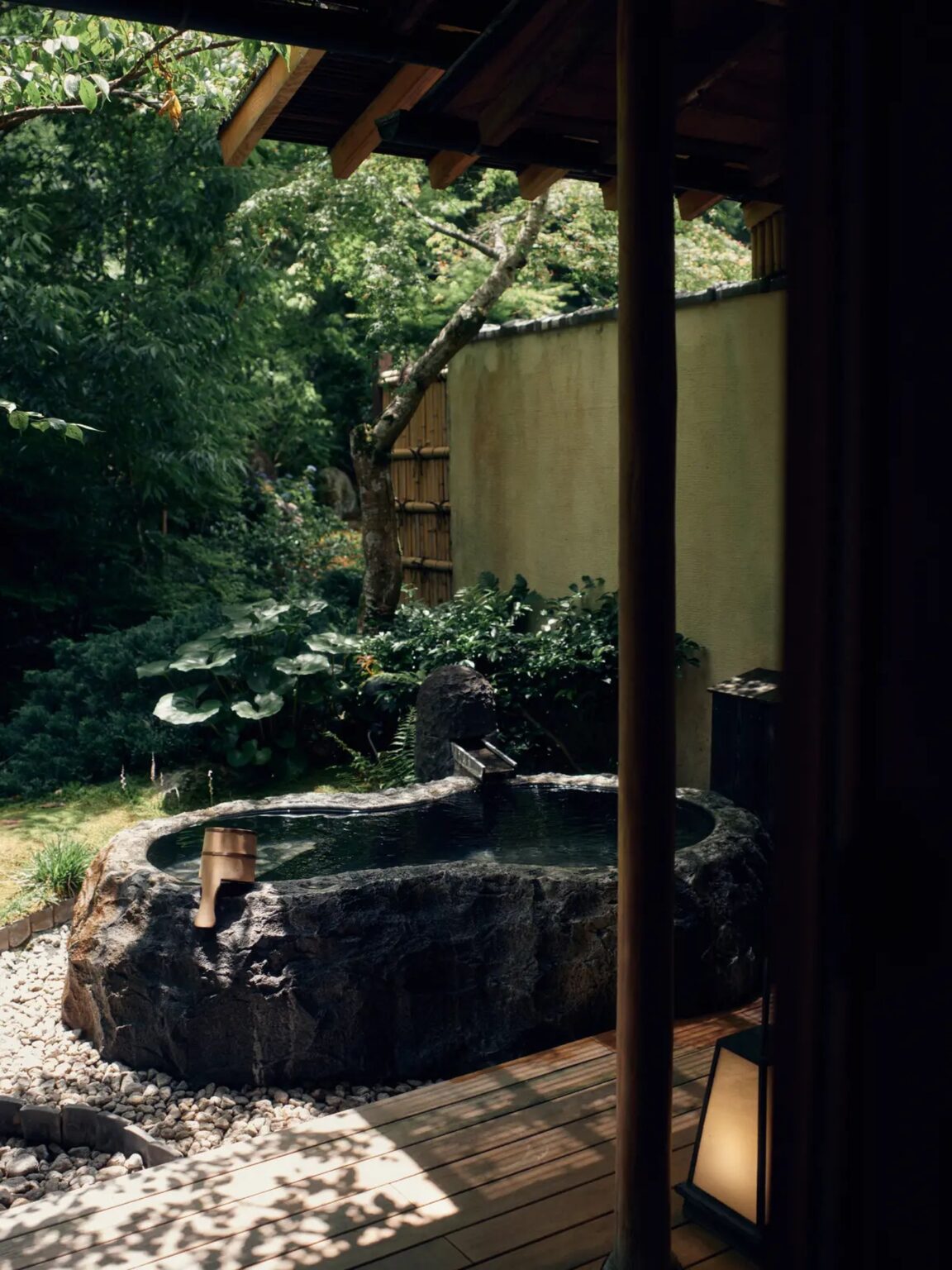
Gora Kadan occupies the grounds in Gora where Prince Kan’in’s household kept its summer villa, a place the property’s own history describes as a residence for receiving honoured guests, and it remains the reference point for Hakone luxury. The room stock is the lesson in the ladder. Standard rooms carry indoor wooden baths and rely on the great communal baths. The step that matters is the room with its own open air stone bath, set in a small private garden, which is the product this guide exists to identify, and above those sit the suites, culminating in vast annex and bettei arrangements with gardens, saunas and dining rooms of their own. Alongside the room baths, the house keeps a private open air bath with a steam sauna that guests may reserve for forty minutes at no charge, the kashikiri done properly. Its published tattoo position is the modern compromise: a small single point tattoo is accepted in the communal baths, and larger work is directed to the private bath. Rates at this level, checked against published figures in 2026, run from roughly 90,000 to 160,000 yen per person per night with kaiseki dinner and breakfast, and the house also sells a day plan, kaiseki lunch with the private bath, for those who want the afternoon without the night. Book the open air bath room type by name, and confirm the bath is spring fed when you reserve.
Ten-yu and Ginyu: the bath in every room, at two prices
Hakone Kowakien Ten-yu makes the opposite proposition to Gora Kadan’s ladder: scale with the bath guaranteed. Its official facilities listing counts 150 guest rooms built around open air bathing, standard rooms, maisonette rooms and executive suites among them, so the private bath question is settled at booking rather than negotiated by room type. What Ten-yu adds on top is theatre: two large communal baths, one an infinity style open air bath whose waterline meets the sky over the Hakone caldera rim, swapped between genders daily, plus the gardens and restaurants of the wider Kowakien resort. Check in is 3 p.m., check out 11 a.m., and the hot spring tax is 150 yen per person. Hakone Ginyu, in Miyanoshita, plays the intimate version of the same promise, a small house where rooms carry their own open air baths facing the gorge, at published rates around 42,500 to 65,000 yen per person per night with two meals. Between them they bracket the sensible money in Hakone: Ginyu for couples who want small and quiet, Ten-yu for families and groups who want the resort around the bath. For the Kyoto expression of the same tradition, at the opposite end of the formality scale, see our profile of Hiiragiya ryokan in Kyoto.
Kaiseki timing, seasons and the honest extras
Three practicalities decide whether a private bath stay delivers. The first is the dinner clock. Kaiseki at a ryokan is served early and in sequence, over ninety minutes to two hours, and the classic rhythm of the stay is built around it: arrive at 3 p.m., take the room bath before dinner while the garden light lasts, dine, then take the communal bath late when it empties, and the room bath again at dawn, which most guests name as the stay’s defining hour. The second is season. Hakone’s price ladder is a slope, not a step: autumn colour weekends and the New Year period price the same room far above a rainy June weekday, and the gap between the ladder’s rungs widens at the peaks, which is when the mid luxury houses earn their value reputation. The third is the extras that are not in the headline rate: the 150 yen hot spring tax, drinks with dinner, any charged kashikiri sessions at houses that charge for them, and the Romancecar or taxi transfers up the mountain. None is large. Together they are the difference between the price you compared and the bill you pay, and a careful booker asks for them in the same email that confirms the bath is spring water.
Frequently Asked Questions
What is the difference between an in room onsen and a reservable private bath?
An in room open air bath belongs to your room for the whole stay, at any hour. A reservable private bath, or kashikiri, is a separate bathing room you book for a session, typically around forty minutes, free at some houses such as Gora Kadan and charged at others.
How much does a private onsen ryokan near Hakone cost?
Per person per night with dinner and breakfast, published 2026 figures run from about 42,500 to 65,000 yen at Hakone Ginyu level to roughly 90,000 to 160,000 yen at Gora Kadan. Season and day of week move every figure, and a small hot spring tax, 150 yen per person at Ten-yu, is added.
Are the baths in the rooms always real hot spring water?
Not always, which is why the wording matters. Some properties do not state the water source for room baths on their room pages. At booking, confirm in writing that the room’s open air bath is fed by the property’s hot spring source.
Can tattooed guests use a private onsen ryokan?
Usually, through the private bath. Policies are published house by house: Gora Kadan, for example, accepts a small single point tattoo in its communal baths and directs larger tattoos to its free reservable private open air bath. A bath inside your own room avoids the question entirely.
When should I take the private bath during a one night stay?
Before dinner for the garden light, and at dawn for the experience guests remember. Kaiseki dinner is early and unhurried, so build the evening around it rather than bathing through it.
Image: A private open air stone bath in a garden at Gora Kadan, Hakone, seen from the room’s wooden veranda. Photo: Gora Kadan, via gorakadan.com, the property’s official website, used with credit. Converted from the site’s WebP original and resized to 1600px wide.