 Jonas Lindqvist
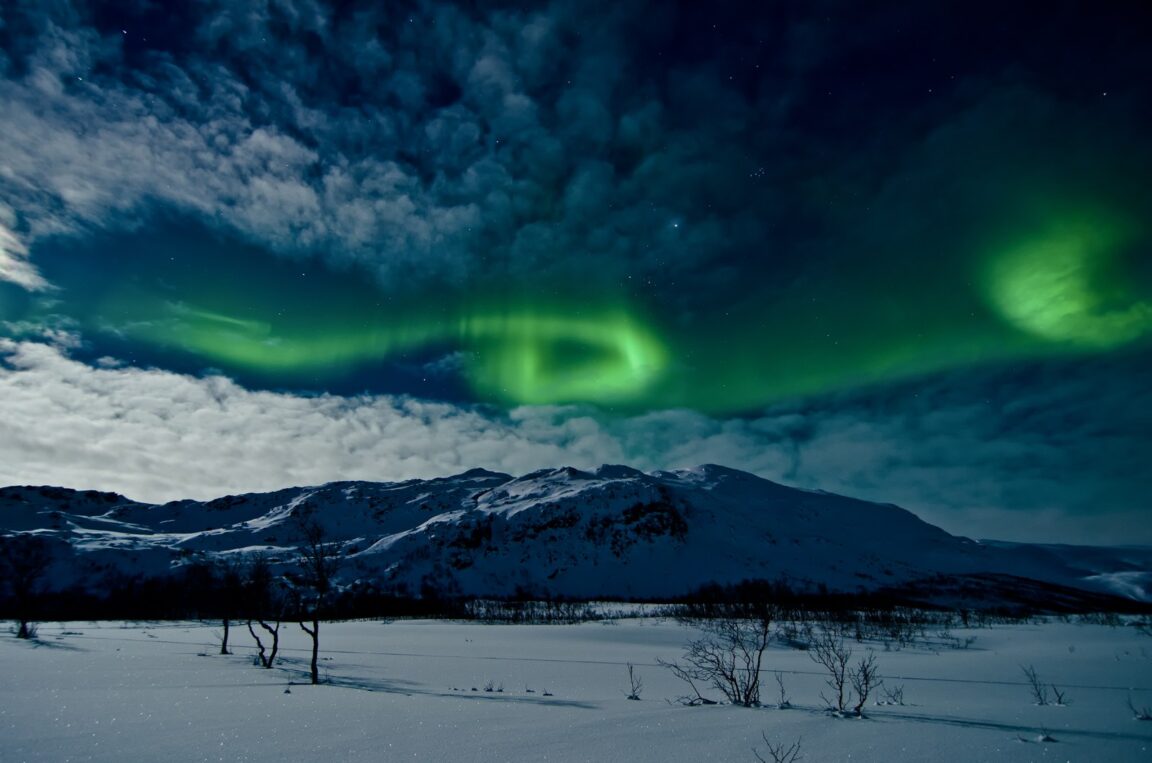
The northern lights can be seen from Tromso from late August to early April, most often between about 20:00 and 02:00, because the city sits directly below the auroral oval at roughly 69 degrees north. No tour, app or forecast can guarantee a sighting on any given night: darkness, solar activity and, above all, clear sky have to coincide. The honest way to plan is to come in the dark season, stay at least three or four nights, book one guided chase that can drive to clear sky, dress for standing still in Arctic cold, and treat every additional clear night as another roll of the same dice.
Quick Facts for Seeing the Northern Lights in Tromso
- Season: Late August to early April, with most organised activities running from early September
- Best hours: Often most active between approximately 20:00 and 02:00, and can appear at any time in the night
- Why Tromso: Located directly below the northern lights oval, about 350 kilometres north of the Arctic Circle
- Polar night: Late November to late January, when the sun does not rise above the horizon
- Guarantees: None. Visit Tromso states plainly that the lights are a natural phenomenon with never any guarantees
- Biggest obstacle: Cloud cover, ahead of solar activity, for a city directly under the oval
- Nights to stay: Three or four as a practical minimum, more is better
- Clothing rule: Layer for standing still outdoors for hours, not for walking around town
When is the northern lights season in Tromso?
Visit Tromso, the official destination organisation, gives the season as late August to early April, whenever the sky is dark and sufficiently clear, with most northern lights activities starting in early September. The aurora itself is present over the region all year. What changes is darkness. Through the summer midnight sun period the sky never gets dark enough to see it, and the returning nights of late August are what switch the season on. By mid-April the nights are again too light, and the season closes until the following autumn.
Within that long window, each stretch has a different character. September and October bring autumn colour, unfrozen lakes that give reflections on calm nights, and milder temperatures, which Visit Tromso highlights as the gentler way to hunt the lights. November darkens quickly, and from late November to late January Tromso is in polar night: the sun never clears the horizon, although the middle of the day still brings a few hours of blue and pastel twilight rather than full darkness. February and March combine deep snow with rapidly returning daylight, so aurora evenings can be paired with full days of dog sledding, fjord trips and skiing. There is no single best month, only trade-offs between darkness hours, temperature, snow cover and daylight for daytime activities.
Visit Norway adds a statistical point worth knowing: geomagnetic activity tends to be higher around the equinoxes, in September to October and again in March to April, which is one reason the shoulder months perform better than their shorter nights might suggest. Against that, Visit Tromso notes that research shows high solar activity has little impact on activity directly below the oval, where Tromso sits. In plain terms, the solar cycle headlines matter far less here than they do at lower latitudes. Weather is the variable that decides trips.
What are your honest odds of seeing the aurora?
Honest odds start with the sentence every responsible operator in Tromso will repeat: there are never any guarantees. The lights can explode across the sky and vanish within minutes, ripple for over an hour, or fail to appear on a night when every app predicted a display. They can also appear on a night rated unpromising, through a sudden break in cloud that Visit Tromso specifically warns hopeful visitors not to despair over, because northern weather changes fast.
Three factors stack. The first is darkness, which the season and the clock control: be outside during the active hours, roughly 20:00 to 02:00 at peak, away from the brightest city light. Visit Tromso notes that strong displays are sometimes visible from downtown, even from a hotel window, but recommends heading to areas with little or no artificial light for a real chance at a strong show. The second factor is auroral activity itself, summarised by the Kp index and by short-range forecasts from the Norwegian Centre for Space Weather at UiT The Arctic University of Norway. Tromso’s position under the oval means modest activity often suffices. The third factor, cloud, beats the other two combined on most failed nights, because the aurora forms around 100 kilometres up, far above the weather, and a solid cloud deck hides even a major display completely.
The practical conclusion is about nights, not apps. Visit Tromso’s core advice is that the more nights spent in the region, the greater the chance that activity and weather cooperate. A one or two night trip is a gamble that fails regularly, even in midwinter. Three or four nights gives the weather several chances to clear, and a week in the dark season makes a sighting likely without ever making it certain. Anyone who needs certainty should not book an aurora trip at all, to Tromso or anywhere else.
Which tour type fits which traveller?
Visit Tromso draws a useful official distinction between northern lights hunts and northern lights experiences, and choosing between them is the main booking decision. Hunts are transport-led: a car, minibus or coach leaves in the evening with one job, finding clear sky and the lights. Guides monitor weather, cloud cover and auroral activity through the day and may drive a long way inland, where the climate is drier and skies clear more often, sometimes as far as the Finnish border area. Hunts typically leave in the early evening and return between midnight and the small hours. Choose a hunt if the aurora is the whole point of the trip, and favour small groups, which can move faster and wait longer.
Experiences combine the evening with an activity: dog sledding, snowmobiling, a Sami camp with a lavvu tent, reindeer feeding, or a boat trip. The activity is the guaranteed part of the evening and the aurora is the bonus, which makes experiences the right choice for families, for anyone anxious about a long cold wait, and for a first night used as a warm-up. Their weakness is range: an experience based at a fixed camp cannot chase clear sky the way a hunt can, so on a cloudy coast night the camp stays cloudy. A strong plan for a four night stay is one experience early in the trip and hunts held for the clearest-looking later nights, with at least one free evening kept flexible rather than fully scheduled.
Self-guided viewing is the third option and costs nothing. Dark spots reachable from the city include the lake at Prestvannet on the plateau of Tromsoya island and the beaches at Telegrafbukta, and the Fjellheisen cable car viewpoint above the city is a popular elevated option on operating evenings. Self-guiding works best as a supplement to tours on extra nights, using the cloud forecast on Yr, the Norwegian Meteorological Institute service, and stepping outside repeatedly rather than once. Book tours and accommodation well ahead in season, because Visit Tromso warns that northern lights activities are often fully booked at peak times. Prices vary widely by operator, group size and inclusions, so compare current listings rather than trusting prices quoted in older guides.
Tromso pairs naturally with a wider northern Norway trip. Our Lofoten Islands travel guide covers the other great aurora base in the region, where the same season and the same no-guarantee rule apply under more dramatic coastal scenery. For clothing and cold-weather systems that transfer directly to Tromso nights, see also our guide to what to pack for Iceland in winter.
What should you wear for a night of aurora watching?
Dress for the activity you will actually be doing, which is standing or sitting still in the dark for long stretches, generating almost no body heat. Visit Tromso stresses dressing warmly for exactly this reason. The system is three layers: a merino or synthetic base layer, never cotton, which stays cold when damp; a thick fleece or insulated mid-layer; and a windproof, insulated outer layer or a long parka. Ski trousers or insulated pants matter as much as the jacket, and two pairs of wool socks inside proper winter boots beat one pair in fashion boots on snow. Many activity providers supply thermal suits and winter boots for sledding, snowmobiling and some hunts, which the Visit Tromso guidance confirms, but confirm inclusions when booking rather than assuming.
The details that decide comfort are at the edges: a warm hat that covers the ears, a neck gaiter, liner gloves for camera and phone work inside heavy mittens, and hand warmers in pockets. Take a headtorch with a red-light mode if it has one, spare batteries kept warm, and a tripod if photography matters, because phones on night mode capture a decent souvenir while a tripod captures the real structure of a display. Finally, lower expectations for colour: cameras record stronger greens, and sometimes reds, than the naked eye typically sees, where a display can look pale grey-green at first and strengthen as eyes adapt to the dark. Knowing that in advance is the difference between a good night and a puzzled one.
Frequently asked questions
What is the best month to see the northern lights in Tromso?
There is no single best month. September and October offer milder weather and equinox activity, November to January offers the longest darkness of the polar night, and February and March offer snow plus returning daylight. Pick by trade-off, stay several nights, and let the cloud forecast, not the calendar, judge each evening.
Can you see the northern lights from Tromso city centre?
Sometimes, during strong displays, yes, and Visit Tromso confirms sightings from downtown and even hotel windows. For the best chance, get away from bright city lights to a dark area, or join a hunt that drives to clear sky. City viewing is a bonus, not a plan.
How many nights should you stay for a good chance?
Three or four nights is the practical minimum, and more is better. Visit Tromso’s central advice is that more nights directly raise the chance of activity and clear weather aligning. A single-night trip is a coin toss against coastal cloud, whatever the aurora forecast says.
What time of night do the lights usually appear?
They can appear at any time during the dark hours and are often most active between approximately 20:00 and 02:00, according to Visit Tromso. Displays can be brief or last over an hour, so plan to be outside, dressed and patient across that whole window rather than checking once.
Does a high Kp forecast guarantee a sighting?
No. Kp measures geomagnetic activity, not sky clarity, and Tromso sits directly below the oval, where even modest activity can produce a display. A clear sky at low Kp beats a cloudy sky at high Kp every time. Watch the cloud forecast first and the aurora forecast second.
Are northern lights tours worth it if you can self-guide?
For most visitors, yes, at least once. A hunt buys local knowledge of microclimates, transport to inland clear sky, warm clothing on many departures and hours of guided waiting in company. Self-guiding then works well for extra nights once you know the terrain and the forecasts.