 LeVar Thomas
Two days is the right amount of time for a first visit to Hoi An, and the order matters more than the checklist. Spend the first day inside the Ancient Town, the UNESCO listed trading port of mustard yellow shophouses, assembly halls and the Japanese Covered Bridge, timing it early and late to dodge the midday tour groups. Spend the second day the way residents do: a tailor fitting in the morning, the market and a cooking focused lunch, and an early morning or late afternoon hour at An Bang Beach, the relaxed stretch of sand a short ride northeast of the old streets. Hoi An rewards travelers who work around its crowd rhythm rather than through it.
Quick Facts
- Best for: Travelers who want a compact, walkable heritage town with great food, tailoring and a beach attached
- How long: Two full days, with the Ancient Town on day one and tailoring, food and An Bang Beach on day two
- The status: Hoi An Ancient Town is a UNESCO World Heritage Site, listed in 1999 as an exceptionally preserved Southeast Asian trading port of the 15th to 19th centuries
- The rhythm: Old Town early and after dark, beach and errands in the middle of the day when the day trip crowds peak
- The tailor rule: Order on day one morning at the latest, fit on day two, and never on the day of departure
- Getting there: Da Nang International Airport is the gateway, about 45 minutes by road, with Da Nang city and the Marble Mountains nearby
- The dish list: Cao lau noodles, white rose dumplings, banh mi and chicken rice, all Hoi An signatures
How should day one in the Ancient Town be structured?
Start at opening time, ideally before 8am, when the Ancient Town belongs to residents, market deliveries and a few photographers. The old streets run along the north bank of the Thu Bon River, and the circuit that works is the Japanese Covered Bridge first, the small covered temple bridge built by the Japanese community in the 1590s and long used as the town’s emblem, then east along Tran Phu Street through the heart of the preserved port. The merchant houses and assembly halls open on the town’s ticket system, under which a single entry ticket covers admission to a selection of the heritage sites, so choose deliberately rather than drifting: one Chinese assembly hall, the Fujian hall with its ornate gates and courtyards is the grandest, one old merchant house such as Tan Ky, where generations of one family layered Chinese, Japanese and Vietnamese details into a single flood marked interior, and one museum or traditional performance stop.
By late morning the day trip buses from Da Nang arrive and the centre thickens. That is the moment to leave the ticket circuit and eat. Lunch on the town’s signatures: cao lau, the thick, chewy noodle dish found properly only in Hoi An, traditionally made with water from an ancient local well and always served with roast pork, greens and crisp croutons, and white rose, the delicate translucent shrimp dumplings named for their shape. Both dishes are short order, inexpensive and best in the small family restaurants a street or two back from the riverfront rather than on it.
What makes the evening in Hoi An different?
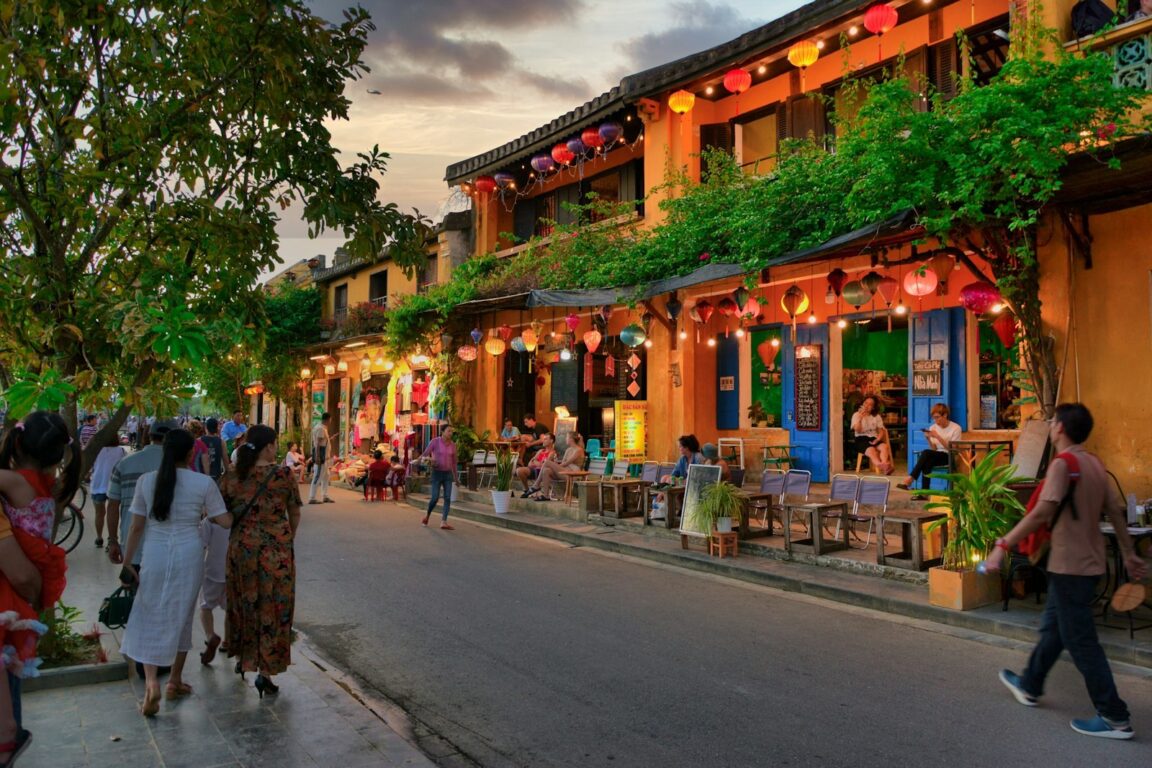
The lanterns. Hoi An’s silk lanterns hang across its streets, shopfronts and boats all year, and at dusk the whole town changes register as they light up and the river fills with small wooden boats offering short rides among floating candles. The monthly full moon lantern festival, when electric lights in the old town are dimmed and the lanterns and river candles carry the evening, is the famous version, but an ordinary evening delivers most of the effect with a fraction of the crowd. Walk the riverfront on both banks, crossing to the An Hoi side for the night market and the view back at the lit old town, and eat dinner late by Hoi An standards, after the day groups have gone back to Da Nang.
The night market is for grazing and gifts rather than serious dining: skewers, grilled seafood, sweet soups and the lantern stalls themselves, where a folding silk lantern makes a genuinely packable souvenir. Travelers who have come up from the capital can compare the two food cultures with the help of the Hanoi food guide: Hanoi is a breakfast and broth city, while Hoi An eats in small, specific dishes all day, and a good trip makes room for both logics.
How does the tailoring actually work on a two day trip?
Hoi An’s tailors are famous because the system is built for speed: choose a shop, choose fabric and style, get measured, and return for fittings as the garment is made, often within 24 to 48 hours. On a two day itinerary that means the order must go in on the morning of day one, or at the very start of day two at the latest, with a first fitting the same evening and a final fitting before departure. Simple pieces, shirts, dresses, trousers and unstructured jackets, are the sweet spot for a short stay. A fully structured suit in 48 hours is possible in Hoi An, but the travelers who are happiest with the result are the ones who allow two fittings and keep the design simple.
Choose the shop by evidence: garments on real customers, a fabric room you can handle rather than a catalogue, and a willingness to discuss construction. Bring or wear the shoes and underlayers the garment must work with, and photograph the fabric in daylight before agreeing, because shop lighting flatters everything. Prices are negotiated and depend heavily on fabric, so agree the total, the number of fittings and the delivery time in writing on the order slip before any cloth is cut.
How should day two balance the beach and the town?
Go to An Bang Beach early. The beach, a few kilometres northeast of the Ancient Town and reached by taxi or bicycle in about 15 minutes, is at its best in the morning: calm water in the dry season, soft light, and the row of seafood restaurants and lounger bars only just opening. Swim, eat a late beachside breakfast or early lunch of grilled seafood, and be back in town by early afternoon, ahead of the worst heat. The alternative beach, Cua Dai, sits closer to the river mouth, but An Bang has the better village feel and the better lunch scene.
The afternoon belongs to the fitting, the market and one last old town pass. Hoi An Central Market, at the eastern end of Tran Phu by the river, is the working market the heritage streets grew from, with a food hall of inexpensive local dishes and fabric and tailor suppliers around its edges. Pick up the finished garment with time to spare, do a final early evening circuit of the lantern streets, and eat the dishes you missed: banh mi from one of the town’s famous counters, where the combination of local baguette, pate, meats, herbs and chilli jam justifies the queue, and com ga, Hoi An chicken rice, shredded chicken over turmeric rice with herbs and a ginger chilli sauce. Travelers continuing south or building a longer Vietnam route can use the food first planning in the three days in Kuala Lumpur itinerary as a model for the next stop: in this region, the market visit is never filler, it is the itinerary.
What should you know before you go?
Hoi An floods. The Ancient Town sits low on a river that rises in the central Vietnam rainy season, roughly October to December, when streets can go under water and boats replace bicycles for a few days at a time. It is a known, managed rhythm for residents, but travelers booking those months should build flexibility into Da Nang flight plans. The dry, comfortable season runs roughly from February to August, with the hottest months in early summer, when the early and late touring rhythm in this itinerary stops being a preference and becomes a necessity.
Cash is useful for market food, boats and small shops, the old town restricts motor traffic at peak periods which makes walking and cycling the default, and bicycles, often provided by hotels, are the best transport the town has. None of the logistics are hard. The only real mistake in Hoi An is doing it at the crowd’s pace, in the crowd’s hours, and leaving before the lanterns come on.
Frequently Asked Questions
Is two days enough for Hoi An?
Yes for a first visit. Two full days covers the Ancient Town circuit, an evening on the river, a tailor order with fittings, a market morning and a beach session at An Bang. Travelers having clothes made in quantity, or taking a cooking class and a countryside cycling trip to the Tra Que herb village, should add a third day.
When is the lantern festival, and is it worth timing a trip for?
The lantern festival is held monthly around the full moon, when old town electric lights are dimmed and lanterns and floating candles take over the river. It is beautiful and significantly more crowded. Travelers with fixed dates should not be disappointed by an ordinary evening, which delivers most of the atmosphere.
Can a tailored suit really be made in two days?
Yes, Hoi An’s tailors routinely work to 24 to 48 hour turnarounds, but quality on a short stay improves sharply with simple designs, an early order and two fittings. Order on day one, fit that evening and the next day, and never schedule final pickup for the hour you leave for the airport.
Which beach is better, An Bang or Cua Dai?
An Bang, for most visitors. It has the livelier village strip of restaurants and lounger bars, a better lunch scene and a relaxed local feel. Cua Dai is closer to the river mouth and has faced erosion and defence works in places, so it is the second choice.
How do you get to Hoi An?
Fly to Da Nang International Airport and travel about 45 minutes by road to Hoi An. Da Nang itself, with its own beaches and the Marble Mountains between the city and Hoi An, is worth a half day if the schedule allows, and trains along the coast also serve Da Nang station.
What is the best time of year to visit?
February to May is the sweet spot, dry and warm without the peak summer heat. June to August is hot but workable with early starts. October to December brings the rainy season and a real chance of street flooding in the Ancient Town, which some travelers find atmospheric and others find disruptive.