 James Wolfe
Yes, three days is the right first dose of Brussels, and the city rewards a simple structure. Day one belongs to the Grand Place and the historic centre around it. Day two follows the comic strip trail and the neighbourhoods of Sainte-Catherine and the Sablon. Day three crosses to the EU Quarter and the Cinquantenaire. Everything in this plan sits within walking distance or a short metro ride of the centre, the distances are forgiving, and the city that visitors sometimes dismiss as a business stop turns out to be warm, funny and quietly beautiful once it is walked at street level.
Quick Facts
- Best for: First time visitors who want the Grand Place done properly, plus the comics culture and European institutions that make Brussels different from any other capital
- How long: Three full days, with the centre on day one, comics and neighbourhoods on day two and the EU Quarter on day three
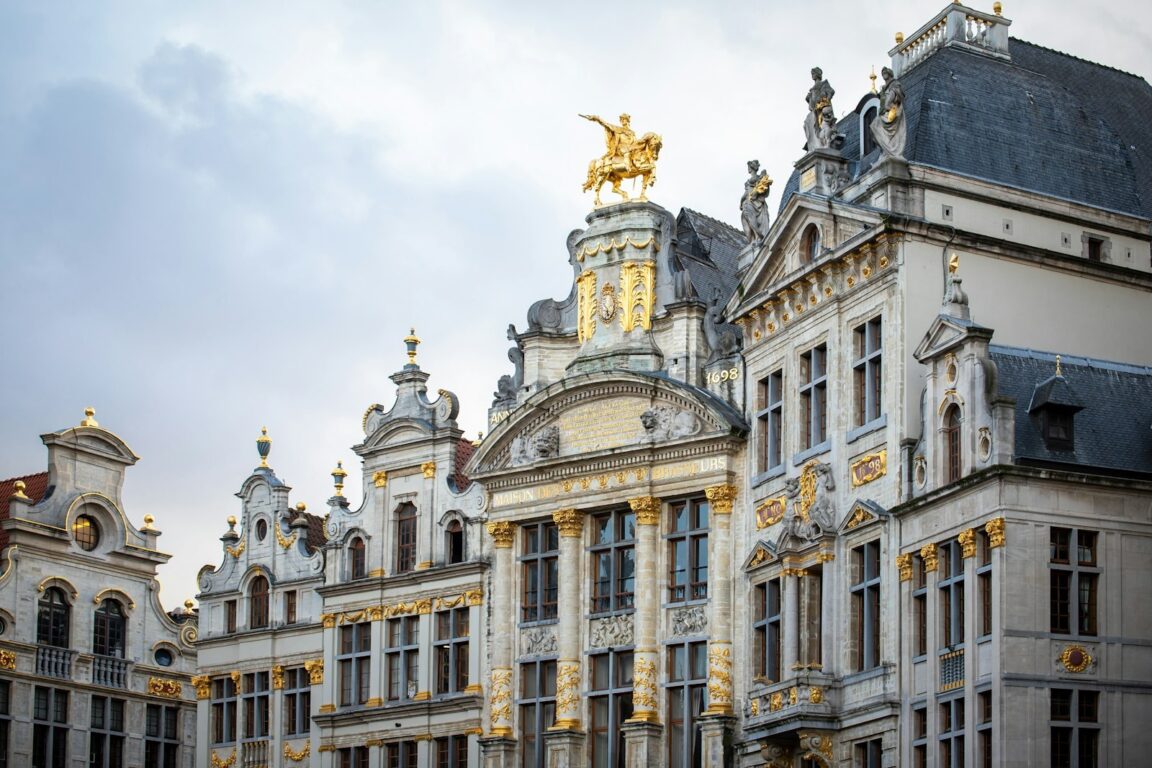
- The anchor sight: The Grand Place, a UNESCO World Heritage Site since 1998, measures about 68 by 110 metres and is ringed by Baroque guildhalls, the Flamboyant Town Hall and the King House
- The comics claim: Brussels is a capital of the bande dessinee, home to the Belgian Comic Strip Center and a city centre route of large comic murals painted on building walls
- The EU Quarter: The European Parliament, the free Parlamentarium visitor centre and the House of European History cluster around Place du Luxembourg and Leopold Park
- Getting in: Brussels Airport trains run to Brussels Central station, a walk of about five minutes from the Grand Place, in roughly 20 minutes
- Languages: Brussels is officially bilingual, French and Dutch, and English is widely spoken in the centre and the EU Quarter
What makes the Grand Place worth building day one around?
Stand in the middle of the square early, before the tour groups arrive, and read it like a document. The Grand Place began as a market in the 11th century and grew into the commercial and political heart of the city. In August 1695, during the Nine Years War, French artillery bombarded Brussels and fire destroyed most of the square. The guilds rebuilt their houses in a burst of competitive pride, largely within a few years, which is why the facades share a Baroque exuberance but no two are alike. UNESCO inscribed the square in 1998, calling it an outstanding example of the eclectic and highly successful blending of architectural and artistic styles that characterised the culture and society of this region.
Two buildings dominate. The Town Hall, built in the early 15th century in Flamboyant Gothic style, is the square survivor of the bombardment, its tall spire slightly off centre because the two wings were built in different campaigns. Opposite stands the King House, also called the Bread House, a neo Gothic building that now houses the Brussels City Museum, where the original statue of Manneken Pis is kept. Between them, the guildhalls carry gilded statues, carvings and symbols that name their trades, from brewers to boatmen to tailors.
How should day one in the centre be sequenced?
What should the morning cover?
Start on the Grand Place itself, then step inside the Brussels City Museum in the King House for the story of the square, the city plans and the wardrobe of costumes made for Manneken Pis. From there it is two minutes to the statue itself, at the corner of Rue de l Etuve and Rue du Chene. Manneken Pis is small, often dressed in one of hundreds of costumes, and best treated as an introduction to the Bruxellois habit of not taking itself too seriously rather than as a monument.
Walk back through the Galeries Royales Saint-Hubert, the glass roofed shopping arcades opened in 1847, among the oldest in Europe, where chocolatiers, bookshops and the Theatre Royal des Galeries sit under one long vault of light. The streets west of the square, around Rue des Bouchers, are the old restaurant quarter. The facades are pretty and the touting is relentless, so treat the lane as a sight, then eat a street or two away.
Where does the afternoon go?
Climb the short hill east of the centre to the Mont des Arts, where the garden steps frame the classic postcard view down to the Town Hall spire. The Royal Library and the museums quarter sit around this rise. Art travellers should pick one collection rather than graze several: the Magritte Museum on Place Royale holds the largest collection of works by Rene Magritte, Belgium most famous modern painter, and pairs well with the Old Masters rooms of the Royal Museums of Fine Arts nearby.
Finish in the Sablon district, south of Place Royale, a smart quarter of antique shops and chocolatiers around the church of Our Lady of the Sablon. On weekends the square hosts an antiques market. Readers planning a Belgium trip with more than one base should compare this plan with our Ghent travel guide, because Ghent sits under an hour away by train and makes the natural second city.
Why does day two belong to comics?
Belgium gave the world Tintin, the Smurfs, Spirou and Lucky Luke, and Brussels treats the bande dessinee as a national art rather than a hobby. The Belgian Comic Strip Center, housed in a former textile warehouse designed by Victor Horta in Art Nouveau style, explains the medium from first sketch to printed album and mounts changing exhibitions on individual artists. It is the single best orientation to why the ninth art matters here.
Outside, the Comic Strip Route turns the centre into an open air album. Dozens of murals painted on the sides of buildings show Tintin, Billy the Cat, Lucky Luke and other characters at building scale. The city publishes the route, and the fun is in the hunting: turn a corner in the Sainte-Catherine district and a three storey cowboy is sharing a wall with a fish restaurant. Sainte-Catherine itself, the old port quarter around its church and former docks, is now one of the best eating districts in the centre, strong on seafood and unpretentious bistros.
What else fits day two?
Add the MOOF, the Museum of Original Figurines near Central station, if travelling with children or collectors, for its rooms of statues and figures drawn from the albums. Bookshops matter too: Brussels has specialist bande dessinee stores where staff will happily steer a newcomer from Tintin to more adult graphic novels. End the day back in Sainte-Catherine or in Saint-Gery, the small island of bars around the old market halls, which is the centre most sociable evening quarter.
How should day three handle the EU Quarter?
Walk or ride east to Place du Luxembourg, the square in front of the European Parliament, lined with cafes that fill with staffers at lunch. The Parlamentarium, the Parliament visitor centre on Rue Wiertz, is free and explains the European Union and the work of its parliament through interactive displays in 24 languages. It is genuinely well made, and it gives context that the glass towers alone cannot.
Next door in Leopold Park, the House of European History, also free, tells the story of the continent from the 19th century to the present through objects lent by museums across Europe. Give it at least ninety minutes. Parliament itself runs guided visits and, on plenary and mini session days, visits to the Hemicycle chamber, booked through its official visitor pages, so check the calendar before fixing this day.
What sits beyond the institutions?
Keep walking east and the quarter opens into Cinquantenaire Park, built for the 50th anniversary of Belgian independence in 1880, with its triumphal arch and long esplanade. The park holds Art and History Museum collections and Autoworld vintage car museum under the same roofs, either of which can fill a rainy afternoon. The EU Quarter is quietest at weekends, when the institutions close and the cafes empty, which is exactly why this plan puts it on day three of a weekday friendly sequence and would swap days two and three on a weekend trip.
Where should a first timer stay in Brussels?
The centre, within a few streets of the Grand Place and Central station, is the practical first base: every sight in this itinerary is walkable, trains to the airport and to Ghent, Bruges and Antwerp leave from below your feet, and the evening restaurant choice is widest. The EU Quarter suits travellers combining sightseeing with meetings and anyone who prefers broad avenues and Leopold Park on the doorstep, at the cost of a quieter Sunday. For a longer European itinerary built the same way, our three days in Vienna itinerary follows the same one district a day logic.
What mistakes do first time visitors make in Brussels?
The first is treating the city as a half day between Paris and Amsterdam and seeing only the Grand Place and the statue. The second is eating on Rue des Bouchers because it looks the part. The third is skipping the comics layer entirely, which is like visiting Vienna and ignoring music. The fourth is visiting the EU Quarter on a Sunday and concluding it has no life. None of these need money to fix, only sequencing.
Frequently Asked Questions
Is three days enough for Brussels?
Yes for a first visit. Three days cover the Grand Place and centre, the comics sights and neighbourhoods, and the EU Quarter with Cinquantenaire, with evenings free. A fourth day is best spent on a train to Ghent or Bruges rather than on more Brussels sights.
When is the Grand Place at its best?
Early morning, when the square is empty and the gilding catches low light, and again after dark, when the facades are illuminated. In even numbered summers the Flower Carpet covers the square in begonias for a few days in August, and the Ommegang pageant fills it in early summer.
Is the Parlamentarium really free?
Yes. The Parlamentarium and the House of European History are both free visitor centres run by the European Parliament. Hemicycle visits are also free but should be booked through the Parliament official visitor pages, especially on session days.
Do I need French or Dutch in Brussels?
No. Brussels is officially bilingual and street signs carry both languages, while English is widely understood in hotels, museums and the EU Quarter. A bonjour or goedendag still lands well, and menus in the centre usually appear in all three languages.
How do I get from Brussels Airport to the Grand Place?
Trains from the airport station run to Brussels Central in roughly 20 minutes, and the Grand Place is about a five minute walk from Central station. Taxis and ride services take longer in weekday traffic and cost considerably more than the train.
What should I buy in Brussels besides chocolate?
Comic albums and prints are the distinctive buy, from the specialist bande dessinee bookshops and the Comic Strip Center shop. Speculoos biscuits, Belgian beer glasses matched to their beers and lace from the small shops near the Grand Place are the classic alternatives.