 LeVar Thomas
Teotihuacan is an easy half day from Mexico City only if three facts are faced before leaving: the direct bus leaves from Terminal Norte, not from the Zocalo; the site opens at 08:00 and last entry is 16:30; and you cannot climb the Pyramid of the Sun, whatever older guides and tour listings still promise. Get those three right and the rest falls into place, a two kilometre ceremonial avenue linking the Pyramid of the Moon, the Pyramid of the Sun and the Feathered Serpent Pyramid in the Ciudadela, in a city that was one of the largest in the ancient Americas centuries before the Aztecs arrived and gave it the name visitors still use. This guide sets out the bus maths, the current INAH ticket and hours, the climbing rules as they now stand, and the site order that keeps a half day from dissolving into backtracking.
Quick Facts
- What it is: The ruined Classic period metropolis of Teotihuacan, a UNESCO World Heritage Site since 1987, about 50 kilometres northeast of Mexico City
- Hours: Daily 08:00 to 17:00, last entry 16:30, under INAH, Mexico’s National Institute of Anthropology and History
- Ticket: 210 pesos for foreign visitors and 105 pesos for Mexican nationals and foreign residents, under the INAH tariff in force from 1 January 2026; the ticket covers the zone and its site museums
- Free entry: Sundays are free for Mexican nationals and residents; children under 13, students and teachers with credentials and other INAH categories enter free
- Climbing: The Pyramid of the Sun has been closed to climbing since 2020 and remains closed; do not plan a visit around climbing either great pyramid
- Bus: Autobuses Teotihuacan from Terminal Central de Autobuses del Norte, by Metro Line 5 at Autobuses del Norte station, every 15 to 20 minutes, about an hour each way
- Core route: Pyramid of the Moon, Avenue of the Dead southward, Pyramid of the Sun, then the Ciudadela and Feathered Serpent Pyramid
- Time needed: Three to four hours on site for the core route and one museum; a half day door to door from central Mexico City
Who built Teotihuacan, and why does it matter on the ground?
Teotihuacan rose in the first centuries of the common era and at its height, around the 5th and 6th centuries, held well over 100,000 people in a planned grid of avenues, temple platforms and apartment compounds, making it one of the largest cities in the world at the time. Its builders left no readable writing that names them, and their identity remains one of Mesoamerican archaeology’s open questions. What is certain is who did not build it: the Aztecs, or Mexica, arrived in the valley some seven centuries after the city’s decline, found the colossal ruins, and treated them with reverence as the place where the gods had made the present world. The names in daily use, Teotihuacan itself and the Avenue of the Dead, are Aztec era labels, not the city’s own.
That history shapes expectations. There are no deciphered royal inscriptions to narrate the pyramids, no tomb story to follow as at Palenque. The experience is urban and spatial: scale, alignment and repetition, a city laid out on a north to south axis tilted deliberately off true north, with the two great pyramids anchoring its ceremonial spine. Visitors who arrive expecting that, rather than a single climbable monument, consistently get more from the day.
What is the bus maths from Mexico City?
The public bus is the standard independent route and it is straightforward. Cross the city by Metro Line 5 to Autobuses del Norte station, which serves the Terminal Central de Autobuses del Norte. Inside the terminal, buy a ticket for the archaeological zone, asking for Los Piramides to distinguish it from buses to the town of San Juan Teotihuacan alone, at the Autobuses Teotihuacan desks, historically at Gate 8. Buses run every 15 to 20 minutes through the day, the ride takes about an hour once moving, and recent reported one way fares have sat in the region of 60 to 81 pesos, so carry small notes and treat any exact fare quoted in an older guide as indicative. The bus sets down by the site, most services at Gate 2, and the return bus to the capital leaves from the same area; ask the driver or gate staff to confirm the pickup point on arrival, and keep the return fare in cash.
The alternatives price convenience against control. Ride hailing and taxis to the site run to several hundred pesos each way depending on pickup point and traffic, and a driver willing to wait must be agreed in advance. Organised tours bundle transport with a guide and often a balloon flight or a Basilica of Guadalupe stop; they remove the terminal entirely, at several times the bus day’s transport cost. For most independent travellers the bus wins on price and frequency, provided the early start is honoured: leave the terminal by about 07:00 to 07:30 for an arrival near opening, before the avenue fills and the highland sun strengthens. Travellers continuing to the Yucatan afterwards will find the same INAH system at work in our Merida base guide and should budget for the separate state charges that apply at peninsula sites.
What are the current climbing rules, exactly?
The Pyramid of the Sun cannot be climbed. Ascent was suspended in 2020, initially as a pandemic measure, and INAH has kept the summit closed on conservation grounds since, reconfirming the prohibition in its 2026 visitor bulletins and directing visitors to the plazas at ground level. Barriers and staff enforce the rule, and no tour operator can lawfully promise the summit.
The Pyramid of the Moon needs a careful sentence rather than a promise. INAH reopened its lower platform, the first section only, in May 2025, and that limited access was subsequently reported suspended again in 2026. The honest planning position in November 2026 is therefore this: expect to climb neither pyramid, treat any lower platform access operating on the day as a bonus confirmed at the gate, and do not choose a tour, a departure time or a fitness plan around an ascent. The Temple of the Feathered Serpent in the Ciudadela is likewise a viewing monument, its sculpted serpent heads studied from the plaza and the viewing platform opposite. Ground level Teotihuacan is not a diminished visit; the avenue, the plazas and the museum collections carry it.
Which site order works for a half day?
Start at the Moon and walk south
Buses arrive by Gate 2, toward the northern end, which suits the strongest route: begin at the Pyramid of the Moon and its plaza, where a ring of smaller platforms frames the classic view down the avenue with the Pyramid of the Sun ahead. The Moon pyramid, about 43 metres high, closes the avenue’s north end against the silhouette of Cerro Gordo, the hill it was shaped to echo. Starting here means walking the avenue once, downhill in effort and logic, rather than zigzagging.
Walk the Avenue of the Dead to the Sun
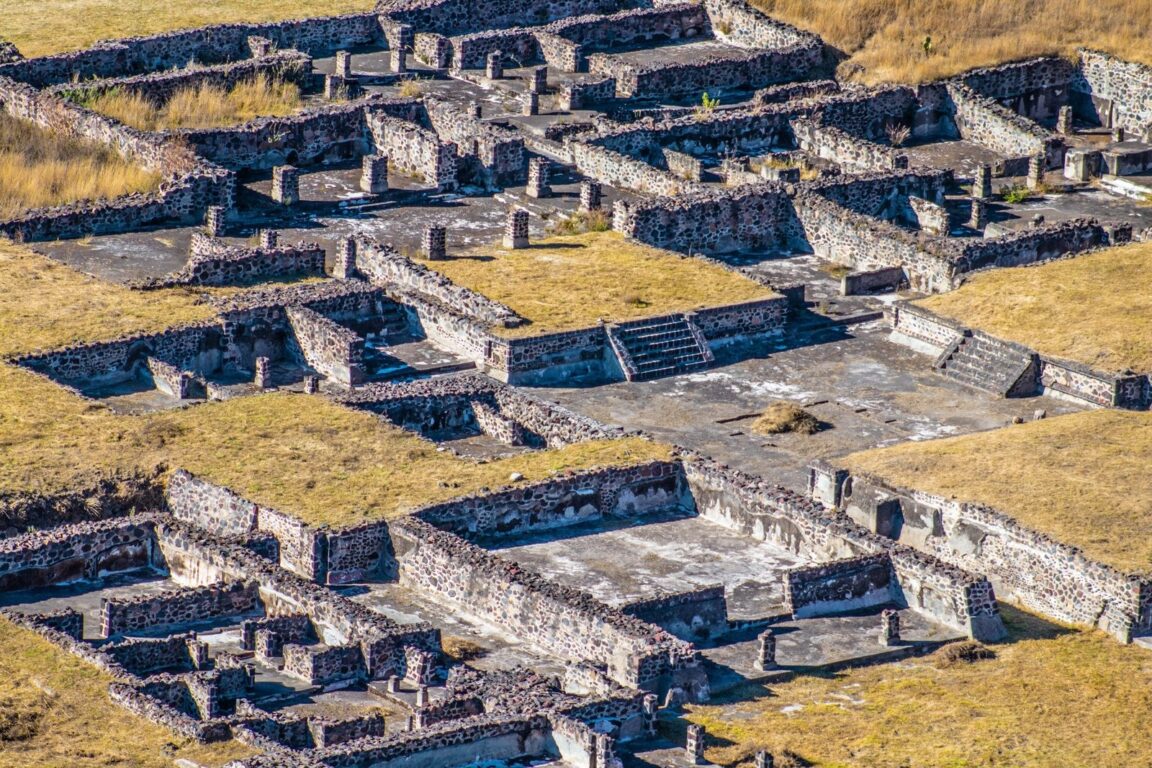
The avenue runs south for about two kilometres of visitable core. It was not a road for the dead; the Aztecs mistook the platforms lining it for tombs. They are temple and palace platforms, and walking between them gives the city’s scale better than any viewpoint. Midway, the Pyramid of the Sun dominates the east side. At about 65 metres high and some 225 metres along each base side, it is among the largest pyramids in the world by volume, built around the early centuries of the city over a cave system that likely explains the site’s sacred charge. Circle it at ground level, then use Gate 5, behind the pyramid, for the Museum of Teotihuacan Culture, whose scale model of the whole city is the single best orientation tool on the site and whose admission is included in the zone ticket.
Finish in the Ciudadela at the Feathered Serpent Pyramid
End at the avenue’s south end in the Ciudadela, the vast sunken quadrangle that held the city’s likely palace and administrative heart. At its centre stands the Temple of Quetzalcoatl, the Feathered Serpent Pyramid, the most richly sculpted building at Teotihuacan, its facades carrying alternating heads of the feathered serpent and a second deity long linked to rain, over undulating serpent bodies. It is the finest carving on the site and the right last stop before exiting toward Gate 3, by the Beatriz de la Fuente Museum of Teotihuacan Murals, which preserves painted fragments from the apartment compounds and rewards any visitor with 30 minutes left. Readers planning the companion capital day will find the Mexica story that followed this one in the Templo Mayor museum downtown, and the sanctuary order method used here is the same one applied in our Delphi day trip guide.
What should you bring, and what catches people out?
The site sits at over 2,200 metres, the sun is strong even when the air feels cool, and shade on the avenue is close to nonexistent. Bring water bought before arrival, a hat, sunscreen and a layer for the cool early bus ride. There are five gates, numbered 1 to 5, and entering by one and leaving by another without noting which is the classic way visitors lose their return bus, so photograph your gate sign on arrival. Tickets are sold at the site ticket offices and through INAH’s official online shop; no advance purchase is required for ordinary days, but the spring equinox period in March brings special operations, crowd controls and prohibited item rules, and anyone travelling then should read INAH’s current bulletin before setting out. Large bags, professional camera equipment and drones sit under restriction or permit rules, as at other INAH zones.
Frequently Asked Questions
How much does Teotihuacan cost to enter in 2026?
Under the INAH tariff in force from 1 January 2026, foreign visitors pay 210 pesos and Mexican nationals and foreign residents pay 105 pesos. The ticket covers the archaeological zone and its site museums. Sundays are free for nationals and residents. Prices were checked in November 2026; confirm on INAH’s site before travel.
What are Teotihuacan’s opening hours?
Daily from 08:00 to 17:00, with last entry at 16:30. The site museums keep slightly shorter hours, roughly 09:00 to 16:30. The zone opens on Mondays, which makes Monday a smart day to pair it against Mexico City museums that close that day.
Can you climb the pyramids at Teotihuacan?
Not the Pyramid of the Sun, which has been closed to climbing since 2020 and remains closed under INAH’s 2026 guidance. Limited access to the Pyramid of the Moon’s lower platform operated in 2025 and was reported suspended in 2026. Plan to climb neither and confirm any change at the gate.
How do you get to Teotihuacan by bus from Mexico City?
Take Metro Line 5 to Autobuses del Norte, enter the Terminal Central de Autobuses del Norte, and buy an Autobuses Teotihuacan ticket for Los Piramides. Buses leave every 15 to 20 minutes and take about an hour. Most arrive by Gate 2 at the site, and the return bus leaves from the same area.
How long do you need at Teotihuacan?
Three to four hours covers the Moon plaza, the avenue, the Sun pyramid circuit, one museum and the Ciudadela without rushing. Door to door by bus from central Mexico City, allow five to six hours, which is why the trip is a half day rather than a morning errand.
Is a sunrise balloon flight over Teotihuacan worth adding?
It is the one premium addition with a genuine case: balloons fly at dawn over the valley and land before the site opens, so the flight and the ground visit stack into a single early day. It is weather dependent, priced far above the bus day, and entirely separate from INAH admission, so book it on its own merits and keep the site plan unchanged.
Fees, hours and climbing rules checked 14 November 2026 against INAH information as reported in November 2026 visitor guidance. Recheck the INAH bulletin if travelling around the March equinox, when special rules apply.