 Kwame Mensah
Royal Mansour is worth it if the point of the trip is the hotel itself: a private three floor riad inside a walled garden medina, a 2,500 square metre spa built around a white lattice atrium, and four restaurants signed by serious chefs, all a short walk from the Marrakech medina. It is harder to justify if you plan to spend your days out sightseeing from dawn to dark, travel with a tight food budget, or want a lively, social, see and be seen resort. You are paying palace rates for space, privacy and craftsmanship, and the value only lands if you actually use them.
That is the honest shape of the decision. There are no standard rooms here at all. Every guest gets a whole house, and the trade off is price and a certain formality. This guide works through the riads, the spa, the dining and the location, then gives a clear verdict by trip style.
Quick Facts
- Format: 53 private riads only, with one to four bedrooms, each arranged over three floors with a roof terrace
- Setting: A walled estate of about 6 hectares inside the old city walls of Marrakech, laid out as a medina within the medina
- Address: Rue Abou Abbas El Sebti, 40000 Marrakech, Morocco
- Spa: Spa Royal Mansour, 2,500 square metres over three floors, with hammams, treatment rooms, private spa suites and a heated indoor pool
- Gardens: Le Jardin covers about 2.5 hectares, with a large outdoor pool and private pavilions
- Dining: La Grande Table Marocaine, Sesamo, La Grande Brasserie and Le Jardin, plus bars and a tea lounge
- Rates: Among the highest in Morocco and variable by riad size and season. The hotel publishes no single headline rate, so check your exact dates on the official site before comparing
- Best for: Honeymoons, milestone trips, spa led stays and travellers who collect great hotels
- Weakest for: Budget trips, party trips and anyone who only needs a bed near the sights
What is a riad stay actually like here?
The core idea is simple and radical. Instead of a corridor of rooms, the hotel is a small, immaculate medina of 53 individual riads, each one a private house built around its own courtyard. The official description puts every riad over three floors, with one to four bedrooms and a roof terrace looking towards the Atlas Mountains. Larger riads add plunge pools and their own hammams. Ground floors hold living and dining space, bedrooms sit above, and the roof becomes your private terrace for breakfast or an evening drink.
Privacy is engineered, not just promised. Staff move through a network of service passages, so housekeeping, room service and butler style help arrive without a parade through your courtyard. For couples, the effect is a house that feels entirely yours. For families or two couples travelling together, the two, three and four bedroom riads solve the usual luxury hotel problem: nobody has to book a noisy connecting room or give up a living room to an extra bed.
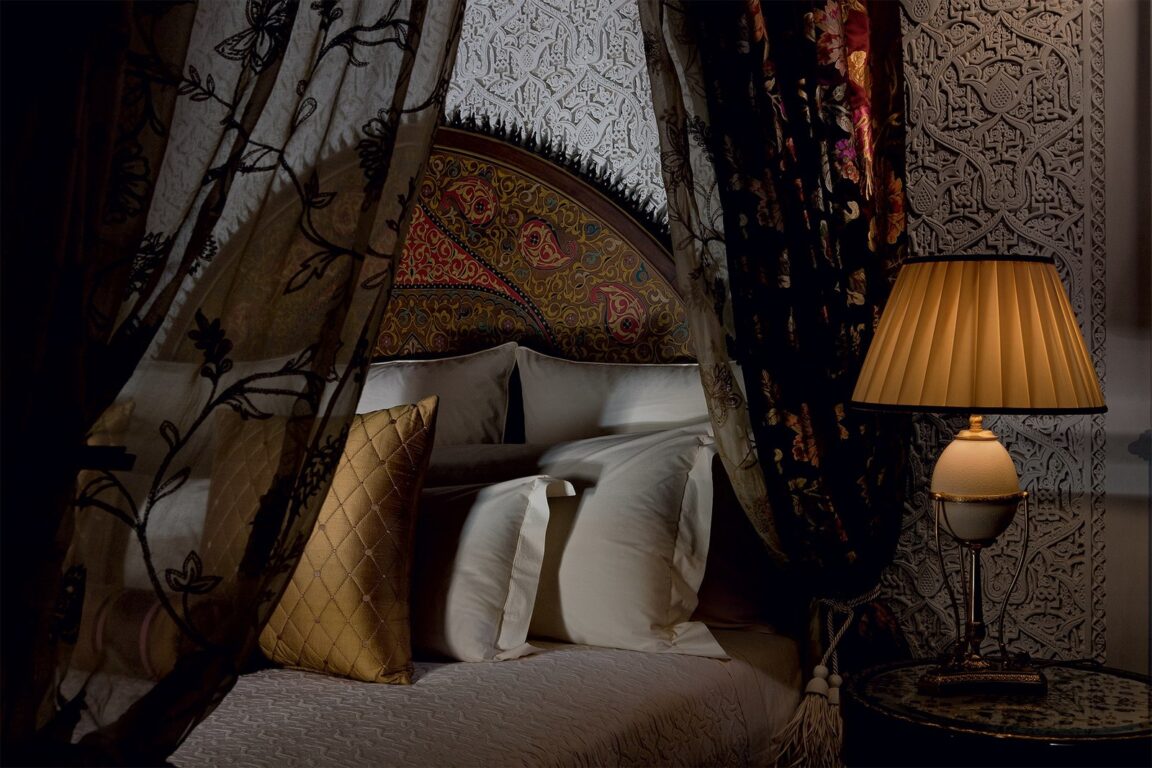
The decoration is the other half of the argument. These interiors were made by Moroccan craftspeople using carved plaster, zellige tile, carved cedar and rich textiles, and the detail rewards slow looking. If you care about craft, the riad is not just accommodation, it is one of the sights of the trip. If you do not, some of that premium is invisible to you, which is exactly why this hotel divides opinion.
How good is the spa, really?
The Spa Royal Mansour is a genuine reason to book, not an amenity box ticked. It covers 2,500 square metres over three floors, entered through a soaring white atrium of intricate latticework that has become the hotel image most people recognise. Inside are two hammams, a sauna, nine treatment rooms and three private spa suites, plus a heated indoor pool under glass and a tea lounge for afterwards.
The hammam matters most. In Marrakech the hammam is not a decorative extra, it is a centuries old ritual of heat, steam, scrub and rest, and doing it properly, in a beautiful space, with time protected for it, is one of the defining experiences of a Moroccan trip. Book treatments early in the stay rather than on the last afternoon: the spa works best as a reset after travel, and the indoor pool and relaxation spaces are worth unhurried hours, not a rushed hour between tours.
Guests who are not spa people should be honest about this too. A large part of the Royal Mansour premium sits in this pavilion and in the gardens. If your plan is the souks, the Atlas foothills and day trips, with the hotel as a base, you will pay for a wellness estate you barely touch.
What will you eat, and who is cooking?
Dining is the third pillar, and it is unusually strong even by palace hotel standards. La Grande Table Marocaine reinterprets traditional Moroccan cooking under chef Helene Darroze, working with chef Karim Ben Baba, and the hotel notes its place near the top of the La Liste ranking, named the best restaurant in Morocco in that list. Sesamo is the Italian table, created by the Alajmo brothers, with chef Massimiliano Alajmo behind a menu that uses local produce in a Venetian palace style room. La Grande Brasserie is Darroze French brasserie cooking, the most flexible of the fine dining rooms. Le Jardin, set in the gardens by the pool, mixes Asian and Mediterranean influences in a relaxed, open air format, and is the natural lunch choice.
Practically, this range changes how a stay feels. A three or four night visit never forces you to repeat a restaurant or leave the walls for a serious dinner, which suits travellers who like to come home in the evening. Food lovers should budget for it properly: these are destination restaurants with destination pricing, and treating them as an afterthought is how a Royal Mansour bill shocks people. Reserve the two flagship tables when you book the riad, not on arrival.
Where is it, and what does the location cost you?
The hotel sits inside the walls of the old city, on Rue Abou Abbas El Sebti, close to the Koutoubia side of the medina. That is the right side of Marrakech for a first visit: the souks, Jemaa el Fnaa and the historic core are within easy reach, while the hotel gardens cut the noise and dust the moment you step back inside. The grounds include Le Jardin, about 2.5 hectares of planting designed by landscape architect Louis Vallejo, with the main outdoor pool and seven private pavilions for shaded, serviced days.
The cost of the location is the flip side of any medina address. This is not a resort strip with a beach or a golf course, and Marrakech sightseeing still means guides, taxis and walking in heat for much of the year. Summer guests in particular should plan the classic pattern: out early, back for the pool, the spa and the gardens in the afternoon, out again for dinner. The hotel is built for exactly that rhythm, which is another reason it suits a slower trip better than a packed one.
Who should book it, and who should skip it?
Book it for a honeymoon or anniversary, when the private house format and the spa turn the stay into the celebration itself. Book it for a return visit to Marrakech, when you have already done the headline sights and can give the hotel the hours it deserves. Book it if design and craft genuinely move you, or if you are travelling as a family group that can fill a multi bedroom riad and split a rate that looks steep for two.
Skip it, without regret, if this is a short first trip built around sightseeing, if the rate would force you to cut the rest of the trip, or if you prefer a sociable hotel with a scene. Marrakech has excellent smaller riads and grand hotels at a fraction of the price, and the honest comparison pieces on this site, such as our case for and against Park Hyatt Sydney and our check of Kulm Hotel St Moritz, use the same test: a famous hotel earns its rate only when its specific strengths match your specific trip.
Frequently Asked Questions
How many riads does Royal Mansour Marrakech have?
There are 53 private riads, ranging from one to four bedrooms. There are no conventional hotel rooms or suites, so every booking is a whole house over three floors with its own courtyard and roof terrace.
Can non residents use the spa or restaurants?
The restaurants and spa are presented by the hotel as destinations in their own right, and reservations are handled through the hotel. Availability for non residents varies by date, so book ahead through the official site rather than arriving unannounced.
What is the best riad size for a couple?
A one bedroom riad already gives a couple a courtyard, living space and a roof terrace, which is more house than most suites. Move up a category for a private plunge pool or hammam, or when you want the extra bedroom for children or friends.
When is the best time to stay?
Spring and autumn bring the most comfortable sightseeing weather in Marrakech, and the gardens and outdoor pool are at their best. Summer stays still work if you plan around the heat, using the indoor pool, the spa and early starts.
Is Royal Mansour suitable for children?
The multi bedroom riads, private courtyards and garden pool suit families well, and a house format gives children space that a hotel room cannot. The atmosphere is calm and formal, so it fits families who want a quiet base rather than a kids club resort.
How does it compare with a traditional medina riad?
A traditional riad is smaller, more intimate and far cheaper, and puts you inside the lanes of the old city. Royal Mansour offers the riad idea at palace scale, with full hotel services, a major spa and four restaurants, inside its own walled grounds.
Photo: A riad bedroom at Royal Mansour Marrakech, with carved plasterwork and painted headboard. Photo by Royal Mansour Marrakech, via the hotel official website (royalmansour.com).