 Rafael Santos
Winter is when the Mesquite Flat Sand Dunes stop being a test of endurance and become the best sunrise walk in Death Valley National Park, and the order of play is simple: base yourself at Stovepipe Wells, two miles away, leave in the dark with a headlamp and layers, walk well beyond the parking lot crowds to an untrampled ridge, and be settled in place at least thirty minutes before sunrise so the first light rakes across clean sand while the crowds are still arriving. The dunes are at their most forgiving from November through March, when the park service describes winter days in the valley as cool with chilly nights, daytime highs commonly in the mid 60s to low 70s Fahrenheit and overnight lows dropping into the upper 30s. That is the whole bargain of a winter visit. You trade the heat cutoff that governs this landscape for most of the year for a cold start, a quiet dune field and low angled light that lasts longer into the morning. There is no trail, no booking and no permit beyond the park entrance pass. The planning that matters is timing, footwear, water and knowing exactly how far out to walk.
Quick Facts
- Where: Mesquite Flat Sand Dunes, Death Valley National Park, California, just east of Stovepipe Wells Village off CA-190. The paved parking lot has pull through spaces for buses and large RVs, and vault toilets.
- Park entrance: $30 per private vehicle for seven days, $25 per motorcycle, $15 per person on foot or bicycle. The Death Valley annual pass costs $55. The park does not accept cash: entrance and campground fees are by credit, debit or digital payment, and passes can be bought at the Stovepipe Wells Ranger Station among other locations.
- The walk: No official trail exists. The National Park Service hike to the tallest dune is 2 miles round trip, about 1.5 hours, with 185 feet of elevation gain, rated easy to moderate, cross country over open sand.
- Scale: The dune field covers roughly 14 square miles and its highest dunes rise about 100 feet above the valley floor.
- Winter weather pattern: Cool days and chilly nights per the National Park Service, with winter highs typically in the mid 60s to low 70s Fahrenheit at Furnace Creek elevations and overnight lows frequently in the upper 30s. Dawn at the dunes can be near freezing even when the afternoon is mild.
- Heat rule: The National Park Service advises that hiking is not advised after 10 a.m. in the summer. In winter that cutoff does not drive the plan, but carrying water still does: this is a dry, exposed landscape in every month.
- Pets: Pets are not allowed on the dunes or on any trail in Death Valley National Park, even if carried, and must never be left in a vehicle.
- Facts checked: 17 November 2026, against the National Park Service Mesquite Flat Sand Dunes place page and the Death Valley entrance fees page.
Why Does Winter Change Everything at Mesquite Flat?
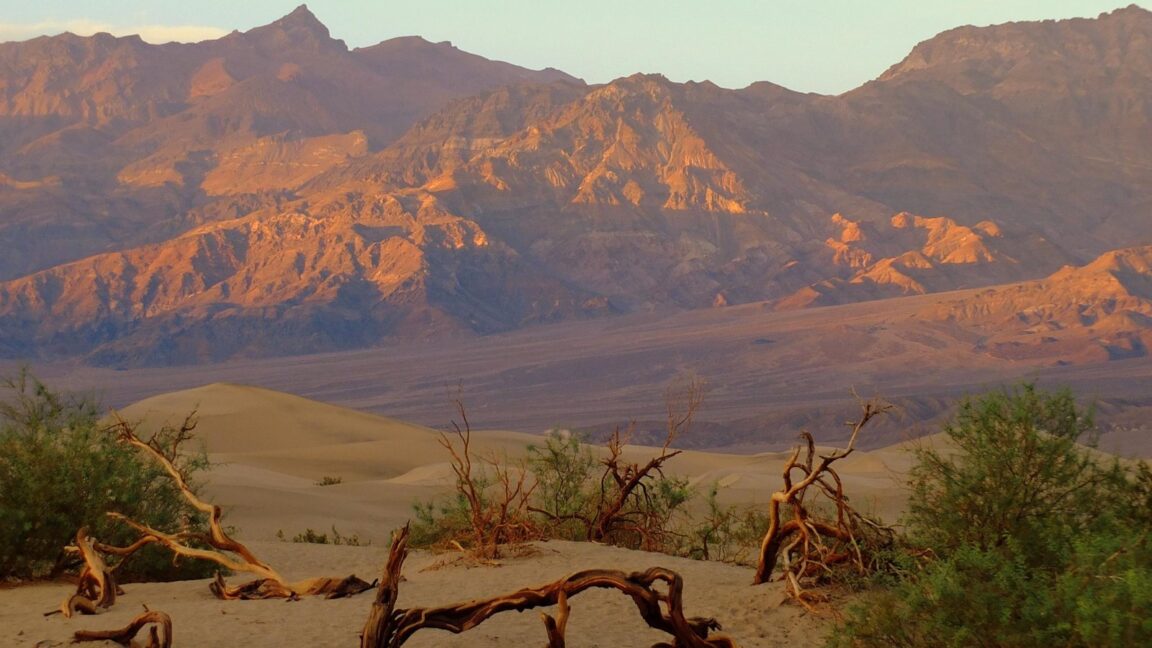
Mesquite Flat is the most accessible dune field in Death Valley, sitting directly on the park main east to west road, and for much of the year accessibility is a trap: the same parking lot that makes the dunes easy also delivers visitors into one of the hottest landscapes on earth with no shade, no water and no marked route. Winter removes the danger and keeps the drama. Temperatures that make a two mile cross country walk a pleasure instead of a risk, overnight cold that firms the sand and makes climbing ridges noticeably easier than on soft summer afternoons, and a low sun that spends more of the morning at the raking angle photographers want. The National Park Service notes the dunes are known for dramatic shadows at sunrise and sunset, when ripples and edges stand out in greater contrast, and winter stretches that effect across more of the day.
Winter also changes the crowd pattern, which is the honest caveat to the when the crowds are gone framing. Sunrise is genuinely quiet: most park visitors choose sunset, and a winter dawn on the outer ridges can feel empty. But winter is Death Valley high season overall, and the holiday weeks around Christmas and New Year, plus fine weather weekends, bring the park its busiest days of the year outside spring break. The dunes parking lot fills by mid morning on those days and sunset draws a crowd in any month. The reliable version of solitude here is not a secret season. It is a specific hour: the first hour of light, on a weekday if you can manage it, at least half a mile from the parking lot.
What Is the Sunrise Order of Play, Step by Step?
Work backwards from sunrise. First, check the sunrise time for Stovepipe Wells the night before and set the alarm for ninety minutes earlier. Second, dress at the car for the coldest moment of the day, not the average: a warm layer and windproof shell, hat and gloves in mid winter, because the dune field before dawn is a still, cold place and you will be standing still in it. Third, leave the parking lot a full hour before sunrise with a headlamp. The walk out is the part visitors underestimate. The photogenic, untrampled ridges are not the first dunes beside the lot, which carry the footprints of every sunset crowd from the day before. Walk twenty to thirty minutes out, heading for the high dune line, and the sand gets cleaner with every ridge you cross. Overnight wind, when it comes, smooths the surface further, which is one more reason sunrise beats sunset for unmarked sand.
Fourth, choose your ridge before the light arrives. A long crest line facing east, with a clean slip face and a view across lower rippled sand toward the mountains, gives the classic composition: shadow on one side of the crest, first gold light on the other. Fifth, stay put through the first thirty minutes of light, which is when the contrast the park service describes is at its strongest, then walk and shoot on the move as the light softens. Sixth, walk out by the route you came in on, using the parking lot lights, the highway and the Stovepipe Wells glow as your bearings, and be back at the car before the mid morning lot fills. The whole outing, done this way, is about two and a half hours, fits entirely before breakfast, and leaves the rest of the day free for the park bigger drives. Our Zion Kolob Canyons guide uses the same dawn first logic in a very different desert, and it transfers directly.
Stovepipe Wells or Furnace Creek: Which Base Works Better?
For a dunes sunrise, Stovepipe Wells and it is not close. The dunes sit about two miles east of Stovepipe Wells Village on CA-190, close enough that the drive in the dark is measured in minutes, while Furnace Creek, the park main hub with the visitor center, is roughly 23 to 24 miles east, which turns a sunrise plan into a pre dawn highway drive on a road where wildlife and darkness both argue for care. Stovepipe Wells offers lodging at the village, the Stovepipe Wells Campground, a ranger station where entrance passes are sold, and fuel, which covers every practical need of a one or two night dunes base. What it does not offer is the full service depth of Furnace Creek, with its larger choice of rooms, dining and the main visitor center exhibits.
The sensible split for a two or three night winter trip: sleep at Stovepipe Wells the night before your dunes sunrise, then move to or day trip Furnace Creek for Badwater Basin, Artists Drive and the visitor center on the following days, rather than commuting past the dunes at dawn every morning. Campers should note that Death Valley campgrounds run on the park fee system, the park is cashless, and winter is peak camping season, so reservable sites should be booked ahead through Recreation.gov where the park offers them. Drivers should also fuel with margin. Distances in Death Valley are deceptive, services are sparse, and the correct amount of fuel for a dawn start is whatever you arranged the afternoon before, not a plan to find a pump open in the dark. For a contrasting winter park base decision, our Grand Teton Jenny Lake itinerary works through the same gateway town trade offs in cold country.
How Do You Photograph the Dunes Without the Crowds in Frame?
The technique is mostly walking. Footprints are the enemy of a clean dune photograph and they concentrate exactly where casual visitors stop: the first ridge line within sight of the parking lot. Every additional ridge you cross in the dark buys cleaner sand. Compose for the crest lines and the light rather than for height. The tallest dune, the goal of the park service 2 mile round trip hike, gives the wide panorama over the field toward the Panamint Range, but the stronger photographs usually come lower down, where a single sharp crest divides lit sand from shadowed sand and the mesquite trees, the gnarled, half buried trees the dunes are named for, give the frame its scale. The National Park Service notes these trees must twist and grow to avoid being buried, and their exposed trunks are the dunes signature foreground.
Practical settings advice that holds in the field: arrive with the tripod already extended and the composition roughly chosen in the blue light before sunrise, because the best contrast lasts minutes, not hours; expose for the lit sand and let the shadow side go dark, which is the look that makes dune photographs read as graphic rather than grey; and keep shooting after the obvious moment, because winter low sun keeps modelling the ridges well into mid morning. Protect the gear as you would at a beach: sand gets into everything, so change lenses at the car, keep the camera bag closed on the sand, and carry a simple blower. Finally, leave the field as you found it. There are no official trails, the park asks visitors to watch their step and not disturb burrows, and the kangaroo rats and sidewinder rattlesnakes that live here are nocturnal, which is one more reason the dawn walk uses a headlamp and a careful eye on the sand ahead.
What Should You Carry for a Winter Dawn on the Dunes?
The winter kit is a layering kit, not a survival kit, but it is a real one. Insulated jacket, warm hat and gloves for the pre dawn stand, worn over the lighter clothes the afternoon will want. A headlamp with a red light option if you have it, which preserves night vision and is kinder to any stargazers still out. Water, at least a litre per person even in January, because the air is desert dry and the walk back climbs the same ridges in full sun. Sturdy closed footwear: sand pours into low shoes and trail runners, and many regulars wear light boots or gaiters for exactly that reason. A phone with the park map downloaded in advance, since mobile coverage in Death Valley is limited to a few pockets, and a simple orientation habit: note the direction of the highway and the lot before you walk in, because a dune field in flat dawn light is a disorienting place to improvise a return route. Sunscreen, counterintuitively, belongs on the list too. By nine in the morning the winter sun on pale sand is strong, and the walk out is fully exposed.
Frequently Asked Questions
What time should you arrive at Mesquite Flat for sunrise in winter?
Be in the parking lot about an hour before sunrise and walking within minutes of arriving. That allows twenty to thirty minutes to cross to the cleaner outer ridges and time to choose a crest line and set up before the first light. In mid winter, sunrise in Death Valley falls around seven in the morning, so the alarm is less brutal than a summer dawn start, which is part of the winter appeal. Check the exact sunrise time for your date the night before.
How far is the walk to the tallest dune?
The National Park Service lists the hike to the tallest dune as 2 miles round trip, about 1.5 hours, with 185 feet of elevation gain, over open sand with no official trail. Soft sand makes those 2 miles feel longer than the same distance on a path, so allow the full time and more in warm weather.
How much does it cost to visit the Mesquite Flat dunes?
Only the park entrance pass: $30 per private vehicle for seven days, $25 per motorcycle or $15 per person, with a $55 Death Valley annual pass available. There is no separate dunes fee, permit or reservation. The park is cashless, so pay by card or digital payment, including at the Stovepipe Wells Ranger Station.
Is sunrise really better than sunset at Mesquite Flat?
For clean sand and quiet, yes. Sunset is the popular hour and the ridges near the parking lot carry the day footprints into it. Overnight, wind can smooth the surface, and the dawn crowd is a fraction of the evening one. Sunset has its own case: warmer temperatures, colour on the Panamint Range, and no alarm clock. Photographers who can only do one should choose sunrise, which is also the hour the park service shadow effect is at its most dramatic.
Can you camp on the Mesquite Flat dunes?
No camping is offered at the dunes themselves. The practical base is Stovepipe Wells, about two miles west, with lodging and the Stovepipe Wells Campground, or Furnace Creek about 23 to 24 miles east. Book reservable winter campsites ahead, because winter is Death Valley peak season.
What are winter temperatures like at the dunes?
The National Park Service describes winter in Death Valley as cool days and chilly nights. At valley floor elevations, winter daytime highs commonly run in the mid 60s to low 70s Fahrenheit, with overnight lows frequently in the upper 30s, so a dawn start can be near freezing while the late morning is warm enough for a single layer. Dress for both ends of that range on the same walk.