 James Wolfe
Pack the Douro Valley in October for three different days wearing the same clothes: a warm, still morning above a river hidden in fog; a steep, muddy vineyard terrace at harvest time, where the vindima is still finishing in the cooler, later valley; and a long, lamplit quinta dinner where everyone looks smarter than they did at lunch. One bag does all three if it is built on layers rather than outfits. The climate numbers that shape the list come from Portugal’s weather service, IPMA, whose 1991 to 2020 normals for Porto, the valley’s gateway, give October a mean maximum of 20.7 degrees and a mean minimum of 12.9 degrees, with 148.9 millimetres of rain falling over about 11 rain days. The inland valley runs warmer by day and cooler at night than the coast, and October is the hinge month: summer is over, winter has not arrived, and rain is no longer a possibility but a schedule. Pack the waterproof, pack the mid layer, and leave the suitcase space you save for the bottles everyone brings home.
Quick Facts
- Trip: The Douro Valley, northern Portugal, in October; terraced wine valley of the Alto Douro, reached by the Linha do Douro railway or by road from Porto
- Climate basis: IPMA climate normal 1991 to 2020 for Porto: October mean maximum 20.7 C, mean minimum 12.9 C, 148.9 mm of rain over about 11 rain days; the inland valley is warmer by day, cooler by night, and fog forms on the river on still mornings
- Harvest reality: The vindima runs from late August into October; cooler regions including the Douro are often still picking, or just finishing, in early October, and some quintas offer harvest visits and grape treading in stone lagares
- The one bag rule: Layers, not outfits: a waterproof shell, one warm mid layer, and shoes that grip wet schist do more work than any second suitcase
- Shoe verdict: Waterproof walking shoes or light boots with real tread for terraces and cellar floors; smooth soled shoes are a genuine hazard on wet stone and mud
- Dinner rule: Quinta dinners are smart but not formal; one dark, crease resistant outfit that layers under a jacket covers every table in the valley
- Leave behind: Heels, a heavy winter coat, and beach gear; October swimming belongs to heated hotel pools, not the river
- Bring extra: A padded wrap or bottle sleeves for wine bought at quintas, and a soft extra bag, because Douro bottles are heavy and checked baggage limits are real
What does an October day in the Douro actually feel like, hour by hour?
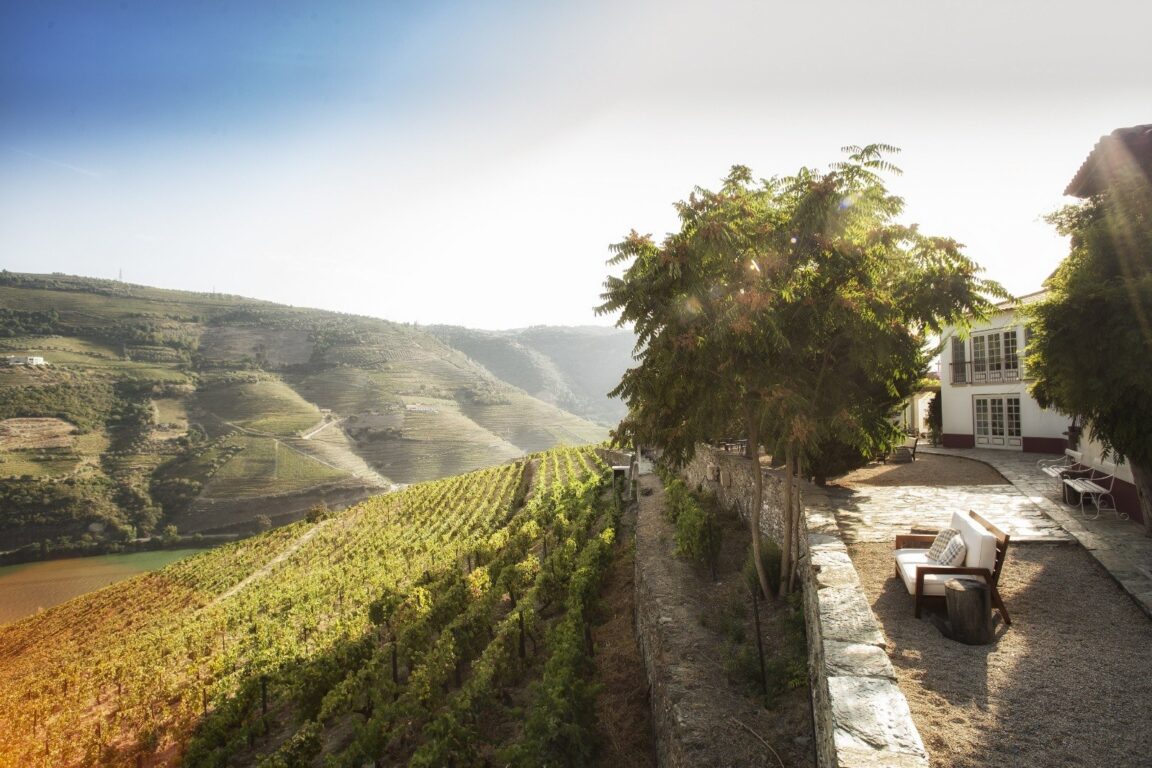
It starts cold and white. On still autumn mornings the river generates its own fog, and a terrace above Pinhao or Peso da Regua can sit in grey murk until mid morning while the hilltops are already in sun. That is the hour for the warmest layer you packed, a hat you can pocket later, and patience: the fog burning off the terraces, row by row, is the valley’s best free show, and it rewards anyone dressed to stand still in it. By midday October turns kind, often shirtsleeve warm on a sheltered terrace, which is why the list is built on layers that come off and go into a daypack rather than a single decisive coat.
Evenings reverse the trick. Once the sun leaves the valley floor, and it leaves early between those steep walls, the temperature falls fast toward that 12.9 degree mean minimum and below it inland. Quinta dinners run long and often end on a terrace with port in hand. The traveller who packed only for the postcard midday ends the night borrowing a blanket; the traveller with a proper mid layer and a shell owns the evening. Rain, when it comes, tends to arrive as Atlantic fronts rather than showers: a full wet day is likelier than a daily sprinkle, which is why the waterproof has to be a real one, trousers included if vineyard walking is planned.
What belongs in the bag, item by item?
Start with the shell system: a breathable waterproof jacket with a hood, and lightweight waterproof trousers if the itinerary includes harvest work or long terrace walks. Add one warm mid layer, a fleece or light insulated jacket, that fits under the shell and over a shirt at dinner. Base layers should be merino or synthetic tees and long sleeves that can be worn two days running without complaint, because quinta laundry is not a plan. Two pairs of walking trousers, one smarter dark pair that doubles for dinner, shorts only if the forecast for your exact week promises a warm spell, and a sleep layer that doubles as a lounge layer for slow mornings.
Footwear carries this trip. Terraces are steep, schist is slippery when wet, cellar floors are damp, and harvest paths turn to mud after rain. Bring waterproof walking shoes or light boots with aggressive tread as the main pair, broken in before departure, and a second, smarter pair, clean loafers or neat trainers, reserved for dinners and the train. If a quinta invites you to tread grapes in a lagar, expect to do it barefoot in shorts or trousers that roll up, and expect purple feet for two days; pack the old pair of shorts you would happily stain. A compact daypack swallows the layers, the fog morning hat and gloves, a water bottle and the inevitable bottle bought after a tasting.
How do you dress for quinta dinners without packing a second wardrobe?
Douro quintas feed guests well and dress informally by city standards: no jackets are required, no ties exist, but the dining rooms are beautiful, the winemakers often join the table, and the traveller in muddy walking trousers feels the mismatch. The fix is one dinner outfit built from pieces already in the bag: the dark trousers, a crease resistant shirt or fine knit, the smarter shoes, and a soft blazer or structured overshirt if space allows, which also serves as the mid layer on the train. Women travellers solve the same equation with a knit dress or dark trousers and a silk scarf that changes the register of a daytime top. Keep jewellery minimal, keep perfume lighter than the wine, and remember that cellars are cold: the layer you carry to the tasting is the one you will wear through dinner.
For a sense of the top end of valley hospitality, our guide to Six Senses Douro Valley in Lamego shows the standard of dining room this single outfit has to satisfy, and it does. The same layering logic, tuned for island wind instead of river fog, runs through our Madeira in January kit list, a useful cross check for travellers combining the two on one Portuguese trip.
What gets left behind, and what small things earn their space?
Leave the heavy winter coat: October cold in the Douro is a layering problem, not an arctic one, and the coat will spend the trip eating the space the wine needs. Leave heels entirely; cobbles, cellar stairs and terrace paths punish them three times a day. Leave the umbrella as your only rain plan, because valley wind on a terrace makes it a sail, and leave any white trousers you care about within one metre of a lagar. What earns space instead is small and unglamorous: a head torch for unlit quinta paths after dinner, a plug adapter and a short power strip for old manor house rooms with one socket, antihistamine and blister care for harvest walking, a dry bag for the daypack on boat trips from Pinhao, and resealable bags that keep a damp shell away from clean clothes on the last morning.
Finally, plan the return physics. A bottle of Douro wine weighs well over a kilo, a bottle of port more, and every traveller buys them. Pack two padded bottle sleeves, check the airline’s hold allowance before the trip rather than at the quinta shop, and keep the soft extra bag flat in the case until the last day. The valley’s October bargain is simple: pack for fog, mud and a long dinner, and the month gives you harvest colour, empty terraces and the last warm light of the year. Pack for the postcard alone, and it will correct you by the first evening.
Frequently Asked Questions
How cold is the Douro Valley in October?
Mild by day, cool by night. IPMA’s 1991 to 2020 normal for Porto gives October a mean maximum of 20.7 C and a mean minimum of 12.9 C; the inland valley runs warmer in the afternoon sun and cooler after dark, with river fog on still mornings. Layers and a warm mid layer cover the full range.
Does it rain much in the Douro in October?
Yes, plan on it. The same IPMA normal records 148.9 mm of rain over about 11 rain days in October at Porto, and the valley shares the Atlantic pattern. Bring a proper waterproof jacket, and waterproof trousers if you will walk vineyards; fronts tend to bring full wet days rather than brief showers.
Is the grape harvest still happening in October?
Often, yes, at the start of the month. The vindima runs from late August into October, and cooler regions such as the Douro pick later than the warm south, so early October trips can still find picking, harvest visits and grape treading in stone lagares. Exact dates move with each year’s weather, so confirm with your quinta before travelling.
What shoes are right for Douro terraces in October?
Waterproof walking shoes or light boots with strong tread, broken in before the trip. Terraces are steep, schist turns slippery when wet, harvest paths mud over after rain and cellar floors stay damp. Add one clean, smarter pair for quinta dinners and the train.
What should I wear to a quinta dinner?
Smart but not formal: dark trousers or a knit dress, a crease resistant shirt or fine knit, clean shoes and a layer for cold cellars and terrace port afterwards. No quinta in the valley expects a jacket and tie; looking deliberate matters more than looking dressed up.
Last updated 17 November 2026. Climate figures are IPMA 1991 to 2020 normals for Porto, checked on the day of writing; they describe the month’s character, not a forecast for a specific week.