 Omar Haddad
Angra do Heroismo eats like a cattle island with a port attached, and the dish that proves it is alcatra: beef slow cooked for hours in an unglazed clay pot with wine, onion, garlic, bacon and warm spices until the meat surrenders, served in the pot it cooked in. Build the trip around it. Start with lapas grelhadas, limpets grilled on the half shell with garlic butter, work through the island’s cheeses, Terceira’s own queijo da ilha and the famous aged cheese ferried in from neighbouring Sao Jorge, and finish with queijadas da Dona Amelia, the little honey and cinnamon cakes invented for a queen’s visit in 1901. One correction belongs at the top, because travellers keep looking for it: there is no Michelin starred restaurant in Angra, or anywhere on Terceira. The Michelin Guide’s Portuguese coverage has never hung a star on this island, and Angra does not need one. Its best rooms are traditional restaurants where the alcatra benchmark is judged by locals, not inspectors, and that judgement is stricter.
Quick Facts
- Town: Angra do Heroismo, on Terceira in the Azores, a UNESCO listed port city and the island’s dining capital; most restaurants worth booking sit inside its walkable grid
- Signature dish: Alcatra, beef slow cooked in an unglazed clay pot with wine, onions, garlic, bacon and spices such as allspice and black pepper; fish and bean versions exist, beef is the benchmark
- Starter: Lapas grelhadas, grilled limpets on the half shell with garlic and butter, eaten hot and immediately, with lemon
- Michelin position: No Michelin starred or guide listed restaurant in Angra do Heroismo; eat traditional instead, and judge rooms by their alcatra, as locals do
- Cheese run: Queijo da ilha from Terceira producers such as Queijaria Vaquinha, plus aged Sao Jorge cheese, the archipelago’s most famous DOP cheese, shipped from the island next door
- Drink: Verdelho wine from Biscoitos, on Terceira’s north coast, where vines grow in currais, small plots walled with black basalt against the Atlantic wind
- Sweet: Queijadas da Dona Amelia, dense cakes of egg, honey, cinnamon and cornflour, created in Angra for Queen Amelia’s visit in 1901
- Feast food: Sopas do Espirito Santo, the Holy Spirit soups of broth, bread, cabbage, mint and slow cooked beef, served at island festivals through the summer
What is alcatra, and why does the pot matter as much as the beef?
Alcatra takes its name from the cut, the rump, and its method from the island’s clay. Chunks of beef are layered in an unglazed terracotta pot with onion, garlic, bacon, wine, both red and white in many family recipes, and a warm spice kit built on allspice, black peppercorns and cloves, then cooked low and slow for at least four hours in most kitchens, and longer in the proud ones. The unglazed clay is not nostalgia: it breathes, it holds a gentle, even heat, and it seasons itself over years of use, which is why restaurants guard their pots and why the dish arrives at the table still in the vessel, bubbling at the edges.
Historically this is feast food, cooked for the Holy Spirit festivals that structure Terceira’s summer, for family Sundays and for weddings, and that origin explains its serving logic: the pot goes in the middle, bread goes alongside for the liquor, and nobody plates it prettily. The practical consequence for visitors is timing. Many traditional restaurants cook alcatra mainly at weekends, when the pots can be planned; in Angra, Tasca das Tias is valued locally precisely because it serves alcatra through the week. Order it for two even if the menu phrases it that way, ask about a half portion if travelling solo, and never schedule a tight afternoon after it. Alcatra is a commitment.
Where should you eat alcatra in and around Angra?
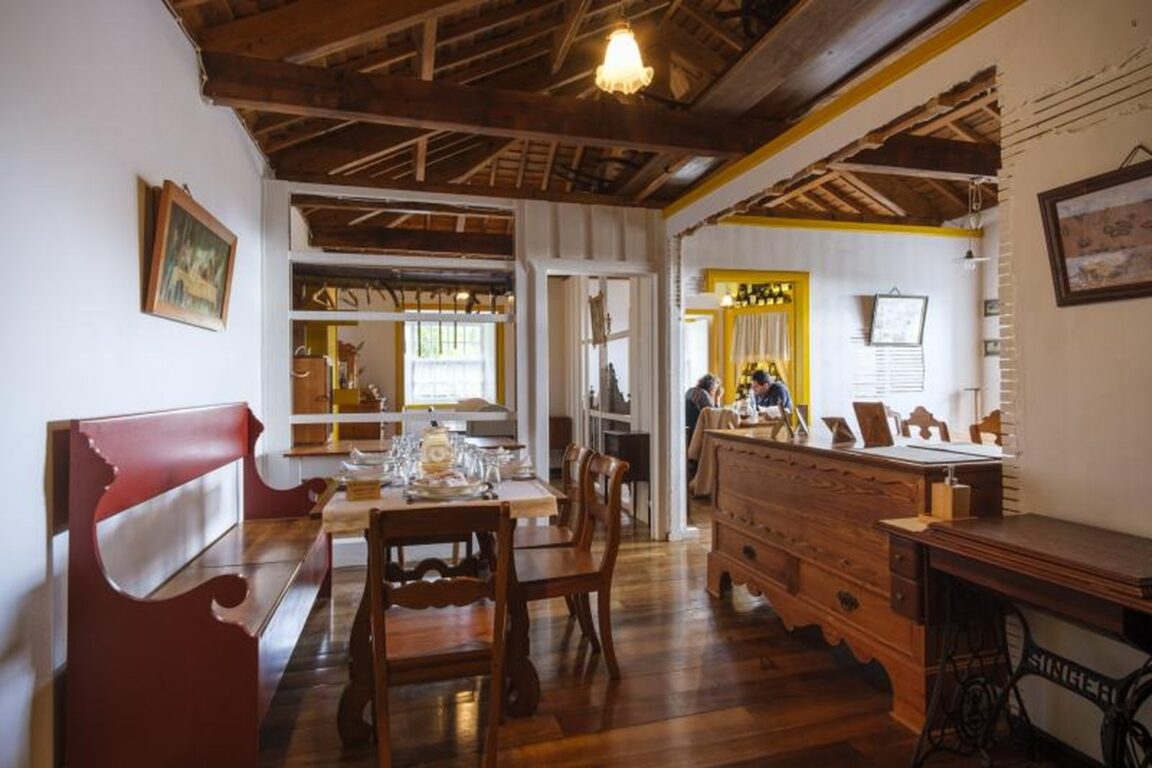
Inside the city, the names locals repeat are the traditional tascas and dining rooms of the old grid, Tasca das Tias chief among them for reliability, with a wine list that takes Terceira seriously. The essential excursion is seven kilometres out, to Quinta do Martelo in Sao Mateus, at Canada do Martelo 24. This is a working farm rebuilt as an ethnographic estate, stone by stone, and its traditional restaurant cooks the island’s repertoire in a dining room that feels like a rural museum that happens to feed you very well. The quinta’s own site records that its kitchen took first place in Portugal’s national gastronomy heritage competition, and its alcatra is the version most often cited as the island benchmark. Book it as the trip’s set piece lunch, then walk the farm’s old threshing floors and vine enclosures to understand where the menu comes from.
For fish, reverse the geography and head to the fishing village of Sao Mateus da Calheta, just west of Angra, where the harbour restaurants grill the day’s catch and serve some of the island’s best lapas; Porto Judeu, east of the city, is the other local answer, known for fish alcatra, the clay pot method applied to the sea. The pattern across Terceira is the same one we found on Menorca in our Ciutadella food guide: the shortest supply line wins, and the harbour decides the menu.
How do lapas, cheese and Verdelho fill the gaps between pots?
Lapas grelhadas are the Azores’ universal first order and Terceira’s are prized, gathered from cold Atlantic rock and grilled briefly on the half shell with garlic butter until they sizzle. The rules are absolute: they must arrive bubbling, they must be eaten within minutes, and a squeeze of lemon is the only permitted distraction. A plate of lapas, a basket of corn bread and a glass of Verdelho is a complete Terceira afternoon, not merely a starter.
The cheese course runs on two islands. Terceira’s own queijo da ilha is a semi hard cow’s milk cheese, buttery and tangy, made across the island; Queijaria Vaquinha is the producer visitors can actually go to, tasting and buying at the dairy and touring the farm. Sao Jorge cheese is the heavyweight: a firm, aged DOP cheese from the long thin island visible across the channel, matured for months until it turns piquant and crystalline, and the cheese every Angra restaurant reaches for when the board is meant to impress. A proper Sao Jorge run means buying a wedge aged at least four months, tasting it against the local queijo da ilha, and understanding that the Azores are nine islands that constantly feed each other.
Verdelho closes the triangle. At Biscoitos, on the north coast, vines are trained low inside currais, grids of small plots walled with black basalt that shelter the grapes from salt wind and store the day’s heat. The wine is dry, saline and built for limpets and grilled fish. The drive out pairs naturally with a north coast swim in the lava rock pools, and with the packing logic in our Azores in September packing guide, because Terceira weather can deliver four seasons between lunch and dinner.
What sweet thing ends the meal, and what feast should you time a trip for?
Queijadas da Dona Amelia are Angra’s edible souvenir: small, dense cakes of eggs, honey, cinnamon and cornflour with molasses and raisins, dusted with icing sugar, first made for Queen Amelia when she visited the island in 1901. Every bakery in the old town sells a version, they keep for days, travel well, and taste of the island’s sugar and spice trading past. Buy a box on the last morning, not the first, or they will not survive the trip home.
If dates are flexible, aim for the Espirito Santo season, the Holy Spirit festivals that run through late spring and summer across Terceira, when sopas do Espirito Santo are served communally: a rich beef broth poured over bread layered with cabbage and mint, with the slow cooked meat alongside. It is alcatra’s close cousin and the island’s food culture at its most generous, cooked in quantity and given away. Angra’s own Sanjoaninas festival in June is the city’s biggest week, when the whole grid eats outdoors and every kitchen in this guide works at full stretch.
Frequently Asked Questions
What is alcatra and what does it taste like?
Alcatra is Terceira’s signature beef dish: rump slow cooked for hours in an unglazed clay pot with wine, onion, garlic, bacon and warm spices including allspice and black pepper. The meat breaks apart, the liquor is rich and spiced rather than hot, and it is served in the cooking pot with bread for the juices.
Is there a Michelin starred restaurant in Angra do Heroismo?
No. There is no Michelin starred restaurant on Terceira, and the guide does not list Angra rooms to chase. The island’s fine dining is traditional: judge restaurants by their alcatra, their lapas and their cheese board instead, starting with the rooms named in this guide.
Can I eat alcatra on a weekday, or is it weekends only?
Many traditional restaurants cook alcatra mainly at weekends, when pots can be planned around bookings. In Angra, Tasca das Tias serves it through the week, and Quinta do Martelo is the benchmark excursion. If alcatra is the point of the trip, book ahead and confirm the pot when reserving.
What cheese should I buy on Terceira?
Two wedges: Terceira’s own queijo da ilha, semi hard, buttery and tangy, ideally from Queijaria Vaquinha where you can taste at the dairy, and aged Sao Jorge DOP cheese from the neighbouring island, firmer and more piquant, sold in Angra’s shops and market.
What are lapas and how should they be served?
Lapas are limpets, grilled on the half shell with garlic and butter. They must arrive sizzling and be eaten immediately with lemon. Sao Mateus da Calheta, the fishing village west of Angra, is the classic place to order them alongside grilled fish.
Last updated 17 November 2026. Restaurant details and the island’s Michelin position checked against local sources and the venues’ own sites on the day of writing.