 Aiko Tanaka
Ciutadella eats around its harbour, and the plan writes itself: a long lunch of just-landed fish on the quay at Cafe Balear, which cooks the catch of its own boat, a slow evening working along the port to S’Amarador for a caldereta de langosta, the spiny lobster stew that is Menorca’s defining dish, and a pomada, the island gin and lemonade, to finish. One correction before the appetite builds: Menorca has no Michelin-starred restaurant, and Ciutadella’s excellence is of a different kind. Where the Michelin Guide covers the town it is with listed, recommended rooms, Smoix chief among them, now cooking at the Hotel Rural Sant Ignasi just outside the old town under chef Miquel Sanchez. The real stars here are the harbour restaurants, the fish market, a protected farmhouse cheese and a gin with a British naval past, and a food trip built on those will not miss the white guide’s stars for a minute.
Quick Facts
- Town: Ciutadella, at the western end of Menorca, Balearic Islands; the island’s former capital and still its most atmospheric harbour
- Signature dish: Caldereta de langosta, spiny lobster stew, priced per person and never cheap; order it once, properly, at a harbour table
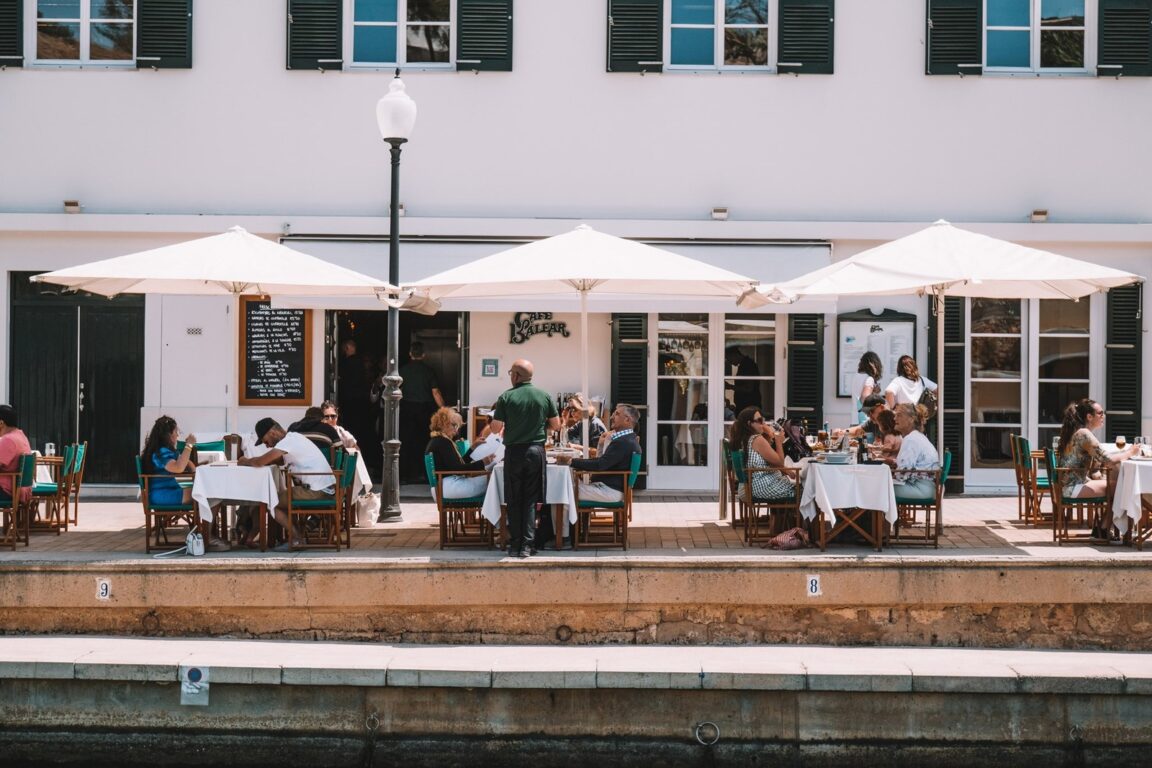
- Harbour anchor: Cafe Balear, Passeig des Moll 15, on the quay since the 1970s, serving fish caught by its own boat, the Rosa Santa Primera
- Michelin position: No starred restaurant on Menorca; Smoix, chef Miquel Sanchez, at Hotel Rural Sant Ignasi, is the town’s Michelin Guide listed fine dining name, with its city offshoot Katu in the centre
- Drink: Pomada, Xoriguer gin with lemonade; Gin de Mahon is a protected geographical indication, distilled in Mahon from wine alcohol and juniper in wood-fired copper stills
- Buy: Queso Mahon-Menorca, the island’s DOP cow’s milk cheese, from young and soft to aged curado and anejo, sold at the Mercat des Peix and old town shops
- Market: Mercat des Peix, the fish market on Placa de la Llibertat, mornings Tuesday to Saturday; arrive before midday for the full stalls
- Season note: Ciutadella is a summer town; many harbour kitchens close or cut hours in deep winter, so November trips should target lunch and book ahead
Why does the harbour decide what you eat?
Ciutadella’s port is a long, narrow inlet that cuts into the old town like a canal, and its quays are lined with restaurant terraces from the bridge at its head down toward the sea. That geography is the menu. The boats work out of this harbour, the fish market sits a few streets above it, and the kitchens that matter most are the ones plugged directly into that short supply line. Cafe Balear is the clearest case: it began in the 1970s as a harbour tavern feeding fishermen before dawn, and four decades on it still serves fish and seafood caught by its own boat, the Rosa Santa Primera. Eat there at lunch, on the terrace at the water’s edge, and order whatever the boat brought in, razor clams, calamari, hake cheeks, grilled fish of the day, before you order anything printed.
At the inner end of the port, S’Amarador plays the same harbour game at a more polished register, contemporary Menorcan seafood in a dining room famous for the fig tree growing inside it, and a caldereta that regulars argue is the best on the island. The honest way to choose between the two is by meal, not by ranking: Cafe Balear for the long, plain, perfect lunch, S’Amarador for the evening splurge as the light goes on the water. Both need booking in season, and both reward asking what came off the boats that morning over any fixed recommendation, ours included.
What is caldereta, and how do you order it without regret?
Caldereta de langosta is a rich, brick-red stew of spiny lobster, cooked with tomato, onion, pepper, garlic and the lobster’s own juices, traditionally in an earthenware pot and eaten with thin slices of bread rubbed and soaked in the broth. It is associated above all with Fornells, the fishing village on Menorca’s north coast, but Ciutadella’s harbour kitchens cook it seriously, and for a visitor based in the west it is the one dish worth organising a day around. Two rules govern it. First, it is priced per person, usually with a minimum of two, and lobster prices make it the most expensive order on any Menorcan menu; confirm the price when you book, not when the bill arrives. Second, many kitchens need notice, so reserve the table and the caldereta together, a day ahead in season.
Beyond the caldereta, Menorcan cooking rewards the traditional order: oliaigua, the island’s humble tomato and vegetable soup, to start; baked or grilled local fish; arroz, rice dishes built on fish stock; and for pudding, the island’s pastries, including the spiral ensaimada Menorca shares with Mallorca and, in Ciutadella, pastissets and formatjades, the little cheese filled pastries of the Sant Joan festival season.
Where does the Michelin Guide fit, if there are no stars?
Plainly: it fits at the level of listings, and the listings are still useful. Smoix is the name the guide has carried for Ciutadella across recent editions, a contemporary Menorcan kitchen built on seasonal local produce; after years in the centre, chef Miquel Sanchez now cooks at the Hotel Rural Sant Ignasi, a country house hotel a short drive north of town, while the original city site runs as Katu by Smoix, adding a Mexican thread to the Mediterranean base. For a tasting menu occasion in the west of the island, Smoix at Sant Ignasi is the booking to chase, with the understanding that you are booking a guide-listed room, not a starred one. In the old town, Es Tast de Na Silvia, chef Silvia Anglada’s small restaurant, holds a different distinction: it is known as the island’s Slow Food, kilometre zero standard bearer, cooking Menorcan recipes from island produce, and it books out fast in season.
Set expectations accordingly and Ciutadella overdelivers. This is not a tasting menu town. It is a harbour, market and farmhouse town whose best meals are a grilled fish, a shared caldereta and a wedge of aged cheese, eaten slowly. Travellers touring Spain’s food cities will find the contrast instructive; our coverage of Barcelona’s tourist tax changes and the Spain rental registry rules covers the practical frame for the mainland legs of such a trip.
What do gin and cheese have to do with Ciutadella?
More than any dessert menu. Menorca spent much of the 18th century under British rule, and British sailors and soldiers wanted gin. Local distillers obliged, using wine alcohol rather than grain spirit, juniper and Mediterranean water, and the result survives as Gin de Mahon, a protected geographical indication made in wood-fired copper stills. Its best known producer, Xoriguer, distils in Mahon, at the island’s other end, and a distillery visit belongs to a Mahon day; but the gin’s social home is every fiesta and harbour bar in Ciutadella, where it is drunk as a pomada, mixed long with cloudy lemonade. During the Festes de Sant Joan in June, Ciutadella’s great horse festival, pomada consumption reaches industrial scale. In November, order one at a harbour bar and you are drinking the island’s history in its mildest form.
The cheese is the souvenir that survives the trip. Queso Mahon-Menorca carries DOP protection: a pressed cow’s milk cheese from island farms, its rind rubbed with oil and paprika as it matures, sold young and tender at a few weeks, semi-cured, and fully curado or anejo, hard, crystalline and intensely savoury, after months of ageing. Buy it at the Mercat des Peix halls and the old town delicatessens around Ses Voltes, the arched shopping street, taste the ages side by side, and take home a vacuum packed wedge of the oldest you enjoy. Farm visits and direct sales operate at fincas across the island’s green interior for drivers with a free morning.
How do you time a food day in Ciutadella?
Start at the market. The Mercat des Peix, on Placa de la Llibertat in the old town, trades in the mornings, Tuesday to Saturday, and a walk through it at 10am tells you what lunch should be. Coffee and a pastry in the Placa des Born, the great square above the harbour, then descend to the quay for the Cafe Balear lunch from about 1.30pm, Spanish hours applying in full. The afternoon belongs to the old town: the cathedral, the palaces of Carrer Major, and the cheese shops of Ses Voltes. Book the evening at S’Amarador or, for the fine dining version of the island, out at Smoix, and finish with a pomada on the quay. In November, the current season at the time of writing, invert nothing but compress everything: kitchens run shorter hours, some harbour rooms close midweek, and lunch becomes the reliable main event, so book the caldereta lunch rather than gambling on dinner.
Frequently Asked Questions
Does Ciutadella have a Michelin-starred restaurant?
No. Menorca has no Michelin-starred restaurant. The Michelin Guide lists and recommends rooms in and around Ciutadella, most notably Smoix, now at the Hotel Rural Sant Ignasi under chef Miquel Sanchez, but lists are not stars, and the town’s best eating is in its harbour restaurants.
What is caldereta and how much does it cost?
Caldereta de langosta is Menorca’s spiny lobster stew, served per person, usually for a minimum of two people, and it is the priciest dish on local menus because the lobster is priced by weight and season. Confirm the per person price when you reserve, and give the kitchen a day’s notice where asked.
Where is the gin distillery, in Ciutadella or Mahon?
In Mahon. Xoriguer, the best known Gin de Mahon producer, distils at the port of Mahon, Moll de Ponent 91. Ciutadella drinks the gin, above all as a pomada with lemonade, but the distillery visit is a Mahon trip.
What cheese should you buy in Ciutadella?
Queso Mahon-Menorca DOP, the island’s protected cow’s milk cheese. Taste it young, semi-cured and fully aged, then buy the aged curado or anejo, vacuum packed, at the market or an old town delicatessen.
When is the fish market open?
The Mercat des Peix on Placa de la Llibertat opens in the mornings, Tuesday to Saturday. Arrive before midday for the full range of stalls, and let what you see there decide your lunch order on the quay below.
Photo: Lunch on the harbour terrace at Cafe Balear, Ciutadella, via Cafe Balear and Balear Grup official website (baleargrup.com).