 Priya Nair
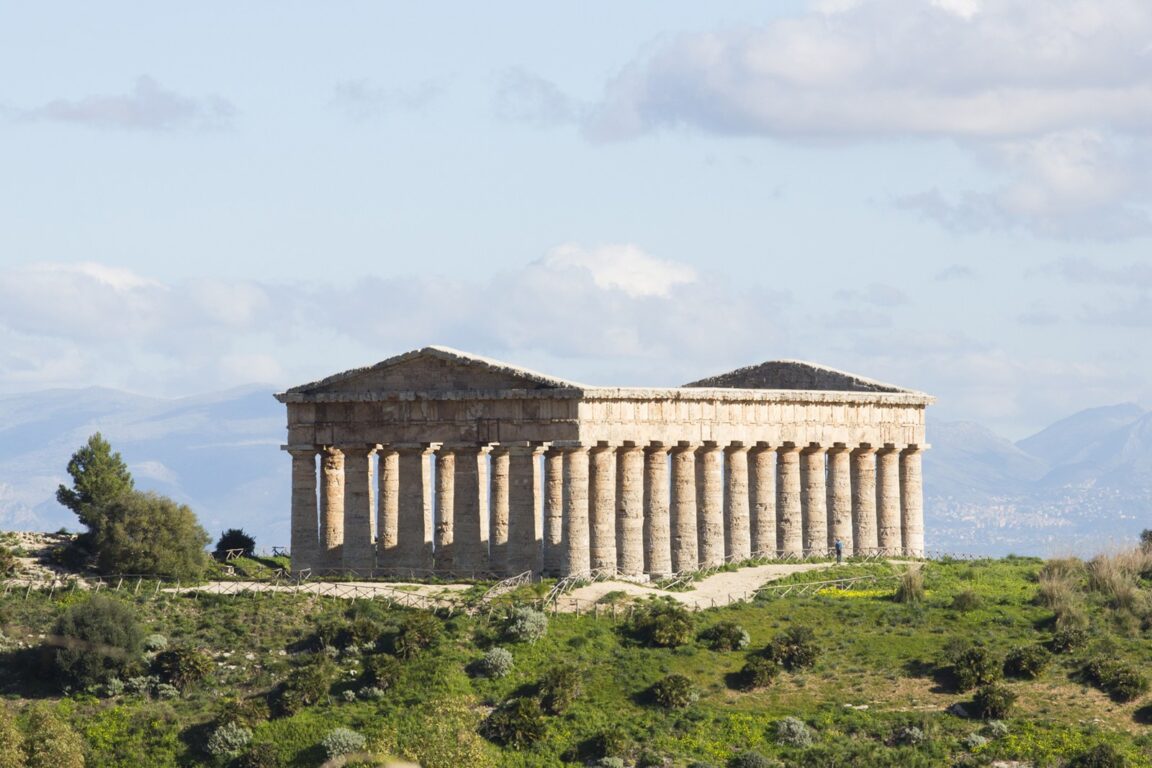
Do Segesta in this order: temple first, in the quiet of the 9am opening, then the shuttle bus up Monte Barbaro to the hilltop theatre while the light is still kind, and only then the slower archaeological areas around the summit. The temple is the famous image, 36 unfluted Doric columns standing alone in a green valley near Calatafimi in western Sicily, but the detail that makes the visit is that it was never finished: no cella was ever built inside the colonnade, no roof was raised, and the columns were never carved with their final fluting. Segesta is not a ruin of something completed. It is a building site that stopped about 2,400 years ago, and reading it that way turns a photo stop into one of the most interesting ancient visits in Sicily.
Quick Facts
- Site: Segesta Archaeological Park, Contrada Barbaro, 91013 Calatafimi-Segesta, Trapani province, Sicily
- Headline sight: The Doric temple, usually dated to the 420s BC, 36 columns, never completed and probably never used for worship
- Second sight: The Hellenistic theatre on Monte Barbaro, built in the 3rd to 2nd century BC, seating about 4,000, facing the Gulf of Castellammare
- Tickets: Full price 16 euros including admission to any current exhibition, reduced 9 euros, on the park rates published by the official West of Sicily park page; a combined ticket with the Pianto Romano museum is 18 euros
- Winter hours: From 25 October to 31 December the ticket office runs 9am to 3.30pm and the park closes at 5.30pm, on the official seasonal schedule; hours lengthen through spring to a 7.30pm summer closing
- Free entry: Every first Sunday of the month, under the Italian state museum scheme
- Time needed: Half a day at a relaxed pace; the temple alone can be seen in under an hour, which undersells the site
- Getting there: Just off the A29 Palermo to Trapani motorway, about 60 km from Palermo; the park shuttle links the lower temple area with the theatre on Monte Barbaro
Why is the temple unfinished, and how can you tell?
Look for what is missing rather than what fell down. A finished Greek temple has a cella, the walled inner chamber that housed the cult image, reached through the colonnade. At Segesta there is open ground inside the ring of columns and nothing else. The columns themselves are smooth cylinders: the vertical grooves called fluting, normally carved once the columns were standing, were never cut, and the lifting bosses used to hoist the stone blocks were never trimmed away. Even the steps were left with their rough protective surface. Every one of those details points the same way. Construction stopped at a specific, identifiable stage and never restarted.
Who stopped, and why, is still argued about. Segesta was the principal city of the Elymians, a people of western Sicily who were not Greek settlers but who built confidently in the Greek architectural language of the period. The temple is usually dated to the 420s BC, squarely in the years when Segesta was locked in conflict with its Greek neighbour Selinunte and was courting Athens as an ally. One long-standing reading is that the temple was as much a diplomatic statement as a sanctuary, proof to Athenian envoys that Segesta was a serious, wealthy, Greek-aligned city worth defending. When the Athenian expedition to Sicily ended in disaster at Syracuse in 413 BC, the politics, and perhaps the money and the will, disappeared with it. Treat that as the leading explanation rather than settled fact, because the honest answer is that nobody knows which god the temple was even intended for.
What should you look at once you reach the temple?
The setting does half the work. The temple stands on a low hill at the edge of a shallow valley, outside the ancient city walls, with no modern building competing in the view. Walk a full circuit before you go up the steps. From the valley side you get the postcard composition, the complete peristyle and both pediments against the hills. From close in, the scale changes: the columns are about nine metres high, the platform roughly 61 metres by 26, and the stone is a warm local limestone that holds the morning light. Because there is no cella, you can see straight through the building, colonnade framing countryside, which no finished temple allows.
Give the temple the first hour of the day. Coaches begin arriving from Palermo and Trapani through the mid morning, and the difference between the temple at 9.15am and the temple at 11am is the difference between a monument and a queue. If you are combining Segesta with other western Sicily sites, the natural pairings are set out in our guide to the Valley of the Temples at Agrigento, a longer drive south, and the nuraghe visit in our Su Nuraxi done properly guide, which rewards the same arrive-at-opening discipline.
How do the theatre and Monte Barbaro fit into the visit?
The ancient city stood on Monte Barbaro, across the valley from the temple, and its theatre is the park’s second essential sight. Built in the Hellenistic period, in the 3rd to 2nd century BC, the cavea is cut into the northern slope of the hill about 440 metres above sea level, and it does something clever: instead of staring at a stage building, the audience looked out over the landscape toward the Gulf of Castellammare. About 4,000 spectators could sit here. The theatre still earns its keep, hosting summer performances, so on festival days access and timings can shift around rehearsals and evening shows.
The practical choice is the shuttle. The climb from the temple area to the summit is a real one, on an exposed road with little shade, and in summer heat it eats time and energy better spent at the top. The park shuttle runs between the lower area and the theatre for a small separate fare; buy the return and keep the walk for the summit plateau itself, where the theatre sits among the remains of the later city, including the agora area, medieval structures and a Norman-era castle. That layering, Elymian city, Greek theatre, Roman and medieval remains on one hilltop, is the part of Segesta most day visitors skip entirely, and it is what lifts the park from a single monument to a place.
When is the best time of year and day to go?
Spring and autumn are the comfortable seasons: the valley is green, the walking is pleasant, and the park keeps middling hours. In mid November, the current season at the time of writing, the ticket office closes at 3.30pm and the park at 5.30pm, which compresses the visit: arrive at opening, temple first, shuttle up by late morning, and do not leave the theatre for the end of the day. Summer inverts the problem. Hours stretch to a 7.30pm closing, but the site is almost entirely unshaded, so the same opening-time start applies, with the theatre done before the midday heat builds on the exposed summit. In every season, last entry is well before closing, and the ticket office shuts earlier than the park, so an afternoon arrival needs checking against the official schedule on the day.
How do you get there without a tour?
Driving is straightforward: the park sits just off the A29 motorway between Palermo and Trapani, signed from the Segesta exit, with parking at the entrance area below the temple. From Palermo the run is about an hour. Public transport exists but asks for patience: trains on the Palermo to Trapani line stop at Segesta Tempio station, followed by an uphill walk of around 20 minutes to the entrance, and regional buses serve Calatafimi, from where the site is a further hop. If Segesta is one stop on a western Sicily loop with Erice, Trapani and the salt pans, a car pays for itself in connections saved. However you arrive, build the plan around the fixed points: gates at 9am, temple before the coaches, shuttle to the theatre, summit ruins last.
Frequently Asked Questions
Was the Segesta temple ever used as a temple?
Probably not. With no cella, no roof and no trace of the fittings a working sanctuary needs, the evidence points to a building abandoned before it could function. Its intended deity is unknown.
How much does Segesta cost in 2026?
The park’s published full price is 16 euros including any current exhibition, with a reduced rate of 9 euros and a combined ticket with the Pianto Romano museum at 18 euros. Entry is free on the first Sunday of the month. Confirm on the official park page before travelling, as exhibition pricing changes the headline rate.
Can you walk from the temple to the theatre?
Yes, but it is a sustained uphill walk on an exposed road. The park shuttle covers the climb for a small separate fare and is the sensible choice in heat, in winter’s short hours, or with children.
How long do you need at Segesta?
Allow half a day: about an hour at the temple, the shuttle ride, and at least an hour on Monte Barbaro for the theatre and the summit ruins. A one hour stop sees the temple and misses the point.
Is Segesta a UNESCO site?
No. Unlike Agrigento, Segesta is not on the World Heritage List, which surprises many visitors given the temple’s state of preservation. It is protected as a Sicilian regional archaeological park.
Photo: The Doric temple at Segesta, via Segesta Welcome (segestawelcome.com), the official visitor site for Segesta.