 LeVar Thomas
Su Nuraxi is visited only on a guided tour, and that single rule shapes the whole trip. Tours leave every 30 minutes, last about an hour, and one ticket also covers the Casa Zapata Museum Complex and the Giovanni Lilliu Centre in Barumini, according to the Fondazione Barumini, which manages all three sites. Book the three sites as one outing, arrive for a morning departure in the cooler months, and give the nuraghe itself the first and freshest hour of the day.
Quick Facts
- Site: Su Nuraxi di Barumini, a Nuragic complex in Barumini, south central Sardinia, inscribed by UNESCO in 1997
- Access: Guided tours only, departing every 30 minutes and lasting about 1 hour
- One ticket, three sites: Su Nuraxi, the Casa Zapata Museum Complex and the Giovanni Lilliu Centre
- Hours: Open every day of the year with continuous hours; closing varies by season, with November to February the shortest days
- Published adult tariff: 15 euros on the tariff sheets reproduced from the Fondazione schedule; confirm the current tariff on the Fondazione site before paying
- Footwear: Comfortable clothing and non slip shoes, as the Fondazione advises
- Animals: Not allowed, except guide dogs, and then by reservation only
What exactly is a nuraghe, and why does this one matter?
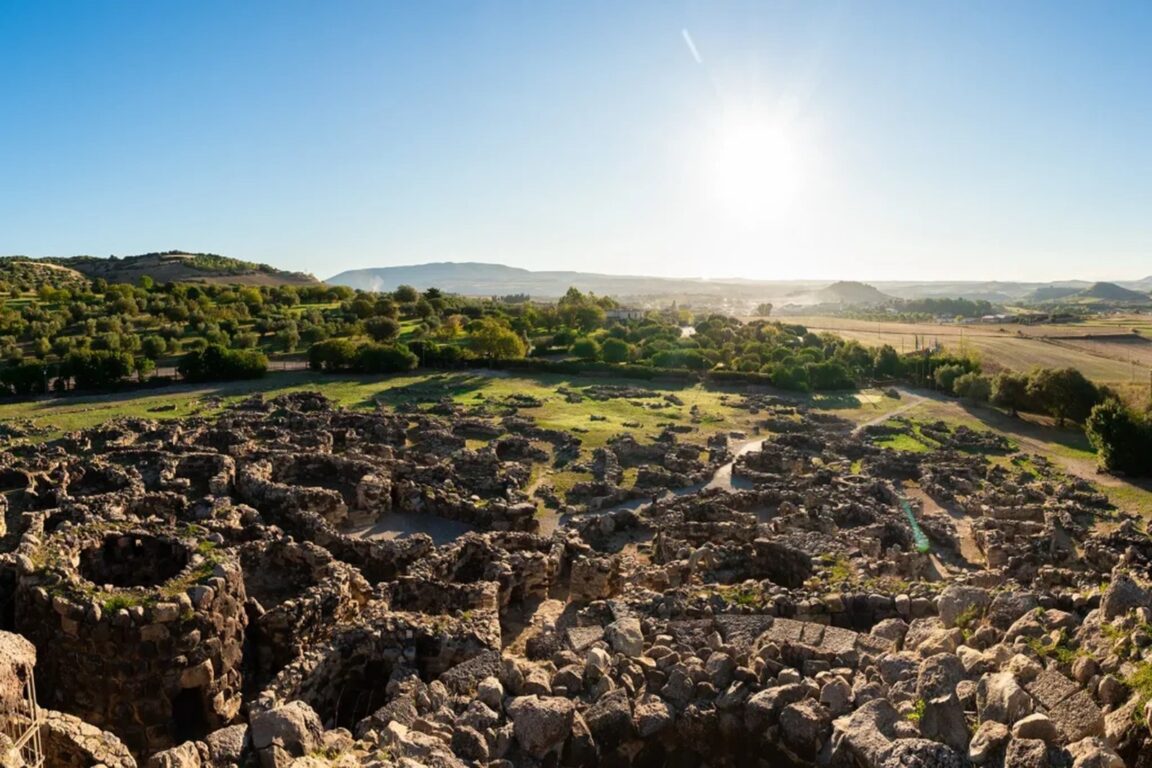
A nuraghe is a dry stone tower built only in Sardinia, and Su Nuraxi is the island’s defining example. The oldest part is a central tower of basalt blocks with three superposed chambers, raised between the seventeenth and thirteenth centuries BC. Around it grew a bastion with four corner towers and then a village of circular stone houses, occupied from the thirteenth to the sixth century BC. UNESCO inscribed the site in 1997 as the outstanding representative of this building tradition, a tradition with no parallel elsewhere in the Mediterranean.
Scale is the point that photographs flatten. From the approach road the complex reads as a low stone hill. Inside the guided route, the walls close in, the chambers stack overhead, and the village lanes make clear that this was a lived in settlement as well as a strongpoint. The excavation history matters too. The site was fully excavated between 1950 and 1957 under Giovanni Lilliu, the Barumini born archaeologist whose name the third site on the ticket now carries. For another Sardinian scale lesson in stone building, compare the cave city covered in our Matera guide, where a whole town was carved rather than stacked.
How do tickets and the booking order actually work?
Work in this order. First, choose the day and aim for the earliest tour that suits the drive, because the archaeological area is open ground with little shade and the Fondazione warns that access may be restricted in bad weather for safety. Second, buy the single combined ticket through the Fondazione Barumini, the official manager. Third, sequence the three sites with Su Nuraxi first, while energy and light are best, then Casa Zapata and the Giovanni Lilliu Centre, each visited on guided tours of about 30 minutes departing every 30 minutes.
Do not plan on wandering the fortress alone to save time. Self guided entry to the central complex is not the offer here; the guided format is the condition of access, and it is also the interpretation. The guide controls the pace through the towers and explains the phasing that is hard to read from the stones alone. Groups, schools and travel agencies should book in advance through the Fondazione. Individual visitors in the quiet season have more flexibility, but the last tour of the day still leaves an hour before closing, so a late arrival can miss the nuraghe even while the ticket office area is still open.
What will you see on the Su Nuraxi tour itself?
The route moves from the outer village into the bastion and the central tower. The village is a maze of circular hut foundations, including a larger meeting hut, and it rewards slow looking: door thresholds, niches and the sheer density of building explain how a community organised itself around the tower. The bastion’s four towers and connecting walls show the defensive phase, when the original single tower was wrapped in a much larger fortified circuit.
Inside the central tower, the three stacked chambers are linked by a staircase within the wall thickness. That engineering, corbelled stone vaulting raised without mortar in the Bronze Age, is the detail to hold onto. Guides also point out how later occupation, including Roman era use of the village area, layered over the Nuragic plan rather than erasing it. Expect uneven stone underfoot and confined passages; the Fondazione’s advice on non slip shoes is practical, not boilerplate.
Why should Casa Zapata and the Lilliu Centre not be skipped?
Casa Zapata is a sixteenth century Aragonese style palace in Barumini village, and its surprise is underfoot: it was built over another nuraghe, Su Nuraxi e Cresia, which is now visible inside the complex. The museum sections display finds that give the main site its human detail, including pottery and tools that the open air ruins cannot supply. Seeing a nuraghe preserved inside a later palace also explains Sardinia in miniature, where each era built directly on the last.
The Giovanni Lilliu Centre, named for the excavator, hosts permanent and temporary exhibitions and the models and reconstruction material that make Su Nuraxi legible before or after the stones. If the order can be flexed on a very hot day, some visitors prefer the centre first for orientation. Either way, treating the combined ticket as a three part visit, rather than a single photo stop, is the difference between a tick box detour and an understood site. Ticketed heritage planning of this kind is similar in spirit to our Alhambra tickets guide: the booking order is part of the experience.
When is the best time of day and year to go?
The Fondazione publishes seasonal hours. In the longest months, May to August, the site stays open into the evening; in November to February it closes at 5pm, with the last guided tour at 4pm. March and October are transitional months tied to the clock changes. For a November visit, a morning tour avoids racing that early last departure and gives low, clear light across the village stones.
Summer brings the opposite problem: heat on exposed basalt and the busiest departures. An opening tour, water, and a hat are the sensible kit, with the two indoor leaning sites saved for the hotter middle of the day. Winter visits trade short hours for quiet paths and green countryside around Barumini, a fair exchange if the day is planned around the 4pm last tour.
How do you get to Barumini and how long should you allow?
Barumini sits inland in the Marmilla countryside, north of Cagliari, and most visitors arrive by car as part of a Sardinia road trip rather than as a city day trip. Allow about three hours for the full combined ticket: roughly an hour for Su Nuraxi and about 30 minutes each for Casa Zapata and the Lilliu Centre, plus walking and waiting time between departures. A rushed one hour stop wastes the ticket’s design.
Build the rest of the day gently. The Marmilla hills and the nearby Giara plateau are the natural pairings, but do not stack another timed entry immediately after Barumini; guided departures every 30 minutes are forgiving, yet a late start compresses all three sites. Check the Fondazione timetable again in the week of travel, because seasonal closing and last tour times, not the headline opening hour, are what actually govern the visit.
Frequently Asked Questions
Can you visit Su Nuraxi without a guide?
No. The Fondazione states that Su Nuraxi is open all year with guided tours required. Tours depart every 30 minutes and last about an hour.
What does one ticket cover at Barumini?
One ticket covers three sites: Su Nuraxi, the Casa Zapata Museum Complex and the Giovanni Lilliu Centre, each visited with a guide.
What are the opening hours in winter?
Hours are seasonal. In November to February the published schedule closes the site at 5pm, with the last guided tour an hour before closing. Confirm the current month on the Fondazione Barumini tickets page before travelling.
How long does a full Barumini visit take?
Allow about three hours: about an hour at Su Nuraxi and about 30 minutes each at Casa Zapata and the Giovanni Lilliu Centre, plus time between tours.
What should you wear for Su Nuraxi?
The Fondazione advises comfortable clothing and non slip shoes. The village lanes and tower passages are uneven stone, and there is little shade in the archaeological area.
Prices and hours checked 17 November 2026 against Fondazione Barumini. Photo: Su Nuraxi village, Barumini, via Fondazione Barumini, the site’s official manager.