 James Wolfe
Enter the Valley of the Temples at the 8.30am opening and walk the eastern ridge first, from the Temple of Hera at the top down to the Temple of Concordia, before tour groups fill the sacred way. The park opens at 8.30am and the ticket office runs to 7pm with exit by 8pm on the hours published by the park’s visitor site at lavalledeitempli.it; a standard ticket is 14 euros, and the Garden of the Kolymbethra is a separate combined ticket decision to make at the gate, not halfway along the ridge.
Quick Facts
- Site: Valley of the Temples, Agrigento, Sicily, the ridge of ancient Akragas, a UNESCO World Heritage Site since 1997
- Opening: 8.30am to 7pm, with exit from the site by 8pm, on the published park schedule
- Standard ticket: 14 euros; concession 7 euros for EU citizens aged 18 to 25 with ID
- Combined tickets: 19.60 euros with the Pietro Griffo Archaeological Museum; 20 euros with the Kolymbethra Garden
- Free entry: Under 18s, and all visitors on the first Sunday of the month until 7pm
- Time needed: At least 3 to 4 hours for the ridge, longer with the museum or garden
- Entrances: Temple of Juno entrance at the eastern end and the Porta V entrance at the western end
What is the right temple order at opening?
Start at the eastern, Temple of Juno, entrance and walk west. The Temple of Hera Lacinia, also called the Temple of Juno, stands at the highest point of the ridge, built around the middle of the fifth century BC. From there the sacred way runs gently downhill, so an early start means walking with the light and against the main flow of later arrivals, who tend to enter at Porta V and climb.
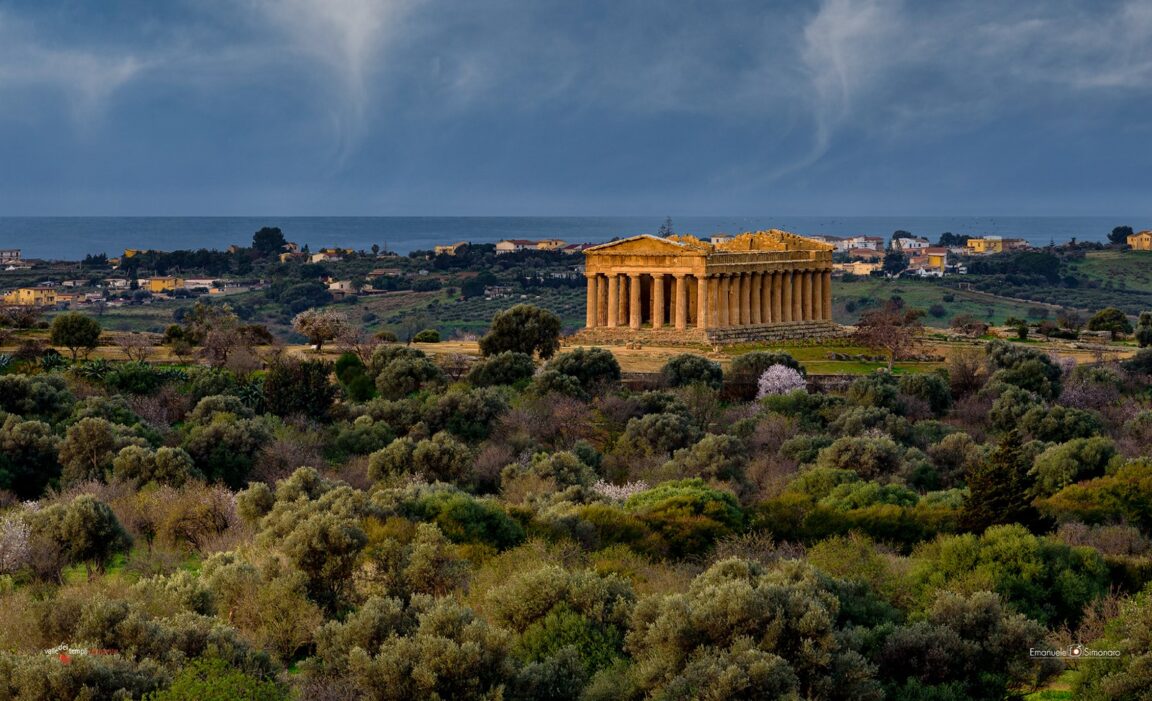
Next comes the Temple of Concordia, built around 440 BC and the park’s complete statement: a full Doric peristyle still standing, largely because the temple was converted into a Christian church in the sixth century AD. Give it the longest stop on the ridge. Below it, the early Christian necropolis and the Villa Aurea area fill in the centuries after Akragas. The Temple of Heracles, near the western end, is the oldest temple on the ridge, from the late sixth century BC, with eight re-erected columns that read clearly against the sky. Ending in the west also sets up the Olympian Zeus field and the Kolymbethra decision without backtracking. For the Greek world pairing, our Acropolis of Athens guide uses the same principle: high point first, crowds behind you.
How do tickets, concessions and combined options work?
Buy the standard 14 euro ticket if the ridge is the whole plan. The published concession is 7 euros for EU citizens between 18 and 25 on showing a passport or ID, and admission is free for EU and non EU citizens under 18. Everyone enters free on the first Sunday of the month until 7pm, which is excellent value and, predictably, the busiest morning to choose.
The two combined tickets solve different days. The 19.60 euro ticket adds the Pietro Griffo Regional Archaeological Museum, open 9am to 7pm, where the finds, including the famous Telamon figure material and Akragas coinage, explain what the stripped temples once held. The 20 euro ticket adds the Garden of the Kolymbethra instead. Decide before paying: if this is a first visit with limited hours, the ridge plus the garden is the more coherent single day; the museum rewards a second half day or a heat escape at midday. Payment at the ticket office is by cash or Visa and Mastercard, per the park visitor site.
Why add the Garden of the Kolymbethra, and when should you skip it?
The Kolymbethra is a green valley floor below the ridge, managed as a historic garden of citrus, olive and almond trees fed by ancient water engineering that gave the place its name, from the great basin of Greek Akragas. After two hours of pale stone and open sky, its shade changes the rhythm of the visit and explains the agriculture that fed the city above.
Skip it on a short or very hot itinerary if the choice is between the garden and completing the western temples; the ridge is the essential text and the garden is the commentary. Add it in spring, when citrus blossom and almond season make it a destination in itself, or on any visit that can stretch past four hours. Sunset entry plans also change the maths: in the summer evening opening season the temples are floodlit on certain dates, so check the park’s current evening schedule rather than assuming a standard 7pm close in July to September.
What should you look for beyond the three famous temples?
The western zone holds the Temple of Olympian Zeus, begun around 480 BC and never finished. Had it been completed at roughly 112 by 56 metres, it would have been among the largest Doric temples ever built, held up in part by telamons, giant male figures about eight metres tall; a reconstructed telamon lying on the site gives the scale that the ruined field otherwise hides. Nearby are the small Temple of the Dioscuri, Castor and Pollux, whose four re-erected columns are the modern symbol of Agrigento, and the sanctuary of the chthonic deities, the oldest cult area on the ridge.
Read the city as well as the temples. Akragas was founded in 580 BC and became one of the great cities of Magna Graecia; its walls, necropolises and the grid below the ridge are part of the same story. That wider Sicilian layering, Greek, Roman, Arab and Norman, is the thread running through our Matera guide as well, where each civilisation reused the last one’s stones.
How should you pace the day in heat, and what should you bring?
The ridge is exposed, the distances are longer than the map suggests, and shade is scarce between temples. An 8.30am start is not a perfectionist flourish; it is the practical core of this guide. Carry water, a hat and sun protection, and wear shoes suited to dusty, uneven paths. In summer, plan the museum or the Kolymbethra shade for the middle of the day and return to the western temples later, within the exit by 8pm rule.
Photographers should reverse nothing: morning light favours Concordia from the east, and late light warms the whole ridge, which is why the sunset and evening openings in season are so sought after. Families should note the free under 18 admission and build in the garden as the rest stop. Everyone should confirm hours on the park site in the week of travel, because evening openings and holiday arrangements sit on top of the standard schedule.
Frequently Asked Questions
How much is a ticket to the Valley of the Temples?
The published standard price is 14 euros, with a 7 euro concession for EU citizens aged 18 to 25 with ID. Combined tickets cost 19.60 euros with the archaeological museum and 20 euros with the Kolymbethra Garden.
What time does the Valley of the Temples open and close?
On the published park schedule it opens at 8.30am, ticket sales run to 7pm and visitors must exit by 8pm. Seasonal evening openings extend hours on certain dates, so check the park visitor site for your date.
Which entrance is best for a first visit?
The eastern Temple of Juno entrance suits the order in this guide: start at the Temple of Hera, walk downhill past Concordia and finish at Heracles and the western zone.
Is the Valley of the Temples free on the first Sunday?
Yes. The park visitor site lists free admission for everybody on the first Sunday of the month until 7pm. Under 18s enter free on every day.
How long do you need in the Valley of the Temples?
Allow at least 3 to 4 hours for the ridge temples. Add an hour or more each for the Kolymbethra Garden and the Pietro Griffo Museum.
Prices and hours checked 17 November 2026 against the park visitor site, lavalledeitempli.it, and the Parco Valle dei Templi. Photo: Temple of Concordia, Valley of the Temples, by Emanuele Simonaro, via Parco Valle dei Templi, the park’s official site.