 Kwame Mensah
Eat and drink in Jerez in this order, and the city makes sense: a fino drawn straight from the barrel in a tabanco at lunchtime, a long bodega tour in the afternoon when the cellars are cool, one serious dinner, and a flamenco night that ends back in a tabanco. Jerez de la Frontera is the capital of sherry, one point of the Sherry Triangle with Sanlucar de Barrameda and El Puerto de Santa Maria, and it holds the title of Spanish Capital of Gastronomy for 2026. It also has two Michelin-starred restaurants within a short walk of each other: LU Cocina y Alma, which holds two stars in the 2026 Michelin Guide under chef Juanlu Fernandez, and Mantua, with one star under chef Israel Ramos. The mistake to avoid is treating Jerez as a tasting menu with a town attached. The tabancos, the sherry bars that pour from the cask and double as flamenco rooms, are the real dining culture here, and everything else arranges itself around them.
Quick Facts
- City: Jerez de la Frontera, Cadiz province, Andalusia; the largest town of the Sherry Triangle and Spanish Capital of Gastronomy 2026
- Drink first: Sherry in its dry styles, fino and manzanilla as an aperitif, amontillado and oloroso with food, poured from the barrel in tabancos
- Michelin headline: LU Cocina y Alma holds two Michelin stars in the 2026 guide, chef Juanlu Fernandez; Mantua holds one star, chef Israel Ramos; both sit around Plaza Aladro and Calle Zaragoza
- Oldest tabanco: Tabanco El Pasaje, Calle Santa Maria 8, pouring since 1925, with daily flamenco shows
- Bodega anchor: Gonzalez Byass, home of Tio Pepe, founded 1835, tours by reservation from its visitor centre in the historic centre
- Eat these: Tortillitas de camarones (shrimp fritters), rabo de toro (oxtail), carrillada (slow pork cheek), ajo caliente at Tabanco San Pablo, fried fish in the pescaito frito style
- Meal rhythm: Lunch is the main meal, from about 1.30pm; dinner rarely starts before 9pm; tabancos fill the gaps at aperitif hours
- Booking rule: Reserve the starred rooms and bodega tours ahead; tabancos are walk in, but arrive before show times for a table
What is a tabanco, and why does it matter more than any restaurant?
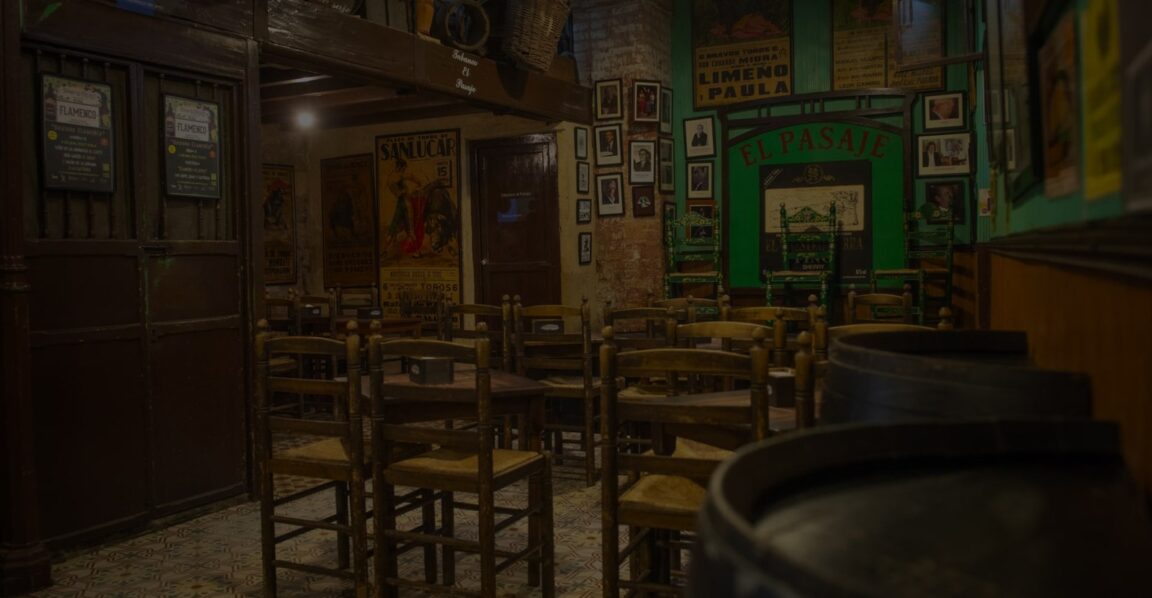
A tabanco is a peculiarly Jerez institution, part wine shop, part tavern, that grew up selling sherry in bulk: you came with a bottle or a jug, filled it from the barrel, and stayed for a glass at the counter. The defining detail survives. In a proper tabanco the sherry is still drawn directly from botas, the oak barrels lined up behind the bar, and a large share of what is poured never sees a bottle at all. Add sawdust-dark wood, bullfighting and flamenco posters, a short list of tapas and preserved fish, and you have the room where Jerez actually socialises. The city even maintains a Ruta de los Tabancos, a tabanco route, so you can work through them systematically rather than by luck.
Start at Tabanco El Pasaje on Calle Santa Maria, founded in 1925 and regarded as the oldest tabanco still operating in Jerez. It has entrances on two streets, which is how it got its name, the Passage, and it runs flamenco shows every day, currently listed at 2pm, 7pm and 9.30pm, with a later middle show on Saturdays; check the board on the day. Order a fino from the barrel, something preserved or smoked to go with it, and treat the show as the main event rather than background music. Then contrast it with Tabanco San Pablo, founded in 1934 in the San Pablo quarter, where the thing to eat is ajo caliente, a hot, garlicky tomato and bread dish served in winter, alongside fino sold by the glass or in bulk to take away. Tabanco Plateros, a 2011 revival pioneer near Plaza Plateros, pours a broader, more curated sherry list for drinkers who want to compare styles side by side.
How should a bodega tour fit around the eating?
Book one big bodega, not three. The essential visit is Gonzalez Byass, the Tio Pepe house, founded in 1835 in the middle of the historic centre: a small town of cellars, vine-shaded streets and courtyards that includes La Concha, the bodega designed with input from Gustave Eiffel’s workshop, and rows of barrels signed by visiting royalty, artists and bullfighters. Visits run by reservation only, in tiers that change the depth of the tasting, so choose the tier by how much sherry you want to drink rather than by price, and book on the official Tio Pepe site before you travel. A late morning or mid afternoon slot works best, leaving lunch free for a tabanco or a sit-down room.
Use the tour to learn the grammar you will drink by for the rest of the trip. Fino ages under flor, a veil of yeast that keeps it pale, bone dry and almondy; manzanilla is the same idea matured by the sea at Sanlucar; amontillado starts under flor and then oxidises, turning nutty and amber; oloroso ages oxidatively from the start, dark and powerful; pedro ximenez is the sweet, raisined outlier for dessert. Back in the tabancos, order in that sequence across an evening and you will taste the whole system without a single lecture. If a second bodega appeals, Lustau, the almacenista house with an unusually wide range of styles, is the connoisseur’s pick, and Bodegas Fundador, founded in 1730 and the oldest in the city, is the history pick.
Where do the Michelin-starred rooms fit in?
Jerez’s fine dining is compact and serious. LU Cocina y Alma, on Calle Zaragoza, is chef Juanlu Fernandez’s two star room in the 2026 Michelin Guide, promoted from one star, which he first won in 2018 after a decade as second in command at the three star Aponiente. His cooking is described by the guide as a personal reading of classic French technique through Andalusian produce and slow-cooked traditional recipes, stews included, and it is the splurge dinner to book if you book only one. Almost opposite, on Plaza Aladro, Mantua holds one star under Israel Ramos, a Jerez native whose restaurant takes its name from a historic local grape variety and whose menus run as a shorter four-dish format or the longer Caliza tasting, built as a journey across the local terroir, sherry pairings very much included.
Between the stars and the tabancos sits the tier locals use most. La Carbona, set in a former 1898 sherry bodega with a soaring ceiling, cooks around the sherry theme under chef Javier Munoz and carries a Michelin recommendation and a Repsol sun. Albalá, Israel Ramos’s gastrobar near the Royal Andalusian School of Equestrian Art, is the smart lunch after the morning horse show, all sharing plates and raciones with the same kitchen intelligence as Mantua at tabanco-adjacent prices. Book the starred rooms well ahead, especially in the Capital of Gastronomy year and around the February flamenco festival and the May horse fair, when the whole city fills.
What should you actually eat across a day in Jerez?
Build the day the Jerez way. Late morning, a fino and a tapa standing up: tortillitas de camarones, lacy shrimp fritters, are the signature bite of Cadiz province and the perfect first mouthful. Lunch is the main event, either the gastrobar tier or a traditional room: order rabo de toro, oxtail braised until it gives way, carrillada, pork cheek in sherry sauce, or a plate of pescaito frito, the Andalusian mixed fry. In the afternoon, when kitchens close and the heat or the siesta empties the streets, bodega tours and museum hours take over. Early evening belongs to the tabanco aperitif, a glass from the barrel and a plate of mojama or cheese. Dinner, from 9pm at the earliest, is your starred booking or a flamenco tablao with food, and the night can still end where it started, in a tabanco, with an oloroso.
For the flamenco half of that evening, the tabancos are only the beginning: dedicated tablaos and the penas, the flamenco social clubs of the Santiago and San Miguel quarters, are where the art form lives at full strength, and our guide to flamenco in Seville explains how to choose a room and read a performance, lessons that transfer directly to Jerez, the birthplace of bulerias. Jerez also works as a base: Seville is about an hour by train, and the Alhambra in Granada is a longer but feasible day trip east.
Frequently Asked Questions
How many Michelin stars does Jerez have?
Three across two restaurants in the 2026 Michelin Guide: two stars at LU Cocina y Alma, chef Juanlu Fernandez, and one star at Mantua, chef Israel Ramos. Both are in the historic centre, a short walk apart.
What is the difference between a tabanco and a normal bar?
A tabanco sells sherry from the barrel, historically in bulk to take away as well as by the glass, and pairs it with a short traditional food offer and, in the best known rooms, live flamenco. Tabanco El Pasaje, open since 1925, is the classic example.
Do you need to book bodega tours in Jerez?
Yes for the big houses. Gonzalez Byass, the Tio Pepe bodega, runs visits by reservation only, in several tiers. Book on the official site and pick the tier by the tasting, not just the price.
When do people eat in Jerez?
Late by northern standards. Lunch runs from about 1.30pm to 3.30pm and is the main meal; dinner starts at 9pm at the earliest. Tabancos and bars cover the aperitif hours in between.
Why is 2026 a big year for food in Jerez?
Jerez holds the title of Spanish Capital of Gastronomy for 2026, with a year of food events layered over its usual calendar of the February flamenco festival, the May horse fair and International Sherry Week in November. Book rooms and restaurants earlier than usual.
Photo: Inside Tabanco El Pasaje, Jerez, with its sherry barrels and flamenco posters, via Tabanco El Pasaje official website (tabancoelpasaje.com).