 Maya Chen
Pack for the Azores in September as if four seasons, two or three islands and one small aircraft share a single bag, because they do. September is the warmest sea month of the Azorean year and one of the mildest on land, with Ponta Delgada averaging daytime highs around 25 degrees Celsius, yet the same week can deliver crater rim wind, warm rain, a natural pool swim and a flight change when Atlantic weather rewrites the inter island schedule. The bag that works is built around that reality. A waterproof shell and light layers handle the land, a proper swim kit handles an ocean that averages around 23 to 24 degrees, and everything essential for the first 24 hours stays in the cabin bag, because checked bags and small inter island planes do not always arrive together. One correction first, for anyone packing around flowers. The famous blue hydrangea roads peak in July. By September the hedges are at the end of their bloom, still green and still lining the roads, but faded rather than electric blue. Pack for the sea and the trails, and treat any remaining hydrangea colour as a bonus.
Quick Facts for Packing for the Azores in September
- The climate in one line: September is warm and humid, with Ponta Delgada on Sao Miguel averaging highs around 25 degrees Celsius in the IPMA 1991 to 2020 climate normal, nights in the high teens, and roughly nine to ten days in the month with measurable rain.
- The sea: Ocean temperatures peak in September at around 23 to 24 degrees Celsius, the warmest of the year, so a full swim kit earns its space in a way it would not in spring.
- The hydrangea truth: Hydrangeas flower from June, peak in July, and fade through August. September roads are green with spent blooms, not peak blue. Do not build the trip, or the bag, around flower colour.
- The flight factor: SATA Air Acores is the inter island airline linking all nine islands. Its official baggage guidance makes the allowance depend on the fare bought, with economy checked baggage at 23 kilograms on inter island routes, so the safe design is one checked bag under that line and a cabin bag that can sustain you alone.
- The bag: One medium case or 45 to 55 litre bag plus a cabin sized personal bag. The personal bag carries documents, medication, swim kit, one full change of clothes and every charger, on every inter island hop.
- The one item people forget: A dry bag. It protects electronics on boat trips and crater rim walks, carries a wet swimsuit between islands, and keeps a checked bag organised when plans change at short notice.
What does September in the Azores actually feel like?
September sits at the hinge of the Azorean year. Summer warmth lingers, especially in the sea, but the Atlantic begins to reassert itself. On Sao Miguel, the largest island and the usual entry point through Ponta Delgada, September days are warm enough for short sleeves at sea level, while the interior highlands around Sete Cidades, Furnas and Lagoa do Fogo run cooler, cloudier and wetter than the coast. Altitude matters here out of proportion to the modest heights involved. Crater rims sit in cloud on days when the harbour is in sunshine, which is why Azoreans check webcams before driving to a viewpoint, and why a shell jacket goes into the daypack even on a blue morning.
Rain in September is rarely a washout pattern. It arrives as warm, fast moving showers, often more than one in a day, separated by bright spells. The practical consequence for packing is that waterproofing matters more than warmth. A breathable waterproof shell, shoes that grip on wet basalt and cobbles, and quick drying fabrics will be used daily. A heavy insulated jacket will not. Evenings call for one light warm layer, particularly on ferry decks, on inter island flights with assertive air conditioning, and in hill villages after sunset. Travellers continuing to smaller islands such as Sao Jorge will find the same pattern compressed, with fewer shops in which to replace anything forgotten.
What is the full kit list for the Azores in September?
The list below assumes a trip of seven to twelve days covering two or three islands, with laundry or sink washing in the middle. It is written for one checked bag plus a cabin bag that works as an overnight kit in its own right.
- Waterproof shell jacket: Fully waterproof, not merely water resistant, with a hood. This is the crater rim layer, the boat layer and the rain layer in one, and it will be worn more than any other single item.
- One light warm layer: A thin fleece or merino mid layer for evenings, high trails and air conditioned flights. September does not justify anything heavier at sea level.
- Four to five short sleeve tops: Quick drying or merino where possible. Humidity is high and cotton stays damp, which matters on a trip built around repeated packing and unpacking.
- Two long sleeve tops: For cooler starts, sun protection on the water during whale watching trips, and evenings in hill towns.
- Two pairs of long trousers: One light hiking pair that dries fast, one smarter pair for dinners in Ponta Delgada, Horta or Angra do Heroismo.
- One pair of shorts: For warm coastal afternoons and natural pool stops. September is still a shorts month at sea level on most days.
- Swim kit, complete: Swimsuit, microfibre towel, dry bag and reef safe sunscreen. Add swim shoes or sturdy sandals with grip, because the best September swimming is in natural ocean pools cut into black lava, at places such as Mosteiros and Ponta da Ferraria, where entries are rocky and can be slippery.
- Trail shoes, broken in, with tread: Worn in transit. Azorean trails cross wet grass, mud, hydrangea lined farm tracks and volcanic gravel, and viewpoint paths are slick after showers.
- Sandals or a light second shoe: For evenings, pool stops and giving trail shoes a drying day, which in Azorean humidity is a genuine need rather than a luxury.
- Small daypack: Carries the shell, water, sun kit and dry bag daily. On inter island flight days it becomes the cabin bag strategy described below, so choose one that fits under a seat.
- Sun kit: High protection sunscreen, sunglasses and a hat. September sun at this latitude is strong between showers, and Atlantic light reflects hard off crater lakes and the sea.
- Documents and tech pouch, kept in the cabin bag: Passport or ID, cards split between two places, phone, chargers, a European two pin adapter and a power bank for long trail and boat days.
- Seasickness and basics pouch: Inter island ferries in the central group and whale watching boats meet open Atlantic swell. Anyone prone to motion sickness should carry their usual remedy rather than hoping to buy it on a small island on a Sunday.
How should the bag be organised for inter island flight changes?
This is the section that decides whether a disrupted day stays a story or becomes a problem. SATA Air Acores links the nine islands with small turboprop aircraft, and September weather, particularly wind and low cloud at the smaller airfields, can delay or reroute flights with little notice. The airline states plainly that checked baggage allowance depends on the fare purchased, and lists economy checked baggage at 23 kilograms for inter island routes, with excess charged per kilogram on applicable fares. Design the bag for that system rather than against it. Keep the checked bag comfortably under 23 kilograms, because a bag that is legal on the international flight into Ponta Delgada may still attract attention on a full inter island service, and repacking on an airport floor helps nobody.
More important is the split. Everything needed for the first day and night on the next island travels in the cabin. That means one full change of clothes including underwear, the swim kit, trail shoes if they are not already on your feet, medication, documents, chargers and toiletries within cabin liquid rules. If the checked bag misconnects or the flight changes, the trip continues. If it does not, nothing has been lost by packing this way. Keep inter island boarding passes, ferry tickets where the central group crossings are part of the plan, and accommodation addresses offline on the phone as well as on paper, because small island connectivity is good but not something to bet a connection on. Travellers used to mainland Portuguese rhythms will also find the Azores run an hour behind Lisbon, a detail that matters when a same day connection is tight. A mainland base such as Coimbra makes a calm prelude, but the islands themselves set the schedule once the Atlantic is involved.
What about trails, hot springs and ocean pools?
September is arguably the best trail month of the year. The official trail network maintained through the Visit Azores trails portal covers routes on all nine islands, from the Sete Cidades crater rim on Sao Miguel, where the path runs between hydrangea hedges above the blue and green lakes, to coastal faja paths on Sao Jorge. Trails are waymarked, but conditions change with the weather, and the portal carries current route status, so check it on the morning of a walk rather than relying on a screenshot taken at home. The kit that covers nearly every September trail is already in the list above. Trail shoes, shell, daypack, water, sun kit and a dry bag for electronics when cloud closes over a crater rim.
Hot springs need one specific addition. At Furnas and at Caldeira Velha on Sao Miguel, the bathing water is iron rich and can tint light fabrics. Pack a dark coloured swimsuit for thermal bathing, or an older suit whose fate does not matter, and keep the good suit for the ocean pools. At Ponta da Ferraria, where a thermal spring warms the ocean pool at low tide, swim shoes protect feet on the lava entry and the ropes provided are there to be used when swell is running. None of this requires specialist gear. It requires the right version of ordinary gear, chosen before departure.
What should be left out of a September Azores bag?
Leave out heavy boots, a thick insulated jacket, formal wear beyond one smart outfit, and a second checked bag worth of options. Leave out an umbrella as the main rain plan, because Atlantic wind makes shells and hoods far more useful. Leave out cotton jeans if they can be avoided, since they dry slowly in humid island air and weigh heavily in a 23 kilogram allowance once damp. The trips that go wrong in September are rarely cold trips. They are trips where the essentials were in a checked bag during a flight change, where shoes slipped on wet lava at a natural pool, or where a light coloured swimsuit met Furnas water. Pack for the flight change, the warm rain and the warmest sea of the year, in that order, and September in the Azores rewards the preparation.
Frequently Asked Questions
Is the sea warm enough to swim in the Azores in September?
Yes, and September is the best month of the year for it. Ocean temperatures peak at around 23 to 24 degrees Celsius, warm enough for proper swims in the natural ocean pools and sheltered coves. Pack a full swim kit, a microfibre towel and swim shoes for the rocky lava entries.
Will the hydrangeas still be in flower in September?
Only at the tail end. Hydrangeas flower from June and peak in July, and by September the roadside hedges are largely green with fading blooms. The roads around Sete Cidades and across Faial are still beautiful, but travellers whose main goal is peak blue hydrangeas should travel in July instead.
How much checked baggage can I take on inter island flights?
SATA Air Acores states that the allowance depends on the fare bought, and lists economy checked baggage at 23 kilograms on inter island routes, checked on 17 November 2026 against the airline official baggage pages. Keep the checked bag under that limit, confirm the allowance on your own booking, and carry a cabin bag that can sustain you for a day if plans change.
Can the Azores in September be done with carry on only?
It can, for a single island trip in quick drying fabrics. For two or three islands with trails, thermal bathing and ocean swimming, a checked bag under the inter island limit plus a well designed cabin bag is the more comfortable system, and it protects the trip when a flight is delayed or rerouted.
What is the most common packing mistake for the Azores in September?
Packing for the warm average and forgetting the split. The temperature rarely causes trouble. A flight change with medication, chargers and a change of clothes locked in a checked bag does. The second most common mistake is smooth soled shoes on wet volcanic rock and cobbles.
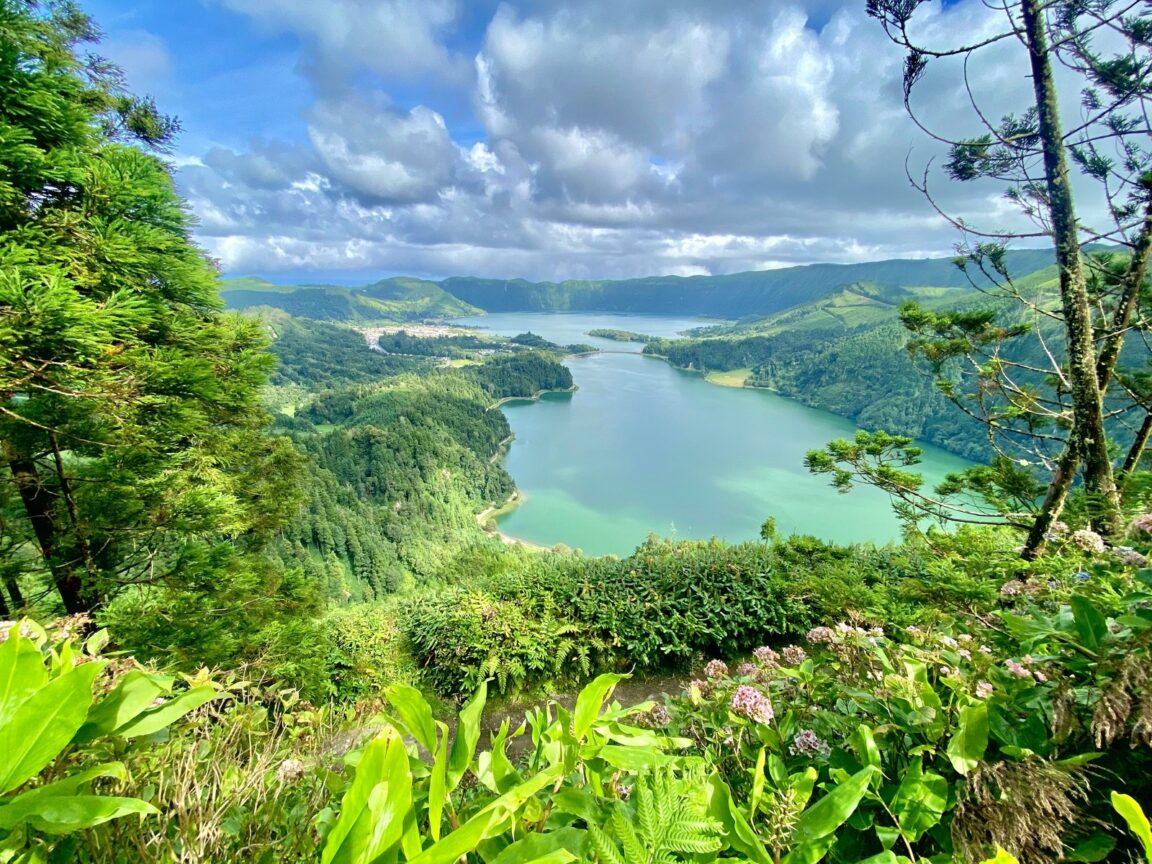
Prices and conditions checked 17 November 2026. Climate figures are IPMA long term normals for Ponta Delgada and published September sea temperature averages for the Azores. Featured image: Lagoa das Sete Cidades, the blue and green crater lakes on Sao Miguel, Azores, with fading hydrangeas in the foreground. Photo by Susie Lada on Unsplash, Unsplash License.