 Kwame Mensah
Pack for Madeira in January around one simple split: Funchal, on the sheltered south coast, averages daytime highs of 20 degrees Celsius and nights of about 14 degrees, while the mountains and levada paths a short drive inland run colder, cloudier and far wetter, with mud underfoot after rain. The kit list that works is a spring weight city wardrobe plus a genuine walking layer system: waterproof shell, warm mid layer, walking shoes with grip that can handle wet stone and levada mud, and a small daypack. Pack those mountain pieces deliberately and the rest of the bag can stay light, because January in Funchal does not ask for winter coats, beach wardrobes or a second case.
Quick Facts for a Madeira in January Kit List
- Funchal in January: Long term IPMA normals for Funchal give a mean daily maximum of 20.0 degrees Celsius and a mean daily minimum of 14.3 degrees in January, with about 67 millimetres of rain across the month.
- The mountain gap: Conditions change fast with altitude. Cloud, wind and heavy rain are routine in the high interior while Funchal sits in sun, so every walking day needs layers carried, not left at the hotel.
- The trail booking rule: Since 1 January 2026, access to Madeira’s classified walking routes, the PR trails, requires a reservation in advance through the official SIMplifica portal, in 30 minute entry slots, with a fee of 4.50 euros for the general public and exemptions for residents of Madeira.
- Levada mud: Levada paths are flat but narrow, often wet, and muddy after rain, with tunnels on some routes. Grippy shoes, a waterproof layer and a head torch for tunnels are the core kit.
- The bag: One medium bag is enough. The walking kit compresses into a single cube and the daypack, and city clothes are spring weight throughout.
- Swimming: Sea temperatures sit in the high teens. Hotel pools and sheltered lidos suit most January swimmers better than open coast, so one swimsuit is plenty.
Why does Funchal feel like spring while the levadas feel like winter?
Madeira is a steep volcanic island rising straight out of the Atlantic, and its weather is made by altitude and aspect as much as by season. Funchal faces south across a sheltered bay and holds some of the island’s mildest winter weather. The IPMA climate normal for Funchal, covering 1991 to 2020, puts January at a mean daily maximum of 20.0 degrees Celsius and a mean daily minimum of 14.3 degrees, figures that describe t shirt afternoons and light jacket evenings. Drive up into the central mountains, or north to the wetter coast, and the day changes character. Cloud builds on the high ground most afternoons, rain falls far more heavily in the interior than on the south coast, and wind at exposed viewpoints can make a mild day feel cold within minutes.
That split is the whole packing problem, and it is also why Madeira rewards walkers in January. The levadas, the island’s historic irrigation channels with paths running beside them, stay green and dramatic in the wet season, waterfalls run full, and the Laurisilva forest, protected as a UNESCO World Heritage Site since 1999, is at its most atmospheric. A traveller who packs only for Funchal sunshine will be cold and wet on the island’s best walks. A traveller who packs only for the mountains will haul winter gear around a springlike city. The list below threads the two together.
What is the full January kit list for Madeira?
The list assumes a trip of five to seven days based in Funchal, with two or three walking days, and fabrics that wash and dry in a hotel room. January is the island’s quiet season, so nothing here is bought for crowds or formality. It is bought for weather range.
- Waterproof shell jacket: Fully waterproof, not merely shower resistant, with a hood. This is the single most important item in the bag, used on levadas, in mountain cloud and on wet Funchal days alike.
- Warm mid layer: A fleece or light insulated jacket. At altitude and in wind it goes under the shell. In Funchal it covers evenings from about 14 degrees.
- Walking shoes or boots with grip, broken in: The levada shoe. Soles must hold on wet stone, damp earth and mud, and uppers will get dirty, so this is not the pair to keep pristine for restaurants.
- Light trainers or smart shoes: For Funchal days, gardens, markets and dinners. The city is steep, so flat and comfortable still applies.
- Three to four short sleeve tops: For Funchal afternoons at around 20 degrees, market mornings and travel days.
- Two long sleeve tops or light knits: For cooler starts, the north coast, and evenings. One should work as a walking base layer.
- Two pairs of trousers: One walking pair in a fabric that shrugs off mud and dries fast, one smarter pair for the city. Walking trousers will finish a levada day splashed, so they never double as dinner trousers the same night.
- One pair of shorts: Optional and only for settled sunny spells in Funchal. Many January trips never use them, which is exactly why one pair is the limit.
- Underwear and sleepwear for four to five days: Rotated with sink washes. Quick dry fabrics suit a walking trip where kit is rinsed often.
- Small daypack, 15 to 20 litres: Carries the shell, mid layer, water, snacks, booking confirmation and sun kit on every walk, and works as the personal item in transit.
- Head torch or phone torch: Several classic levada routes pass through tunnels. A small head torch keeps hands free on wet ground.
- Dry bag or zip pouches: For the phone, documents and a spare layer inside the daypack. Mountain rain arrives fast and daypacks are rarely waterproof.
- Sun kit: Sunscreen, sunglasses and a cap. January sun in Funchal is real, and altitude strengthens it on clear mountain days.
- Swimsuit: One, for hotel pools, the Funchal lido complex on a calm day, or a brave sea dip. The Atlantic in January sits in the high teens and the open coast is often rough.
- Documents and tech pouch: Passport or ID, cards, phone, charger, European two pin adapter, power bank, and offline copies of trail reservations, because mountain signal cannot be relied on at a trailhead.
How does the 2026 trail booking rule change what goes in the daypack?
Since 1 January 2026, Madeira’s classified walking routes have run on a reservation system, and it affects packing in a practical way. The official Visit Madeira hiking pages state that access to classified PR trails requires a prior reservation through SIMplifica, the Regional Government’s digital portal, choosing an entry time in 30 minute slots. The 2026 fee is 4.50 euros per person for the general public, 3 euros for visitors walking with tourism animation companies that hold a protocol with IFCN, the Institute of Forests and Nature Conservation, and residents of Madeira are exempt from payment but still book. Entering a classified trail without a reservation is an infraction. Payment must be made in advance, as internet coverage in the mountains may be limited.
So the daypack now carries proof as well as layers: the reservation confirmation saved offline, a charged phone, and the discipline to check the trail’s status, open, restricted or closed, on Visit Madeira or IFCN channels before setting out, because January rain closes or restricts routes. Book the walks before travelling or early in the trip, keep the confirmations in the dry pouch, and treat a closed trail as a decision already made. January paths are at their best with that small admin done, and the island’s other pleasures fill any gap easily, from the Funchal old town and market to a slow day built around the kind of long, layered planning a Lisbon city break rewards on the mainland.
What does a January walking day actually require, hour by hour?
Start in Funchal in a long sleeve top with the shell and fleece in the daypack. The drive up, whether to a levada start in the forest or a high viewpoint, climbs through cloud bands, and the trailhead is routinely ten degrees cooler than the harbour. Walk in the base layer, add the fleece at stops, and expect the shell to go on and off as cloud and sun trade places. Levada paths themselves are mostly level, which tempts travellers into city shoes, but the surface is the catch: wet stone, puddled earth, leaves and mud, with narrow sections beside the channel. Grip matters more than ankle height for most visitors, though walkers who prefer boots will be glad of them after rain. Finish the walk, change shoes at the car or bus, and Funchal evenings ask only for the fleece and clean trousers. That rhythm, repeated across the trip, is why this bag stays small. The same discipline that makes a one bag system work for a spring packing list built on layers works here too, with the waterproof shell promoted to first place.
What should be left out of a Madeira January bag?
Leave out heavy coats, snow gear, a beach wardrobe, formal shoes and a second suitcase of just in case outfits. The peaks can feel wintry in wind and cloud, but the combination of fleece and waterproof shell handles every condition a January visitor is likely to walk in, and trails close before weather becomes extreme. Leave out cotton walking clothes that stay cold when wet, white shoes destined for levada mud, and any plan that depends on buying booking confirmations or signal at a trailhead. Pack for Funchal sun, mountain cloud and levada mud in one bag, in that order of frequency, and January Madeira is an easy island to dress for.
Frequently Asked Questions
Is Madeira warm in January?
On the south coast, yes, by European winter standards. IPMA normals for Funchal give January a mean daily maximum of 20.0 degrees Celsius and a minimum of 14.3 degrees. The mountains and north coast run cooler and wetter, which is why the kit list pairs spring city clothes with a real waterproof and fleece.
Do Madeira’s levada walks need booking in January?
Yes. Since 1 January 2026 every classified walking route, including the PR levadas, requires a reservation through the SIMplifica portal in a 30 minute entry slot, paid in advance. The general fee is 4.50 euros per person, residents of Madeira are exempt from the fee, and trail status should be checked before setting out because rain can close routes.
What shoes work best on levadas in January?
Broken in walking shoes or boots with pronounced grip. Levada paths are flat but frequently wet and muddy in January, with slick stone in tunnels and shaded sections. City trainers with smooth soles are the commonest cause of a miserable, careful walk.
Can you swim in Madeira in January?
Some visitors do, briefly, and hotel pools are the comfortable default. Sea temperatures sit in the high teens and open coast conditions are often rough in winter. Pack one swimsuit for a calm day at a sheltered lido rather than planning the trip around the sea.
How much luggage does a January Madeira trip need?
One medium bag. City clothes are spring weight, and the entire mountain system is a shell, a fleece, walking shoes and a daypack. Travellers who find the bag growing are usually packing separate outfits for Funchal and for walking, when the layered list above covers both.
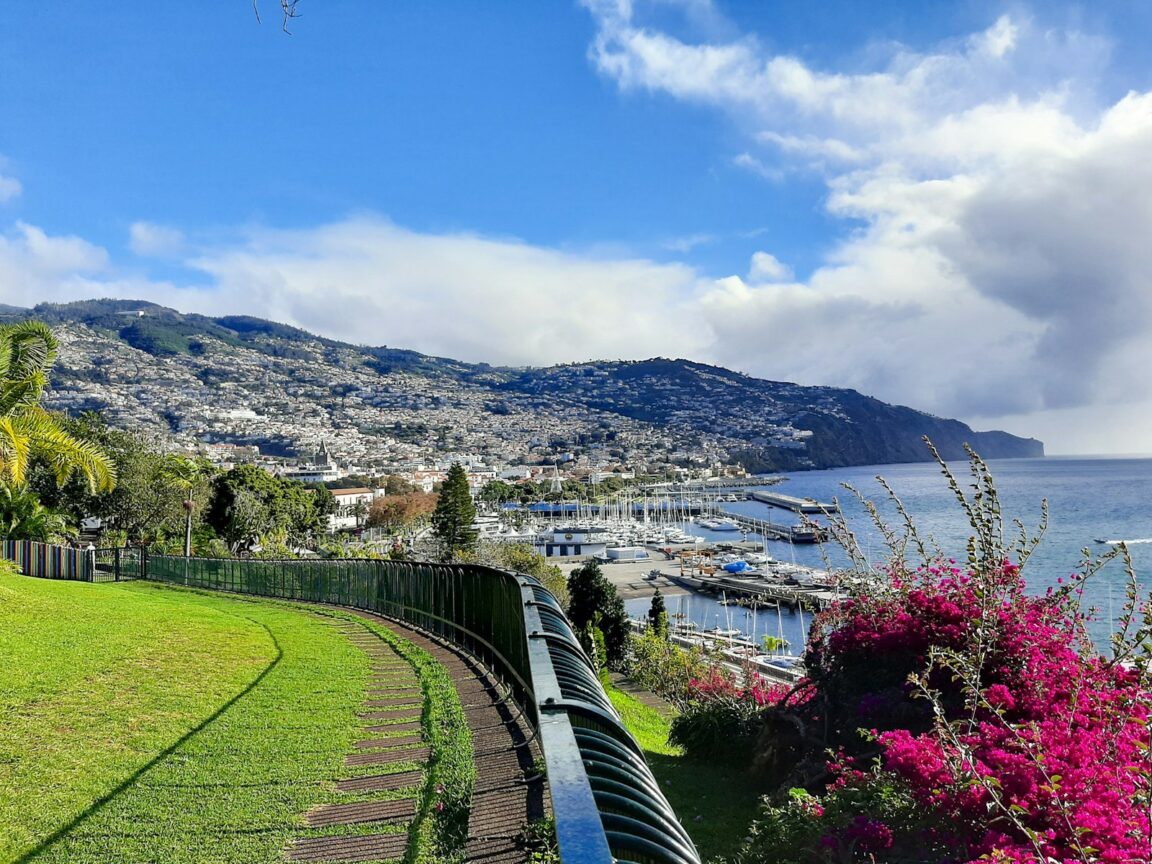
Fees and conditions checked 17 November 2026 against Visit Madeira and IFCN guidance. Climate figures are the IPMA 1991 to 2020 normals for Funchal. Featured image: Funchal harbour and marina beneath the hillside city, Madeira, Portugal. Photo by Sofia Vila Flor on Unsplash, Unsplash License.