 Hana Kim
Castel Monastero is not a hotel built to look like a village. It is a village: a walled medieval hamlet and former monastery in the Ombrone Valley near Siena, whose piazza, church, lanes and stone houses now hold 68 rooms and suites, a one Michelin star restaurant, a Tuscan cantina in the medieval wine cellar and a 1,500 square metre spa. Guests sleep scattered across the hamlet rather than along a corridor, meet on the piazza for breakfast, and drive 20 minutes to Siena when they want a city. This guide explains how the village layout, room categories and spa shape a stay, and who this corner of the Sienese Chianti suits.
Quick Facts: Castel Monastero
- Address: Localita Monastero d’Ombrone 19, 53019 Castelnuovo Berardenga, Siena, Tuscany
- Setting: a restored medieval monastery and hamlet in the Ombrone Valley, among Chianti vineyards and centuries old forest
- Rooms and suites: 68 in total: 44 rooms from 25 square metres, 19 suites from 50 square metres, 5 signature suites, plus Villa Lavanda at 160 square metres
- Dining: Contrada, one Michelin star, on the piazza; Cantina, Tuscan cooking in the medieval wine cellar; Bar Chigi and the Aqva Pool Bar
- Spa: Spa Monasterii, 1,500 square metres, 8 treatment rooms, indoor hydromassage pool and mineral salt therapeutic pool, saunas, hammam and Kneipp path
- Pools: three outdoor infinity pools, plus a gym and a tennis court
- Distances: Siena 20 minutes, Montepulciano 40 minutes, Florence airport 1 hour 20 minutes, per the resort’s official fact sheet
- Checked: room counts, dining, spa and distances verified 20 November 2026 against castelmonastero.com
What is it like to stay inside a medieval village?
The albergo diffuso idea, a hotel diffused through a real settlement, defines everything here. Reception, restaurants and rooms occupy separate stone buildings around the piazza and along the hamlet’s lanes, so the daily rhythm involves short outdoor walks between your room, breakfast and the spa, past the small convent church and under the walls that once defended the place. The monastery began life in the 11th century, passed to the Chigi Saracini family as a country residence, and was restored by the Marcegaglia family into the resort it is today, a member of The Leading Hotels of the World. The restoration kept the village legible: stone, wood and warm Tuscan fabrics inside, views opening to fields, vineyards and forest outside, and no single monolithic hotel block anywhere. Travellers who love the estate hotel idea at working farm scale should compare our guide to Borgo Santo Pietro in Tuscany, and for a Spanish estate in the same spirit, Grand Hotel Son Net in Mallorca.
Which room, suite or villa should you book?
The official fact sheet gives the clearest map of the inventory: 44 rooms from 25 square metres, 19 suites from 50 square metres, five signature suites and one resort villa. Rooms divide into Superior, Deluxe and Prestige bands, furnished in rustic Tuscan style with antique materials, facing either the village lanes or the countryside, with Prestige rooms adding a small sitting area that makes them feel like a Tuscan home rather than a hotel room. Junior Suites, including a piazza facing option, and Executive Suites add real living space while keeping the same understated palette of stone, wood and Sienese colour. The Royal and signature suites are the individualists, each shaped by its own position and outlook over fields and the nearby abbey lands. Villa Lavanda, at 160 square metres with three bedrooms, a living room opening onto a terrace and a private jacuzzi, is the choice for families and small groups who want the village on the doorstep and privacy behind their own door. The booking advice follows the layout: choose a piazza room for atmosphere and the shortest stroll to dinner, a countryside facing suite for quiet and views, and the villa when the group, not the romance, is the point.
What happens in the spa and at the pools?
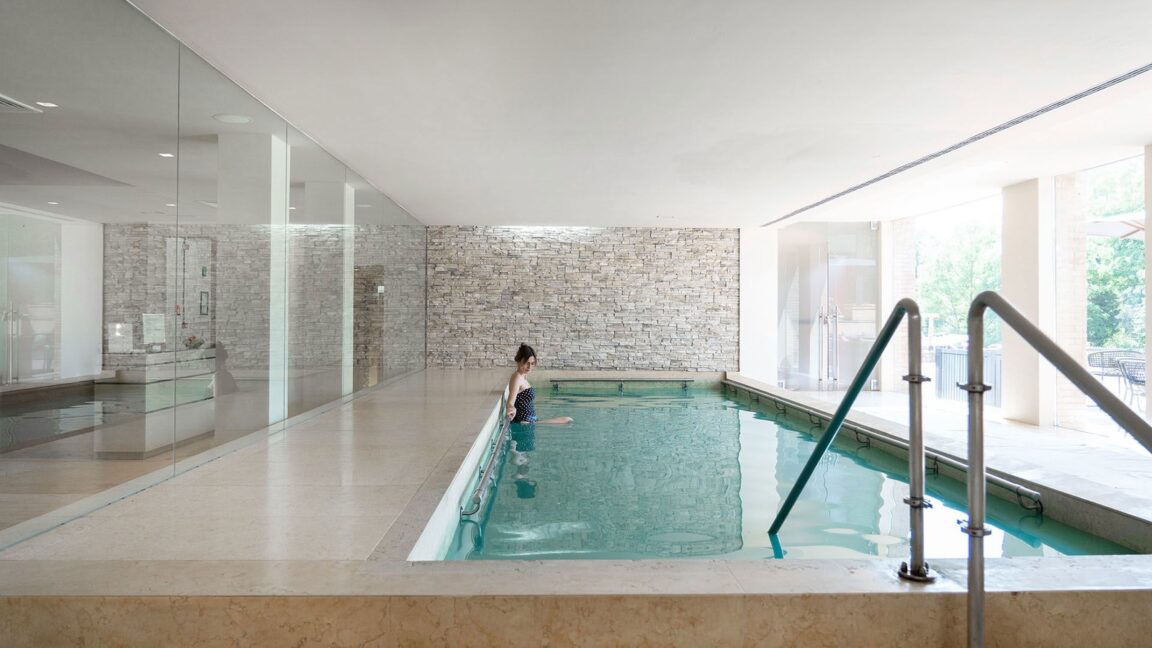
Spa Monasterii is a serious wellness operation, not a treatment room annex. Across 1,500 square metres it holds eight treatment rooms, an indoor pool with hydromassage, a second indoor pool filled with therapeutic water rich in mineral salts, Finnish and bio saunas, a hammam, a Kneipp path and multisensory showers, built around purifying and regenerating rituals that draw on herbal tradition and local products. The indoor saline pool shown in this guide’s featured image is the spa’s quiet centre on a cool day. Outside, three infinity pools step down through the grounds with views over the valley, served by the Aqva Pool Bar, and a gym and tennis court complete the active side. The resort programmes the days around the place itself: yoga, meditation and trekking on site, and visits to local wine producers and artisan workshops arranged as shared experiences, which is the right way to use a base this deep in wine country.
Where will you eat, and what is the Siena calculation?
Two restaurants carry the village. Contrada, holding one Michelin star, is the gourmet address, serving refined contemporary Tuscan cooking in relaxed elegance on the piazza at the heart of the hamlet. Cantina is its counterweight, an intimate room inside the medieval wine cellar and its garden, serving the traditional Tuscan kitchen the region actually eats. Bar Chigi and the pool bar fill the hours between. The location maths is Castel Monastero’s quiet strength: Siena, one of Italy’s great small cities, is 20 minutes away, close enough for a morning of the Duomo and the Campo and an afternoon back at the pools. Montepulciano is 40 minutes, Pienza and Arezzo about 50 minutes, San Gimignano an hour, and Florence airport 1 hour 20 minutes, so the resort works both as a Siena base and as a southern Chianti touring hub. It suits couples and wellness travellers who want a village to live in rather than a hotel to sleep in, and it rewards stays of three nights or more. Travellers who need a city on the doorstep, or who plan to tour northern Tuscany daily, should base in Siena or Florence instead and treat Castel Monastero as the countryside chapter of a longer trip.
Frequently asked questions about Castel Monastero
How many rooms does Castel Monastero have?
The resort’s official fact sheet lists 68 rooms and suites: 44 rooms from 25 square metres, 19 suites from 50 square metres, five signature suites and the 160 square metre Villa Lavanda, all spread through the medieval hamlet.
How far is Castel Monastero from Siena and Florence?
Siena is 20 minutes by car. Florence airport is 1 hour 20 minutes, Pisa airport 1 hour 45 minutes, and Rome about 2 hours 30 minutes, according to the resort. Montepulciano is 40 minutes and San Gimignano about an hour.
Does Castel Monastero have a Michelin starred restaurant?
Yes. Contrada, the gourmet restaurant on the village piazza, holds one Michelin star. The Cantina restaurant, in the medieval wine cellar, serves traditional Tuscan cooking, and both are open to outside guests.
What is in the Spa Monasterii?
The 1,500 square metre spa has eight treatment rooms, an indoor hydromassage pool, an indoor therapeutic pool with mineral rich water, Finnish and bio saunas, a hammam, a Kneipp path and multisensory showers. Three outdoor infinity pools sit elsewhere in the grounds.
Room counts, restaurant, spa and distance details checked on 20 November 2026 against castelmonastero.com, the resort’s official website and fact sheet. Rates vary by date and category and are confirmed at booking.