 Rafael Santos
Give Montevideo two days in this order: Ciudad Vieja and the port market on day one, the Rambla east to Pocitos and the Sunday market or football museum on day two, and decide the Colonia pairing before you book, not after you arrive. Uruguay capital is a low, walkable city on the north bank of the Rio de la Plata, built around a waterfront promenade the city describes as almost 30 kilometres long, a compact colonial old town on a peninsula, and a lunch culture centred on the wood fired grills of the Mercado del Puerto. First timers go wrong by treating it as a day trip from Buenos Aires or a stop on the way to the beaches. It rewards the slower order set out here.
Quick Facts
- Where: Montevideo, capital of Uruguay, on the north bank of the Rio de la Plata, about 140 km west of Punta del Este. Carrasco International Airport serves the city.
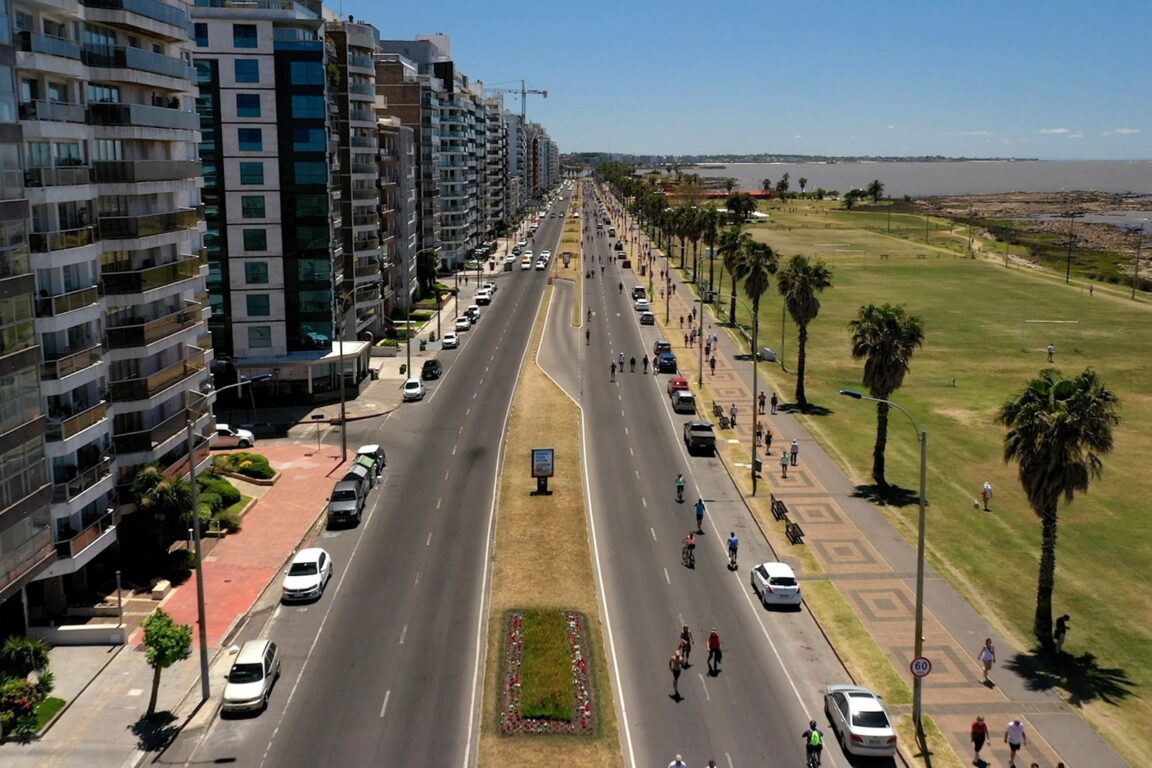
- The Rambla: The waterfront promenade running from the port around the city beaches to the eastern districts. The Intendencia de Montevideo describes it as almost 30 kilometres long, for walking and cycling, and it is the city defining public space.
- Ciudad Vieja: The old town on the peninsula, entered from Plaza Independencia through the Puerta de la Ciudadela, the surviving gateway of the old walled city. Heritage buildings, museums, cafes and design shops, per the Intendencia.
- Plaza Independencia: The main square between the old town and the Centro, holding the Artigas mausoleum beneath the national hero monument and the Palacio Salvo, the 1928 tower that was among the tallest in South America on completion.
- Mercado del Puerto: The 1868 iron market hall by the port, now a hall of parrilla grills. Go at lunch, not dinner. Entry is free, you pay for what you eat and drink, including the medio y medio, half sparkling and half white wine.
- Teatro Solis: The national theatre beside the old town, inaugurated in 1856. Guided tours run on scheduled days, and a performance is the better ticket if the programme suits your dates. Check the theatre own site for current tour times and prices.
- Colonia pairing: Colonia del Sacramento is about 2 hours 30 minutes to 3 hours by bus from Montevideo Tres Cruces terminal. Ferries cross from Colonia to Buenos Aires in about 1 hour 15 minutes, and a direct ferry links Buenos Aires and Montevideo in about 2 hours 30 minutes.
How should day one run, Ciudad Vieja to the port market?
Start at Plaza Independencia in the morning, because the square explains the city layout in one look. On one side stands the Palacio Salvo, the eclectic 1928 tower with its distinctive crown. Beneath the monument at the square centre lies the mausoleum of Jose Gervasio Artigas, the national founder. Through the Puerta de la Ciudadela, the stone gateway that is the surviving fragment of the colonial citadel, you pass into the Ciudad Vieja, and the rest of the morning is a grid you cannot get lost in: the pedestrian street Sarandi running down toward the port, Plaza Matriz with the Cabildo and the cathedral, the Torres Garcia museum honouring the constructivist painter who turned the map of South America upside down, and small museums, bookshops and cafes in the old bank and warehouse buildings.
Time the walk to land at the Mercado del Puerto at lunch, because lunch is when the hall works. The market, opened in 1868 under an iron frame, is now a room of parrillas, each built around an open wood fire, and the ritual is fixed: take a counter seat, order a mixed grill built on asado de tira and chorizo, add a medio y medio, and watch the coals do the work. It is the single best introduction to Uruguayan eating, it runs on lunch hours rather than dinner, and weekends fill early, so arrive before 1 pm on a Saturday. In the afternoon, take the Teatro Solis tour if it runs that day, or cross back through the old town slowly, and finish with the first stretch of the Rambla at sunset, walking east from the old town as the city comes out to meet the evening. Travellers who want the deep dive on the ferry town at the other end of the bus ride should read our guide to Colonia del Sacramento by day and by night before deciding the pairing below.
How should day two run, the Rambla and the east side?
Day two belongs to the water. The Rambla is where Montevideo walks, runs, cycles, fishes and drinks mate, and the first timer best stretch runs from Punta Carretas through Pocitos, the curve of beach and apartment towers where the Montevideo sign stands on the Rambla de Pocitos, a spot the Intendencia calls unmissable for its view over the Rio de la Plata. Walk or rent a bike, stop where the locals stop, and carry mate if you want to do it properly. The promenade is free, open at all hours and best in the long late afternoon light, when the whole eastern city seems to be out on it.
Fill the middle of day two by the calendar. On a Sunday, the Feria de Tristan Narvaja, the enormous street market spreading over many blocks of Cordon, is the city at its most Uruguayan: antiques, books, records, produce, plants and pets, best in the morning. On any day, the Estadio Centenario, built for the first World Cup in 1930, and its football museum cover the sporting pilgrimage, while the Mirador Panoramico, the panoramic lookout on the 22nd floor of the Intendencia building at almost 80 metres, gives the free city overview, booked through the city site. If the trip extends into the Uruguayan countryside and coast, our spotlight on Estancia Vik in Jose Ignacio, the ranch hotel near the beach scene, shows the splurge version of the same slow Uruguayan pace.
Where should a first timer sleep and eat?
Sleep in or beside the Ciudad Vieja if the two day plan above is the trip, because both mornings start there and the port market lunch lands on foot. The old town and the adjoining Centro hold the boutique hotels in converted heritage buildings and the dependable mid range choice, and the Rambla is a short walk south. Sleep in Pocitos or Punta Carretas instead if the beach and the Rambla are the priority, if you prefer a residential neighbourhood with its own restaurants and cafes, or if Montevideo is a longer stay, accepting a bus or taxi ride into the old town for day one. Eat one lunch at the Mercado del Puerto, one dinner at a neighbourhood parrilla away from the port, a chivito, the stacked Uruguayan sandwich the city lists among its essentials, at a classic bar, and Tannat, Uruguay signature red, at least once with the grill food it was made for.
Should you pair Montevideo with Colonia or Buenos Aires?
Decide by direction of travel. Colonia del Sacramento, the Portuguese and Spanish colonial town across the river from Buenos Aires, is a bus ride of about 2 hours 30 minutes to 3 hours west of Montevideo from the Tres Cruces terminal, with frequent services, and it deserves its own overnight rather than a rushed day trip bolted onto these two days. The classic pairing is a triangle: fly into Buenos Aires, cross by ferry to Colonia in about 1 hour 15 minutes, bus east to Montevideo for these two days, then return by the direct Buenos Aires to Montevideo ferry in about 2 hours 30 minutes, or reverse the loop. Both ferry operators sell combined ferry and bus tickets through Colonia, immigration for both countries is handled inside the Buenos Aires terminals before boarding, and fares vary by sailing and how early you book, so price the triangle as one purchase. If you have only two days in Uruguay total, spend both in Montevideo as set out here and give Colonia a future trip. Splitting two days between the two cities shortchanges both.
Frequently Asked Questions
How many days do you need in Montevideo?
Two full days is the useful minimum for a first visit: one for Ciudad Vieja, Plaza Independencia and a Mercado del Puerto lunch, and one for the Rambla, Pocitos and the Sunday Tristan Narvaja market or the Estadio Centenario. A third day allows Colonia as a day trip, the Prado museums or a winery visit in Canelones, but Colonia is better as its own overnight.
What is the Rambla and how long is it?
The Rambla is Montevideo continuous waterfront promenade along the Rio de la Plata, running from the port and old town east past the city beaches to Carrasco. The Intendencia de Montevideo describes it as almost 30 kilometres long. It is free, open at all hours, and used for walking, running, cycling, fishing and drinking mate, with the Pocitos stretch the best first timer section.
When should you eat at the Mercado del Puerto?
At lunch. The 1868 iron market hall by the port is a hall of wood fired parrilla grills that runs on lunch service, not dinner. Entry is free and you pay per dish. Arrive before 1 pm at weekends, take a counter seat, and order a mixed grill with a medio y medio, the half sparkling, half white wine pour that is the market house drink.
How do you get from Montevideo to Colonia and Buenos Aires?
Buses run from Montevideo Tres Cruces terminal to Colonia in about 2 hours 30 minutes to 3 hours. From Colonia, fast ferries cross to Buenos Aires in about 1 hour 15 minutes, and operators sell combined ferry and bus tickets between Buenos Aires and Montevideo via Colonia. A direct ferry also links Buenos Aires and Montevideo in about 2 hours 30 minutes. Book ahead for the best fares and arrive early for terminal immigration.
Is Montevideo walkable for a first timer?
The core is. Ciudad Vieja, Centro and Plaza Independencia form a compact, flat grid you can cover on foot, and the Rambla links the coastal neighbourhoods for walking and cycling. City buses on the STM system cover longer jumps, such as Tres Cruces, the Estadio Centenario and Carrasco. No car is needed for the two day plan in this guide.
City, Rambla and old town details checked against the Intendencia de Montevideo on 20 November 2026, and ferry and bus times against the operators serving the routes. Theatre tour times, market hours and ferry fares change, so confirm each on the official site before you travel.