 LeVar Thomas
Colonia del Sacramento is the Portuguese old town across the river from Buenos Aires: a cobbled, UNESCO listed Barrio Historico founded in 1680, reached by a ferry crossing of about an hour, and small enough to walk end to end before lunch. It works as a day trip, and thousands take it that way. It works better as an overnight, when the day boats leave, the river light turns gold over the Rio de la Plata, and the old town’s cafes and stone streets belong to the people staying in them.
Quick Facts
- Where: Southwestern Uruguay, on the northern shore of the Rio de la Plata, facing Buenos Aires
- Founded: 1680, by the Portuguese under Manuel Lobo, as a post opposite Spanish Buenos Aires
- Heritage status: Historic Quarter inscribed by UNESCO in 1995, under criterion (iv)
- Getting there: Fast ferries from Buenos Aires take about 1 hour with Buquebus and about 1 hour 15 minutes with Colonia Express; buses from Montevideo take about 2 hours 50 minutes
- Core sights: Calle de los Suspiros, Puerta de la Ciudadela, Basilica del Santisimo Sacramento, the 1857 lighthouse, and the restored Plaza de Toros at Real de San Carlos
- Best plan: Arrive on a morning ferry, stay one night, and take a late ferry back the next day
Why does Colonia’s old town look Portuguese in a Spanish speaking country?
Colonia was founded in 1680 by Portugal as Nova Colonia do Santissimo Sacramento, a trading and military post planted deliberately opposite Buenos Aires on the far shore of the Rio de la Plata. For more than a century it was contested ground, changing hands between Portugal and Spain repeatedly before Uruguay’s independence settled the question. That tug of war is written into the streets. UNESCO’s listing notes the contrast at the heart of the quarter: the original Portuguese town follows an irregular plan that fits the terrain, while the later Spanish areas were laid out on the regular grid used across Spanish America.
The result is a small town with two geometries. In the Barrio Historico, lanes bend, narrow and open suddenly onto tiny plazas and river views. A short walk east, the newer town straightens into orderly blocks. Travellers who have followed our 3 days in Buenos Aires itinerary will feel the switch clearly, because Colonia is in many ways the Argentine capital’s quiet mirror: same river, same century of immigration, entirely different pace. For another walled old town that rewards an overnight over a day trip, see our 2 days in Cartagena itinerary.
What should you see inside the Barrio Historico?
Calle de los Suspiros and the Portuguese streets
The Calle de los Suspiros, the Street of Sighs, is the quarter’s emblem: a short, sloping lane of rough river cobbles and low, thick walled houses, with a drainage channel running down its centre in the Portuguese manner. It survives because so much around it does. Walk it early or late for the lane without a crowd, then loop through the neighbouring streets, where bougainvillea spills over walls, vintage cars sit parked like period props, and small museums occupy colonial houses. The quarter is compact, roughly a ten minute walk from the ferry port, and its pleasures are cumulative rather than monumental: stone, shade, river air and unhurried corners.
Puerta de la Ciudadela, the basilica and the lighthouse
The Puerta de la Ciudadela, the surviving city gate with its drawbridge, marks where the walled town began, and a stretch of the old defensive wall still runs beside it. On the Plaza Mayor stands the Basilica del Santisimo Sacramento, among the oldest churches in Uruguay; a church has stood on the site since the 1690s, and the present building reflects rebuilding in the early 1800s after an explosion destroyed its predecessor. A few streets away, the lighthouse rises from the ruins of the San Francisco convent, destroyed by fire in the 18th century. The lighthouse was built in 1857, and local listings put the climb at 118 steps to a panorama over tiled roofs, the old town peninsula and the wide, silvery river. On a clear day, the Buenos Aires skyline can be visible across the water.
Day trip or overnight: which is right?
The day trip is easy to run. Take a morning ferry, walk the quarter, climb the lighthouse, eat a long lunch, and sail back in the evening with an extra country in the passport. If Buenos Aires time is tight, it is a genuinely satisfying day, and the ferry operators run schedules built around it. Schedules and fares change by season, so book on the operators’ own sites, Buquebus and Colonia Express, and arrive at the terminal well ahead for international check in and border formalities, travelling on the same document used to enter Argentina.
The overnight changes the town. Day visitors cluster in the middle hours, so an evening in Colonia means the Suspiros lane in low light, dinner without a ferry to catch, and a morning walk along the riverfront rambla before the first boats arrive. Stay inside or beside the Barrio Historico to keep everything on foot, and use the second day for the sights outside the walls. One night is the sweet spot for most itineraries; two turns Colonia into a slow river base for the surrounding wine country around Carmelo, an hour north by road.
What is there beyond the old town walls?
The detour that surprises most visitors is the Plaza de Toros Real de San Carlos, a few kilometres north of the old town in the Real de San Carlos district. Built in 1909 in a neo Mudejar, Moorish revival style and inaugurated on 9 January 1910, the bullring hosted only eight bullfights before Uruguay prohibited bullfighting in 1912. It then stood abandoned for a century, roofs falling in, before a restoration returned it to use: it reopened in December 2021 as a cultural and events venue, with a museum telling the building’s strange, short sporting life. The ring was part of a larger tourist complex promoted by Nicolas Mihanovich, with a hotel, a jai alai court and a racecourse; the racecourse still operates. A taxi or a rented bicycle or golf cart, all common ways to move around Colonia, makes the trip simple, and the contrast between the intimate old town and this grand, repurposed arena rounds out the town’s story.
Closer in, the riverfront itself is an attraction. The rambla runs along the Rio de la Plata with beaches such as Playa Ferrando to the east, and sunset over the water is the town’s reliable evening performance. The river here is so wide, and carries so much sediment from the Parana and Uruguay rivers, that it looks like a pale sea rather than a river, a point local guides make with pride.
Frequently Asked Questions
How long is the ferry from Buenos Aires to Colonia?
Crossings take about 1 hour with Buquebus and about 1 hour 15 minutes with Colonia Express, depending on the vessel and service. Both companies vary schedules by season, so check the operators’ own sites for the day you travel.
Do you need a passport for the day trip?
Yes, the crossing is an international journey with border controls on both sides. Travel with a valid passport, or the accepted identity document for Mercosur citizens, and use the same document you used to enter Argentina.
Is Colonia del Sacramento a UNESCO site?
Yes. UNESCO inscribed the Historic Quarter of the City of Colonia del Sacramento in 1995 under criterion (iv), recognising the fusion of Portuguese and Spanish urban planning and architecture in the old town.
Can you walk from the ferry port to the old town?
Yes. The Barrio Historico is about a ten minute walk from the port, and the quarter itself is small and best explored entirely on foot.
What is the Plaza de Toros at Real de San Carlos?
It is a former bullring inaugurated in 1910 that closed after bullfighting was banned in 1912, stood derelict for a century, and reopened in December 2021 as a cultural venue and museum. It sits a few kilometres from the old town and makes an easy half day detour.
How many nights should you stay in Colonia?
One night is enough for most travellers: it covers the Barrio Historico at its quietest hours, the lighthouse, a riverfront sunset and the bullring detour, without rushing the ferry on either side.
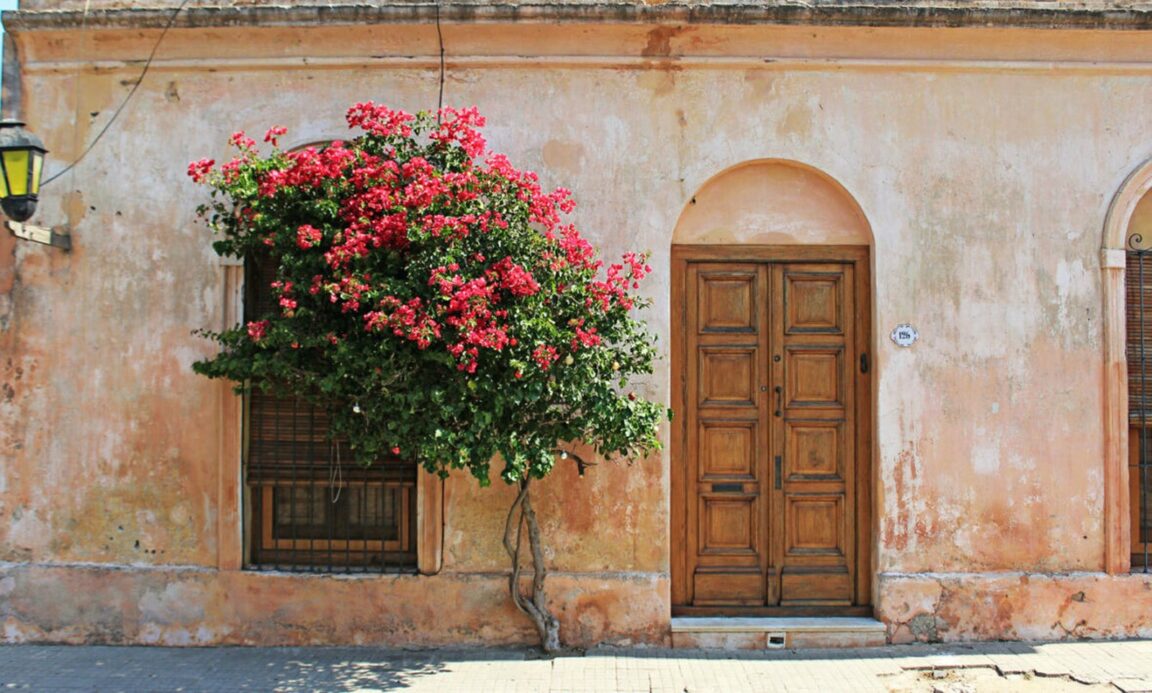
Featured image: Colonia del Sacramento old town, Uruguay. Photo by Marcela Laskoski on Unsplash, Unsplash License. Facts checked 14 November 2026 against UNESCO, ferry operator and municipal sources.