 Elena Vasquez
The Aeolian Islands are seven volcanic islands in the Tyrrhenian Sea north of Sicily, Lipari, Vulcano, Salina, Stromboli, Panarea, Filicudi and Alicudi, joined by one ferry and hydrofoil network from the Sicilian port of Milazzo. Each island has a distinct character: Lipari is the hub and the base, Salina is the green wine island, Stromboli is the active volcano, and Vulcano is the crater you can walk. The practical secret is simple: sleep on Lipari or Salina, and treat the boats as the archipelago’s bus system.
Quick Facts
- Where: Tyrrhenian Sea, 30 to 80 kilometres off the north coast of Sicily, Italy
- The seven islands: Lipari, Vulcano, Salina, Stromboli, Panarea, Filicudi and Alicudi
- Heritage status: Inscribed by UNESCO in 2000 under criterion (viii) for volcanic landforms and ongoing volcanic phenomena
- Gateway: Milazzo on Sicily’s north coast; Liberty Lines hydrofoils reach Vulcano in about 50 minutes and Lipari in about 50 to 65 minutes
- Operators: Liberty Lines runs passenger only hydrofoils; Siremar ferries carry vehicles
- Highest point: Monte Fossa delle Felci on Salina, 962 metres
- Safety note: Stromboli and Vulcano are active volcanoes; access rules follow Italy’s Protezione Civile notices and can change at short notice
Why are the Aeolian Islands a UNESCO site?
UNESCO inscribed the Isole Eolie in 2000 under natural criterion (viii), because the archipelago is an outstanding record of volcanic island building and destruction, studied by geoscientists since at least the 18th century. The islands gave volcanology two of its classic eruption types, named for the islands themselves: Vulcanian eruptions, forceful explosions at longer intervals, and Strombolian eruptions, regular bursts of incandescent material from a persistent vent. The present shape of the islands is the product of volcanic activity over roughly 260,000 years, and the process is not finished: Stromboli and Vulcano remain active. That living geology shapes everything about a visit, from the black sand beaches to the rules about where visitors may walk.
Travellers building a Sicily trip around the islands will find the mainland context in our guide to Matera, Italy, another southern Italian destination where landscape dictates the itinerary, and our Kotor, Montenegro guide covers a comparable ferry and old town rhythm across the Adriatic.
How does the ferry network actually work?
Milazzo is the mainland hub, and Lipari is the island hub. Liberty Lines hydrofoils run from Milazzo to Vulcano in about 50 minutes and to Lipari in about 50 to 65 minutes, then fan out across the archipelago: Salina in about 1 hour 40 minutes from Milazzo, Panarea from about 1 hour 25 minutes, Stromboli from about 1 hour 10 minutes on direct services, Filicudi in about 2 hours 25 minutes and Alicudi in about 2 hours 55 minutes. Many sailings string several islands into one run, so a boat to Stromboli may call at Lipari and Panarea on the way. Liberty Lines is passenger only, and boarding closes with ticket and identity document checks shortly before departure; be at the port at least 15 minutes ahead, and earlier in high summer.
Vehicles travel on the slower Siremar ferries, and island rules restrict cars further in peak season. Most visitors are better off without one: the towns are walkable, and scooters, taxis and local buses cover the rest. Two warnings govern every plan. Timetables change with the season, thinning sharply outside summer, and hydrofoils are weather dependent; a rough day can cancel sailings, which is why the last night of an Aeolian trip is safest spent within reach of Milazzo rather than on the furthest island. Fares vary by route, date and passenger category under the Sicilian Region’s public service arrangements, so confirm the price for your sailing in the operator’s booking system rather than relying on any guide figure.
Which island should be your base?
Lipari: the hub with the evenings
Lipari is the largest island, at 37.5 square kilometres, and its town is the archipelago’s working centre: the main port at Marina Corta and Marina Lunga, the widest choice of hotels and restaurants, and the Corso Vittorio Emanuele, where the evening passeggiata happens. Above the harbour, the fortified citadel holds the cathedral and the Regional Archaeological Museum, one of Sicily’s important collections, built on layers of Greek and Roman Lipara. Lipari is the sensible first base: boats to every other island radiate from it, supplies are easy, and a cancelled sailing strands you in a real town rather than a hamlet. Swimming is close at hand at Canneto, just north of town, and at the white pumice beaches near Porticello, where the water turns an improbable pale blue over pale stone.
Salina: the green island
Salina is the second largest island and the greenest, formed by two extinct cones, including Monte Fossa delle Felci at 962 metres, the archipelago’s highest point. It is the island of vines and capers: Malvasia wine has been made here for centuries, and the villages of Santa Marina Salina, Malfa and Leni string along a coastal road beneath terraced slopes. Parts of the film Il Postino were shot on Salina, and its evenings are quieter and more local than Lipari’s. Choose Salina as a base for a slower trip with walking, swimming at Pollara’s cliff backed cove, and dinners in Malfa; use it as a day trip from Lipari if ferries and time are tight.
Stromboli: the volcano that never quite sleeps
Stromboli is a near perfect cone rising straight from the sea, with a village strung along its northeastern shore and black sand beaches below the slopes. Its crater produces the regular, small explosions that gave Strombolian activity its name, visible by day as puffs and after dark as brief fountains of fire. Access to the summit area is regulated and guided, and the permitted altitude and routes change with the volcano’s behaviour under Protezione Civile monitoring, so any climb must be arranged with authorised local guides and checked against current notices on arrival. Even without a climb, a boat trip past the Sciara del Fuoco, the fire chute on the island’s northwest flank, after sunset is one of the great natural spectacles of the Mediterranean.
Vulcano: the walkable crater
Vulcano is the closest island to Sicily and the easiest volcano encounter: the path up the Gran Cratere climbs to a rim of fumaroles and sulphur stained ground, with a panorama back across the water to Lipari. The last eruption ran from 1888 to 1890, and the island still smells of its chemistry at the crater and at the warm mud baths near the port, currently subject to local access rules that visitors should confirm on the day. Vulcano makes the simplest day trip of all, 50 minutes from Milazzo and minutes from Lipari, and pairs naturally with an afternoon swim off its black beaches.
What about Panarea, Filicudi and Alicudi?
Panarea is the smallest inhabited island and the most polished, a cluster of white houses and lanes with views across to Stromboli, busy with summer boats and quiet outside the peak. Filicudi and Alicudi, the western pair, are the archipelago at its most elemental: few roads, donkey paths between hamlets on Alicudi, long walks and very clear water. They reward travellers with time and punish tight schedules, because sailings are the least frequent in the network. Treat them as deliberate choices, ideally with an overnight, rather than boxes to tick between other islands.
How many days do the Aeolians need?
Three nights is the honest minimum: a day for Lipari town and swimming, a day split between Vulcano’s crater and Salina, and an evening boat to Stromboli. Five nights allows a base split, Lipari then Salina, plus a weather buffer day, which the hydrofoil network regularly demands. A week opens Filicudi or Alicudi properly. Build every itinerary backwards from the Milazzo sailing on departure day, and keep one unplanned half day in reserve for the sea.
Frequently Asked Questions
How do you get to the Aeolian Islands?
By sea, almost always from Milazzo on Sicily’s north coast. Liberty Lines hydrofoils are the fastest and most frequent service, reaching Lipari in about 50 to 65 minutes; Siremar ferries are slower and carry vehicles. Seasonal services also link the islands with other Sicilian and mainland ports, and timetables change by season, so check the operator for your date.
Which Aeolian island is best to stay on?
Lipari for first time visitors, because it has the port, the widest services and boats to everywhere else. Salina for a quieter, greener stay with wine country walks. Stromboli for travellers whose priority is the volcano itself, accepting tighter logistics.
Can you climb Stromboli?
Summit access is regulated, guided and conditional on the volcano’s current activity level as assessed by Italy’s Protezione Civile. Permitted routes and altitudes change; arrange any ascent with authorised guides on the island and follow the notices in force on the day.
Why are the islands called Vulcanian and Strombolian in textbooks?
UNESCO’s inscription records that the islands provided volcanology with two classic eruption types: Vulcanian, named for Vulcano, and Strombolian, named for Stromboli. Both have been studied since at least the 18th century and remain reference examples worldwide.
Do you need a car on the Aeolian Islands?
No, and most visitors should not bring one. Hydrofoils are passenger only, cars travel on ferries, and seasonal restrictions apply. Towns are walkable, and local transport covers island sightseeing.
When is the best time to visit the Aeolian Islands?
Late spring and early autumn balance warm seas with fuller ferry timetables than winter and thinner crowds than August. Services reduce outside the summer season and hydrofoils can be cancelled in rough weather at any time of year.
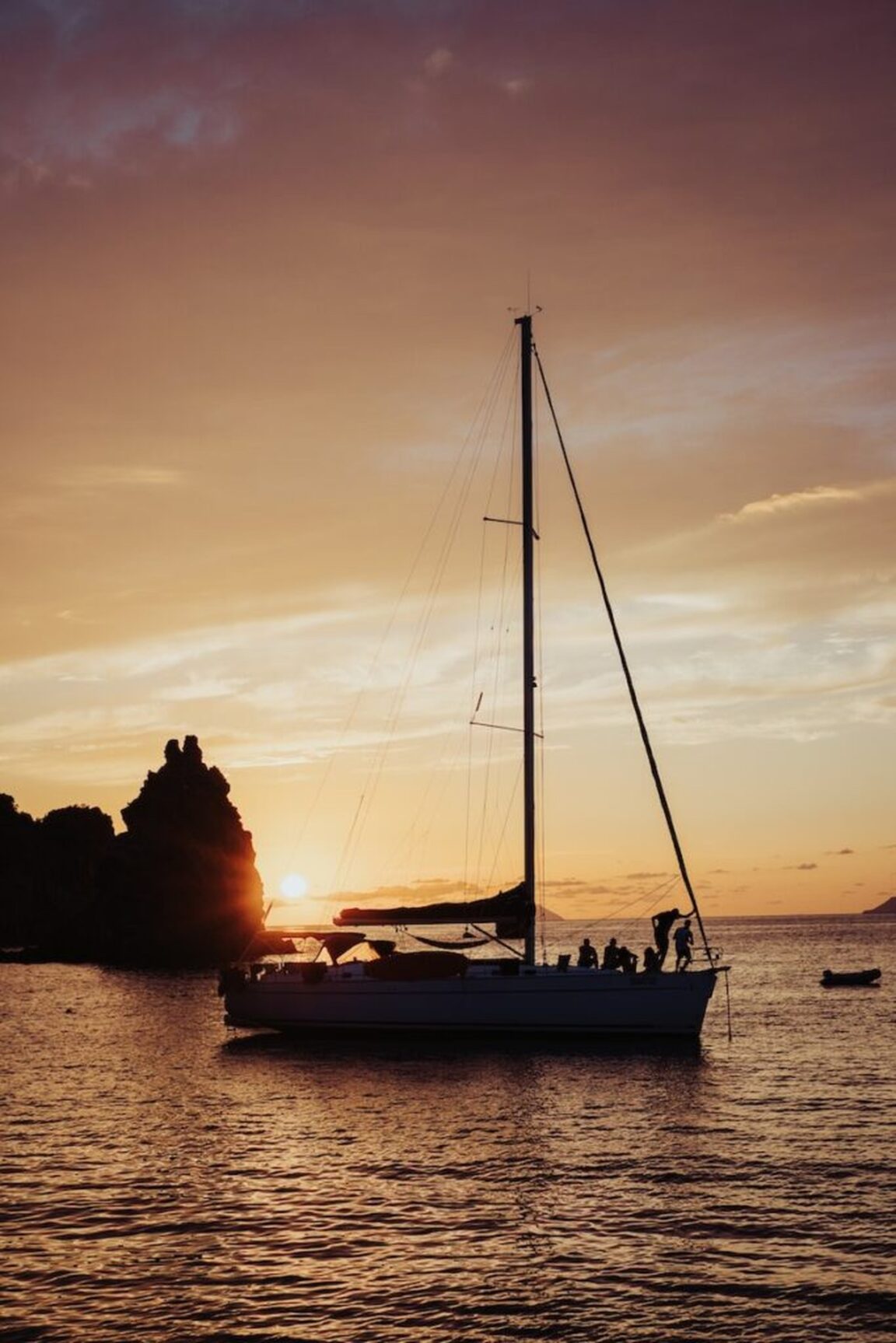
Featured image: Sailboat at Lipari, Aeolian Islands. Photo by Pietro De Grandi on Unsplash, Unsplash License, hosted copy via This is Italy. Facts checked 14 November 2026 against UNESCO, Liberty Lines route information and Protezione Civile guidance.