 Kwame Mensah
Saint-Louis, known in Wolof as Ndar, is an island city at the mouth of the Senegal River in northern Senegal, where a UNESCO listed colonial old town faces a working fishing quarter across a narrow channel, with the Atlantic on the other side. Founded by the French in 1659, it was once the capital of French West Africa; today it is Senegal’s most atmospheric small city, famous for faded grandeur, painted fishing boats and a jazz festival that fills its streets each spring. Come for at least two nights, and three if the festival or the bird sanctuaries are the point.
Quick Facts
- Where: Northern Senegal, near the Mauritanian border, at the mouth of the Senegal River
- Founded: 1659, as a French trading post on the island that now carries the old town
- Heritage status: Island of Saint-Louis inscribed by UNESCO in 2000
- Landmark: The Faidherbe Bridge, opened in 1897 and about 507 metres long, linking the island to the mainland
- Quarters: The island old town; Guet Ndar fishing quarter on the Langue de Barbarie sand spit; the mainland Sor district
- Signature event: Saint-Louis International Jazz Festival, running since the early 1990s, usually held over several days in May or early June
- Day trips: Djoudj National Bird Sanctuary and the Langue de Barbarie National Park
How is Saint-Louis laid out?
Saint-Louis is really three places in a line, held together by bridges. To the east is the mainland district of Sor, where the transport hubs and much of modern life sit. In the middle, in the Senegal River, lies the island: a narrow strip, a few streets wide, carrying the historic core on a regular grid of balconied houses. West of the island, across a second channel, runs the Langue de Barbarie, a long sand spit between river and ocean, where the fishing quarter of Guet Ndar packs tightly along the shore. The Faidherbe Bridge, the iron bridge opened in 1897, makes the first crossing from the mainland, and walking it at the start of a stay is the right introduction: pirogues moving on the river below, the island’s quays and rooftops ahead.
UNESCO inscribed the Island of Saint-Louis in 2000, recognising the old town’s regular plan, its quay system and its stock of colonial era houses with their distinctive balconies and galleries. Saint-Louis served as capital of the French colony of Senegal and, from 1895 to 1902, of French West Africa; it remained Senegal’s capital until 1957, when Dakar took over. That demotion froze the island in a way that now defines its appeal, as our West Africa coverage in our Dakar, Senegal guide explains from the capital’s side. Travellers continuing through the region will also find the heritage thread in our 2 days in Accra itinerary.
What should you do on the island?
Walk, slowly and repeatedly. The island rewards loops rather than routes: along the river quays in the early morning when the light is soft, through the grid at midday for shade and doorways, and back along the water at dusk. Place Faidherbe, beside the former Governor’s Palace, is the natural orientation point. Houses here are two storeys, with shuttered windows, wrought iron or wooden balconies and coloured render in every stage from freshly restored to gracefully peeling; the fading grandeur in the town’s reputation is literal, and conservation work is ongoing across the listed area.
Horse drawn caleches still circulate and offer an easy orientation tour with commentary, useful on a first afternoon. The island also holds a serious cultural institution in MuPho, the Museum of Photography of Saint-Louis, founded in 2017 by Amadou Diaw and described by its founders as the first museum in West Africa devoted entirely to photography; Saint-Louis was a pioneering centre of West African studio photography in the 19th century, and the museum connects that history to contemporary Senegalese work. Small galleries, bookshops and cafes fill the ground floors between the landmarks, and the island’s scale means none of it needs scheduling.
Why cross to Guet Ndar?
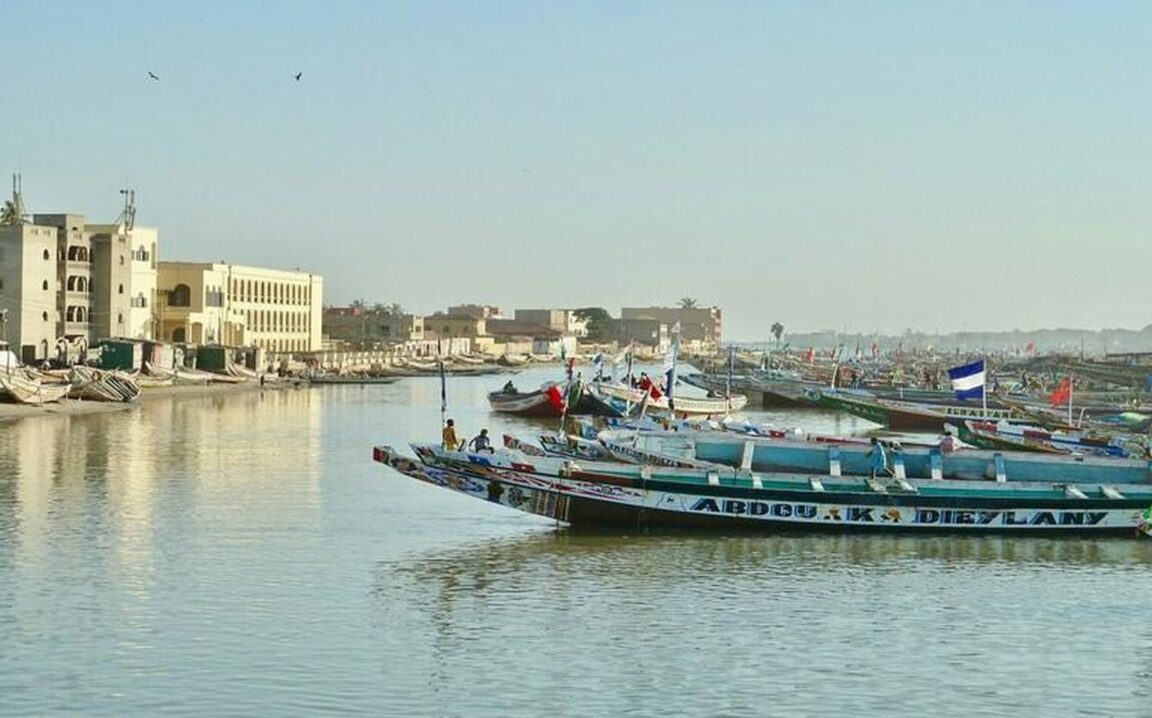
Guet Ndar is the counterweight to the island’s elegance: one of Senegal’s most important artisanal fishing quarters, dense, loud and vividly alive. Hundreds of long wooden pirogues, painted in bright patterns and names, line the beach and the river shore. The fleet leaves and returns with the tides, and the shore economy follows it: fish landed, sorted, smoked and sold, nets mended, boats built and repaired in the open. The fish market area is the busiest ground in Saint-Louis and the most instructive; a local guide helps with both navigation and etiquette, and photography should always be asked for, not assumed.
Guet Ndar also carries the city’s hardest story. The quarter sits low on a narrow spit between river and ocean, exposed to Atlantic erosion and flooding, and protective works and relocations have reshaped parts of the shoreline in recent years. Visiting respectfully, with a guide from the quarter and money spent locally, matters more here than in the old town. Between the two worlds, dinner makes the connection literal: thieboudienne, the rice and fish dish regarded as Senegal’s national dish, is traditionally linked to Saint-Louis, and eating it a short walk from where the fish came ashore is the city’s essential meal.
When does the jazz festival happen, and how should you plan for it?
The Saint-Louis International Jazz Festival has run since the early 1990s and is counted among Africa’s best known jazz events. It usually occupies several days in May or early June, spreading concerts across the island’s squares, courtyards and venues, with the sound spilling into bars and late night jam sessions. Exact dates are announced for each edition, so travellers building a trip around the festival should confirm the current year’s dates with the festival organisation before booking anything else.
Practically, festival week is the one time Saint-Louis fills up: accommodation on and near the island books out well ahead, and prices and crowds peak together. Stay on the island if possible, because the festival’s pleasure is wandering between sets on foot. Outside festival week, the town’s musical life continues at a lower volume in bars and cultural venues, and many visitors prefer the ordinary rhythm: the same streets, the same river light, and the fishing fleet rather than the stages setting the timetable.
What lies beyond the city?
Two protected areas make Saint-Louis a nature base as well as a heritage stop. North of the city, the Djoudj National Bird Sanctuary spreads across wetlands in the Senegal River delta, a UNESCO listed sanctuary that hosts vast concentrations of migratory and resident birds, including white pelicans, purple herons, African spoonbills and great egrets; the season for the great migratory gatherings is the northern winter and spring. South of the city, the Langue de Barbarie National Park, established in 1976, protects the southern stretch of the sand spit, with nesting birds and sea turtles among its draws. Both are usually visited as organised day trips with transport and a guide arranged in Saint-Louis, and Djoudj in particular justifies an early start.
How many nights does Saint-Louis need?
Two nights gives a full island day, a Guet Ndar morning and one evening on the quays. Three nights adds Djoudj or the Langue de Barbarie without rushing, or absorbs the festival properly. The city is reached by road from Dakar in several hours, which makes it a natural second stop on a Senegal itinerary rather than a day trip; arriving before dark on the first day preserves the bridge walk and the first dusk, which are half the introduction.
Frequently Asked Questions
Why is Saint-Louis a UNESCO World Heritage Site?
UNESCO inscribed the Island of Saint-Louis in 2000 for its historic colonial town plan, its system of quays and its distinctive architecture of balconied and gallery houses, and for the role the city played in the economic and cultural development of West Africa.
When is the Saint-Louis Jazz Festival?
The festival usually runs for several days in May or early June and has been held since the early 1990s. Dates are announced for each edition, so confirm the current year’s dates before booking travel or accommodation.
What is Guet Ndar?
Guet Ndar is Saint-Louis’s historic fishing quarter, on the Langue de Barbarie sand spit between the Senegal River and the Atlantic. Its painted pirogue fleet, fish market and boat building yards make it the working heart of the city; visit with a local guide and ask before photographing people.
How do you cross to the old town island?
The Faidherbe Bridge, opened in 1897 and about 507 metres long, carries road and foot traffic from the mainland district of Sor onto the island. A second crossing leads west from the island to Guet Ndar and the Langue de Barbarie.
What food is Saint-Louis known for?
Thieboudienne, the celebrated Senegalese dish of rice, fish and vegetables, is traditionally linked to Saint-Louis. Seafood generally is the city’s strength, served a short distance from the Guet Ndar landing beaches.
Can you visit Djoudj as a day trip from Saint-Louis?
Yes. The Djoudj National Bird Sanctuary, a UNESCO listed wetland in the Senegal River delta north of the city, is a standard organised day trip from Saint-Louis, best started early and most rewarding in the migratory season.
Featured image: Saint Louis, Senegal. Photo by E. Diop on Unsplash, Unsplash License, hosted copy via Akbar Travels. Facts checked 14 November 2026 against UNESCO, festival and regional sources.