 Hana Kim
Sokcho is the east coast gateway town for Seoraksan: a fishing port in Gangwon Province where city buses run straight from the bus terminals to the national park gate at Sogongwon, the cable car climbs to the Gwongeumseong fortress rock, and the evening can be spent in a covered seafood market a short walk from a hand pulled ferry to Abai Village. It deserves a night or two in its own right, not just a bus change. Sleep in Sokcho, enter the park early, and let the town’s markets, beaches and lake fill the hours the mountain does not.
Quick Facts
- Where: Gangwon Province, on South Korea’s east coast, at the foot of Seoraksan
- The park: Seoraksan National Park, designated in 1970 and a UNESCO Biosphere Reserve since 1982; highest peak Daecheongbong, 1,708 metres
- Park entry: Free; you pay for facilities such as the cable car and parking
- Cable car: Seorak Cable Car to Gwongeumseong, about 700 metres up, around 5 minutes each way; return tickets 16,000 KRW for adults and 12,000 KRW for children, sold on the day only
- Getting around: City buses 7 and 7-1 link Sokcho’s terminals with the Sogongwon park entrance
- Town circuit: Sokcho Tourist and Fishery Market, the gaetbae ferry to Abai Village at 500 KRW per adult each way, Yeonggeumjeong for sunrise, Sokcho Beach and Daepo Port
- Prices checked: 14 November 2026, against the cable car operator and Korea National Park Service information; fares and hours change, so confirm before travel
Why base in Sokcho for Seoraksan?
Seoraksan is South Korea’s most celebrated mainland mountain park: a granite range of spires, ridges and temple valleys that became the country’s fifth national park in 1970 and a UNESCO Biosphere Reserve in 1982. Its highest summit, Daecheongbong at 1,708 metres, is the third highest peak in South Korea. The park’s most accessible sector, Outer Seorak, faces Sokcho, and the town has grown into the park’s front hall: two bus terminals, a market built for post hike appetites, and lodging from guesthouses to resort hotels, all within a short city bus ride of the trailheads.
The alternative, day tripping from Seoul, is possible but punishing, because the bus journey runs to around two and a half hours each way before the park even starts. Our 3 days in Busan itinerary makes the same argument for Korea’s other great coast city: sleep where the scenery is. Before any Korea trip, also check the entry formalities in our South Korea e-Arrival Card guide.
How do you get to Sokcho and into the park?
Sokcho has no train station, so the capital connection is by express bus: services from Seoul’s terminals reach Sokcho in roughly two hours twenty minutes to two and a half hours, depending on the terminal and traffic. Sokcho itself has two long distance terminals, the Express Bus Terminal and the Intercity Bus Terminal, a detail worth checking on tickets because they sit in different parts of town. From either, city buses 7 and 7-1 run to Seorak-dong and terminate at Sogongwon, the park’s main entrance plaza, where the cable car station, the visitor facilities and the trailheads for Sinheungsa temple and the Ulsanbawi and Biseondae routes all begin. Entry to the national park itself is free.
What should you do at Sogongwon first?
Ride the cable car to Gwongeumseong
The Seorak Cable Car climbs about 1,128 metres from Sogongwon to a station at roughly 700 metres, in about five minutes, with views opening across the Outer Seorak ridges to Ulsanbawi and back to the East Sea. From the top station, a short, steep walk of around twenty to thirty minutes reaches Gwongeumseong, the site of a Goryeo era stone fortress on a bare granite platform. Two operational facts shape the day: tickets are return only, because there is no trail down from the fortress, and tickets are sold at the station on the day, with no advance reservation, because wind and weather decide whether the cars run. The operator posts each day’s hours on its site, and the standard advice holds: go to the cable car first, before the queues and before the afternoon wind, and treat a clear morning ride as the park’s easiest great view. Fares checked for this guide were 16,000 KRW return for adults and 12,000 KRW for children.
Walk to Sinheungsa and choose a trail
A flat, easy walk from Sogongwon leads to Sinheungsa, the park’s principal temple, fronted by a great bronze Buddha that has become one of Seoraksan’s emblematic images. Beyond the temple the effort ladder climbs quickly: the Biseondae route follows a stream into the inner valley at moderate grade, while the Ulsanbawi route is the park’s classic hard half day, a roughly 3.8 kilometre climb one way, famous for its long stair sections, ending on the six peaked granite massif that dominates every view from Sokcho. Trail openings in Seoraksan are seasonal and sections close for fire risk and weather, particularly in the dry spring and autumn periods; the Korea National Park Service posts current restrictions, and checking them the day before is part of the hike.
What does Sokcho town add?
The market circuit
The Sokcho Tourist and Fishery Market, in the city centre, is the town’s kitchen: covered alleys of live and dried seafood, stalls selling the local fried chicken, dakgangjeong, glazed and boxed to take away, and counters where a hiker’s dinner can be assembled in ten minutes. It is busiest in the early evening, which makes it the natural end to a park day, and its lanes are organised by product, so a circuit is easy even on a first visit.
Abai Village and the gaetbae
Across the harbour channel from the market quarter sits Abai Village, settled during the Korean War by refugees from Hamgyeong Province in the north; its name comes from a Hamgyeong dialect word for an elder. The village became nationally famous as a filming location for the 2000 drama Autumn in My Heart, and its lanes are known for abai sundae, stuffed squid and other northern style dishes. The way across is half the experience: the gaetbae is a flat, cable guided ferry that passengers help haul across the channel by hand, a crossing of a few minutes costing 500 KRW for an adult each way, running from early morning to late evening with seasonal hours. It is a small, working piece of transport history still doing its original job.
Sea, sunrise and the southern harbour
Sokcho faces the East Sea, and the town’s coast is built for mornings. Yeonggeumjeong, a pavilion on a rocky point near the lighthouse quarter, is the classic sunrise spot, its name likening the sound of waves on the rocks to the strings of a geomungo zither. Sokcho Beach, south of the centre, is the summer swimming beach, backed by a pine fringe and the town’s resort strip, while Cheongchoho Lake, the lagoon behind the centre, gives an easy evening walk with the mountain behind. Further south, Daepo Port is the working harbour for raw fish restaurants and the park-bound traffic’s seafood stop. A second day in Sokcho writes itself: sunrise, market breakfast, a beach or lake hour, and Daepo for dinner.
How many nights, and when?
One night is the minimum that makes Seoraksan civilised: arrive, sleep, enter the park at opening, and leave the following morning free for the town. Two nights allows a weather buffer for the cable car, which matters in every season. Autumn, when Seoraksan is traditionally among the first places in Korea to colour, is the peak: expect the cable car queues and the market to match the foliage. Winter brings the granite under snow and the coldest wind; spring brings trail closure periods for fire risk on some routes. In every season, the order of the day stays the same: mountain first, market last.
Frequently Asked Questions
How do you get from Seoul to Sokcho?
By express bus. Sokcho has no railway station; express buses from Seoul’s main terminals take roughly two hours twenty minutes to two and a half hours. In Sokcho, note which terminal your bus uses, because the express and intercity terminals are in different locations.
How much is the Seorak Cable Car, and can you book ahead?
Return tickets were 16,000 KRW for adults and 12,000 KRW for children when checked on 14 November 2026. There is no advance booking: tickets are sold at the lower station on the day only, because operation depends on wind and weather, and the operator posts daily hours on its site.
Is there an entry fee for Seoraksan National Park?
No. Entry to South Korea’s national parks, including Seoraksan, is free. Charges apply to facilities such as the cable car and parking, and trail sections can close seasonally, so check the Korea National Park Service notices before a hike.
What is the gaetbae ferry to Abai Village?
The gaetbae is a hand hauled, cable guided flat ferry crossing the harbour channel between central Sokcho and Abai Village. The crossing takes a few minutes, costs 500 KRW per adult each way, and runs from early morning to late evening, with hours varying by season.
What should you eat in Sokcho?
Start at the Sokcho Tourist and Fishery Market: fresh and dried seafood, dakgangjeong sweet crispy chicken, and, in Abai Village across the channel, northern style dishes such as abai sundae and stuffed squid. Daepo Port is the other seafood centre, known for raw fish restaurants.
When is the best time to visit Sokcho and Seoraksan?
Autumn is the famous season, when the park’s maples colour early by Korean standards and crowds follow. Spring and early summer bring green valleys and fewer people, winter brings snow on the granite, and in all seasons the cable car is weather dependent, so a spare morning is valuable.
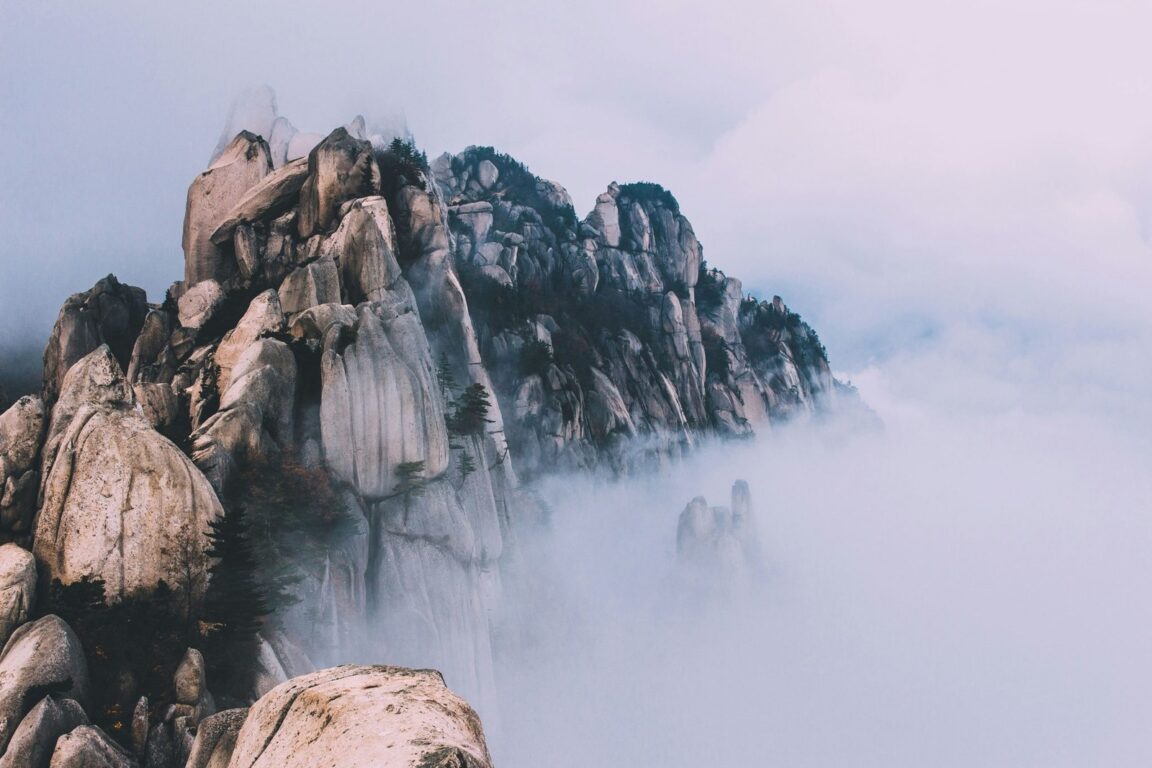
Featured image: Seoraksan National Park above Sokcho, South Korea. Photo by Alexandre Chambon on Unsplash, Unsplash License. Facts checked 14 November 2026 against the cable car operator, the Korea National Park Service and Korea Tourism Organization sources.