 James Wolfe
Pondicherry, officially Puducherry, is two towns sharing one seafront, and the best way to read it is on foot in the early morning. East of the canal, White Town keeps the French colonial grid, mustard and white villas behind bougainvillea, street signs that still say Rue, and cafes serving croissants a few streets from the Bay of Bengal. West of the canal, the Tamil quarter runs on markets, temples and everyday noise. Spend your mornings in the first, your evenings in the second, and treat Auroville, the experimental township about 12 km north, as a considered day visit rather than a photo stop.
Quick Facts
- Where: Puducherry, a Union Territory enclave on the Coromandel Coast, surrounded by Tamil Nadu, about 150 km south of Chennai on the East Coast Road.
- The split: A canal divides White Town, the former French quarter, from the Tamil quarter to the west.
- French period: France held Pondicherry from the late 17th century, with interruptions, until the transfer to India in 1954.
- Anchor institution: The Sri Aurobindo Ashram, founded in 1926, headquartered in White Town near the seafront.
- Day trip: Auroville, founded in 1968, about 12 km north. Its Matrimandir viewing point is reached from the visitors centre.
- Best months: October to March, avoiding the worst heat and the heaviest northeast monsoon rain.
- How long: Two days in town, plus a half day for Auroville.
How do you walk White Town so it makes sense?
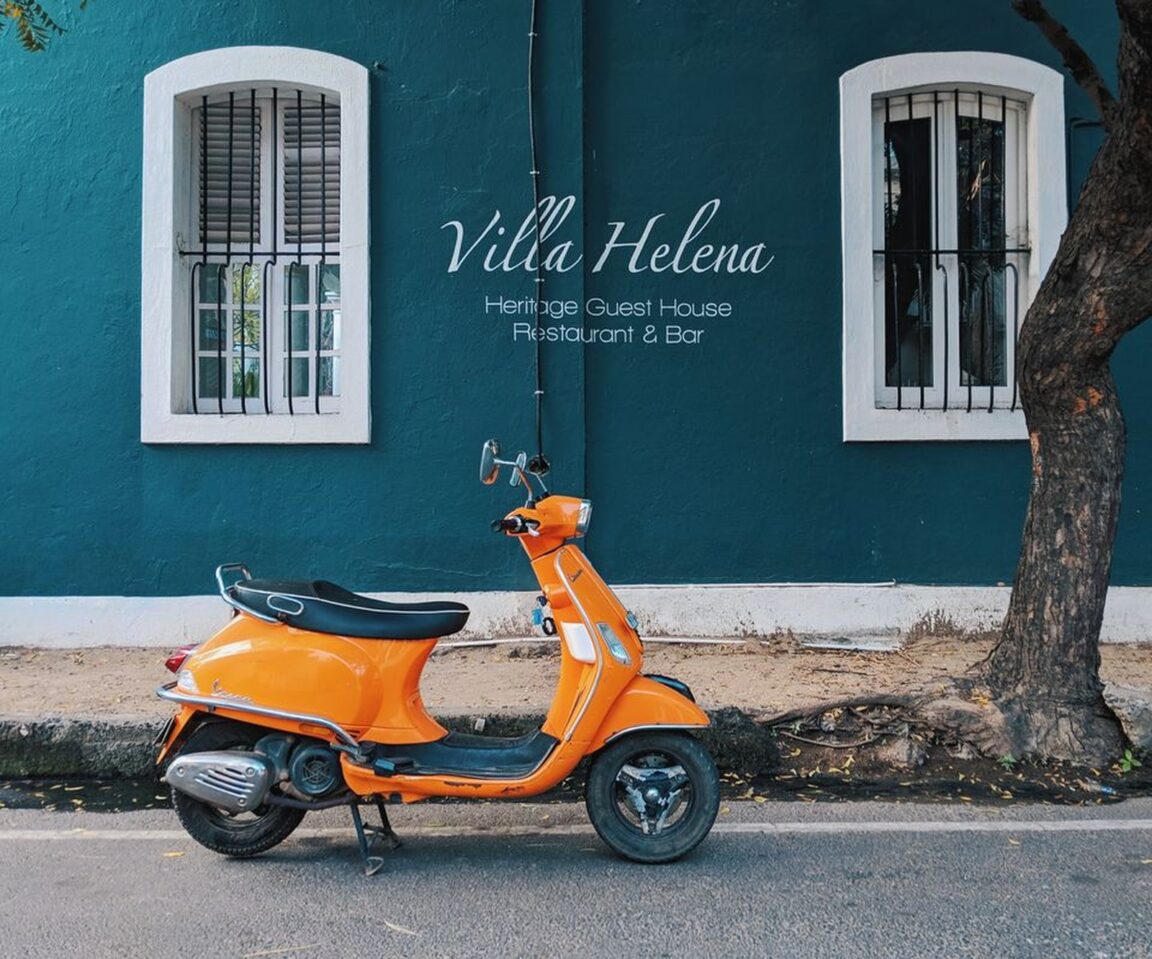
Start at the Promenade at sunrise. Goubert Avenue, the seafront road, is closed to traffic in the early morning and evening, and the whole town seems to walk it, past the Gandhi statue, the war memorial and the old lighthouse end of the bay. Then turn inland into the grid. White Town was laid out in a regular French colonial plan, and its pleasure is architectural rather than monumental. Look for high walled courtyards, shuttered windows, deep verandas and paint in mustard, peach and white, with Tamil houses on some streets answering in a different grammar of pillared porches and open courtyards.
Named stops help, used lightly. The Notre Dame des Anges church faces the sea in pale pink and cream. The French Consulate, the Alliance Francaise and the Institut Francais keep the living French connection visible, helped by a resident French community and by Pondicherry’s place in French electoral life. Cafes and bakeries cluster around Rue Romain Rolland and the neighbouring streets, and a slow breakfast crawl is a legitimate morning plan. The featured streets reward photographers early, before scooters and delivery traffic reclaim them.
What changes when you cross the canal?
Almost everything except the heat. The Tamil quarter is the working town, and its sights are institutions rather than facades. The Manakula Vinayagar Temple, dedicated to Ganesha, sits close to the Ashram and draws a steady flow of devotees, with an elephant at the gate in many periods offering blessings. Goubert Market and the streets around Jawaharlal Nehru Street supply the colour, noise and bargaining that White Town politely lacks, and the grand 19th century churches on the western side, including the Basilica of the Sacred Heart of Jesus near the station, show how layered the town’s religious life is.
Eat across both towns. White Town does French influenced cafes and bakeries well, while the Tamil quarter and the streets beyond it are where to chase dosas, filter coffee and thali lunches at local prices. For readers building an India food route, our guide to what to eat in Mumbai covers the country’s other great cafe culture, and the contrast between Irani cafes and Pondicherry’s French bakeries is half the fun.
How should you approach the Sri Aurobindo Ashram?
As a guest at a working spiritual community, not as a sightseer at a monument. The Ashram grew around Sri Aurobindo, the philosopher and freedom movement figure who settled in Pondicherry in 1910, and Mirra Alfassa, known as the Mother, and it was formally founded in 1926. Its central courtyard holds the samadhi, the flower covered resting place of Sri Aurobindo and the Mother, where visitors are asked for silence. Dress respectfully, keep phones away, and let the quiet set the terms. The Ashram also runs much of the town’s cultural infrastructure, from its library and handmade paper factory to guest houses, so its presence explains White Town’s calm as much as any architecture does.
What is the respectful way to visit Auroville?
Understand first what it is. Auroville is an experimental international township founded in 1968 under the Mother’s charter, aiming, in its own words, at human unity, and home to a few thousand residents from dozens of countries. At its centre stands the Matrimandir, a golden sphere that Auroville describes as a place for concentration, not a temple and not a tourist attraction. Day visitors walk from the visitors centre, where an introductory exhibition and film explain the project, along the shaded path to a viewing point for the Matrimandir and its gardens. Entry inside the Matrimandir is a separate, limited booking process aimed at people who want to sit in silence there, and it is not a same day walk up activity.
Go with curiosity and restraint. Browse the visitors centre boutiques, which sell Auroville made incense, paper, clothing and food, have lunch in one of its cafes, and skip any framing of residents as exhibits. Travellers drawn to Pondicherry for its contemplative side may also value our guide to choosing an Ayurveda retreat in Kerala, which applies the same scepticism and respect a few hundred kilometres southwest.
When should you go, and what should you skip?
October to March brings the gentlest weather. April to June is hot enough to reorganise any day around shade and sea air, and the northeast monsoon can bring heavy rain in late autumn. Skip the urge to rush Paradise Beach and Auroville into the same morning as White Town. Pondicherry’s whole argument is slowness, bicycles, long breakfasts and a town that is largely asleep by ten at night, and it makes that argument best to travellers who stop trying to win it.
Frequently Asked Questions
Is Pondicherry the same as Puducherry?
Yes. Puducherry is the official name, adopted in 2006. Pondicherry remains in everyday use for the town and its French era heritage.
How many days do you need in Pondicherry?
Two full days covers White Town, the Tamil quarter, the Ashram and the Promenade at the right pace. Add a half day for Auroville and more if beaches or cafes are the point of the trip.
Can anyone walk into the Matrimandir at Auroville?
No. Day visitors use the visitors centre and the viewing point. Sitting inside the Matrimandir requires a separate advance booking and is intended for silent concentration, not sightseeing.
What is the best time of day in White Town?
Early morning. The Promenade is traffic free, the light suits the painted facades, and the streets are quiet enough to hear the town wake up.
How do you get to Pondicherry from Chennai?
The East Coast Road runs about 150 km down the coast from Chennai and is the scenic standard route, by bus, taxi or self drive, passing Mahabalipuram on the way.
Featured image: Villa Helena on a White Town street, Pondicherry. Photo by Faris Mohammed on Unsplash, Unsplash License, via Tripoto. Facts checked 14 November 2026 against Puducherry tourism and Auroville official sources.