 Rafael Santos
Beyond Big Daddy, the Sossusvlei morning runs on gate maths, not dune size. Sleep inside the Sesriem gate and you roll an hour before everyone else, drive 60 kilometres of tar in the dark, take the shuttle or a proper 4×4 over the last 5 kilometres of sand, and walk into Dead Vlei while the light is still low and the pan is empty. Sleep outside and the same sights are still there, but later, hotter and shared. This guide sequences the visit in the order it actually happens: the inside gate decision, the Dune 45 alternative, the climb choice between Big Daddy and the smaller dunes, and Dead Vlei timed last of the climbs and first for photographs, inside the Namib-Naukluft Park in Namibia.
Quick Facts
- Where: Sossusvlei, at the end of the Sesriem road inside Namib-Naukluft Park, Namibia. Sesriem gate is the only visitor entrance, about a 4 to 5 hour drive southwest of Windhoek.
- Park fees: Since 1 April 2026, foreign adults pay N$280 per person per day and a vehicle with up to 10 seats pays N$60, entrance and conservation fees combined, valid 24 hours, per the Ministry of Environment, Forestry and Tourism schedule. Confirm the posted figure at the gate.
- Two gates: The outer Sesriem gate opens at sunrise and closes at sunset. The inner gate, for guests sleeping inside the park only, opens about one hour before sunrise and closes about one hour after sunset.
- Inside the gate: Sesriem Campsite, Sossus Dune Lodge and Dead Valley Lodge are the places to sleep inside the outer gate, all booked through or in partnership with Namibia Wildlife Resorts (NWR).
- The drive in: About 60 km of tarred road from Sesriem to the 2×4 parking area. Dune 45 stands at the 45 km mark. The final 5 km to Sossusvlei and Dead Vlei is a deep sand track, 4×4 only, with a paid shuttle from the 2×4 parking area for everyone else.
- Dead Vlei walk: About 1 to 1.1 km on foot over soft ground from the 4×4 parking area to the pan. No shade. Carry water for the walk and the climb.
- Sesriem Canyon: A gorge about 1 km long and 30 to 40 metres deep near the gate, covered by the same park permit, best saved for the afternoon.
Why does the inside gate decide the whole morning?
Sossusvlei has two barriers and they open an hour apart, and that hour is the product. The outer gate at Sesriem, with the fuel station, shop and permit office, opens at sunrise for everyone sleeping outside the park. The inner gate onto the Sossusvlei road opens about one hour before sunrise, but only for guests who slept inside the outer gate, at Sesriem Campsite, at Sossus Dune Lodge or at Dead Valley Lodge. That head start is not a luxury detail. The drive from the gate to the pans is 60 kilometres, so the inside guest is walking into Dead Vlei at first light while the outside guest is still in the permit queue, and in a landscape photographed for its low light and long shadows, first light is the whole game.
The honest costs of the inside sleep are scarcity and planning. Those three properties hold a tiny fraction of the area beds, they are booked through Namibia Wildlife Resorts rather than the usual portals, and in the dry high season from June to September they fill many months ahead. The outside alternative is not a failure: lodges cluster at the gate and within an hour of it, and an outside guest who pays the park permit the afternoon before, queues at the outer gate before sunrise and drives without stopping can still be at Dead Vlei in strong morning light. What the outside guest cannot do is beat the inside guest there. Decide which morning you want before you book any bed, because no alarm clock outside the gate buys back that hour. Travellers building the full Namibia circuit should sequence this stop with our guide to Windhoek, the capital most safari travellers skip, at the start or end of the drive.
What is the Dune 45 alternative, and when is it the better climb?
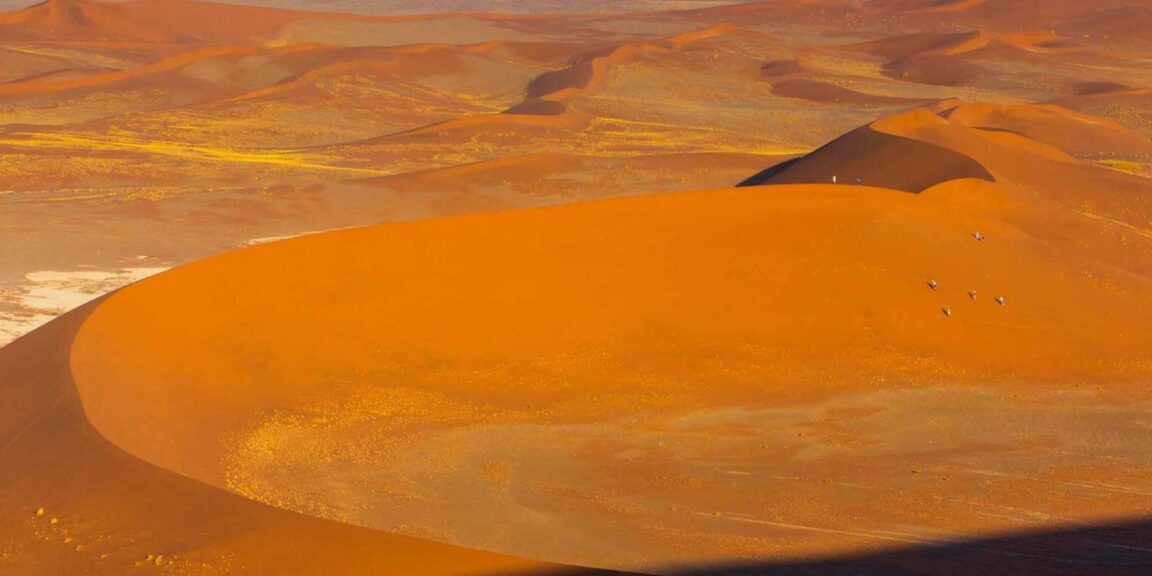
Dune 45, named for its position at the 45 kilometre mark on the Sesriem road, is the climb for everyone who does not need the biggest dune. Its ridge is shorter and more forgiving than Big Daddy, the great dune overlooking Dead Vlei, the views over the Tsauchab valley and the dune sea are superb at sunrise, and crucially it sits on the tar road, 15 kilometres before the sand track begins, so it asks nothing of your vehicle. For photographers it offers the classic clean ridge line with climbers silhouetted at dawn. For families, older travellers and anyone rationing energy in desert heat, Dune 45 plus a relaxed Dead Vlei walk is a better morning than a Big Daddy summit followed by a depleted walk across the pan.
Big Daddy keeps its place for those who want it: the long climb up the dune that towers over Dead Vlei, with the reward of looking down into the white pan and its blackened camel thorn trees, then descending the slip face toward the pan itself. The sequencing rule is to choose one climb, not both, before the heat builds. Inside gate guests can do Big Daddy and Dead Vlei in the cool window. Outside gate guests arriving later should protect Dead Vlei, which deteriorates fastest as the sun climbs and the crowds arrive, and treat the climb as the optional extra, choosing Dune 45 on the drive out if energy remains. By 9 am the light on the pan is already flattening and the sand is heating through shoes. The dune will keep. The morning will not.
How does the last 5 kilometres work?
The tar ends at the 2×4 parking area, 60 kilometres from the gate, and the final 5 kilometres to the Sossusvlei and Dead Vlei parking run on deep sand. That stretch is for proper four wheel drive vehicles with deflated tyres and low range, driven by people who know sand, and the rules for who may drive it have been adjusted by the environment ministry in recent seasons, so confirm the current position at the Sesriem gate or with your rental company the day before rather than relying on any guide, including this one. Everyone else, which means most visitors in standard rental cars, takes the paid shuttle that runs through the day between the 2×4 parking area and the 4×4 parking area, for a separate fare on top of the park permit.
From the 4×4 parking area, Dead Vlei is a walk of about a kilometre over soft, shadeless ground, following the marked route around the dune base. Allow 15 to 20 minutes each way at a steady pace, more with children or camera stops, and carry all the water you will drink, because there is none at the pan. Sossusvlei pan itself, the actual vlei at the road end with its occasional acacia shade, is the quieter stop most tour groups rush past, and it rewards ten unhurried minutes once Dead Vlei is done. Drivers continuing a Namibia self drive after Sesriem will find the coastal counterpoint in our guide to Swakopmund, the desert dune town on the Skeleton Coast gateway.
How should you time Dead Vlei itself?
Dead Vlei is a white clay pan cut off from the Tsauchab River by the dunes centuries ago, its dead camel thorn trees, commonly put at around 900 years old, blackened by sun and too dry to rot, standing against orange sand. It photographs best in two windows: at first light, when shadow still fills half the pan and the dune wall behind the trees glows, and in mid morning, when light reaches the pan floor and the contrast between white clay, black trees and red dune is at its hardest. The inside gate strategy targets the first window. Everyone else should target arrival before the tour groups thicken, walk the pan edge before the centre, and leave the wide establishing shots for last, because the trees closest to the entry path empty out as groups move deeper in.
Give the pan a full hour once you arrive. Visitors consistently under budget it, spending the morning on the climb and then rushing the one sight that cannot be replicated anywhere else on earth. Then reverse the road with the day heating up: Sossusvlei pan, the shuttle or sand track, and the tar drive back past Dune 45 and the Elim Dune near Sesriem, saving Sesriem Canyon, the narrow gorge about a kilometre long near the gate, for the late afternoon when its shade is deepest and its slot is coolest. That order, canyon last, is the beyond Big Daddy day in full: gate, pan, climb if chosen, canyon, and a sunset from outside the dunes rather than inside the queue.
Frequently Asked Questions
What is the advantage of staying inside the Sesriem gate?
About one hour. The inner gate opens roughly an hour before sunrise and closes an hour after sunset for guests sleeping inside the park at Sesriem Campsite, Sossus Dune Lodge or Dead Valley Lodge, while the outer gate opens at sunrise for everyone else. With 60 km of road between the gate and the pans, that hour decides who reaches Dead Vlei at first light. Inside rooms and campsites are scarce and booked through Namibia Wildlife Resorts, so reserve many months ahead for the June to September high season.
How much does Sossusvlei cost to enter?
On the Ministry of Environment, Forestry and Tourism schedule in force since 1 April 2026, a foreign adult pays N$280 per person per day and a vehicle with up to 10 seats pays N$60, with lower bands for SADC and Namibian visitors and children under 9 free. The permit is valid for 24 hours and is paid at the Sesriem gate. The sand track shuttle, camping and lodging are charged separately. Confirm the posted amounts at the gate, as schedules are revised.
Can you drive the last 5 km to Dead Vlei yourself?
Only in a proper 4×4, on a deep sand track requiring deflated tyres and low range, and only under the access rules in force on the day, which the environment ministry has changed in recent seasons. Confirm at the Sesriem gate or with your rental company the day before. Visitors in 2×4 vehicles park at the 2×4 parking area and take the paid shuttle to the 4×4 parking area, then walk about 1 km to the pan.
Big Daddy or Dune 45, which should you climb?
Choose one. Big Daddy, the dune above Dead Vlei, is the bigger, longer climb with a descent toward the pan, and suits fit visitors who arrived at first light. Dune 45, at the 45 km mark on the tar road, is shorter, needs no sand driving, and gives the classic sunrise ridge view. Later arrivals should protect Dead Vlei in the morning light and treat either climb as secondary.
When is the best time of year for Sossusvlei?
The dry season, roughly May to September, brings the clearest mornings, the coolest climbs and the highest demand, so inside gate beds and Sesriem campsites book out early. The greener months after rain can dust the dune bases with grass and flowers but carry hotter middays and less predictable access. In every season, the visit is won or lost before 9 am.
Fee, gate and access details checked against the Ministry of Environment, Forestry and Tourism schedule and Namibia Wildlife Resorts on 20 November 2026. Sand track rules and gate times follow the season and posted notices, so confirm both at Sesriem the day before your visit.