 Priya Nair
Do Berea in this order and the weekend works: artisan workshops and student craft shops on Saturday, the Pinnacles above town on Sunday morning, and the Kentucky Artisan Center as the last stop on the way out. Berea, about 40 miles south of Lexington where the Bluegrass meets the Appalachian foothills, is the Folk Arts and Crafts Capital of Kentucky, and the reason is a college. Berea College, founded in 1855 as the first interracial and coeducational college in the South, charges no tuition, and its students work at least 10 hours a week in campus jobs that include making the brooms, weaving, ceramics and woodwork sold in town. Base yourself near College Square or in Old Town, keep the car parked, and let the two craft districts and one forest carry the two days.
Quick Facts
- Where: Berea, Kentucky, in southern Madison County, off Interstate 75 at exits 76 and 77, about 45 miles south of Lexington.
- Known for: Folk arts and crafts. Kentucky names Berea its folk arts and crafts capital, with working studios clustered in College Square and the Old Town Artisan Village.
- Berea College: Founded in 1855. Every admitted student receives the No Tuition Promise Scholarship and pays no tuition. Students work a minimum of 10 hours a week in the Labor Program, per Berea College.
- Student craft: Berea College Student Craft dates to the 1890s. Students still make brooms, woven goods, ceramics and wood pieces sold through the college shops and visitor center.
- The Pinnacles: Rocky overlooks in the Berea College Forest, trailhead at 2047 Big Hill Road, about 3 miles from Boone Tavern. Trails are open dawn to dusk every day, free, and dogs are allowed on a leash, per the Berea College Forestry Outreach Center.
- Kentucky Artisan Center: 200 Artisan Way, just off I-75. A 25,000 square foot state center with work by Kentucky artisans, exhibits and a cafe. Free admission.
- Where to sleep: Boone Tavern, the college owned hotel on College Square, is the landmark base. Smaller inns, motels near the interstate and vacation rentals fill out the choice.
Why does a college run this town?
Most college towns are shaped by football or nightlife. Berea is shaped by a labor program. Berea College admits academically promising students with limited financial resources, primarily from Kentucky and Appalachia, covers tuition entirely through its Tuition Promise Scholarship, and puts every student to work for at least 10 hours a week in jobs across more than 100 campus and community programs. Some of those jobs are the ones a visitor actually meets: students staff the Boone Tavern hotel and restaurant, work the college farm and forest, and make craft in workshops that have run since the Fireside Industries era of the 1890s, when the college encouraged Appalachian families to keep weaving, woodworking and broom making alive as living skills rather than museum pieces.
That history explains the shopping. The broom in a Berea shop window is not imported souvenir stock. Berea College Student Craft still produces brooms, blankets, ceramics and woodcraft made by students as part of their labor assignments, and independent artisans, many drawn here by the college and the craft tradition, work in studios across town. It also explains the tone: this is a small, quiet, working town with a serious purpose, not a themed attraction. Visitors who arrive expecting a craft themed outlet village miss the point. Visitors who arrive curious about how the work is made, and who makes it, have the best weekend in Kentucky.
How should Saturday run, College Square then Old Town?
Start at College Square, the blocks around Boone Tavern and the campus edge. The Berea College Visitor Center and Shoppe on Main Street is the right first stop: it sells student made craft, can set up campus tours covering the historic, craft and ecological angles, and orients you to which workshops are demonstrating that day. From there, walk the square slowly. Galleries and shops here lean toward finished, higher end work, and the campus itself, brick buildings and shady lawns directly adjoining downtown, repays a self guided stroll. Students walk everywhere here, and so should you.
Then move to Old Town, the Artisan Village around the restored L and N railroad depot on Artist Circle, which now houses the Berea Welcome Center. Old Town is the working end of the craft scene: studio after studio where potters, glass artists, jewelers, woodworkers and broom makers sell from the rooms where the work happens. The honest difference between the two districts is that College Square is where you buy the college story, and Old Town is where you watch independent makers practice it. Give Old Town the longer block of time, talk to whoever is at the bench, and buy the piece you watched being made if the budget allows one serious purchase. Finish the day back at Boone Tavern for dinner in the dining room the students help run, which closes the loop the town is built on.
What about the Kentucky Artisan Center?
Save it for the drive out, or use it as the rainy hour plan. The Kentucky Artisan Center at Berea, in a Kentucky limestone building just off I-75 at 200 Artisan Way, gathers work from artisans across the whole state under one roof: gallery and sales space, changing exhibits, artisan demonstrations on many days, a travel information area and the Artisan Cafe and Grill for lunch. Admission is free and parking is free, and it works as both a serious survey of Kentucky craft beyond Berea and the most practical rest stop on this stretch of I-75. If your Saturday in Old Town left you wishing you had compared more pottery or textiles before buying, the center is the comparison shop. If you are continuing south toward the Smokies, it is also a natural pause before the road climbs, and our guide to the Smokies synchronous fireflies lottery and viewing rules pairs well with a Berea stop on the same Appalachian road trip.
How do you hike the Pinnacles on Sunday?
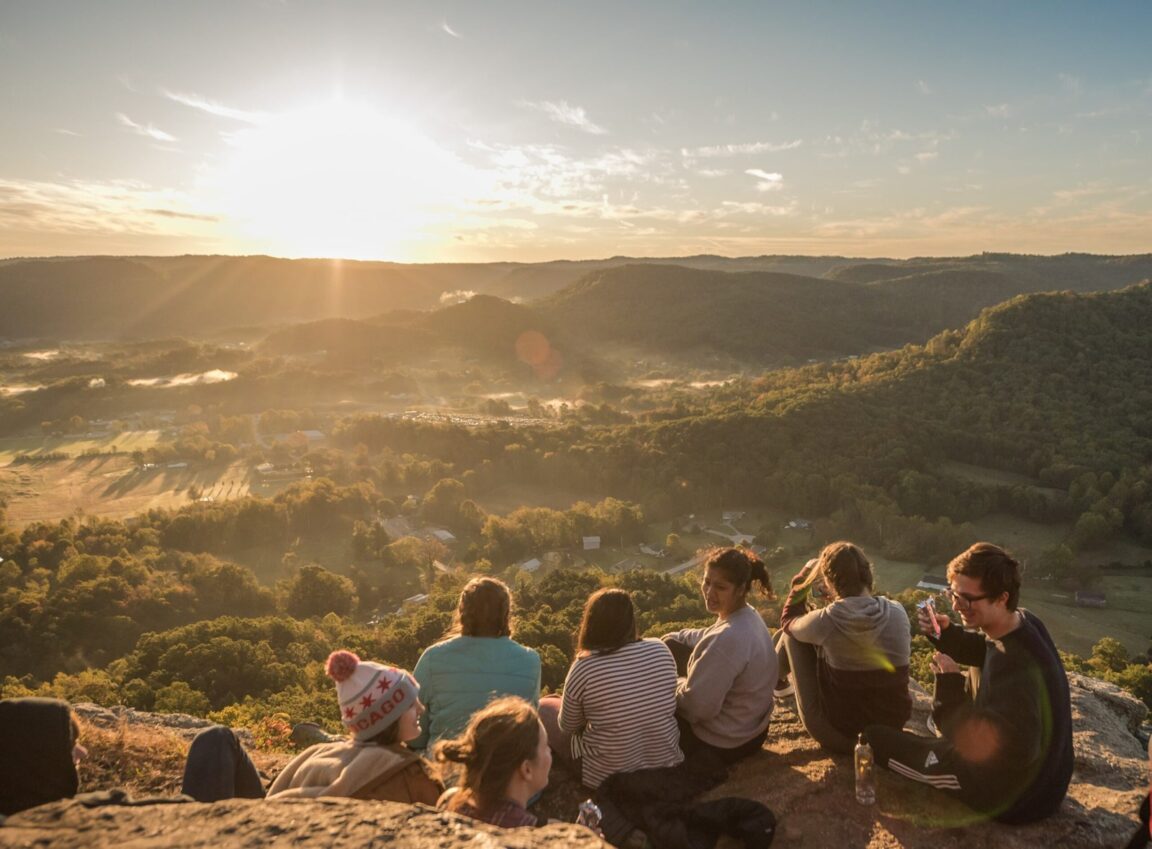
Go in the morning, and go to the main trailhead. The Pinnacles are the signature hike of the Berea College Forest, the college managed forest east of town, reached from the Forestry Outreach Center parking lot at 2047 Big Hill Road, about 3 miles from Boone Tavern on Highway 21. The trails are open dawn to dusk every day of the year and are free. Every route starts with an uphill climb from the main trailhead, then branches toward five lookouts: East Pinnacle, West Pinnacle, Indian Fort Lookout, Buzzard’s Roost and Eagle’s Nest. The Forestry Outreach Center recommends East Pinnacle for first timers, and that is the right Sunday call: a steady climb to a broad rocky overlook with views over the Bluegrass to the north and the Knobs hills to the south and east. Late fall and winter, with leaves down, open the views widest.
Know the practical rules before you set off. The Forestry Outreach Center building keeps limited hours, 10 am to 4 pm Tuesday to Saturday and noon to 4 pm Sunday, closed Monday, but the trails themselves run dawn to dusk regardless. Dogs are welcome on a leash. The West Barton trailhead, signed as the Berea Forest Trail, is the quieter start and shortens the walk to West Pinnacle, but it has no restrooms and no water, so the main lot is the better family choice. Download the trail map for offline use before you leave town, carry water even on a cool morning, and treat the upper trail linking East and West Pinnacles as the difficult option it is signed to be. Back in town by late morning, you have time for a last Old Town studio, lunch, and the Artisan Center on the way to the interstate. Hikers building a longer Kentucky and Virginia highlands loop will find the same plan ahead logic in our guide to Shenandoah in winter and its Skyline Drive closures.
Where should you sleep and eat?
Boone Tavern is the base that matches the town. The college owned hotel on College Square has been the address in Berea for generations, its dining room and front porch put you steps from the visitor center and the campus, and staying there directly supports the student labor model the whole visit is about, since students work throughout the property. Book it first for a one or two night weekend. The alternatives trade character for convenience: chain motels near the I-75 exits suit a late arrival or an early departure, and a small stock of inns and vacation rentals in and around town suits groups. Eat one meal at Boone Tavern, graze the cafes around College Square and Old Town for the other, and use the Artisan Cafe at the Kentucky Artisan Center for the departure lunch. Berea is a dry toned, early to bed town by big city standards, so plan the evening around dinner and a campus or Old Town stroll rather than nightlife.
Frequently Asked Questions
Does Berea College really charge no tuition?
Yes. Berea College states that no student pays tuition: every admitted student receives a Tuition Promise Scholarship covering tuition, funded by the college endowment, grants and scholarships. The promise covers tuition, not automatically housing, food, books or fees, and every student works a minimum of 10 hours a week in the Labor Program.
What is the difference between College Square and Old Town?
College Square, around Boone Tavern and the campus, holds the college visitor center, student craft shops and galleries in the town center. Old Town, the Artisan Village around the old railroad depot and the Berea Welcome Center on Artist Circle, holds independent working studios where artisans make and sell their own work. A good Saturday does College Square first, then gives Old Town the longer afternoon.
How hard is the Pinnacles hike?
Moderate, with a real climb. All trails from the main trailhead at 2047 Big Hill Road start uphill. East Pinnacle, the lookout the Forestry Outreach Center recommends for first timers, is roughly 1.8 miles one way in local trail descriptions. The trails are free, open dawn to dusk daily, and dogs are allowed on a leash.
When is the best time to visit Berea?
Spring and fall suit the town best: studio doors open, comfortable hiking weather for the Pinnacles, and fall color in the college forest. Late fall and winter open up the Pinnacle views once leaves drop, at the cost of colder climbs and shorter days. Summer weekends bring the fullest craft calendar and the warmest hiking.
How much time do you need in Berea?
Two days is right. One full day covers College Square, Old Town and the campus properly, a morning covers the Pinnacles, and the Kentucky Artisan Center fits the departure drive. Berea also works as an overnight stop on I-75 between Lexington and Knoxville, but the craft studios reward the slower stay.
College, forest and artisan center details checked against Berea College, the Berea College Forestry Outreach Center and the Kentucky Artisan Center on 20 November 2026. Studio and tour hours vary, so confirm demonstrations and campus tours before you go.