 Jordan Ellis
Winter is Shenandoah with the volume turned down and the certainty turned down with it. The park itself never closes, and Skyline Drive stays open all winter unless snow or ice closes it, but every lodge, campground and wayside inside the park shuts by the end of November, fuel becomes a single unreliable self-pay pump, and a storm can lock the ridge road for several days while the valleys below stay clear. In exchange you get empty overlooks, views through bare trees that summer hides, waterfalls edged with ice and the quietest hiking of the year on 500 miles of trails. This guide sets out the real trade-offs, including the closure question everyone asks and the honest answer the park gives.
Quick Facts
- The road: Skyline Drive runs 105 miles along the Blue Ridge crest at a 35 mph speed limit, with four entrances: Front Royal (mile 0), Thornton Gap (mile 31.5), Swift Run Gap (mile 65.5) and Rockfish Gap (mile 104.6).
- Entrance fee: $30 per private vehicle for seven consecutive days; the park has been cashless since July 1, 2025, so bring a card or mobile payment.
- Winter road rule: Skyline Drive remains open throughout winter unless closed by snowy or icy conditions, and reopening after a storm can take several days, per the National Park Service.
- Closure alerts: Text SHENALERTS to 888777 for the park’s closure and reopening texts.
- In-park lodging: None in winter. In 2026 Skyland and Lewis Mountain Cabins closed on November 8 and Big Meadows Lodge on November 29, per the park’s operating dates.
- Fuel: One gas station in the park, at Big Meadows (mile 51), self-pay in winter and described by the park as unreliable; enter with a full tank.
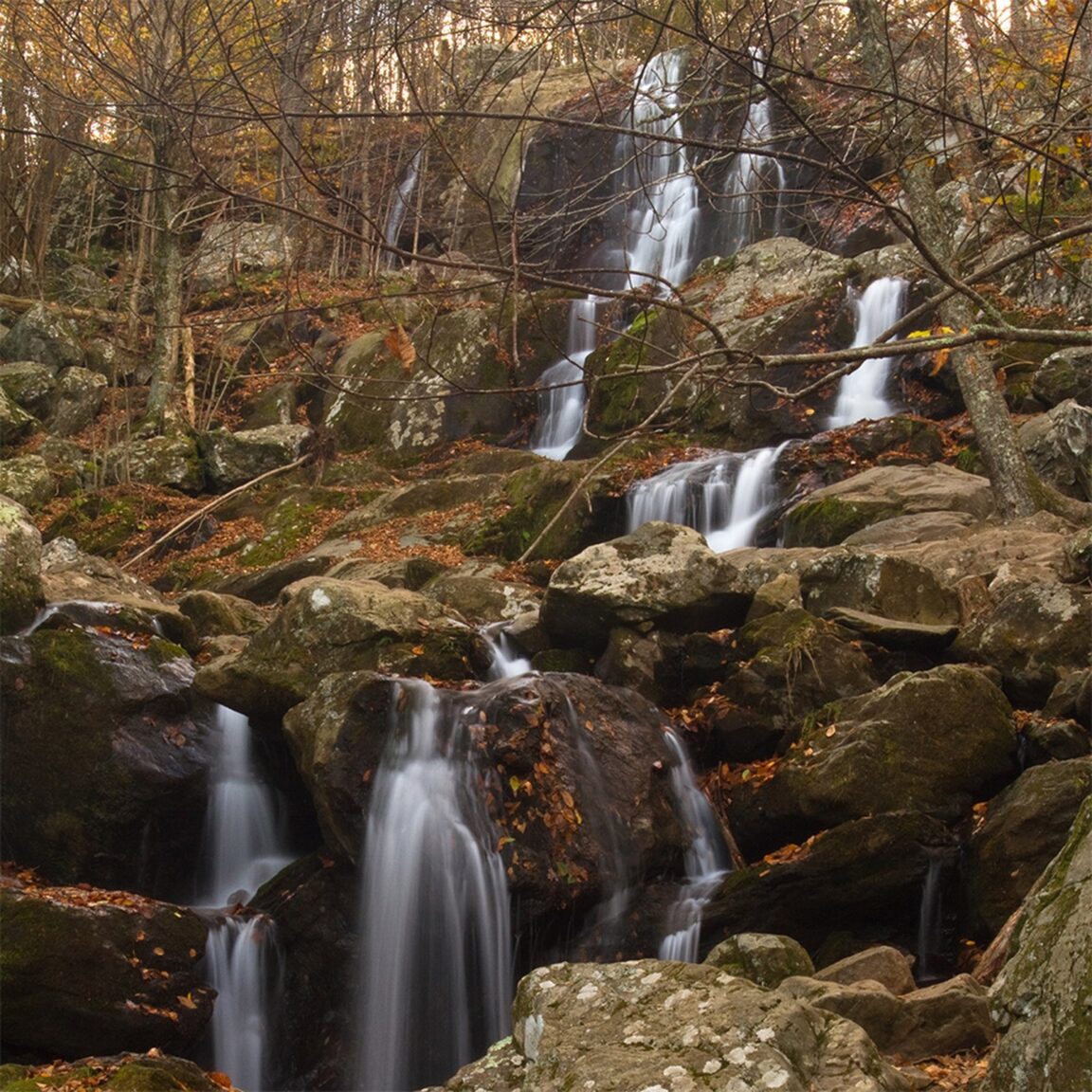
- Signature winter hike: Dark Hollow Falls, a 70-foot falls and the park’s most visited waterfall, reached by a steep 1.4-mile round trip from mile 50.4; no pets on the trail.
- Temperature gap: The ridge runs 10 to 20 degrees Fahrenheit colder than the lowlands, and rain in the valley can be ice and snow on the mountain.
Which sections of Skyline Drive close first?
Here is the honest answer the National Park Service gives, and it is not a list. The park publishes no fixed closure sequence. Instead it states that portions of Skyline Drive are periodically closed during inclement weather, that the whole drive remains open throughout winter unless snowy or icy conditions close it, and that cold mountain temperatures can make reopening a matter of several days after a storm. Closures follow the weather, and the weather follows elevation and exposure: the high central section around Skyland and Big Meadows, above 3,000 feet, catches snow and ice that lower sections escape, and shaded curves hold ice long after the road looks dry, which is why the park warns drivers about icy patches on curves that otherwise appear clear.
Plan accordingly. Treat any winter Skyline Drive plan as provisional until the morning you drive it, subscribe to the park’s SHENALERTS text system before you leave home, and build your day around a single entrance rather than a through-drive, so a partial closure shortens your day instead of stranding your itinerary on the wrong side of a gate. The park also makes a point winter visitors miss: even when Skyline Drive is closed, the park is still open to hiking, with the Appalachian Trail accessible from the entrance stations and many trails reachable from boundary parking. A closed road cancels a drive, not a visit. Current facility dates sit on the park’s operating hours page and winter specifics on its winter page.
When does Dark Hollow Falls freeze, and is it worth the hike in winter?
Dark Hollow Falls is the park’s most visited waterfall, 70 feet of cascades on the stream below Big Meadows, reached by a 1.4-mile round trip that the park grades moderate with a 440-foot elevation gain and a steep, rocky return climb. There is no published ice date, because the freeze is weather-made, not calendar-made: it takes sustained cold on the ridge, the kind of stretch where the 10 to 20 degree gap between valley and mountain keeps the falls below freezing for days at a time. In a mild spell you get a full, fast falls in a bare winter forest; in a deep cold snap you get ice formations framing a narrowed stream of water. Both are worth the short hike, but they are different photographs and different walks.
The winter-specific hazard is the trail itself. The park advises carrying microspikes or traction devices in winter because trails can be icy and snow covered even when lower elevations are perfectly clear, and Dark Hollow’s steep, rocky path beside running water is exactly the terrain that advice was written for. Pets are not allowed on this trail at any time of year. Pair the falls with the neighbouring Rose River loop in settled weather if you want a longer day, and treat both as fair-weather windows: the trailhead sits at mile 50.4, deep in the central section that is most exposed to closures, so a falls plan needs the road open and the cold already in place. Check conditions the same morning, and if the central section is gated, take a lower trail from a boundary trailhead instead of forcing the plan.
Should you base in Luray or Front Royal?
With every in-park bed closed for the season, winter Shenandoah is a gateway-town park, and the two northern bases split the job cleanly. Front Royal, at mile 0, is the Washington DC side base: it sits off Interstate 66, holds the widest spread of chain hotels and services, and puts you at the Dickey Ridge end of the drive, where the visitor center area and picnic grounds stay open year round even though the visitor center itself runs reduced winter hours. It is the right base for a short trip, a late arrival, or a plan weighted to the north district and to hiking in from the boundary when the road is closed.
Luray, in the Page Valley west of Thornton Gap, is the central-district base. Route 211 climbs from town to the Thornton Gap entrance at mile 31.5, the closest gate to Skyland, Stony Man, Hawksbill and the Big Meadows and Dark Hollow Falls country around mile 50. From Luray you reach the park’s highest and most winter-prone section with the least ridge driving, which matters on the mornings when part of the drive is gated and you want the open part to be the good part. Luray also adds its famous caverns as a bad-weather fallback a short drive from your bed, an insurance policy Front Royal cannot match at the same distance. The split, then: Front Royal for logistics and the north, Luray for the central highlights and a weather hedge. Travellers coming from the south should run the same logic from Waynesboro at Rockfish Gap rather than defaulting to either northern town. For how a winter park trip differs when the park keeps one road open through the season, compare our Yellowstone in winter guide, and for another park where timing the season is the whole decision, see the best time to visit Crater Lake.
What do you actually give up, and what do you gain?
The losses are concrete. No in-park lodging or dining after late November, no campgrounds, one unreliable fuel pump at Big Meadows, very limited visitor services and cell coverage the park calls unreliable, and restrooms reduced to a short list of picnic grounds and entrance stations with frost-proof water spigots. A winter trip is self-reliant by design: full tank before you enter, layers, blankets in the car in case you are stuck waiting for assistance, extra water and food, a flashlight and a paper map, exactly as the park’s winter guidance lists.
The gains are just as concrete. Overlooks you would queue for in October stand empty. Bare trees open views from trails that are tunnels of green in July, which the park itself singles out as winter’s quiet gift. Sunsets, in the park’s own description, are the prettiest and most dramatic of the year in the crisp air. Wildlife is easier to spot against bare ground, parking at the famous trailheads stops being a contest, and gateway towns price their rooms for the off season. The trade, in one line: winter exchanges services and certainty for solitude and atmosphere, and it rewards travellers who find that exchange attractive with the park at its most itself.
Frequently Asked Questions
Is Shenandoah National Park open in winter?
Yes. The park is always open, and Skyline Drive remains open throughout winter unless snow or ice closes all or part of it. What closes is the service layer: lodges, campgrounds, waysides and most visitor services shut by the end of November, so a winter visit runs on gateway towns and your own supplies.
How will I know if Skyline Drive is closed?
Subscribe to the park’s alert system by texting SHENALERTS to 888777; subscribers receive closure and reopening texts as they happen. Check the park’s alerts and conditions before driving up, and remember that reopening after a storm can take several days, so a closure on Saturday may still shape a Monday plan.
Can I still hike if Skyline Drive is closed?
Yes. The park states that it remains open to hiking even when the drive is closed. The Appalachian Trail can be reached from the entrance stations and many other trails from boundary parking areas outside the gates. Carry traction devices, since trails can be icy when the valleys are clear.
Where can I get fuel and food inside the park in winter?
Plan as if you cannot. The park’s only gas station is at Big Meadows, self-pay in winter, and the park warns the pumps can be unreliable and that there are no commercial services during winter. Enter with a full tank, eat in your gateway town and carry food and water with you.
Is Dark Hollow Falls a good winter hike for beginners?
It is short but not easy: 1.4 miles round trip with a 440-foot climb on a steep, rocky path, and winter adds ice beside the stream. Fit beginners with microspikes, poles and a settled forecast can enjoy it; anyone uncomfortable on ice should choose a lower, flatter trail, such as the Story of the Forest trail near Big Meadows, and save the falls for a thaw.
How much does it cost to enter Shenandoah in winter?
The standard pass is $30 per private vehicle for seven consecutive days, the same as the rest of the year, and the America the Beautiful pass is accepted. Payment is cashless, a policy in place since July 1, 2025, so carry a card or a phone set up for mobile payment.
Fees, operating dates, closure policy and trail details checked against the National Park Service on November 20, 2026. Winter conditions change daily; confirm Skyline Drive status on the morning of any winter visit.