 Camille Baptiste
Five years after launch, the Barbados Welcome Stamp still does exactly what it promised in 2020: it lets a non-Barbadian live on the island for 12 months while working only for employers, clients or a business based outside Barbados, provided expected income over the year reaches at least US$50,000, valid health insurance covers the stay, and the fee is paid within 28 days of approval. The stamp costs US$2,000 for an individual and US$3,000 for a family bundle, holders pay no Barbados income tax on their foreign earnings, and staying on means reapplying rather than renewing automatically, with the programme currently authorised by Cabinet only until 31 December 2026.
Quick Facts
- What it is: A 12-month remote work visa created by the Remote Employment Act, 2020, for non-nationals who work exclusively for entities outside Barbados.
- Income bar: Applicants certify an expectation of earning at least US$50,000 over the 12 months of the stamp, or of having the means to support themselves and any dependants.
- Fees: US$2,000 for an individual application and US$3,000 for a family bundle, non-refundable and payable within 28 days of approval.
- Tax: Stamp holders are not liable for Barbados income tax on remote earnings; local spending still carries the standard 17.5 percent VAT.
- Insurance: Valid health insurance covering the full period of stay is required.
- Where to apply: Online only, through the official portal at barbadoswelcomestamp.bb. Third-party application sites are not the official route.
- Programme horizon: Cabinet extended the programme until 31 December 2026; check the official page before counting on an application or reapplication after that date.
What exactly does the Welcome Stamp allow?
The Welcome Stamp is a residence permission built around one bright line: the work must stay offshore. Holders may live in Barbados for a full year and work remotely, but only for companies, clients or their own businesses that are registered and operating outside Barbados. Taking a local job or serving Barbadian clients is outside the stamp’s scope and belongs to the separate work permit system. That single condition is what makes the stamp simple to administer, and it is also the first thing to test against your own situation before applying. A salaried employee of a foreign company, a freelancer with foreign clients and a founder whose company is incorporated abroad all fit the model. Anyone whose income would come from the island itself does not.
The stamp runs for 12 months and the holder must arrive within 12 months of approval, so approval is not a ticket that can be banked indefinitely. Families can travel on the family bundle, which covers a spouse or partner and dependants under one fee, with proof of relationship supplied in the application. Barbados has plenty to fill a year beyond the laptop hours, from the festival calendar covered in Crop Over, Barbados’s summer festival from the ceremonial cane delivery to Kadooment Day, to the quieter east coast surf towns that reward a long stay far more than a short one.
How high is the income bar in practice?
The headline figure is US$50,000 a year, which is BBD 100,000 at the Barbadian dollar’s fixed two-to-one peg to the US dollar. The mechanism matters as much as the number: the applicant certifies on the application form an expectation of earning at least that amount over the 12 months of the stamp, or of having the means to support themselves and any accompanying family. Expect to back the certification with evidence of employment or self-employment with an entity outside Barbados, such as contracts, employer letters or business records, alongside the bio-data page of a valid passport and a passport-style photograph for the principal applicant and each family member over 18.
Two practical points follow. First, the test is about expected income across the stamp year, not about a single month’s payslip, so a contractor between engagements should assemble the strongest forward-looking evidence available. Second, the fee is only payable once the application is approved, and it must be paid within 28 days of that approval, so there is no financial risk in applying before your plans are final, but there is a hard payment deadline once the yes arrives.
What does a second year actually look like?
This is where five years of the programme have clarified the reality behind the word renewal. The programme’s own framing is that a happy stamp holder reapplies: continuation is a fresh application through the same portal, not an automatic extension and not a rubber stamp. Some secondary sources report a 25 percent discount on renewal fees, but that discount does not appear on the official programme pages, so budget for the full US$2,000 or US$3,000 again and treat any discount as a bonus confirmed at the time you reapply.
The larger caveat is the programme’s own authorisation. Cabinet renewed the Welcome Stamp until 31 December 2026, and no publicly announced extension beyond that date was in place when this guide was checked. A worker whose first year would end after that date, or who is counting on a second year starting in 2027, should verify the programme’s status on the official page before signing a long lease or giving up housing elsewhere. The stamp has been renewed before, and Barbados built it as a flagship, but a prudent remote worker plans around the authorisation that exists, not the one expected.
How does the tax position work?
The tax deal is statutory, not a marketing line. Under the Remote Employment Act, 2020, a stamp holder is treated as not resident for income tax purposes and their foreign remote-work income is excluded from Barbados income tax, so there is no Barbados tax on the salary or fees earned abroad and no double taxation problem created by living on the island. What the stamp does not exempt is consumption: holders remain subject to Barbados VAT at 17.5 percent on local spending like everyone else. Anyone with a complicated tax position at home should still take advice in their home country, because the stamp settles the Barbadian side of the question only.
Who should choose Barbados over a shorter island stay?
The stamp makes most sense for workers who want one base for a full year rather than a chain of 30 or 90 day entries, and who value an English-speaking island with a fixed exchange rate and a programme that has now run long enough to have settled procedures. Travellers comparing island bases in the region can weigh the long-stay logic against a very different kind of island trip in Daufuskie Island, South Carolina, the ferry-only Gullah island off Hilton Head, a reminder that island life rewards those who arrive with time rather than an itinerary. For the remote worker, the honest summary at five years is that the Welcome Stamp’s terms have barely moved: same income bar, same fees, same offshore-work rule. The only number that has acquired an expiry date is the programme itself, and that is the one to watch.
Frequently Asked Questions
How much do I need to earn to qualify for the Welcome Stamp?
At least US$50,000 over the 12 months of the stamp. You certify the expectation on the application and support it with evidence of employment or self-employment with an entity based outside Barbados.
How much does the Welcome Stamp cost?
US$2,000 for an individual and US$3,000 for a family bundle. The fee is non-refundable, is only payable after approval, and must be paid within 28 days of that approval.
Can I renew the Welcome Stamp for a second year?
You reapply through the same official portal. Continuation is a new application rather than an automatic renewal, and the programme is currently authorised until 31 December 2026, so confirm its status before relying on a later start.
Do Welcome Stamp holders pay Barbados income tax?
No. The Remote Employment Act, 2020 excludes stamp holders’ foreign remote-work income from Barbados income tax. Local purchases still carry the standard 17.5 percent VAT.
Can I work for a Barbadian company on the Welcome Stamp?
No. The stamp covers remote work only, for employers, clients or businesses outside Barbados. Working for a local employer requires the separate work permit route.
Do I need health insurance?
Yes. Valid health insurance covering the whole period of stay is a programme requirement, for the principal applicant and accompanying family.
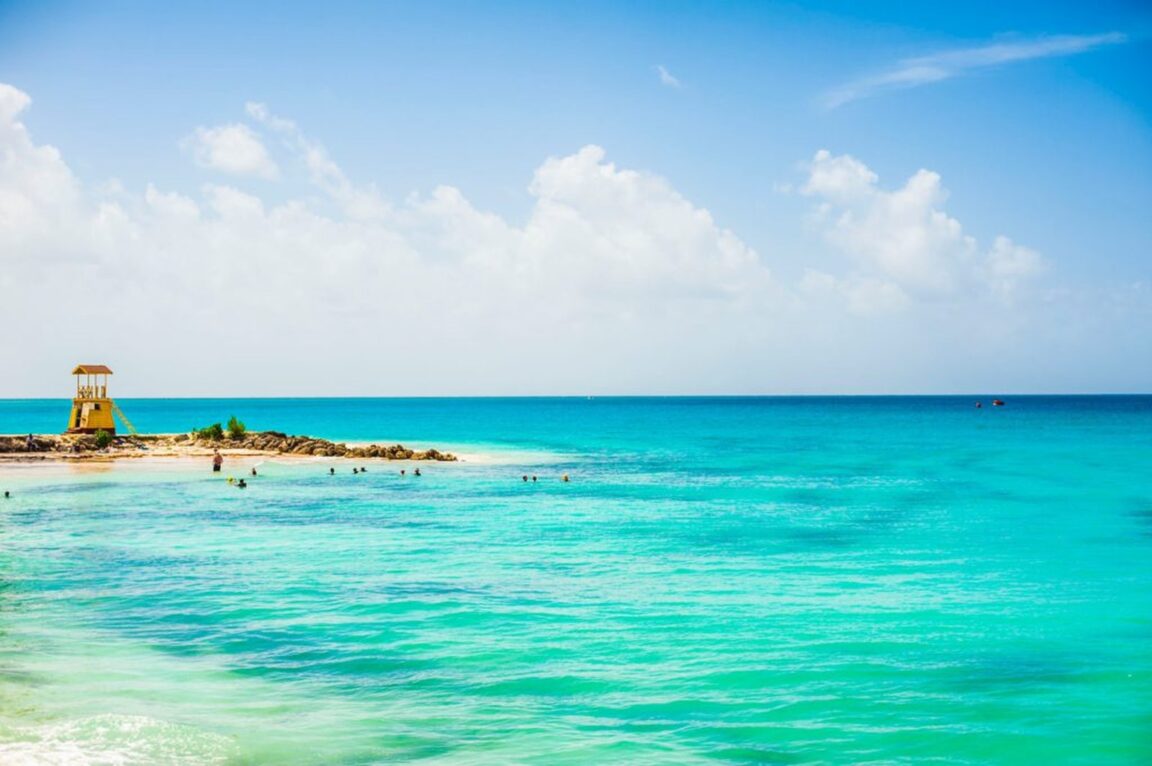
Photo: A Barbados beach with its yellow lifeguard tower, swimmers in turquoise water under a bright sky. Credit: Tom Jur, via Unsplash.