 Elena Vasquez
In Porto, the francesinha is not settled by a best-of list. It is settled, plate by plate, on the sauce. Two houses can stack the same bread, ham, sausage and steak, cover both in melted cheese, and still produce sandwiches that taste nothing alike, because each house guards its beer and tomato sauce recipe as a family secret. That is the tribunal a traveller walks into: order one francesinha well, understand why nobody will tell you what is in the sauce, pair it with a small cold beer, and choose your house by the argument you find most convincing, not by the longest tourist ranking.
Quick Facts
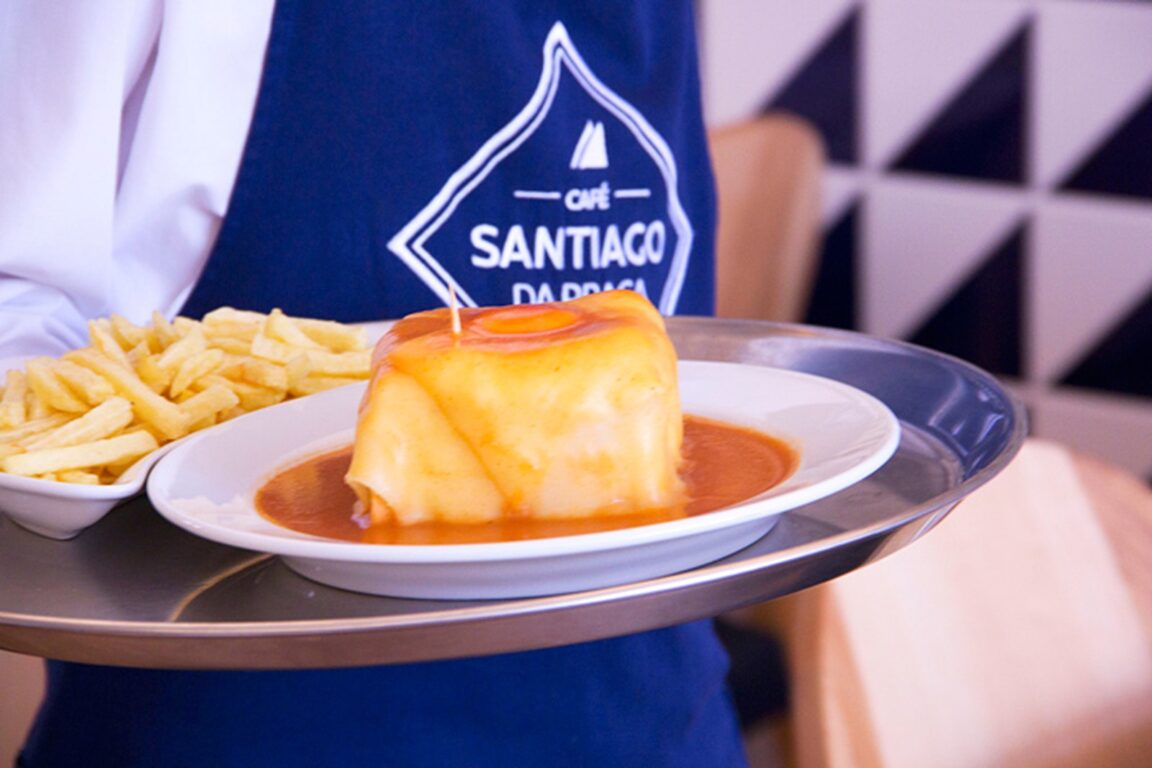
- The dish: A layered Porto sandwich of toasted loaf bread, mortadella, fresh sausage, linguica, beef steak, ham and cheese, covered in more cheese and a hot tomato and beer sauce, often with a fried egg on top.
- The origin most often told: Daniel David de Silva, back in Porto after time in France and Belgium, adapted the croque monsieur at A Regaleira on Rua do Bonjardim in 1953.
- The benchmark house: Cafe Santiago, Rua de Passos Manuel 226, officially founded in 1959, open Monday to Saturday from 12:00 to 22:45 and closed on Sunday, per its own site.
- The queue workaround: Santiago F at Rua de Passos Manuel 198 opened in 2011, and Santiago da Praca at Praca dos Poveiros 88 opened in 2017, both from the same family and the same Francesinha Santiago tradition.
- The drink: A fino, a small draft beer. Order it small and cold rather than large and warming while you work through the sauce and fries.
- The tool: A knife and fork. A francesinha arrives in a deep plate under hot sauce and is not a sandwich to pick up.
- Facts checked: 22 November 2026, against Cafe Santiago’s own site for the house, its layers, its hours and its sister addresses.
What exactly is a francesinha, layer by layer?
Start with the bread. At Cafe Santiago, the house describes loaf bread cooked in a wood-fired oven, selected for shape and consistency and cut into careful slices, then toasted rather than simply grilled. Toasting matters because the bread has to hold its edge for a few minutes under hot sauce instead of collapsing at the first cut.
Inside, Santiago builds in a stated order. Mortadella goes down first, as a subtle base. Fresh sausage arrives daily and is grilled only to order, never precooked. Linguica adds a more intense, lightly smoked note. A thin beef steak, cut in house and trimmed of fat, goes on top, then ham and a slice of cheese inside the stack.
The cover makes the plate recognisable across a room. A fried egg, cooked without oil at Santiago, sits on the bread, with four thin half-circle slices of cheese over it. The cheese melts under the heat of the sauce poured over it. Fries are not decoration. They are the tool for the sauce left in the plate.
Other houses vary the stack, with roast pork, no mortadella or no egg. The fixed points are toasted bread, several meats, a cheese seal and hot sauce. Everything else is a house position.
Why will nobody give you the sauce recipe?
Because the sauce is the house. Santiago calls its version the Santiago Essence and describes it, on its own site, as a well-kept family secret, developed by the Pereira family. The house will tell you that temperature, pans, spices and cooking time make the difference. It will not tell you the proportions.
The shared ground is narrow. Beer is the one ingredient common to francesinha sauces generally, most are tomato based, and they vary in spiciness. Beyond that, houses diverge on heat, acidity, body and sweetness, and on which extra spirits or stocks belong in the pot. Treat any definitive printed recipe with suspicion. It is not the sauce of the house whose plate you are eating.
Regulars therefore defend a sauce, not a sandwich in general: this one has more bite, that one is too sweet, another is flat by the last bite. Judge yours the same way, sauce first, then whether the bread held and the meats stayed distinct. You will have a position by the end of the plate.
Which houses do locals defend against the tourist lists?
Cafe Santiago is the name Porto gives first, and its queue is the visible cost of that status. It is a benchmark, useful for a first francesinha because so many versions are measured against it. Its own site presents the Francesinha Santiago as a major reference in Porto and Portuguese gastronomy, built on selected ingredients and handmade assembly.
The counter-arguments have names too. Bufete Fase, on Rua de Santa Catarina, is the purist case: a house associated with francesinha alone, a strong, spicy sauce and no egg. Francesinha Cafe, on Rua da Alegria, is defended for a tangier sauce and won a widely reported blind tasting. Brasao is the beer-first argument. Lado B, near Santiago, is the modern case, with lighter and vegetarian takes purists argue about because they depart from the classic.
A list can tell you which houses are famous. It cannot tell you whether you prefer heat over acidity, an egg or no egg, or a heavy sauce against a pourable one. Eat the benchmark first, then one counter-argument, on different days.
Pair this guide with 3 Days in Lisbon: A First-Timer Itinerary for Alfama, Belem and a Sintra Day Trip if you are travelling the length of the country, and with Alentejo, Portugal: The Slow Wine-and-Cork Country South of Lisbon for the contrast between Porto’s working lunch culture and the south’s long table pace.
What are the queue rules at Cafe Santiago?
Plan for a queue. Santiago does not build its trade on reservations, and at peaks the line forms outside number 226, near the Coliseu. Arrive close to the 12:00 opening, or early in the evening service. Avoid Sunday, when the house is closed. Keep the group together, order decisively, and do not linger after you finish. Turnover is how the queue behind you eats.
If that line is longer than your hunger allows, use the family’s own safety valves. Santiago F, at number 198 on the same street, opened in 2011 in response to demand, and its Francesinha Santiago TOP is exclusive to that house. Santiago da Praca, at Praca dos Poveiros 88, opened on 25 July 2017 with its own Praca version. Same family, same sauce tradition, different room.
What should you drink with it, and how should you order?
Order a fino. In Porto a fino is a small draft beer, and the small measure matters: it stays cold while a rich, hot plate is eaten, where a large glass would warm before the fries are finished. Beer is built into the dish, as the common ingredient of the sauce, so a plain lager echoes the plate instead of competing with it. Save Porto’s fortified wine for another day.
Then make three decisions. Egg or no egg: with egg is the Santiago presentation and the yolk enriches the sauce, while without keeps the sauce cleaner. Whole or shared: a full francesinha with fries is a main meal, and sharing one is sensible for two smaller appetites. Sauce: do not ask for it on the side on a first visit. It is designed to melt the cover cheese and soak the bread.
Frequently Asked Questions
Is a francesinha a sandwich you eat with your hands?
No. It arrives in a deep plate, covered in hot sauce, with melted cheese sealing the stack and fries alongside. Eat it with a knife and fork, cutting through the layers so each bite carries bread, meat, cheese and sauce together.
Why is the sauce at every Porto house different?
Because each house keeps its own recipe. Beer is the common ingredient and most sauces are tomato based, but heat, acidity, body and seasoning are house decisions. Cafe Santiago, for example, calls its sauce a well-kept family secret and does not publish the recipe.
When is Cafe Santiago open, and when should you avoid going?
Cafe Santiago lists its hours as Monday to Saturday from 12:00 to 22:45, closed on Sunday, on its own site. Avoid Sunday, arrive near opening or early in the evening to shorten the queue, and consider Santiago F or Santiago da Praca if the original line is too long.
Do you have to have the fried egg on top?
No. The egg is a defining presentation at Cafe Santiago, where it sits under the cover cheese, but respected houses such as Bufete Fase are defended in a no-egg version. Order with egg for the classic Santiago plate, and without it if you want the sauce to stand alone.
Can one francesinha feed two people?
For many travellers, yes, especially with fries and a beer each. It was built as a substantial main plate of several meats, cheese and sauce. Two full plates on a first day, at lunch, will shape the rest of that day more than most visitors expect.