 Jonas Lindqvist
You can reach the Faroe Islands without flying, and the way to do it is a single ship: Smyril Line’s Norrona, sailing from Hirtshals at the top of Denmark to Torshavn, and onward to Seydisfjordur in Iceland for much of the year. The crossing takes one night in the summer pattern and two nights in the off season pattern, you can bring your own car, and the timetable changes shape three times a year, so the season you travel in decides everything from sailing days to whether a Faroe stopover on the way to Iceland lasts three nights, seven nights or half an hour. This guide lays out the 2026 patterns, the cabin choices and the check in rules so you can plan the sea route with confidence.
Quick Facts
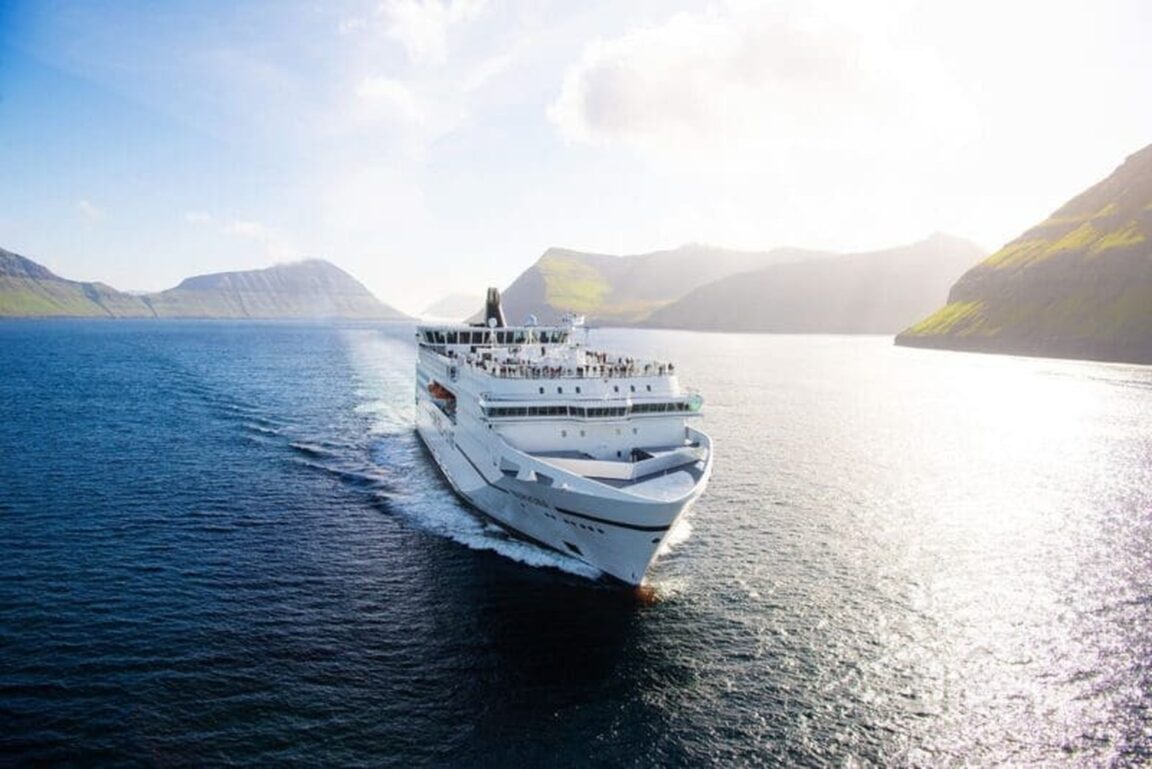
- Ship: MS Norrona, Smyril Line’s cruise ferry, in service since April 2003, 165.7 metres long, with 366 cabins and 30 couchette rooms after its 2020 to 2021 rebuild
- Route: Hirtshals, Denmark, to Torshavn, Faroe Islands, continuing to Seydisfjordur, Iceland, in season
- Winter pattern, late November to mid March: No Iceland sailings; Hirtshals departs Sunday at 15:00, Torshavn arrives Tuesday at 07:30, and the return leaves Torshavn on Friday evening
- Shoulder pattern, mid March to late May and September to late November: One round trip a week including Iceland; Hirtshals Sunday 15:00, Torshavn Tuesday 07:30 and departing 13:00, Seydisfjordur Wednesday at 09:00
- Summer pattern, June to early September: Two departures a week from Hirtshals; the Tuesday 11:30 sailing continues to Iceland, and a Saturday 15:30 sailing runs to Torshavn only
- Check in: Passengers must check in no later than one hour before departure; late arrival is treated as a no show
- Vehicles: Cars, motorcycles, campervans and bicycles can be booked; arriving with your own vehicle is the main reason most travellers choose the ferry over flying
- Times: All timetable times are local, and the Faroes sit one hour behind Denmark, with Iceland a further hour or two behind depending on season
How does the Norrona timetable actually work?
Think of the year in three blocks. From late November to mid March, Norrona is a Denmark to Faroes ferry only: out of Hirtshals on Sunday afternoon, into Torshavn early on Tuesday, back out of Torshavn on Friday evening and into Hirtshals on Sunday. Iceland disappears from the map, and the ship also comes out of service for a maintenance period in the darkest part of winter in most years, so January and February dates need a careful check against the published schedule. In the shoulder seasons, mid March to late May and again from September to late November, the Iceland leg returns once a week: the ship reaches Torshavn on Tuesday morning, sails again at 13:00 and arrives in Seydisfjordur on Wednesday at 09:00, turning round on Thursday evening. In summer, June to early September, the pattern speeds up and doubles: a Tuesday sailing from Hirtshals calls briefly at Torshavn on Wednesday evening and reaches Iceland on Thursday morning, while a second, Saturday sailing runs to the Faroes and back, giving the islands two arrivals a week.
The practical consequence is the stopover maths. In summer, the Saturday arrival in Torshavn and the Wednesday departure onward create a three night Faroe stop on the way to Iceland, which is the sweet spot most travellers want. In the shoulder seasons, the ship leaves Torshavn for Iceland the same day it arrives, so a stop means waiting a full week for the next sailing. In winter there is no onward ship at all. Choose your season around that fact and the rest of the trip falls into place. For what to do once you step ashore, our Faroe Islands travel guide covers the islands themselves, and drivers continuing north can compare the ferry logic with Norway’s coast in our Lofoten Islands travel guide.
What is life on board like across two North Atlantic nights?
Norrona is a working cruise ferry rather than a cruise ship, and that is its charm. Smyril Line lists restaurants and a cafe, a cinema, a fitness room and an outdoor seawater hot tub among the onboard facilities, and the top deck is where the crossing earns its keep: the run up the Danish coast, the open North Atlantic, and in the Faroes season the approach through the islands themselves, with Torshavn appearing after a morning of fjord scenery in the off season pattern. Cabins range from budget couchettes and inside cabins through outside cabins with windows to suites, and the price steps between them widen sharply in summer. The honest advice is to pay for a window if the budget allows on a winter or shoulder crossing, because daylight is short and the sea is the entertainment, and to treat the couchette as a young traveller’s bargain rather than a couple’s retreat. Book cabins early for July and August, when the Iceland sailing in particular sells its best categories first.
Should you bring a car, and what does check in involve?
Bringing a vehicle is the ferry’s whole point for many travellers. The Faroes have good roads and subsea tunnels but limited public transport for sightseeing, and Iceland’s east fjords, where Seydisfjordur sits, reward drivers immediately. Vehicle spaces are priced by length and height and are the first thing to sell out in summer, so book the car before the cabin upgrade. Foot passengers are well served too, with Torshavn’s terminal at Eystara Bryggja a short walk from the town centre, but a foot passenger continuing to Iceland should plan the onward journey from Seydisfjordur carefully, because it is a small east coast town a long way from Reykjavik. Check in closes one hour before departure at the latest, vehicle check in takes longer than foot passenger check in, and Smyril Line treats a late passenger as a no show, so build the drive to Hirtshals with slack. Hirtshals itself is reached by train and motorway up the Jutland peninsula, and many travellers sleep the night before in Hirtshals or nearby Hjorring rather than risk a same day dash.
How does the ferry compare with flying?
Flying to Vagar airport is faster and often cheaper for a short Faroe trip, and this guide will not pretend otherwise. The ferry wins on three specific counts. It carries your own car, campervan or motorcycle, which transforms both a Faroes road trip and an Iceland ring road trip that starts in the east. It turns the journey into part of the holiday, with a genuine North Atlantic crossing instead of an airport day. And it links three countries in one booking, Denmark, the Faroes and Iceland, with a stopover structure no airline replicates. It loses on time, on winter weather, since North Atlantic crossings can be rough and occasionally disrupted, and on frequency, because missing your sailing means waiting days, not hours. Travellers prone to seasickness should pick the summer pattern, when crossings are shortest, and book a midship cabin on a low deck.
Frequently Asked Questions
How long is the ferry from Denmark to the Faroe Islands?
In the summer pattern the crossing takes about a day, with the Tuesday sailing reaching Torshavn the following evening and the Saturday sailing arriving late on Sunday. In the off season pattern it takes two nights, leaving Hirtshals on Sunday at 15:00 and arriving in Torshavn on Tuesday at 07:30. Smyril Line describes it as one night in summer and two nights in the off season.
Can I stop over in the Faroe Islands on the way to Iceland?
Yes, but the season decides the length. In summer, arriving on the Saturday sailing and leaving on the Wednesday Iceland sailing gives three nights ashore. In the shoulder seasons the onward ship leaves the day you arrive, so a stopover means a full week. In winter the ship does not sail to Iceland at all.
Does the ferry run all year?
The Denmark to Faroes route runs through the year apart from a maintenance break, but Iceland is only served from mid March to late November. There are no Seydisfjordur sailings in the winter months.
How early do I need to check in?
No later than one hour before departure, and earlier with a vehicle. Smyril Line’s schedule notes that a passenger who arrives late is treated as a no show, so plan to be at the Hirtshals terminal well ahead of the deadline.
Can I take a campervan or motorcycle?
Yes. Norrona carries cars, campervans, motorcycles and bicycles, priced by vehicle dimensions. Vehicle deck space is limited and sells out first in summer, so reserve it when you book rather than adding it later.
What cabins does Norrona have?
The ship has 366 cabins plus 30 couchette rooms, ranging from couchettes and inside cabins to outside cabins and suites. The current ship entered service in 2003 and gained around 50 extra cabins in its 2020 to 2021 modernisation.
Facts checked 22 November 2026 against Smyril Line’s published sailing schedules for 2026 and its official ship and route information.