 Maya Chen
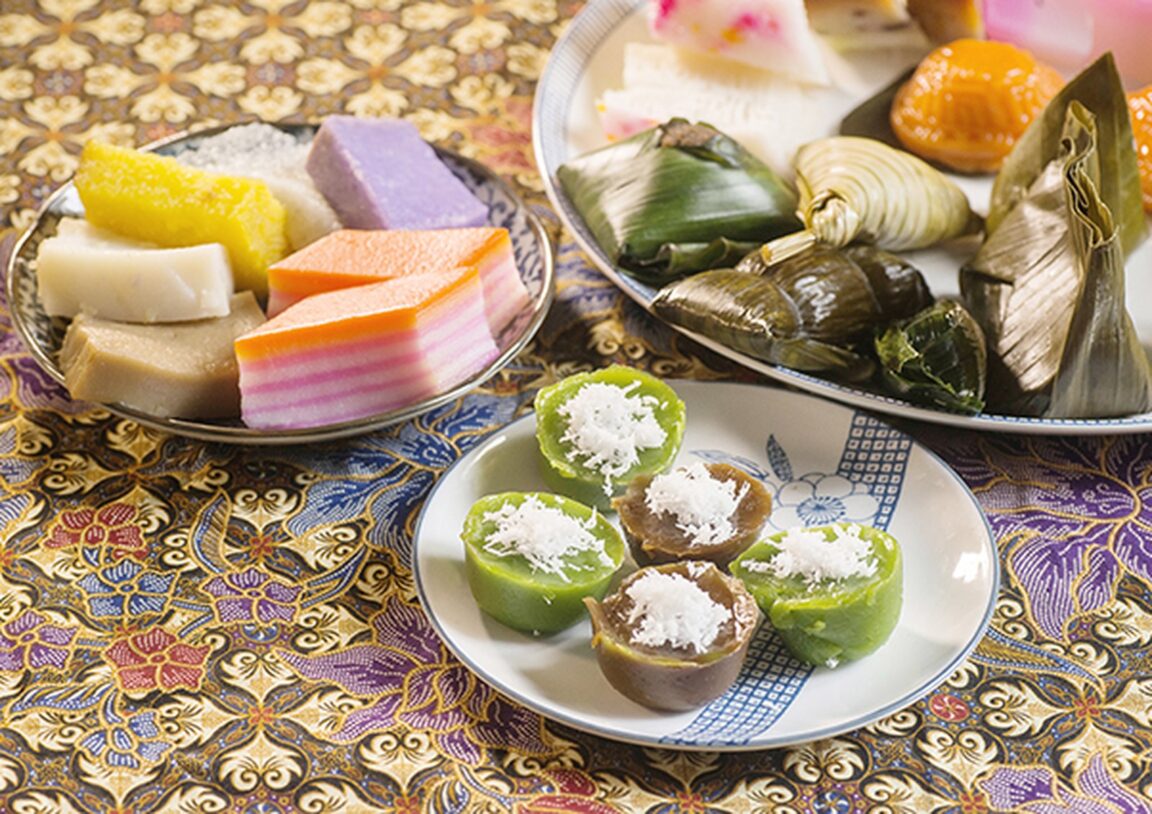
Penang’s Nyonya kuih are best read by colour before you read them by name, because the colours are a working code: green means pandan, blue means butterfly pea flower, deep brown means gula melaka palm sugar, and the red of ang ku means a celebratory cake moulded like a tortoise for luck and long life. The place to learn the code in one morning is Chowrasta Market on Penang Road in George Town, where kuih stalls spread their trays from about 6am and the best pieces are gone by mid morning. Go early, buy small, buy many, and eat the leaf wrapped and coconut topped pieces first, because kuih are made for the day they are sold and do not improve by lunchtime.
Quick Facts
- What kuih are: Bite sized steamed, baked and leaf wrapped cakes of the Peranakan, or Nyonya, community, built on rice and glutinous rice flours, coconut milk, pandan and palm sugar.
- The morning anchor: Chowrasta Market, Penang Road, George Town, where market listings put kuih stalls at roughly 6am to noon, with the widest choice before 9am.
- The heritage shop: Moh Teng Pheow Nyonya Koay, off Chulia Street on Jalan Masjid, making kuih since 1933 and listed as a Michelin Bib Gourmand. Tourism Malaysia lists its hours as 10am to 5pm, closed Mondays.
- Prices: Market estimates put individual pieces at about RM 0.50 to RM 2 at market stalls and RM 1 to RM 3 at dedicated shops. Carry small cash notes.
- The colour code: Pandan green, butterfly pea blue, gula melaka brown, turmeric and pumpkin yellows, and ang ku red.
- The night extension: Kimberley Street wakes up in the evening, best known for its duck kway chap stalls, with shop format kuih counters such as Kuih Culture at 59A Lebuh Kimberley for a late sweet stop.
What does each colour on the tray actually mean?
Start with green. Pandan leaf juice colours and scents a whole family: onde onde, the glutinous rice balls rolled in grated coconut that burst with liquid gula melaka when you bite them; kuih kosui, soft wobbly cups topped with salted coconut; and the green top layer of kuih talam and seri muka. Blue comes from butterfly pea flowers steeped in water, and its signature cake is pulut tai tai, pressed glutinous rice marbled blue and white, served with kaya coconut jam. Browns and caramels signal palm sugar, in kuih kosui’s darker version and in the filling of kuih koci, a pyramidal parcel of glutinous rice flour and sweet coconut steamed inside a banana leaf, which is why so many green and brown pieces on the tray arrive wrapped in leaves.
Then there are the cakes that break the code by being several colours at once. Kuih lapis, the rainbow layer cake, is steamed layer by layer, nine or more strata of rice and tapioca flour, and children peel it sheet by sheet. Ang ku, the red tortoise cake, carries sweet mung bean or peanut inside a chewy skin pressed in a tortoise mould. Rempah udang runs the other way entirely: a savoury, spiced dried prawn and coconut filling inside glutinous rice, wrapped in banana leaf and grilled until the leaf chars and perfumes the rice. A good first tray mixes one of each colour family, plus a rempah udang for contrast. For the wider table, pair this crawl with our Penang hawker order guide and the George Town kopitiam breakfast circuit.
How does a Chowrasta morning actually run?
Chowrasta is a working wet market first and a food destination second, which is exactly why its kuih are good: the stalls cook for neighbourhood aunties, not for tour groups. Arrive between 7am and 8.30am for the full spread, trays of lapis and talam still in their steaming tins, onde onde rolled to order, leaf parcels stacked in pyramids. Point, hold up fingers for quantities, and expect pieces to be bagged fast and priced by the piece or by the small box. Market guides put most pieces between RM 0.50 and RM 2. By 10am the trays thin out, by 11am the specialist pieces, the pulut tai tai and the good rempah udang, are usually gone, and what remains is what the morning did not want. That sell out rhythm is not a flaw in the system. It is the system: kuih carry no preservatives, and a stall that sells out has judged its day correctly.
Why go to Moh Teng Pheow as well as the market?
Because the factory shop shows you the making, not just the selling. Moh Teng Pheow has produced Nyonya kuih since 1933 off Chulia Street, is run by the founding family into its third generation, and was recognised with a Michelin Bib Gourmand in the first Penang guide. Tourism Malaysia lists the shop at Lebuh Chulia, Jalan Masjid, open 10am to 5pm and closed on Mondays. The range runs to more than 20 varieties a day, from kuih talam, lapis and ang ku to the savoury Nyonya chang, glutinous rice dumplings, and the canteen serves a small menu of Nyonya dishes alongside. Prices sit a little above the market stalls, and in exchange you get consistency, air conditioning, a seat, and staff who can tell you what is inside each piece, which matters more than it sounds when half the tray is wrapped in leaves.
What is the Kimberley Street night run, honestly?
Honesty matters here: kuih are a morning food, and no night market will match a Chowrasta tray at 8am. What Kimberley Street offers in the evening is a different pleasure. The street is one of George Town’s classic night eating strips, famous above all for duck kway chap, a broad rice noodle roll served in a dark, herbed broth with duck and offal, sold from stalls that set up as the light fades. Work the street for the savoury course, then close the night with shop format kuih: Kuih Culture, at 59A Lebuh Kimberley, sells a broad kuih range in cafe form later into the day than any market stall. It is the right order of operations for a traveller who slept in: market kuih tomorrow at dawn, Kimberley Street tonight, and no pretence that the two are the same experience.
Frequently Asked Questions
What time should I get to Chowrasta Market for kuih?
Between 7am and 8.30am for the full choice. Stalls open from about 6am, the best pieces sell by mid morning, and little is left by noon.
How much do kuih cost in George Town?
Market stalls charge roughly RM 0.50 to RM 2 per piece and dedicated shops about RM 1 to RM 3, based on current market listings. A generous mixed box for two rarely costs more than a coffee shop breakfast.
Which kuih should a first timer try?
Onde onde for the palm sugar burst, kuih lapis for the layered classic, pulut tai tai with kaya for the blue rice, ang ku for the tortoise cake, and one rempah udang for the savoury, leaf grilled contrast.
Are Nyonya kuih gluten free?
Most traditional kuih are made with rice, glutinous rice and tapioca flours rather than wheat, but recipes vary by stall and cross contact is common in market settings. Ask the seller about the specific piece if it matters to your health.
Can I take kuih home on a flight?
Eat them the same day. Coconut milk and grated coconut give most kuih a life of hours, not days, and they stale and sour quickly in tropical heat. Buy a morning box for the day, not a souvenir supply.
Is Moh Teng Pheow open every day?
No. Tourism Malaysia lists it as closed on Mondays, open 10am to 5pm on other days. Plan the factory shop for any day but Monday, and the market for the same morning if you can.