 Jonas Lindqvist
Two days in Aarhus resolve into a simple order once the museums are understood: ARoS first, in the morning, while the light is fresh and the roof is quiet; Den Gamle By second, in the long afternoon, when its streets of rescued houses feel most alive; and the harbour baths judged by the season rather than by optimism. ARoS, Denmark’s great art museum outside the capital, is crowned by Your rainbow panorama, Olafur Eliasson’s circular walkway of coloured glass, and it is the city’s signature hour. Den Gamle By, the Old Town Museum, is a whole town assembled from 75 historic buildings gathered across Denmark, and it needs half a day, not a gap between other things. Around those two anchors, Aarhus fills easily: a cathedral with Denmark’s longest nave, a Latin Quarter of cobbled lanes, a Viking and prehistory museum of world rank at Moesgaard, and a harbour front that the city has spent two decades turning from docks into its front room. This itinerary sequences them for a winter trip, when the days are short and the order matters most.
Quick Facts
- City: Aarhus, Denmark’s second city, on the east Jutland coast
- Anchor one: ARoS Aarhus Kunstmuseum, Aros Alle 2, a 10 minute walk from Aarhus Central Station
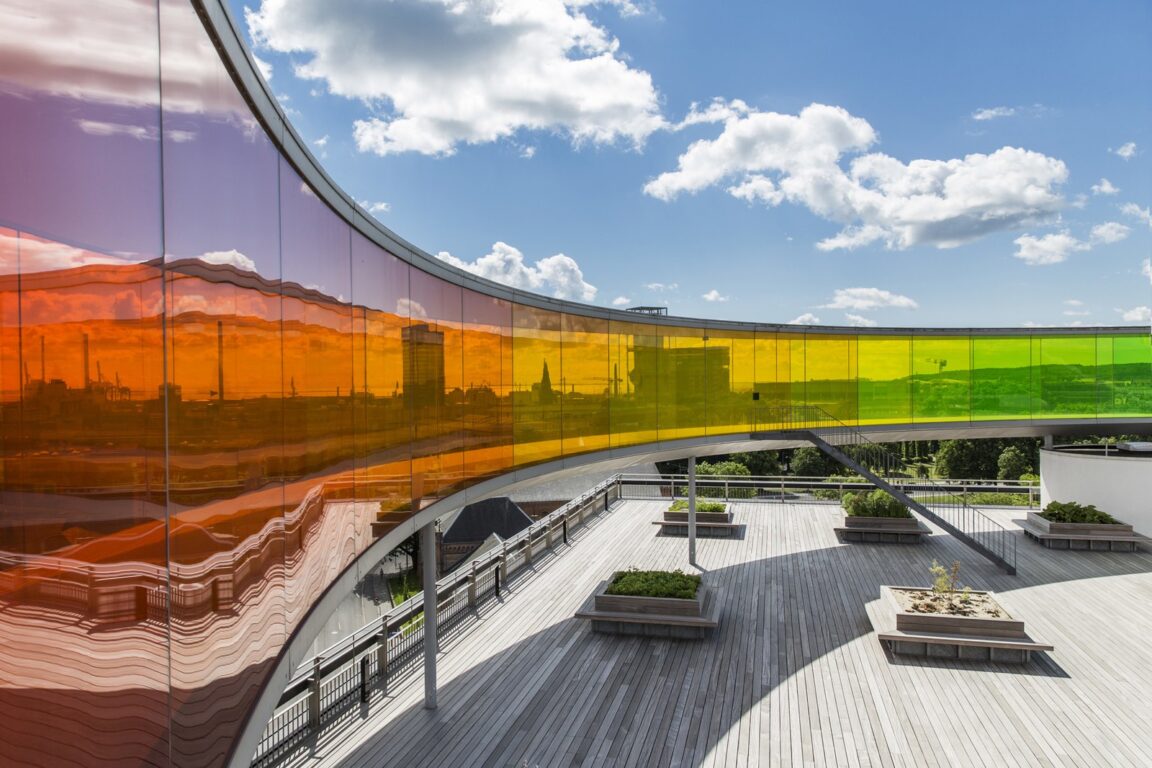
- The panorama: Your rainbow panorama by Olafur Eliasson, opened 2011; a circular glass walkway 150 metres around, included in museum admission
- ARoS admission: DKK 200 standard, DKK 150 for students and under 31s, under 18s free, per the museum’s official practical information checked November 2026
- Anchor two: Den Gamle By, Viborgvej 2; 75 historic buildings from across Denmark, arranged by era
- Harbour baths: The Harbour Bath on Aarhus O, a seasonal swimming harbour bath; winter swimming is a club and sauna culture
- Facts checked: November 24, 2026, against ARoS and Den Gamle By official sources; always confirm same day hours before visiting
Day 1 morning: ARoS and the rainbow
Start at ARoS at opening. The museum’s winter pattern in recent seasons has run Tuesday to Friday from 10 am with evening hours, shorter weekend days and Mondays closed, but hours shift by season and exhibition changeovers can close individual galleries, so check the museum’s own practical page on the morning itself and treat any third party listing as a rumour. Go up first. Your rainbow panorama is a 150 metre circular walkway, three metres wide, glazed in the full spectrum, sitting on the roof like a halo; walking it, the city below changes colour panel by panel, the harbour turning amber, the old town green, the bay blue. It is included in the admission ticket, with no separate booking, and it is at its best twice: in clear morning light, and again near closing on a winter afternoon when the city lights come up inside the colours. With the roof done early, work down through the museum: ten levels of Danish art from the Golden Age to the present, major international contemporary shows, and the vast Nine Spaces installation level below ground. Allow three hours and do not apologise for the cafe stop; the building is a day structure, not a raid.
Day 1 afternoon: the old centre and the Latin Quarter
From ARoS, the centre is a short walk. Aarhus Cathedral, its whitewashed Gothic interior holding Denmark’s longest nave and a celebrated altarpiece, anchors the old town; the Latin Quarter around it, the city’s oldest streets, is where the independent shops, wine bars and small restaurants cluster along cobbled lanes such as Graven and Mejlgade. Winter makes this quarter more, not less, itself: the cafes steam, the design shops glow, and the distances are mercifully short. End the afternoon at the harbour front if the weather allows even a look: Dokk1, the great public library and citizen centre on the waterfront, is worth entering for its scale and its views alone, and the walk out along Aarhus O shows the new harbour city rising, the Isbjerget iceberg housing and the baths among it. Dinner belongs in the Latin Quarter or the Frederiksbjerg neighbourhood south of the station, where the city’s younger restaurant scene concentrates.
Day 2 morning: Den Gamle By by the light
Give Den Gamle By the second morning and the early afternoon, and go while the light is good, because this is an outdoor museum: 75 historic buildings, dismantled across Denmark and rebuilt here street by street, arranged so that a walk is a walk through time, from a 17th century merchant’s town through 1927 and into a fully realised 1974 quarter of shops, flats and a jazz bar. Costumed interpreters and working workshops vary by season, and winter trims the programme, which the museum’s own calendar states plainly; what winter gives back is atmosphere, woodsmoke, quiet streets and the Christmas season displays for which the museum is nationally loved. Practical order: walk the eras in chronological order on the way in, against the instinct to start at the nearest street, then double back to the interiors that caught your eye, the bakery, the merchant’s house, the 1970s commune flat. Opening is generally at 10 am, with seasonal variation the museum publishes; three to four hours is the honest allowance, and the museum sits a walkable distance west of the centre along Viborgvej.
Day 2 afternoon: Moesgaard or the harbour baths, by season
The last half day is a judgment call, and the season should make it. The heavyweight option is Moesgaard Museum, south of the city in a striking modern building cut into the landscape: one of Europe’s finest prehistory and ethnography museums, home to the Grauballe Man, the Iron Age bog body preserved to the fingernails, and to exhibitions that justify the bus ride on their own. It pairs naturally with Den Gamle By for a traveller whose two days lean historical, and it is the better winter choice, being mostly indoors. The harbour baths are the other answer, and they must be judged honestly: the Harbour Bath on Aarhus O, the sculptural complex of pools and decks by the harbour, is a summer institution, free and full from June to August. In winter the open water swimming belongs to the Danes’ winter bathing clubs and sauna culture, a hardier pleasure that visitors join through club and sauna arrangements rather than by simply turning up with a towel. In deep winter, take Moesgaard, walk the harbour front for the architecture, and leave the plunge to those who have trained for it since childhood. Aarhus in two days, done in this order, gives a traveller the full arc of the place: the rainbow above it, the centuries inside it, and the cold sea at its edge.
Getting around and where to sleep
Aarhus rewards walking: the station, ARoS, the cathedral, the Latin Quarter and Dokk1 all sit within a compact centre, and Den Gamle By is a straightforward walk west or a short bus ride. City buses cover Moesgaard and the suburbs, and the light rail links the harbour front districts. Sleep in the centre if the two days are museum heavy, in the streets around the station and Frederiksbjerg for the restaurant scene, or out at the harbour front for the new architecture and the sea. Winter visitors should pack for wind off the bay as much as for cold: Aarhus in December and January is a city of short, bright middays and long, lamplit evenings, and the itinerary above is built for exactly that rhythm, with the big indoor anchors placed where the daylight is not needed and the streets saved for the hours when they glow.
Frequently Asked Questions
Is Your rainbow panorama a separate ticket?
No. The rooftop walkway is included in ARoS general admission. Buy the museum ticket, at DKK 200 standard and DKK 150 for students and under 31s with under 18s free per the museum’s official information checked in November 2026, and allow time to reach the roof within your visit.
When is ARoS closed?
In recent winter seasons ARoS has closed on Mondays, with Tuesday to Friday daytime and evening hours and shorter weekend hours, and galleries occasionally close for exhibition changeovers. The pattern shifts by season, so confirm the day’s hours on aros.dk before setting out.
How long does Den Gamle By take?
Three to four hours for a proper visit. Its 75 buildings are arranged as a walk through Danish urban history from the 1600s to 1974, and rushing it wastes the concept. Seasonal programmes and opening hours vary; the museum opens generally at 10 am.
Can you swim at the Aarhus harbour baths in winter?
The Harbour Bath’s pools are a summer operation. Winter sea bathing in Aarhus is a winter bathing club and sauna activity, organised and hardy, not a casual visitor swim. In winter, admire the harbour architecture and choose Moesgaard Museum for the afternoon instead.
How do you reach Aarhus?
By train from Copenhagen in about three hours to Aarhus Central Station, from which ARoS is a 10 minute walk. The city centre, the Latin Quarter, Den Gamle By and the harbour front are all walkable or a short bus ride from the station.
Image: Your rainbow panorama on the roof of ARoS, Aarhus. Photo: Anders Traerup, via aros.dk.