 River Callahan
Churchill’s polar bear season runs on the ice, not the calendar: every autumn, hundreds of polar bears gather on the Hudson Bay shore near this Manitoba town of under 900 people, waiting for the bay to freeze so they can hunt seals, and Travel Manitoba puts the main viewing window from mid October to mid November. Plan backwards from that window. The tundra buggy days, the only safe way to watch bears at close range on the tundra, are a permitted, capacity limited product that peak season travellers book close to a year ahead. Getting there is its own decision, because there is no road: VIA Rail’s train from Winnipeg takes about 45 hours across 1,694 kilometres, while Calm Air flies the same gap in about two hours. And once in town, a third body of knowledge applies, the bear etiquette of a place where the wildlife walks through the streets and the rules about walking after dark are not folklore. Season, buggies, transport, etiquette: settle them in that order.
Quick Facts
- Where: Churchill, Manitoba, on the western shore of Hudson Bay at about 58 degrees north; no road access
- Season: Polar bear viewing October to November; main window mid October to mid November, per Travel Manitoba
- Viewing: Permitted tundra vehicles in the Churchill Wildlife Management Area; Frontiers North Adventures has operated in Churchill since 1987
- Train: VIA Rail Winnipeg to Churchill, about 1,694 km and roughly 45 hours, twice weekly
- Flights: Calm Air scheduled service from Winnipeg, about two hours
- Booking reality: Peak season trips should be planned and booked close to a year in advance, per Travel Manitoba guidance
- Facts checked: November 24, 2026, against Travel Manitoba, VIA Rail, Destination Canada and operator sources
Why the bears gather, and why the window is short
Western Hudson Bay’s polar bears hunt from the sea ice. The bay melts completely by late summer, forcing the bears ashore for three to four months to live off their fat reserves, and Churchill sits where the ice forms early, at the mouth of the Churchill River. As freeze up approaches in autumn, the bears concentrate along this stretch of coast, waiting. That concentration is the season: big males sparring, mothers moving cubs, bears testing the young ice at the shore. Once the bay freezes solid, usually through November, the bears walk out onto it and the season ends within days. Early in the window there are fewer bears and milder cold. Late October into early November brings the peak gathering. There is no guaranteed peak date, because the whole event tracks ice formation rather than any timetable a tour company controls, and honest operators say so.
How tundra buggy booking actually works
The Churchill Wildlife Management Area, east of town, is where the buggies roam, on an established trail network, under a permit system that caps vehicle numbers. The buggies themselves are purpose built: high, heated, with large windows, a rear viewing platform and a driver guide who reads the tundra. Frontiers North Adventures, operating in Churchill since 1987, runs both a day tour, the Tundra Buggy Adventure, and multi day packages including nights at its Tundra Buggy Lodge, a train like chain of units parked out on the tundra. Other licensed operators run comparable day and lodge products. Two booking truths follow. First, the day tour can sometimes be secured closer to the season, but lodge based packages for late October and early November sell out many months ahead, and Travel Manitoba advises planning peak trips at least a year out. Second, a package bought from Winnipeg bundles the scarcest elements, transport, beds and buggy days, into one reservation, which is why most first time visitors buy the bundle rather than assembling the pieces in a town with very few of each.
The train from Winnipeg: 45 hours, twice a week
VIA Rail’s Winnipeg to Churchill service is one of North America’s great rail journeys and a logistical commitment. Destination Canada lists the essentials: 1,694 kilometres, approximately 45 hours, departing Winnipeg on Tuesdays and Sundays at 12:05 pm and departing Churchill on Thursdays and Saturdays at 8:30 pm, in Economy and Sleeper Plus classes, with meals not included in either. The route runs through Manitoba’s boreal forest, pauses at Thompson, and crosses into the subarctic tundra where the trees shrink and the sky takes over. There is a dome car for the northern lights and the long northern dusk. The train suits travellers who treat the journey as part of the expedition and who build slack around it, because a twice weekly service means a missed connection costs days, not hours. The flight, by contrast, is a tool: Calm Air’s scheduled service from Winnipeg takes about two hours, costs more, and returns your days to the bears. Many packages fly one way and train the other, which is the connoisseur’s compromise.
Bear etiquette: the town rules are real
Churchill lives with its bears under a system built over decades. Manitoba’s Polar Bear Alert Program patrols the town, responds to reports of bears in the community, and deters or relocates animals that come too close; residents report sightings rather than approaching for photographs. Visitors are expected to follow the same discipline. Never walk alone after dark in bear season, and in the darkest weeks avoid walking at night at all unless your operator or hotel advises the route is clear. Move in groups, make noise, and stay alert at the town’s edges, near the shore and around buildings that block sightlines. Never approach a bear on foot for a closer look, and never feed one: a fed bear becomes a problem bear, and problem bears are the ones the system has to remove. On the tundra, the buggy’s height and the driver’s judgment are the safety system, and the rule is to stay aboard unless the driver says otherwise. In town, heed local advice over any itinerary: if the patrol says stay in, you stay in, and the evening becomes a northern lights watch from the hotel instead.
What a sensible booking timeline looks like
Twelve months out, choose your window and reserve the package or the buggy days and lodge nights, because those are the constrained pieces. Nine to six months out, book the train berths or flights and the Winnipeg hotel nights at both ends, which the rail timetable makes necessary. In the final month, sort the cold weather system: Churchill in late October is genuinely Arctic, with wind chills that punish thin layers, and operators publish packing lists that assume you will follow them. On the ground, plan one non buggy day for the town itself, its museum, the Parks Canada visitor centre and the shore at the town complex, because Churchill’s human story, a grain port, a former military and research base, and an Indigenous and fur trade crossroads, is half the reason the place stays with you. However it is assembled, the trip’s logic is fixed: the bears keep the schedule, and the traveller’s job is to be there, booked, warm and patient, while they do.
What does a day on the tundra actually feel like?
The buggy day runs long and slow, and that is its pleasure. Vehicles leave town in the morning, cross onto the Wildlife Management Area trails, and then move at walking pace, stopping wherever bears are resting, sparring or walking the shore. The height of the vehicle is the whole trick: bears approach out of curiosity and pass beneath the windows at a distance that feels impossibly close while remaining entirely safe, and the rear platform lets photographers work in the open air. Lunch is eaten aboard, the heater runs, and the guide’s commentary fills the quiet stretches with the science of the place, the research presence in Churchill, the bear biology of the fasting season and the work of the conservation organisations based in town. Expect six to eight hours out, expect long stillnesses between encounters, and dress for standing on an open platform in serious cold: the travellers who enjoy the day most are the ones who treated the operator’s clothing list as a requirement rather than a suggestion.
Frequently Asked Questions
When is polar bear season in Churchill?
October and November, with the main viewing window from mid October to mid November per Travel Manitoba. The season ends when Hudson Bay freezes and the bears head out onto the ice to hunt, so late November dates carry real risk of the bears having gone.
How do you get to Churchill?
By train or plane only; there is no road. VIA Rail runs from Winnipeg twice weekly in about 45 hours. Calm Air flies from Winnipeg in about two hours. Most tour packages start and end in Winnipeg.
How far ahead should you book a tundra buggy?
For peak dates in late October and early November, plan on booking close to a year ahead, as Travel Manitoba advises. Day tours occasionally open up closer to the season, but lodge based packages at peak sell out many months in advance.
Is it safe to walk around Churchill at night?
Not casually in bear season. The town operates under the Polar Bear Alert Program, and visitors should never walk alone after dark, should travel in groups, and should follow hotel and operator guidance on whether to walk at all on a given night.
Can you see polar bears without a tundra buggy?
Bears do appear around town and along the shore, and summer visitors see them on boat and walking tours in the beluga season. But the autumn tundra viewing that Churchill is famous for happens from permitted tundra vehicles in the Wildlife Management Area, which keep both bears and people safe.
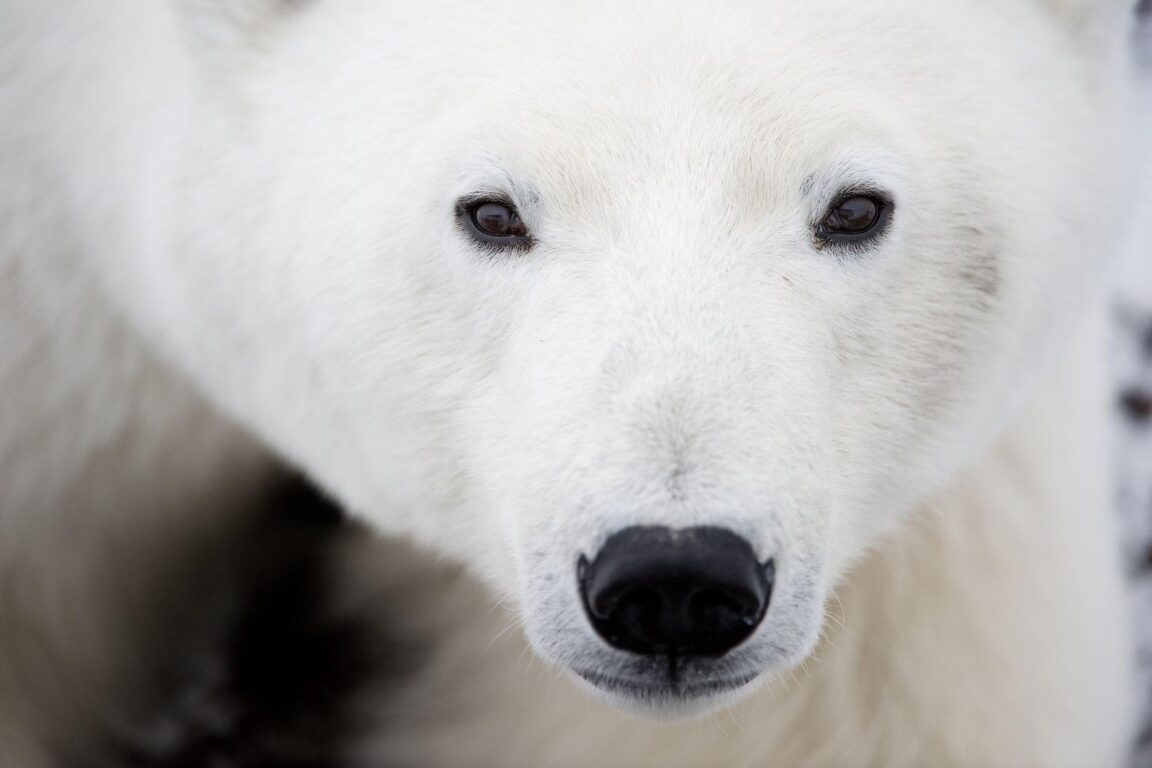
Image: A polar bear in Churchill’s bear country. Photo: Frontiers North Adventures, via frontiersnorth.com.