 Rafael Santos
Valparaiso is a vertical city, and the way to understand it is to ride the lifts that still run, walk the two great visitor cerros in the right order, and time Pablo Neruda’s house, La Sebastiana, for its opening hour. Around seven of the historic ascensores are confirmed in service in recent counts, including Concepcion, El Peral, Reina Victoria, Espiritu Santo, Baron, Cordillera and San Agustin, while famous names such as Artilleria have been out of service for years, so a plan built on a guidebook list will fail at a closed station door. La Sebastiana, on Cerro Bellavista, opens Tuesday to Sunday from 10:00 to 18:00 and closes on Mondays. Build your day on those two facts, verified on the ground when you arrive, and the painted hills will do the rest.
Quick Facts
Where: A Pacific port city about 120 kilometres west of Santiago, built across steep hills called cerros above a flat commercial centre.
UNESCO status: The historic quarter is a World Heritage Site, recognised for its late 19th century port city character and its funicular lift system.
Ascensores in service: A small working set that changes with maintenance. Recent counts list Concepcion, El Peral, Reina Victoria, Espiritu Santo, Baron, Cordillera and San Agustin among those running, with Artilleria long out of service.
La Sebastiana: Neruda’s house at Calle Ferrari 692 on Cerro Bellavista, open Tuesday to Sunday, 10:00 to 18:00, closed Mondays. Arrive at opening for the quietest visit.
First stay hills: Cerro Concepcion and Cerro Alegre for first timers, Cerro Bellavista for Neruda and the open air museum.
Footwear: Shoes with grip. The city is stairs, cobbles and steep lanes in every direction.
Which ascensores should a first timer actually plan around?
Plan around the lifts that serve the hills you are walking, and confirm each one at its station on the day, because maintenance closures are a normal part of life for machinery that in several cases dates from the 1880s and 1900s. Ascensor Concepcion, the oldest of the working lifts, climbs from the flat centre up to Paseo Gervasoni on Cerro Concepcion and is the classic first ride. Ascensor El Peral rises from beside Plaza Sotomayor to Paseo Yugoslavo on Cerro Alegre, delivering you directly to the terrace views and the fine arts museum in Palacio Baburizza. Ascensor Reina Victoria is the short, steep link up to Cerro Alegre from near Plaza Anibal Pinto, handy at the end of a day in the flat. Ascensor Espiritu Santo climbs Cerro Bellavista, the hill of La Sebastiana and the Museo a Cielo Abierto.
Equally important is knowing what not to plan around. The Artilleria funicular, which once carried visitors up to Paseo 21 de Mayo and the national maritime museum, has been out of service for years with restoration discussed but no dependable reopening a visitor should bank on. Reach that viewpoint by taxi or on foot instead. Treat every ascensor fare as small change: these are working public transport lifts used by residents to get home, priced in hundreds of pesos rather than as a tourist attraction, and exact fares change, so carry coins and small notes and check the posted fare at the station rather than trusting any printed figure, including ours.
How should you walk Cerro Concepcion and Cerro Alegre?
Ride up, walk across, ride down. Take Concepcion up in the morning, then drift across the ridge into Alegre through the lanes around Templeman and Almirante Montt, where the two hills blur into one walkable neighbourhood of painted houses, small hotels, cafes and viewpoints. This is the Valparaiso of the postcards, and it earns the description: corrugated iron facades painted every colour, stairways turned into murals, and the port and bay opening out below at every gap between houses. Descend by El Peral to Paseo Yugoslavo for the Baburizza museum if art is on your list, or stay up on the hills through lunch, because the neighbourhood restaurants are half the reason to base a first stay here.
Mural etiquette is the part visitors get wrong. The street art is on people’s homes and businesses, in lived in streets, not in a gallery. Photograph walls freely from the street, but do not block doorways, climb on painted stairs that are someone’s front step, or treat a resident posing for your lens as part of the artwork without asking. Murals also change. A famous piece from a blog post may be painted over, tagged or replaced, and that turnover is the culture working as intended. Walk with a local guide if you want the stories behind specific works and artists, because the meaning of half of what you are looking at is invisible without the neighbourhood context, and a good guide spreads your spending into the hills rather than the flat.
For another great painted port city comparison, see our first timer guide to San Miguel de Allende beyond the expat script, and for hill town craft shopping, Bisbee, Arizona’s copper town turned art colony.
When should you visit La Sebastiana, and how long does it take?
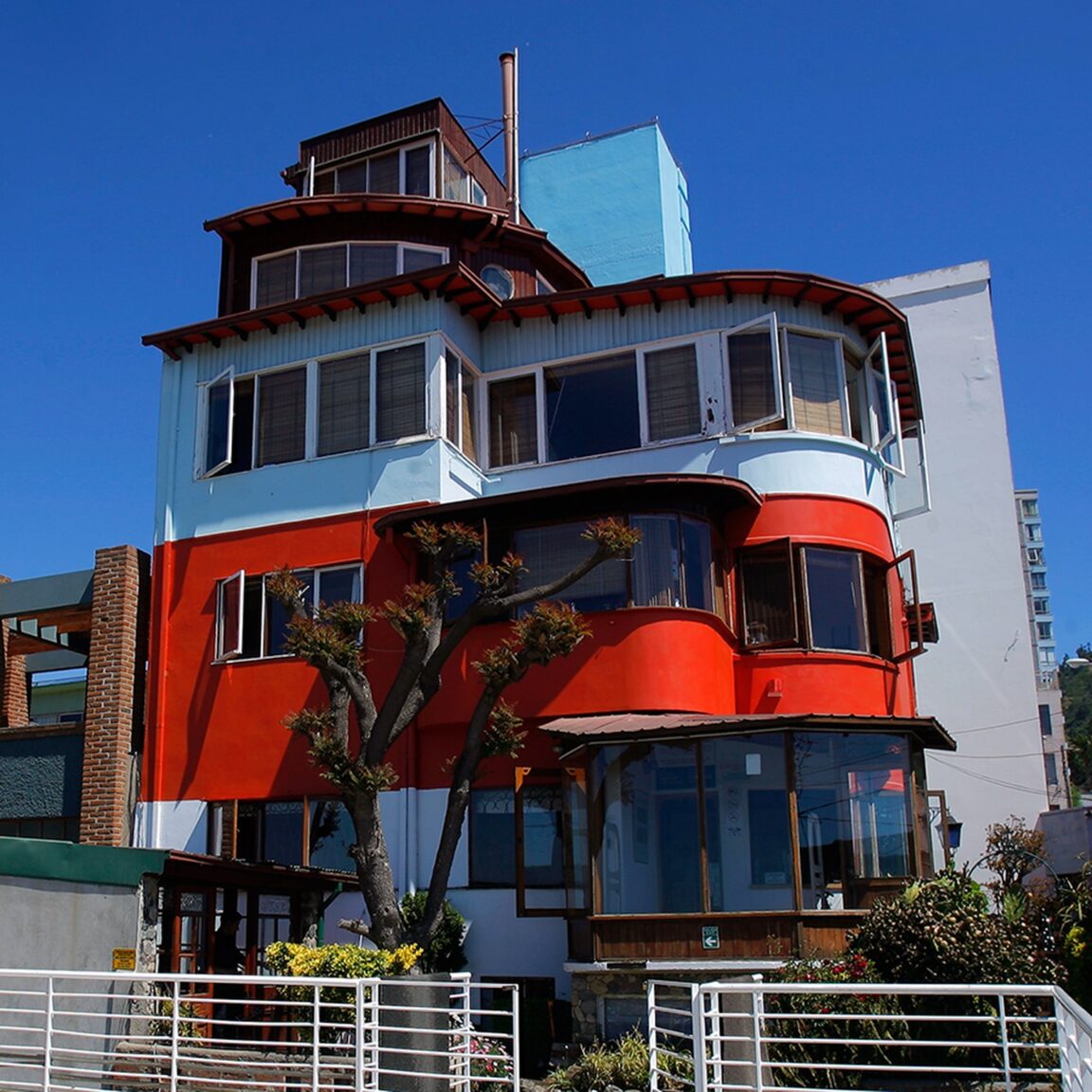
Go at opening, at 10:00, on a Tuesday to Sunday, and never on a Monday, when the house is closed and more day trips from Santiago are ruined by that single fact than by any other. La Sebastiana is the tall, narrow house Neruda bought on Cerro Bellavista, five levels of collected objects, coloured glass, ship memorabilia and windows aimed at the bay, connected by tight stairways that clog quickly once tour groups arrive from mid morning. At opening you can move at the pace the house deserves, floor by floor, ending with the views that explain why a poet who could live anywhere chose this hill above this unruly port.
Allow about an hour inside, and pair it with the Museo a Cielo Abierto on the same hill, a series of large murals from the early 1990s spread along the stairways below the house, free and open at any hour because it is simply the street itself. The pairing makes a complete Bellavista half day: the poet’s interior world in the morning, the neighbourhood’s exterior canvas after, and lunch back down in the flat or across in Alegre. Tickets for La Sebastiana are sold at the door for individual visitors, and the included audio guide is widely praised, so there is no need to over plan beyond arriving early and checking the day of the week twice.
Where should a first timer sleep, and how do you arrive?
Sleep on Cerro Concepcion or Cerro Alegre if you want the Valparaiso of the murals outside your door, with the honest warning that hillside charm means stairs, and a wheeled suitcase will remind you of every one of them. Sleep in the flat centre if you are arriving late, leaving early, or travelling with anyone for whom steep lanes are a genuine obstacle, and ride the ascensores up as a visitor instead of hauling luggage up them as a resident. Either way, keep valuables discreet in the busy flat streets around the port and the lift stations, where crowds and queues are exactly where opportunistic theft looks for distracted travellers.
Most visitors arrive by bus from Santiago, a journey of roughly an hour and a half to two hours with frequent departures through the day, which makes Valparaiso an easy add on to a capital stay and a tempting day trip. Resist the day trip if you can. The city at dusk, when the lights come on across forty odd hills and the day buses have left, is the version residents love, and one night on a cerro costs little more than the willpower to book it.
Frequently asked questions
How many ascensores are running in Valparaiso? The number changes with maintenance. Recent counts confirm around seven in service, including Concepcion, El Peral, Reina Victoria, Espiritu Santo, Baron, Cordillera and San Agustin. Check at the station on the day.
Is the Artilleria funicular open? No. It has been out of service for years. Reach Paseo 21 de Mayo and the maritime museum by taxi or on foot.
What are La Sebastiana’s hours? Tuesday to Sunday, 10:00 to 18:00, closed on Mondays. Arrive at opening for the quietest visit, because the narrow stairways fill quickly.
Which cerro is best for a first stay? Cerro Concepcion and Cerro Alegre, for murals, cafes, viewpoints and small hotels. Choose the flat centre instead if stairs or late arrivals make hills impractical.
How long do I need in Valparaiso? One full day covers the two main cerros and La Sebastiana at a good pace. One night is strongly recommended to see the hills lit after dark.
Image credit: La Sebastiana, Pablo Neruda’s house in Valparaiso, Fundacion Neruda, via fundacionneruda.org.