 Rafael Santos
San Miguel de Allende rewards first timers who build their visit on the Mexican city rather than the expat one. Start at the Jardin Principal under the pink towers of the Parroquia, shop the artisan market lane in the order the stalls are laid out, eat where the food market eats, and give one full morning to El Charco del Ingenio, the canyon botanical garden above town. Do those four things and the city explains itself: a working Guanajuato market town with a famous church, not a stage set with a large foreign audience.
Quick Facts
- Where: San Miguel de Allende, Guanajuato, Mexico, in the central highlands at about 1,900 metres
- Heritage status: UNESCO World Heritage Site since 2008, listed with the nearby Sanctuary of Atotonilco
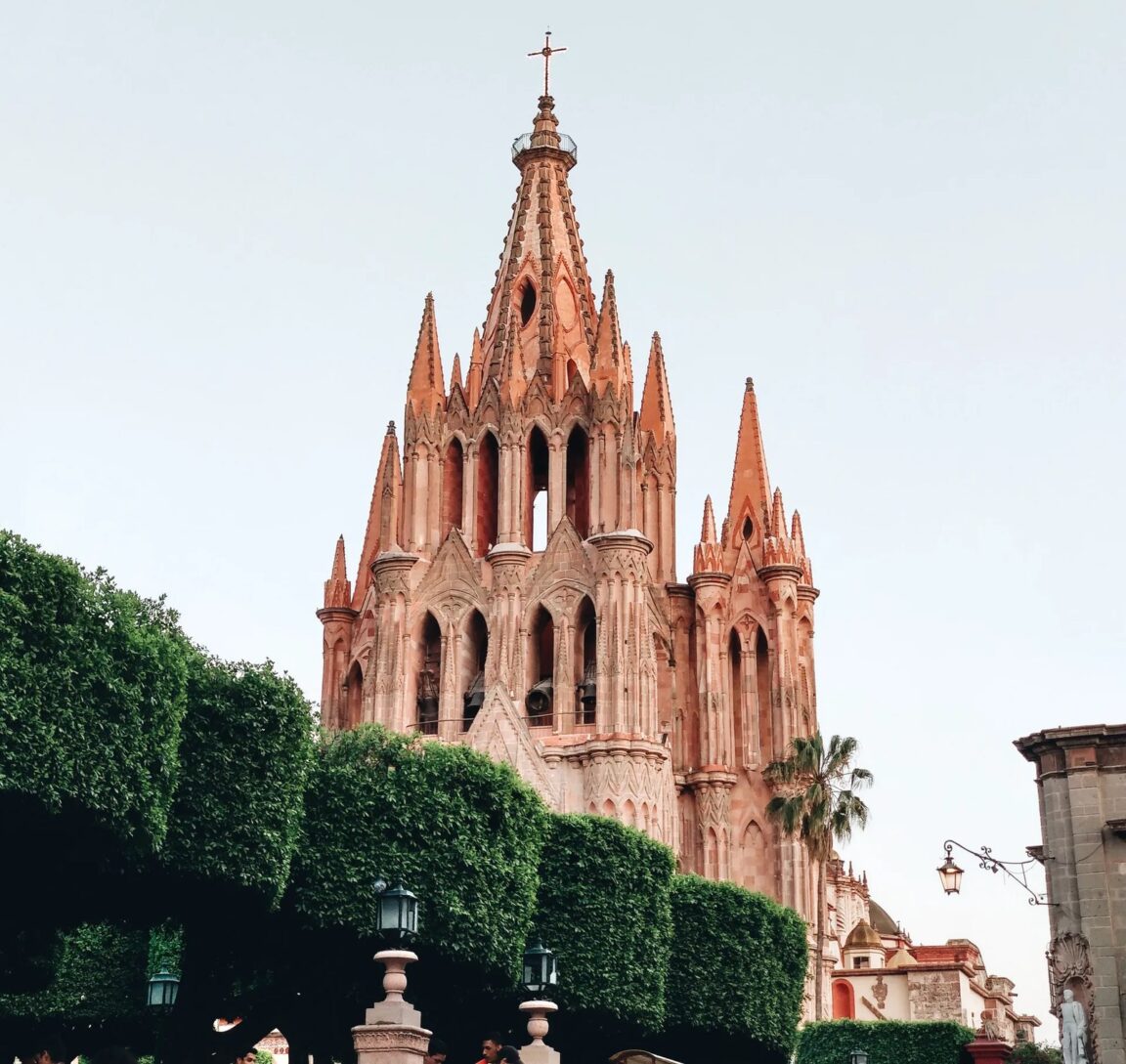
- The landmark: Parroquia de San Miguel Arcangel, whose pink stone facade was redesigned in 1880 by stonemason Zeferino Gutierrez
- Market lane: Mercado de Artesanias, along the Andador Lucas Balderas walkway in Centro
- Food market: Mercado Ignacio Ramirez, beside the artisan market
- The garden: El Charco del Ingenio, a botanical garden and nature reserve in a canyon above town, founded in 1991
- Language: Spanish is the street language; learn the greetings and use them
- Currency: Mexican peso
Where should a first morning in San Miguel actually begin?
Begin in the Jardin Principal, the clipped laurel square that is the city’s living room, facing the Parroquia de San Miguel Arcangel. The church’s pink quarry stone towers are the most photographed sight in San Miguel, and their story is the right introduction to the place: the facade visitors admire was redesigned in 1880 by Zeferino Gutierrez, a self taught indigenous stonemason who is said to have worked from postcards of European cathedrals. The building is Mexican craftsmanship wearing a European costume, which is a fair summary of the city at its best. Sit on a bench first. The Jardin is where San Miguel meets itself, mariachis, balloon sellers, families and shoeshine stands, and ten unhurried minutes there will orient you better than any map.
From the Jardin, walk the grid slowly. San Miguel’s historic centre is compact, cobbled and sloped, built for feet rather than cars, and its pleasures are sequential: a courtyard glimpsed through an open door, a fountain in a small plaza, the bell towers layering above the rooftops. The Centro Cultural Ignacio Ramirez, known as Bellas Artes, occupies an 18th century former convent a few streets from the Jardin and hosts exhibitions and a celebrated mural room; it is the natural second stop of a first morning, and it roots the visit in the city’s long life as a place where Mexican artists study and work. Travellers continuing through the Bajio should pair this visit with our Guanajuato city itinerary, an hour and a half away and San Miguel’s natural twin.
How do you shop the artisan market in the right order?
The Mercado de Artesanias runs along the Andador Lucas Balderas, a long stepped lane of stalls a short walk from the Jardin, and the way to work it is simple discipline: walk the whole lane once without buying, then walk it again and buy what you are still thinking about. The stalls carry the crafts of Guanajuato and of Mexico more widely: punched tin mirrors and lanterns, blown glass, painted ceramics in the Talavera tradition, embroidered textiles, papier mache figures, silver and folk art masks. Quality and price vary stall by stall, which is why the first pass matters. The second pass is also when you notice the workshops behind the stalls, where some of what is sold is actually made, and buying from the maker remains the best transaction in the market.
Beside it, the Mercado Ignacio Ramirez is the city’s food market, and it deserves equal time. This is where San Miguel shops for itself: fruit and flower stalls, dried chillies by the sack, herbs, cheeses and cooked food counters where lunch is a local transaction conducted in Spanish at local prices. Eat here at least once. A first timer who only eats on the rooftop circuit misses the city’s palate entirely. Cash in small notes speeds everything, a polite counteroffer is a normal part of market life for larger pieces, and asking before photographing a stall or its owner is basic courtesy everywhere in San Miguel.
What about the rooftops, and how do you use them honestly?
San Miguel’s rooftop bars are famous for a reason: the city sits in a bowl of highland light, and sunset over the Parroquia towers and the distant Guanajuato range is a genuine spectacle. The honest way to use the rooftops is as a punctuation mark, one drink at the end of a day spent at street level, rather than as the day itself. Go up for the golden hour, watch the swifts and the changing stone, and come back down for dinner. The neighbourhoods beyond the Jardin’s immediate ring, including the streets toward the Fabrica La Aurora, the former textile factory now filled with galleries and studios, reward the same street level attention in daylight: Spanish is the language of the pavement, the shops serve residents as much as visitors, and the city feels like what it is, a provincial Mexican city with an unusual number of painters.
Why does El Charco del Ingenio deserve a full morning?
El Charco del Ingenio, above the town, is the counterweight to every cobbled lane: a botanical garden and nature reserve spread across a plateau and down into a canyon, dedicated to Mexican flora and above all to cacti and succulents, many of them rare. The garden was founded in 1991, its founding moment marked by the solar eclipse of that year, which is commemorated in the Plaza of the Four Winds, the ceremonial space at its heart built with coloured stones in the tradition of a Toltec Chichimeca codex. Since 2014 the reserve has held federal recognition from Mexico’s National Commission for Natural Protected Areas as an area voluntarily destined for conservation. Trails cross the scrub, border the canyon and pass the old dam and reservoir, with viewpoints west over the city and the Laja valley.
Go in the morning, with water and a hat, and give it two to three hours. The light is kind, the birds are active around the wetlands, and the conservatory collection of cacti and other succulents repays slow looking. El Charco is also a ritual space for the indigenous communities of San Miguel, whose annual festival gathers here each July, and visitors should treat it with the respect that dual role deserves: stay on the trails and let the quiet be part of the visit. It is the single best answer to the traveller who asks what San Miguel offers beyond shopping and rooftops, and it pairs naturally with a slower onward journey through the region, such as the hacienda country covered in our Merida haciendas and cenotes guide for those continuing to Yucatan.
How do you pace three days without rushing the city?
Day one belongs to the centre: the Jardin and the Parroquia in the early light, Bellas Artes before lunch, and a slow afternoon in the streets between them, ending on a rooftop at golden hour. Day two is the market day, and it should start at the food market while the stalls are being set and the cooked food counters are at their busiest, then move into the artisan lane with the two pass method, first looking and then buying, before an afternoon at Fabrica La Aurora’s galleries. Day three is the garden morning at El Charco del Ingenio, taken slowly with the canyon trails, and a final unplanned afternoon, because San Miguel’s last gift to a first timer is usually something nobody scheduled: a procession leaving a parish church, a band in a side plaza, a courtyard concert. Build the trip in that order, market before garden and centre before both, and the city’s layers arrive in the sequence that makes them legible. Travellers with a fourth day should spend it doing less, not more: a second market morning, a long lunch and the Jardin at dusk is a complete and honourable day in this city.
Frequently Asked Questions
How many days does a first visit to San Miguel need?
Three days covers the pattern in this guide comfortably: a Centro day, a market and galleries day, and a morning at El Charco with a rooftop evening. Four days lets the pace drop to the city’s own speed.
Is San Miguel de Allende only an expat town?
No. It has a large foreign resident community, but it is a working Mexican city of markets, schools, festivals and parishes. Visitors who use the food market, the artisan lane and the neighbourhoods beyond the Jardin meet that city directly.
When is the light best at El Charco del Ingenio?
Morning. The canyon and the cactus collection photograph and walk best before the midday highland sun, and the reserve’s birdlife is most active early.
What should I buy in the Mercado de Artesanias?
Buy what is made locally and what you watched being finished: punched tin, blown glass, embroidered textiles and ceramics travel well. Walk the lane once before buying anything.
Do I need Spanish in San Miguel?
English is widely understood in the tourist centre, but Spanish opens the real city. Greetings, numbers and market phrases are the highest value vocabulary a first timer can carry.
Featured image: The Parroquia de San Miguel Arcangel above the Jardin, San Miguel de Allende. Photo by David Liceaga via Unsplash, Unsplash License.